Sample Papers
Previous Year Papers
Syllabus
EXAM SYLLABUS
The syllabus for the Railway Recruitment Board Junior Engineer (RRB JE) exam includes a broad range of topics designed to evaluate candidates’ technical knowledge, general awareness, and aptitude skills. The examination is conducted in multiple stages, mainly CBT Stage I and CBT Stage II.
The syllabus for RAILWAY JE CBT- II Examination is given below:
Name of Test | Topic | Weightage |
| General Awareness | Knowledge of Current affairs and Indian geography | 15 Q |
Culture and history of India including freedom struggle | ||
Indian Polity and constitution | ||
Indian Economy | ||
Environmental issues concerning India and the World, Sports | ||
General scientific and technological developments etc | ||
| Physics and Chemistry | Up to 12th standard CBSE syllabus | 15 Q |
| Basics of Computers and Applications | Architecture of Computers | 10 Q |
Input and Output devices | ||
Storage devices and Networking | ||
Operating System like Windows, Unix, Linux | ||
MS Office | ||
Various data representation | ||
Internet and Email | ||
Websites & Web Browsers | ||
Computer Virus | ||
| Basics of Environment and Pollution Control | Basics of Environment | 10 Q |
The adverse effect of environmental pollution and control strategies | ||
Air, water, and Noise pollution, their effect, and control | ||
Waste Management, Global warming and | ||
Acid rain and ozone depletion | ||
Technical Abilities | ||
| Civil & Allied Engineering | Engineering Mechanics, Building Construction, Building materials, Construction of substructure, Construction of superstructure, Building finishes, Building maintenance, Building drawing, Concrete Technology, Surveying, Computer-Aided Design, Geo-Technical Engineering, Hydraulics, Irrigation Engineering, Mechanics of Structures, Theory of Structures, Design of Concrete Structures, Design of Steel Structures, Transportation Engineering, Highway Engineering, Environmental Engineering, Advanced Construction Techniques, and Equipment, Estimating and Costing, Contracts and Accounts | 100 Q From each |
| Electrical & Allied Engineering | Basic concepts, Circuit law, AC Fundamentals, Measurement and measuring instruments, Electrical Machines, Synchronous Machines, Switchgears and Protection, Estimation and costing, Utilization of Electrical Energy, Basic Electronics | |
| Electronics & Allied Engineering | Electronic Components & Materials, Electronic Devices and Circuits, Digital Electronics, Linear Integrated Circuit, Microprocessor and Microcontroller, Electronic Measurements, Communication Engineering, Data communication and Network, Computer Programming, Basic Electrical Engg | |
| Mechanical & Allied Engineering | Engineering Mechanics, Material Science, Strength of Materials, Machining, Welding, Grinding & Finishing Process, Metrology, Fluid Mechanics & Hydraulic Machinery, Industrial Management, Thermal Engineering | |
| Computer Science and Information Technology | PC Software, Computer fundamentals, C Language, Computer Organisation, Information Systems, Data Structure using C++, DBMS fundamentals, System Programming, Operating System using LINUX, Web Technologies, and Programming, System Analysis and Design, Data and Network Communication, Java Programming, Software Engineering | |
| Printing Technology | Printing Systems, Printing Materials, Fle | |
EXAM SYLLABUS
The syllabus for the Railway Recruitment Board Junior Engineer (RRB JE) exam includes a broad range of topics designed to evaluate candidates’ technical knowledge, general awareness, and aptitude skills. The examination is conducted in multiple stages, mainly CBT Stage I and CBT Stage II.
The syllabus for RAILWAY JE CBT- II Examination is given below:
Name of Test | Topic | Weightage |
| General Awareness | Knowledge of Current affairs and Indian geography | 15 Q |
Culture and history of India including freedom struggle | ||
Indian Polity and constitution | ||
Indian Economy | ||
Environmental issues concerning India and the World, Sports | ||
General scientific and technological developments etc | ||
| Physics and Chemistry | Up to 12th standard CBSE syllabus | 15 Q |
| Basics of Computers and Applications | Architecture of Computers | 10 Q |
Input and Output devices | ||
Storage devices and Networking | ||
Operating System like Windows, Unix, Linux | ||
MS Office | ||
Various data representation | ||
Internet and Email | ||
Websites & Web Browsers | ||
Computer Virus | ||
| Basics of Environment and Pollution Control | Basics of Environment | 10 Q |
The adverse effect of environmental pollution and control strategies | ||
Air, water, and Noise pollution, their effect, and control | ||
Waste Management, Global warming and | ||
Acid rain and ozone depletion | ||
Technical Abilities | ||
| Civil & Allied Engineering | Engineering Mechanics, Building Construction, Building materials, Construction of substructure, Construction of superstructure, Building finishes, Building maintenance, Building drawing, Concrete Technology, Surveying, Computer-Aided Design, Geo-Technical Engineering, Hydraulics, Irrigation Engineering, Mechanics of Structures, Theory of Structures, Design of Concrete Structures, Design of Steel Structures, Transportation Engineering, Highway Engineering, Environmental Engineering, Advanced Construction Techniques, and Equipment, Estimating and Costing, Contracts and Accounts | 100 Q From each |
| Electrical & Allied Engineering | Basic concepts, Circuit law, AC Fundamentals, Measurement and measuring instruments, Electrical Machines, Synchronous Machines, Switchgears and Protection, Estimation and costing, Utilization of Electrical Energy, Basic Electronics | |
| Electronics & Allied Engineering | Electronic Components & Materials, Electronic Devices and Circuits, Digital Electronics, Linear Integrated Circuit, Microprocessor and Microcontroller, Electronic Measurements, Communication Engineering, Data communication and Network, Computer Programming, Basic Electrical Engg | |
| Mechanical & Allied Engineering | Engineering Mechanics, Material Science, Strength of Materials, Machining, Welding, Grinding & Finishing Process, Metrology, Fluid Mechanics & Hydraulic Machinery, Industrial Management, Thermal Engineering | |
| Computer Science and Information Technology | PC Software, Computer fundamentals, C Language, Computer Organisation, Information Systems, Data Structure using C++, DBMS fundamentals, System Programming, Operating System using LINUX, Web Technologies, and Programming, System Analysis and Design, Data and Network Communication, Java Programming, Software Engineering | |
| Printing Technology | Printing Systems, Printing Materials, Flexo, Gravure and Screen Printing, Printing Finishing Processing, Image Processing, Design & Advertising in Print Media, Sheetfed offset Machines, Publishing Software, Paper, and Ink, Colour Separation and Management, Plate Making Methods, Printing Machine Maintenance, Digital Imaging, Web offset Printing, Printer’s Accounting and Estimating, Advanced Printing Technologies, Package Technology | |
| CMA Exam | Measurements, Light, Heat, Sound, Mechanics, Magnetism, Electricity & Electro Magnetism, Modern Physics, Electronics and Communications, Matter, Chemical Reactions, Acids and Bases, Salts, Atomic Structure, Periodic Classification of Elements, Chemical Bonding, Carbon and its Compounds, Environmental Chemistry, Metallurgy | |
GENERAL AWARENESS DETAILED SYLLABUS
Given below is the detailed syllabus of General Awareness with example and difficulty level of the questions asked in the RAILWAY JE Examination:
| Topics | Topics Description | Topic Example | Topic Difficulty Level |
| Indian History / Geography / Culture | Questions Based on Indian History/ Geography & Culture and World | Santhara is a religious ritual related to ___? | Class 10th level |
| Indian Politics & Elections | Questions based on Indian politics and elections | The concept of Lokpal has been taken from. | Class 10th level |
| Current Events of National and International Importance | Questions on National and International Events being held | Which of the following countries won the Badminton Asia Mixed Team Championships, in 2019? | Based on General Knowledge & Past 3-4 Months Current Affairs |
| Games & Sports | Questions on Games and sports fields being held | The famous player ‘Ronaldo’ is associated with which of | |
| Achievements & Awards | Questions on Awards won by Persons and Achievements | Who was the first Indian lady actress to receive the Padma Shri Award? | |
| Indian Economy / Banking / Finance | Questions on Indian Economy and Banking Sector and Financial Model | National Bank for Agriculture and Rural Development (NABARD) was established in? | |
| Famous Personalities | Questions on Famous Personalities of the world | Hari Prasad Chaurasia is a renowned player of | |
| Books & Author | Questions on Various books and writers. | Who is the author of the book 'No Full Stops in India'? | |
| Common Abbreviations | Questions on Fill forms of various government schemes and enterprises | What is the full form of "PSLV"? | |
| Important Government and Public Sector Organizations of India etc | Questions on Government & public sector enterprises | What was the target for number of houses in the 1st phase of PMAY- Gramin? |
PHYSICS & CHEMISTRY DETAILED SYLLABUS
Given below is the detailed syllabus of Physics & Chemistry with example and difficulty level of the questions asked in RAILWAY JE Examination:
| Topics | Topics Description | Topic Example | Topic Difficulty Level |
| Physics | Important inventions and their inventors | Who invented the Typewriter? | Class 10th level |
| Unit Measurement | Light year is a measurement of | Class 10th level | |
| Motion | The second equation of motion gives the relation between | Class 10th level | |
| Sound | What is the velocity of sound in water at room temperature? | Class 10th level | |
| Light | Optical fibres are based on the phenomenon of | Class 10th level | |
| Wave | What is the relationship between the frequency and the pitch of a sound wave? | Class 10th level | |
| Energy | When an object falls freely towards the ground, then its total energy | Class 10th level | |
| Electricity | What is the property of a conductor to resist the flow of charges known as? | Class 10th level | |
| Chemistry | Chemical Properties of Substance and their uses | When Sulphur is heated with rubber, the process is commonly known as ? | Class 10th level |
| Chemical Name of Important substances like Plaster of Paris, etc. | Calcium Magnesium Silicate is commonly called as ________? | Class 10th level | |
| Chemical Change and Physical Change | Burning of paper is which type of reaction? | Class 10th level | |
| Properties of Gases | The sum of partial volumes of all gases in a mixture is equal to | Class 10th level | |
| Surface Chemistry | The movement of colloidal particles towards the oppositely charged electrodes on passing electric current is known as | Class 10th level |
BASICS OF COMPUTERS AND APPLICATIONS DETAILED SYLLABUS
Given below is the detailed syllabus of Basics of Computers and Applications with example and difficulty level of the questions asked in RAILWAY JE Examination:
Topics | Topics Description | Topic Example | Topic Difficulty Level |
| Architecture of Computers | ethods that describe the functionality, organization, and implementation of computer systems. | On the motherboard, the connection points for chips are referred to as | Easy & Less time Consuming |
| input and Output devices | Keyboard, Mouse, Microphone, Bar code reader, etc. | The small element at the base of a mouse is called _________. | Easy & Less time Consuming |
| Storage devices | Magnetic Storage Devices, Optical Storage Devices, Flash Memory Devices, Online Cloud Storage. | Data on a floppy disk is recorded in rings called __________. | Easy & Less time Consuming |
| Networking | Basic networking terms, Internet Protocol, etc. | Connection-oriented packet switching is also known as? | Easy & Less time Consuming |
| Operating System like Windows, Unix, Linux; MS Office | Basics of software aplications | Which operating system doesn’t support networking between computers? a. Windows 3.1 | Easy & Less time Consuming |
| Internet and Email | Questions based on Internet email services | TCP stands for | Easy & Less time Consuming |
| Websites & Web Browsers | Web browser includes Microsoft Internet Explorer, Google Chrome, Mozilla Firefox, and Apple Safari etc. | Which among the following is NOT a web browser? A- Space Time B- NeoPlanet C- Sputnik D- MeeGo | Easy & Less time Consuming |
| Computer Virus | Questions based on the type of malware and its effects | What is the name of first computer virus? | Easy & Less time Consuming |
BASICS OF ENVIRONMENT AND POLLUTION CONTROL DETAILED SYLLABUS
Given below is the detailed syllabus of Basics of Environment and Pollution Control with example and difficulty level of the questions asked in RAILWAY JE Examination:
| Topics | Topics Description | Topic Example | Topic Difficulty Level |
| Basics of Environment | concepts of environment, basic aspect of environmental studies etc. | What is the main cause of Soil erosion? | Easy & Less time Consuming |
| Adverse effect of environmental pollution and control strategies | Effects of pollution, strategies to control, etc. | Depletion of the ozone layer is damaging to human health. Negative effects include A-Skin cancers | Easy & Less time Consuming |
| Air, water and Noise pollution, their effect and control | Questions based on Pollution effects and control measures. | How many different types of primary pollutants together contribute to about 90 per cent of the global air pollution? | Easy & Less time Consuming |
Waste Management | Principles of waste management and its types. | The process of burning municipal solid wastes under suitable temperature and conditions in a specific furnace is called ______. | Easy & Less time Consuming |
| Global warming | Causes of global warming, and its effects etc. | Which of the following gas does not contribute to the global warming? A. Methane B. Carbon dioxide C. Sulpuhr D. Acetylene | Easy & Less time Consuming |
| Acid rain | Acid rain impacts forests, freshwaters, and soils etc. | The main cause of damage to Taj Mahal is (a) water pollution (b) soil pollution (c) acid rain (d) fog | Easy & Less time Consuming |
| Ozone depletion | cause of ozone layer, Greenhouse Effect etc. | When was the first ozone hole discovered? | Easy & Less time Consuming |
Format
EXAM PATTERN
RAILWAY JE Exam CBT- II will be conducted as a Computer Based Test. It will consist of a total 150 Questions and 150 Marks (1 Mark for each question). The total duration of the examination is 120 minutes and 160 minutes for PwBD candidates who are availing of the Scribe facility.
The section - wise number of questions and marks are indicated below:
Test Mode | Name of Test | No. of Questions | Maximum Marks | Duration |
Objective Type Online Computer Based Test | General Awareness | 15 Q | 15 x 1 = 15 Marks | 120 Minutes |
Physics & Chemistry | 15 Q | 15 x 1 = 15 Marks | ||
Basics of Computers and Applications | 10 Q | 10 x 1 = 10 Marks | ||
Basics of Environment and Pollution Control | 10 Q | 10 x 1 = 10 Marks | ||
Technical Abilities | 100 Q | 100 x 1 = 100 Marks | ||
Total | 150 Questions | 150 Marks |
Mode of Examination
RAILWAY JE Examination CBT- II will be conducted as a Computer Based Test. Questions will be based on Objective Type Multiple Choice.
Medium of Examination
1. English is the default language.
2. In case the candidate wishes to choose any other language, then the same can be selected from the drop - down list of languages.
3. The languages listed are- Assamese, Bengali, Gujarati, Hindi, Kannada, Konkani, Malayalam, Manipuri, Marathi, Odia, Punjabi, Tamil, Telugu and Urdu.
4. In case of any difference / discrepancy / dispute in the Questions between English and the opted language, the content of the English version shall prevail.
Marking Scheme
1. Each Question carries 1 Mark.
2. For Each correct answer, 1 Mark will be awarded.
3. There will be negative marking and 1/3 mark shall be deducted for each wrong answer.
Documents Verification
1. Shortlisting of Candidats for Document Verification shall be based on performance in 2nd Stage CBT.
2. In the case of two or more candidates securing the same marks, their merit position shall be determined by age criteria i.e., older person shall be given higher seniority.
3. Appointment of selected candidates is subject to their passing the requisite Medical Fitness Test to be conducted by the Railway Administration, final verification of educational and community certificates and verification of antecedents / character of the candidates.
Normalisation of Marks
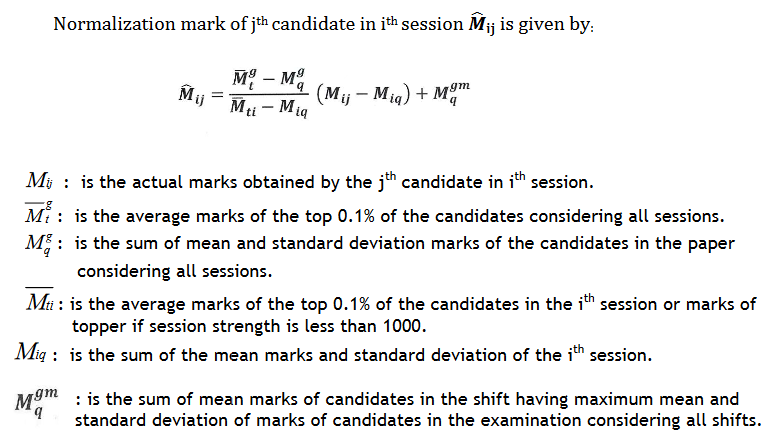
Shortlisting of Candidates for various stages shall be based on the normalized marks obtained by them whenever CBT is conducted in multiple sessions for the same syllabus.
The Stage- II CBT examination may have to be conducted in multiple sessions for some posts For these multisession papers, a suitable normalization is applied to take into account any variation in the difficulty levels of the question papers across different sessions. The formula for calculating the normalized marks for the multi -session papers is detailed below:
???????
EXAM PATTERN
RAILWAY JE Exam CBT- II will be conducted as a Computer Based Test. It will consist of a total 150 Questions and 150 Marks (1 Mark for each question). The total duration of the examination is 120 minutes and 160 minutes for PwBD candidates who are availing of the Scribe facility.
The section - wise number of questions and marks are indicated below:
Test Mode | Name of Test | No. of Questions | Maximum Marks | Duration |
Objective Type Online Computer Based Test | General Awareness | 15 Q | 15 x 1 = 15 Marks | 120 Minutes |
Physics & Chemistry | 15 Q | 15 x 1 = 15 Marks | ||
Basics of Computers and Applications | 10 Q | 10 x 1 = 10 Marks | ||
Basics of Environment and Pollution Control | 10 Q | 10 x 1 = 10 Marks | ||
Technical Abilities | 100 Q | 100 x 1 = 100 Marks | ||
Total | 150 Questions | 150 Marks |
Mode of Examination
RAILWAY JE Examination CBT- II will be conducted as a Computer Based Test. Questions will be based on Objective Type Multiple Choice.
Medium of Examination
1. English is the default language.
2. In case the candidate wishes to choose any other language, then the same can be selected from the drop - down list of languages.
3. The languages listed are- Assamese, Bengali, Gujarati, Hindi, Kannada, Konkani, Malayalam, Manipuri, Marathi, Odia, Punjabi, Tamil, Telugu and Urdu.
4. In case of any difference / discrepancy / dispute in the Questions between English and the opted language, the content of the English version shall prevail.
Marking Scheme
1. Each Question carries 1 Mark.
2. For Each correct answer, 1 Mark will be awarded.
3. There will be negative marking and 1/3 mark shall be deducted for each wrong answer.
Documents Verification
1. Shortlisting of Candidats for Document Verification shall be based on performance in 2nd Stage CBT.
2. In the case of two or more candidates securing the same marks, their merit position shall be determined by age criteria i.e., older person shall be given higher seniority.
3. Appointment of selected candidates is subject to their passing the requisite Medical Fitness Test to be conducted by the Railway Administration, final verification of educational and community certificates and verification of antecedents / character of the candidates.
Normalisation of Marks
Shortlisting of Candidates for various stages shall be based on the normalized marks obtained by them whenever CBT is conducted in multiple sessions for the same syllabus.
The Stage- II CBT examination may have to be conducted in multiple sessions for some posts For these multisession papers, a suitable normalization is applied to take into account any variation in the difficulty levels of the question papers across different sessions. The formula for calculating the normalized marks for the multi -session papers is detailed below:
???????
Eligibility
ELIGIBILITY CRITERIA
Candidates willing to apply for RAILWAY JE exam are required to fulfil certain conditions to be eligible for the RAILWAY JE exam. The candidate who does not satisfy the Eligibility criteria like Age, Minimum educational qualification, Nationality, etc., shall be rejected by the authorities. The candidate’s eligibility for RAILWAY JE exam is based on the fulfillment of the following conditions:
1. Nationality
2. Age Limit & Relaxations
3. Educational Qualification
4. Medical Standards
5. Minimum Percentage of Marks
Nationality
A candidate must be either:
A citizen of India, or
A subject of Nepal, or
A subject of Bhutan, or
A Tibetan refugee who came over to India, before the 1st January, 1962 with the intention of permanently settling in India, or
A person of Indian origin who has migrated from Pakistan, Burma, Sri Lanka, East African Countries of Kenya, Uganda, the United Republic of Tanzania, Zambia, Malawi, Zaire, Ethiopia and Vietnam with the intention of permanently settling in India.
Provided that a candidate belonging to categories (ii), (iii), (iv) and (v)above shall be a person in whose favor a certificate of eligibility has been issued by the Government of India. A candidate in whose case a certificate of eligibility is necessary may be admitted to the examination but the offer of appointment may be given only after the necessary eligibility certificate has been issued to him by the Government of India.
Age Limit
The age limit of the candidates who are applying for RAILWAY JE must be between 18 TO 33 years of age. Although there will be age relaxations for the reserved categories.
S. NO | Age Group | Lower age limit as on 01.01.2026 (not born after) | Upper age limit as on 01.01.2026 (Date of Birth not earlier than) | ||
For all communities/categories | UR/EWS | OBC-NCL | SC/ST | ||
1 | 18-33 | 01.01.2008 | 02.01.1993 | 02.01.1990 | 02.01.1988 |
Age Relaxation
Certain age relaxation is provided by the Railway Recruitment Board to the reserved category candidates for the RAILWAY JE examination. The age relaxation for candidates belonging to different categories is given below:
| Sr. No | Community / Categories | Community | Age Relaxation |
| 1 | SC / ST candidates | - | 5 Years |
| 2 | OBC - Non Creamy Layer candidates | - | 3 Years |
| 3 | Ex- Servicemen candidates who have put in more than 6 months service after attestation | UR | 33 Years plus Number of years of service rendered in Defence plus 3 years |
| OBC - NCL Non Creamy Layer | 36 Years plus Number of years of service rendered in Defence plus 3 years | ||
| SC/ST | 38 Years plus Number of years of service rendered in Defence plus 3 years | ||
| 4 | Persons with Benchmark Disabilities (PwBD) | UR | 10 Years |
OBC- NCL Non Creamy Layer | 13 Years | ||
SC / ST | 15 Years | ||
ELIGIBILITY CRITERIA
Candidates willing to apply for RAILWAY JE exam are required to fulfil certain conditions to be eligible for the RAILWAY JE exam. The candidate who does not satisfy the Eligibility criteria like Age, Minimum educational qualification, Nationality, etc., shall be rejected by the authorities. The candidate’s eligibility for RAILWAY JE exam is based on the fulfillment of the following conditions:
1. Nationality
2. Age Limit & Relaxations
3. Educational Qualification
4. Medical Standards
5. Minimum Percentage of Marks
Nationality
A candidate must be either:
A citizen of India, or
A subject of Nepal, or
A subject of Bhutan, or
A Tibetan refugee who came over to India, before the 1st January, 1962 with the intention of permanently settling in India, or
A person of Indian origin who has migrated from Pakistan, Burma, Sri Lanka, East African Countries of Kenya, Uganda, the United Republic of Tanzania, Zambia, Malawi, Zaire, Ethiopia and Vietnam with the intention of permanently settling in India.
Provided that a candidate belonging to categories (ii), (iii), (iv) and (v)above shall be a person in whose favor a certificate of eligibility has been issued by the Government of India. A candidate in whose case a certificate of eligibility is necessary may be admitted to the examination but the offer of appointment may be given only after the necessary eligibility certificate has been issued to him by the Government of India.
Age Limit
The age limit of the candidates who are applying for RAILWAY JE must be between 18 TO 33 years of age. Although there will be age relaxations for the reserved categories.
S. NO | Age Group | Lower age limit as on 01.01.2026 (not born after) | Upper age limit as on 01.01.2026 (Date of Birth not earlier than) | ||
For all communities/categories | UR/EWS | OBC-NCL | SC/ST | ||
1 | 18-33 | 01.01.2008 | 02.01.1993 | 02.01.1990 | 02.01.1988 |
Age Relaxation
Certain age relaxation is provided by the Railway Recruitment Board to the reserved category candidates for the RAILWAY JE examination. The age relaxation for candidates belonging to different categories is given below:
| Sr. No | Community / Categories | Community | Age Relaxation |
| 1 | SC / ST candidates | - | 5 Years |
| 2 | OBC - Non Creamy Layer candidates | - | 3 Years |
| 3 | Ex- Servicemen candidates who have put in more than 6 months service after attestation | UR | 33 Years plus Number of years of service rendered in Defence plus 3 years |
| OBC - NCL Non Creamy Layer | 36 Years plus Number of years of service rendered in Defence plus 3 years | ||
| SC/ST | 38 Years plus Number of years of service rendered in Defence plus 3 years | ||
| 4 | Persons with Benchmark Disabilities (PwBD) | UR | 10 Years |
OBC- NCL Non Creamy Layer | 13 Years | ||
SC / ST | 15 Years | ||
| 5 | Candidates ordinarily been domiciled in the State of Jammu & Kashmir during the period from 01.01.1980 to 31.12.1989 | UR | 38 Years |
OBC - NCL Non Creamy Layer | 41 Years | ||
SC / ST | 43 Years | ||
| 6 | Candidates who are serving Group ‘C’ and Group ‘D’ Railway Staff, Casual Labour and Substitutes and put in minimum of 3 years service (continuous or in broken spells) | UR | 40 Years of age |
OBC - NCL Non Creamy Layer | 43 Years of age | ||
SC / ST | 45 Years of age | ||
| 7 | Candidates who are working in Quasi - Administrative offices of the Railway organization such as Railway Canteens, Co - operative Societies and Institutes | UR | 33 Years plus length of service rendered or 5 years, whichever is lower |
| OBC - NCL Non Creamy Layer | 36 Years plus length of service rendered or 5 years, whichever is lower | ||
| SC / ST | 38 Years plus length of service rendered or 5 years, whichever is lower | ||
| 8 | Women candidates, who are widowed, divorced or judicially separated from husband but not remarried | UR | 35 Years of age |
NCL Non Creamy Layer | 38 Years of age | ||
SC / ST | 40 Years of age |
Note
1. If a candidate is eligible for relaxation of age on more than one ground, he/she would be accorded the highest of the age relaxations for which he/she is eligible.
2. No age relaxation is allowed to SC / ST / OBC - NCL (Non - Creamy Layer) candidates applying against unreserved vacancies.
3. Candidates should note that the date of birth filled in this application should be the same as recorded in the Matriculation / SSLC or an equivalent certificate. No subsequent request for its change will be considered.
Educational Qualification
Candidates should have requisite Educational / Technical qualifications indicated for posts from recognized Board / University / Institute as on the closing date for ONLINE Registration. Those awaiting results of the final examination of the prescribed educational / technical qualification not apply.
1. Post - wise Educational Qualification
Post Name | Educational Qualification |
Junior Engineer | Diploma or BE / B. Tech in the respective discipline from a recognized University / Institute |
Junior Engineer (Information Technology) | Diploma or BE / B. Tech in the relevant discipline from a recognized University / Institute |
Depot Material Superintendent | BE / B. Tech / B. Sc / PGDCA / BCA in the Computer Science / IT |
Chemical & Metallurgical Assistant | B. Sc with Physics and Chemistry from a recognized University / Institute |
2. Three years Diploma in Engineering or Bachelor’s Degree in Engineering / Technology
| Sr. No. | Three years Diploma in Engineering or Bachelor’s Degree in Engineering / Technology | Exam Group |
| 1. | Mechanical Engineering / Production Engineering / Automobile Engineering / Manufacturing Engineering / Mechatronics Engineering / Industrial Engineering / Machining Engineering / Tools and Machining Engineering / Tools and Die Making Engineering / Combination of any sub stream of basic streams of above disciplines | Mechanical and Allied Engineering |
| 2. | Electrical Engineering / Combination of any sub stream of basic streams of Electrical Engineering | Electrical and Allied Engineering |
| 3. | Electronics Engineering / Instrumentation and Control Engineering / Communication Engineering / Computer Science and Engineering / Computer Engineering / Computer Science / Information Technology / Combination of sub streams of basic streams of above disciplines / Civil Engineering | Electronics and Allied Engineering |
| 4. | Combination of any sub stream of basic streams of Civil Engineering | Civil and Allied Engineering |
| 5. | Printing Technology / Engineering | Printing Technology |
| 6. | B.Sc., Chemistry and Physics | CMA |
| 7. | BE / B.Tech., (Computer Science) / BE / B.Tech., (Information Technology) / PGDCA / B.Sc. Computer Science / BCA / DOEACC “B” Level Course of 3 years duration or equivalent | Computer Science and Information Technology |
NOTE-
A candidate possessing more than one minimum educational qualification, mapped to different Exam Groups, can choose any one Exam Group. These candidates would be eligible for all the posts for which they possess minimum educational qualifications.
Medical Standerd
Candidates called for DV will have to pass a requisite medical fitness test(s) conducted by the Railway Administration to ensure that the candidates are medically fit to carry out the duties connected with the post(s) opted by them. Visual Acuity Standard is one of the important criteria of medical fitness of railway staff. The medical requirements against different Medical Standards for different categories are outlined below:
| Sr.No | Medical Standards | General Fitness | Visions Standards |
| 1. | A- 3 | Physically fit in all respects | Distance Vision: 6/9, 6/9 with or without glasses (power of lenses not to exceed 2D), Near Vision: Sn: 0.6,0.6 with or without glasses and Must pass test for Colour Vision, Binocular Vision, Night Vision and Mesopic vision |
| 2. | B- 1 | Physically fit in all respects | Distance Vision: 6/9, 6/12 with or without glasses (power of lenses not to exceed 4D), Near Vision: Sn: 0.6, 0.6 with or without glasses when reading or close work is required and Must pass test for Colour Vision, Binocular Vision, Night Vision and Mesopic vision |
| 3. | B- 2 | Physically fit in all respects | Distance Vision: 6/9, 6/12 with or without glasses (power of lenses not to exceed 4D). Near Vision: Sn: 0.6, 0.6 with or without glasses when reading or close work is required and Must pass test for Binocular Vision |
| 4. | C- 1 | Physically fit in all respects | Distance Vision: 6/12, 6/18 with or without glasses. Near Vision: Sn: 0.6, 0.6 with or without glasses when reading or close work is required |
Note
1. The above Medical Standards are indicative and not exhaustive and apply to candidates in general.
2. Candidates who have undergone Lasik surgery or any other surgery procedure to correct refractory error are not eligible for the post having Medical Standards A3, B1 and B2.
Minimum Percentage of marks
Minimum percentage of marks for eligibility in various categories:
UR - 40%,
OBC - 30%,
SC - 30%,
ST - 25%.
This percentage of marks for eligibility may be relaxed by 2% for PwBD candidates in case of a shortage of PwBD candidates against vacancies reserved for them.
Schedule
IMPORTANT DATES
The Railway Recruitment Board (RRB) has officially announced the RRB JE Exam Date 2026, stating that the CBT for CEN 05/2025 (JE/DMS/CMA) will be held on 19th and 20th February, and 3rd March 2026. Additional details will be provided along with the RRB JE Admit Card 2026 and the City Intimation Slip. The city details will be released 10 days before the exam, while the admit card will be made available 4 days prior to the scheduled exam date.
Events | Dates |
Date of Issue of RRB JE Notification | 28.10.2025 |
Opening of Online Registration for RRB JE Exam | 31.10.2025 |
Closing of Online Registration for RRB JE Exam | 10.12.2025 |
Closing of online payment | 13.12.2025 to 22.12.2025 |
Correction window open from | 23.12.2025 to 27.12.2025 |
Application status | 12.01.2026 |
1st Stage Computer Based Test (CBT – I) | 19.02.2026, 20.02.2026 and 3.03.2026 |
1st Stage Computer Based Test (CBT- I) Exam city | 09.01.2026 |
RRB JE 1st Stage Computer Based Test (CBT- I) Admit card | Will be released 4 days before exam |
IMPORTANT DATES
The Railway Recruitment Board (RRB) has officially announced the RRB JE Exam Date 2026, stating that the CBT for CEN 05/2025 (JE/DMS/CMA) will be held on 19th and 20th February, and 3rd March 2026. Additional details will be provided along with the RRB JE Admit Card 2026 and the City Intimation Slip. The city details will be released 10 days before the exam, while the admit card will be made available 4 days prior to the scheduled exam date.
Events | Dates |
Date of Issue of RRB JE Notification | 28.10.2025 |
Opening of Online Registration for RRB JE Exam | 31.10.2025 |
Closing of Online Registration for RRB JE Exam | 10.12.2025 |
Closing of online payment | 13.12.2025 to 22.12.2025 |
Correction window open from | 23.12.2025 to 27.12.2025 |
Application status | 12.01.2026 |
1st Stage Computer Based Test (CBT – I) | 19.02.2026, 20.02.2026 and 3.03.2026 |
1st Stage Computer Based Test (CBT- I) Exam city | 09.01.2026 |
RRB JE 1st Stage Computer Based Test (CBT- I) Admit card | Will be released 4 days before exam |
Analysis
EXAM ANALYSIS
Here is the Exam Analysis for the upcoming Railway JE Stage II Exam 2026 based on the previous exam cycle.
Railway JE Stage II Exam Analysis 2026
When Was the Last Exam Conducted
The most recent Railway Junior Engineer Stage II (CBT-2) exam under CEN 03/2024 was conducted on 22 April 2025 across multiple centres in India.
However, the Shift-2 exam on the same day was cancelled due to repetition of questions and was later re-conducted on 4 June 2025 for affected candidates.
The recruitment was conducted for around 7,951 vacancies for posts such as
Junior Engineer
Depot Material Superintendent
Chemical and Metallurgical Assistant.
Exact Date, Time and Shift Details
The exam was conducted in two shifts.
Shift 1
Reporting Time 7:30 AM
Gate Closing Time 8:30 AM
Exam Time 9:00 AM to 11:00 AM
Shift 2
Reporting Time 12:30 PM
Gate Closing Time 1:30 PM
Exam Time 2:00 PM to 4:00 PM
The Shift-2 exam of 22 April 2025 was cancelled and rescheduled on 4 June 2025 for affected candidates.
Admit cards were released 4 days before the exam, and city intimation slips were released around 10 days before the exam date.
Exam Pattern for Railway JE Stage II
Mode of Exam
Computer Based Test
Total Questions
150 Multiple Choice Questions
Total Marks
150 Marks
Exam Duration
120 Minutes
Negative Marking
One third mark deducted for every wrong answer.
Section Wise Distribution
General Awareness – 15 Questions
Physics and Chemistry – 15 Questions
Basics of Computer and Applications – 10 Questions
Environment and Pollution Control – 10 Questions
Technical Abilities – 100 Questions
The Technical section carries the highest weightage and plays the most important role in final merit.
Difficulty Level Based on Previous Exam
Overall Difficulty
Moderate
Technical Section
Moderate to Difficult
Physics and Chemistry
Moderate
Computer Awareness
Easy to Moderate
General Awareness
Easy to Moderate
Candidates reported that the technical portion required strong subject knowledge, while other sections were comparatively easier.
Good Attempts (Previous Trend)
A safe number of attempts was generally between
85 to 105 questions with good accuracy.
Expected Cut Off Trend
Based on previous exam trends and competition:
General
85 to 95 marks
OBC
80 to 90 marks
EWS
80 to 88 marks
SC
70 to 80 marks
ST
65 to 75 marks
Actual cutoffs depend on
exam difficulty
number of candidates
normalisation process.
Expectations for Railway JE Stage II Exam 2026
Exam pattern likely to remain the same
Technical section will dominate the score
Difficulty level expected to be Moderate
Competition expected to remain high due to limited vacancies
Candidates should focus mainly on
core engineering subjects
previous year technical questions
computer awareness and environment topics.
EXAM ANALYSIS 2019
RRB JE CBT- II Exam Analysis, 28th August 2019:
General Awareness:
The General Awareness section included questions from current affairs, and static gk mainly. The difficulty level of this section was Easy to moderate. Some questions from history, polity were also seen. Here are some of the questions asked from this section:
1. Which tournament won by Vishwanathan Anand in 2017
2. Who is the 13th chairman of Finance Commission
3. Chapchar Kut Festival of which state [Mizoram]
4. Who presented the first union budget of India
5. Double fault related to which game
6. The first Union budget presented by
7. Chairman of national backward class.
8. When India was declared as the republic
Physics & Chemistry:
The Physics & Chemistry questions asked in the exam were of 10th Standard. Basic questions of physics and chemistry were asked. Questions were asked on:
1. Elements
2. Chemical Formulas
3. New Scientific Tech
4. Physics properties & laws
Basics of Computers and Applications:
The questions from computers belonged to the topics such as The architecture of Computers, Input and Output devices, Storage devices, Networking, Operating System like Windows Unix & Linux, MS Office Internet and Email, Websites & Web Browsers etc.
Here are some of the questions asked from this section:
1. What is the Full form of BCD in the computer?
2. The question was asked from HTML.
3. Binary formation of a number.
4. The function of operating system.
Basics of Environment and Pollution Control:
This section consisted of the Basics of Environment, Adverse effect of environmental pollution and control strategies Air, water and Noise pollution, their effect and control.
EXAM ANALYSIS
Here is the Exam Analysis for the upcoming Railway JE Stage II Exam 2026 based on the previous exam cycle.
Railway JE Stage II Exam Analysis 2026
When Was the Last Exam Conducted
The most recent Railway Junior Engineer Stage II (CBT-2) exam under CEN 03/2024 was conducted on 22 April 2025 across multiple centres in India.
However, the Shift-2 exam on the same day was cancelled due to repetition of questions and was later re-conducted on 4 June 2025 for affected candidates.
The recruitment was conducted for around 7,951 vacancies for posts such as
Junior Engineer
Depot Material Superintendent
Chemical and Metallurgical Assistant.
Exact Date, Time and Shift Details
The exam was conducted in two shifts.
Shift 1
Reporting Time 7:30 AM
Gate Closing Time 8:30 AM
Exam Time 9:00 AM to 11:00 AM
Shift 2
Reporting Time 12:30 PM
Gate Closing Time 1:30 PM
Exam Time 2:00 PM to 4:00 PM
The Shift-2 exam of 22 April 2025 was cancelled and rescheduled on 4 June 2025 for affected candidates.
Admit cards were released 4 days before the exam, and city intimation slips were released around 10 days before the exam date.
Exam Pattern for Railway JE Stage II
Mode of Exam
Computer Based Test
Total Questions
150 Multiple Choice Questions
Total Marks
150 Marks
Exam Duration
120 Minutes
Negative Marking
One third mark deducted for every wrong answer.
Section Wise Distribution
General Awareness – 15 Questions
Physics and Chemistry – 15 Questions
Basics of Computer and Applications – 10 Questions
Environment and Pollution Control – 10 Questions
Technical Abilities – 100 Questions
The Technical section carries the highest weightage and plays the most important role in final merit.
Difficulty Level Based on Previous Exam
Overall Difficulty
Moderate
Technical Section
Moderate to Difficult
Physics and Chemistry
Moderate
Computer Awareness
Easy to Moderate
General Awareness
Easy to Moderate
Candidates reported that the technical portion required strong subject knowledge, while other sections were comparatively easier.
Good Attempts (Previous Trend)
A safe number of attempts was generally between
85 to 105 questions with good accuracy.
Expected Cut Off Trend
Based on previous exam trends and competition:
General
85 to 95 marks
OBC
80 to 90 marks
EWS
80 to 88 marks
SC
70 to 80 marks
ST
65 to 75 marks
Actual cutoffs depend on
exam difficulty
number of candidates
normalisation process.
Expectations for Railway JE Stage II Exam 2026
Exam pattern likely to remain the same
Technical section will dominate the score
Difficulty level expected to be Moderate
Competition expected to remain high due to limited vacancies
Candidates should focus mainly on
core engineering subjects
previous year technical questions
computer awareness and environment topics.
EXAM ANALYSIS 2019
RRB JE CBT- II Exam Analysis, 28th August 2019:
General Awareness:
The General Awareness section included questions from current affairs, and static gk mainly. The difficulty level of this section was Easy to moderate. Some questions from history, polity were also seen. Here are some of the questions asked from this section:
1. Which tournament won by Vishwanathan Anand in 2017
2. Who is the 13th chairman of Finance Commission
3. Chapchar Kut Festival of which state [Mizoram]
4. Who presented the first union budget of India
5. Double fault related to which game
6. The first Union budget presented by
7. Chairman of national backward class.
8. When India was declared as the republic
Physics & Chemistry:
The Physics & Chemistry questions asked in the exam were of 10th Standard. Basic questions of physics and chemistry were asked. Questions were asked on:
1. Elements
2. Chemical Formulas
3. New Scientific Tech
4. Physics properties & laws
Basics of Computers and Applications:
The questions from computers belonged to the topics such as The architecture of Computers, Input and Output devices, Storage devices, Networking, Operating System like Windows Unix & Linux, MS Office Internet and Email, Websites & Web Browsers etc.
Here are some of the questions asked from this section:
1. What is the Full form of BCD in the computer?
2. The question was asked from HTML.
3. Binary formation of a number.
4. The function of operating system.
Basics of Environment and Pollution Control:
This section consisted of the Basics of Environment, Adverse effect of environmental pollution and control strategies Air, water and Noise pollution, their effect and control.
Following are the topics on which questions were asked in this section:
1. Basics of Environment
2. Environmental pollution – Cause and Effects
3. Pollution control strategies
4. Global Warming
5. Environmental Disasters – Chernobyl
6. Greenhouse Gases
7. Waste Management
8. Impact of CFC
9. Environment Act
Here are some of the questions asked from this section:
1. The date of the Chernobyl disaster was asked?
2. Question - related to the sewage treatment plant.
3. Question related to greenhouse gases, acid rain, CFC responsible for, environment act, etc.
Technical Abilities:
The RRB JE CBT- II exam is dominated by the technical abilities subject chosen by the candidate. Many candidates stated that there were more questions related to the environment in this section as well. This section was moderate in level.
Here we are providing the questions asked in the civil exam group:
1. Question was related to the Montreal protocol.
2. What is the Full form of DPC?
3. Question was asked Mortgage.
4. Most of the question were theoretical.
5. 4 - 5 questions were asked from estimation and valuation.
6.One question from load carrying capacity?
7. One question from granule theory?
Good Attempts and Difficulty Level Of The Exam:
Sections | No. of Questions | All Shifts | |
Difficulty | Good Attempts | ||
General Awareness | 15 | Easy to Moderate | 8 - 9 |
Physics & Chemistry | 15 | Easy to Moderate | 9 - 11 |
Basics of Computer & Applications | 10 | Easy | 6 - 8 |
Basics of Environment & Pollution Control | 10 | Easy | 7 - 8 |
Technical Abilities | 100 | Easy | 72 - 80 |
Total | 150 | Easy - Moderate | 108 - 112 |
CBT- 2 Cut Off: Minimum Qualifying Marks:
Category | Qualifying Percentage in CBT- 2 | RRB JE CBT- 1 Qualifying Marks |
General | 40% | 60 |
EWS | 40% | 60 |
OBC (Non - creamy layer) | 30% | 45 |
SC | 30% | 45 |
ST | 25% | 37.5 |
MPORTANT LINKS
For Official Website- Click here
For Official Notification- Click here
Study Tips
STUDY TIPS
RRB JE preparation books are essential study materials for candidates. They cover the complete syllabus for CBT 1 and CBT 2, helping aspirants develop strong conceptual understanding.
Many of these books also contain practice questions, mock tests, and previous year papers, which help candidates evaluate their performance and enhance accuracy. Additionally, they offer topic-wise explanations, solved examples, and exam-oriented strategies to improve performance in each section.
1. Know the Syllabus & Exam Pattern: Carefully review the CBT-1 and CBT-2 syllabus to identify important and high-weightage topics.
2. Prepare a Focused Study Plan: Study for 6–8 hours daily, giving extra time to technical subjects (Civil, Mechanical, Electrical, etc.) for CBT-2 since they carry more marks.
3. Build Strong Technical Concepts: Strengthen your core engineering fundamentals and regularly practice branch-specific numerical and conceptual questions.
4. Practice Previous Year Papers: Solve at least 5–10 years of PYQs to understand exam trends, frequently asked topics, and improve accuracy.
5. Take Mock Tests Consistently: Attempt 5–6 full-length mock tests per week under real exam conditions to boost speed and time management skills.
6. Prepare Short Revision Notes: Make concise notes of formulas, important concepts, and key facts for quick revision, especially in Physics, Chemistry, and General Awareness.
7. Focus on General Awareness & Science: Revise NCERT basics for Science and stay updated with current affairs, particularly railway-related updates.
8. Revise Regularly: Go through your notes repeatedly, especially in the final weeks before the exam, to retain important information.
9. Maintain Health & Routine: Get 6–8 hours of sleep, eat balanced meals, and follow a disciplined study schedule to stay productive.
STUDY PLAN
6 Month Study Plan
Month 1: Foundation Building
Read full syllabus & exam pattern carefully.
Start core Technical basics (branch-wise).
Cover Maths fundamentals (Percentage, Ratio, SI/CI).
Practice basic Reasoning topics (Series, Coding).
Begin Static GK (History, Polity basics).
Start daily current affairs (30 mins).
Make formula & short-note notebook.
Solve topic-wise MCQs daily.
Attempt 1 sectional mock per week.
Month 2: Complete Basic Syllabus
Finish remaining Technical basic topics.
Cover General Science (Physics/Chemistry basics).
Practice Arithmetic intensively.
Solve Reasoning puzzles & mixed sets.
Revise Month 1 notes weekly.
Start solving previous year CBT-1 questions.
Improve calculation speed.
Take 2 sectional mocks weekly.
Month 3: Advanced Technical Focus
Begin advanced Technical topics.
Solve branch-specific numericals daily.
Cover Environment & Computer basics (CBT-2 topics).
Revise Maths shortcut techniques.
Practice 5–6 years PYQs.
Attempt 1 full-length mock weekly.
Analyze mistakes deeply.
Strengthen weak areas.
Month 4: Intensive Practice Phase
Complete men'suration/advanced maths.
Finish full Technical syllabus.
Practice mixed question sets daily.
Revise current affairs (last 6 months).
Attempt 2 full mocks weekly.
Focus on time management strategy.
Revise formulas daily.
Solve previous CBT-2 papers.
Month 5: Mock & Revision Mode
Attempt 3–4 full mocks weekly.
Analyze performance after every test.
Revise Technical notes repeatedly.
Solve 10 years PYQs.
Focus on accuracy (avoid negative marking).
Improve weak subjects.
Revise General Awareness thoroughly.
Practice under real exam timing.
Month 6: Final Revision & Polishing
Daily quick revision of short notes.
Attempt 4–5 full mocks weekly.
Revise last 6–12 months current affairs.
Do not start new topics.
Focus on formula retention.
Improve speed & calmness.
Sleep 6–8 hours daily.
Last 7 days: Light revision only.
3 Month Study Plan
Month 1: Complete Syllabus Coverage (Foundation + Core)
Read full syllabus & exam pattern carefully.
Start and complete core Technical basics (branch-wise subjects).
Cover Maths fundamentals (Percentage, Ratio, SI/CI, Time & Work).
Practice Reasoning basics (Series, Coding-Decoding, Analogy).
Begin General Science (Physics & Chemistry basics).
Study Static GK (History, Polity, Geography basics).
Start daily current affairs (30 minutes).
Make short notes for formulas & key concepts.
Solve topic-wise MCQs daily.
Month 2: Practice + Advanced Topics
Complete remaining Technical advanced topics.
Cover Environment & Pollution (CBT-2).
Study Basics of Computer Applications.
Practice advanced Maths (Mensuration, Algebra, Data Interpretation).
Solve 5–10 years Previous Year Questions (PYQs).
Attempt 2–3 full-length mocks per week.
Analyze mock tests and note weak areas.
Revise current affairs of last 6 months.
Strengthen speed and accuracy.
Month 3: Revision + Mock Test Intensive
Revise complete Technical syllabus thoroughly.
Practice mixed question sets daily.
Attempt 3–4 full mocks per week (exam-like conditions).
Focus on weak sections and error correction.
Revise formulas and short notes daily.
Revise General Awareness & Science completely.
Avoid starting new topics.
Improve time management strategy (90 mins CBT-1 / 2 hrs CBT-2).
Last 7 days: Light revision + confidence
...STUDY TIPS
RRB JE preparation books are essential study materials for candidates. They cover the complete syllabus for CBT 1 and CBT 2, helping aspirants develop strong conceptual understanding.
Many of these books also contain practice questions, mock tests, and previous year papers, which help candidates evaluate their performance and enhance accuracy. Additionally, they offer topic-wise explanations, solved examples, and exam-oriented strategies to improve performance in each section.
1. Know the Syllabus & Exam Pattern: Carefully review the CBT-1 and CBT-2 syllabus to identify important and high-weightage topics.
2. Prepare a Focused Study Plan: Study for 6–8 hours daily, giving extra time to technical subjects (Civil, Mechanical, Electrical, etc.) for CBT-2 since they carry more marks.
3. Build Strong Technical Concepts: Strengthen your core engineering fundamentals and regularly practice branch-specific numerical and conceptual questions.
4. Practice Previous Year Papers: Solve at least 5–10 years of PYQs to understand exam trends, frequently asked topics, and improve accuracy.
5. Take Mock Tests Consistently: Attempt 5–6 full-length mock tests per week under real exam conditions to boost speed and time management skills.
6. Prepare Short Revision Notes: Make concise notes of formulas, important concepts, and key facts for quick revision, especially in Physics, Chemistry, and General Awareness.
7. Focus on General Awareness & Science: Revise NCERT basics for Science and stay updated with current affairs, particularly railway-related updates.
8. Revise Regularly: Go through your notes repeatedly, especially in the final weeks before the exam, to retain important information.
9. Maintain Health & Routine: Get 6–8 hours of sleep, eat balanced meals, and follow a disciplined study schedule to stay productive.
STUDY PLAN
6 Month Study Plan
Month 1: Foundation Building
Read full syllabus & exam pattern carefully.
Start core Technical basics (branch-wise).
Cover Maths fundamentals (Percentage, Ratio, SI/CI).
Practice basic Reasoning topics (Series, Coding).
Begin Static GK (History, Polity basics).
Start daily current affairs (30 mins).
Make formula & short-note notebook.
Solve topic-wise MCQs daily.
Attempt 1 sectional mock per week.
Month 2: Complete Basic Syllabus
Finish remaining Technical basic topics.
Cover General Science (Physics/Chemistry basics).
Practice Arithmetic intensively.
Solve Reasoning puzzles & mixed sets.
Revise Month 1 notes weekly.
Start solving previous year CBT-1 questions.
Improve calculation speed.
Take 2 sectional mocks weekly.
Month 3: Advanced Technical Focus
Begin advanced Technical topics.
Solve branch-specific numericals daily.
Cover Environment & Computer basics (CBT-2 topics).
Revise Maths shortcut techniques.
Practice 5–6 years PYQs.
Attempt 1 full-length mock weekly.
Analyze mistakes deeply.
Strengthen weak areas.
Month 4: Intensive Practice Phase
Complete men'suration/advanced maths.
Finish full Technical syllabus.
Practice mixed question sets daily.
Revise current affairs (last 6 months).
Attempt 2 full mocks weekly.
Focus on time management strategy.
Revise formulas daily.
Solve previous CBT-2 papers.
Month 5: Mock & Revision Mode
Attempt 3–4 full mocks weekly.
Analyze performance after every test.
Revise Technical notes repeatedly.
Solve 10 years PYQs.
Focus on accuracy (avoid negative marking).
Improve weak subjects.
Revise General Awareness thoroughly.
Practice under real exam timing.
Month 6: Final Revision & Polishing
Daily quick revision of short notes.
Attempt 4–5 full mocks weekly.
Revise last 6–12 months current affairs.
Do not start new topics.
Focus on formula retention.
Improve speed & calmness.
Sleep 6–8 hours daily.
Last 7 days: Light revision only.
3 Month Study Plan
Month 1: Complete Syllabus Coverage (Foundation + Core)
Read full syllabus & exam pattern carefully.
Start and complete core Technical basics (branch-wise subjects).
Cover Maths fundamentals (Percentage, Ratio, SI/CI, Time & Work).
Practice Reasoning basics (Series, Coding-Decoding, Analogy).
Begin General Science (Physics & Chemistry basics).
Study Static GK (History, Polity, Geography basics).
Start daily current affairs (30 minutes).
Make short notes for formulas & key concepts.
Solve topic-wise MCQs daily.
Month 2: Practice + Advanced Topics
Complete remaining Technical advanced topics.
Cover Environment & Pollution (CBT-2).
Study Basics of Computer Applications.
Practice advanced Maths (Mensuration, Algebra, Data Interpretation).
Solve 5–10 years Previous Year Questions (PYQs).
Attempt 2–3 full-length mocks per week.
Analyze mock tests and note weak areas.
Revise current affairs of last 6 months.
Strengthen speed and accuracy.
Month 3: Revision + Mock Test Intensive
Revise complete Technical syllabus thoroughly.
Practice mixed question sets daily.
Attempt 3–4 full mocks per week (exam-like conditions).
Focus on weak sections and error correction.
Revise formulas and short notes daily.
Revise General Awareness & Science completely.
Avoid starting new topics.
Improve time management strategy (90 mins CBT-1 / 2 hrs CBT-2).
Last 7 days: Light revision + confidence building only.
1 Month Study Plan
Week 1: Complete Syllabus Quick Revision + Basics Strengthening
Revise full Technical syllabus (focus on core subjects of your branch).
Revise Mathematics basics (Arithmetic + Algebra + Mensuration).
Practice Reasoning topics daily (Puzzles, Series, Coding).
Revise General Science (Physics & Chemistry important formulas).
Cover Static GK (Polity, History, Geography basics).
Revise Computer Basics & Environment (important for CBT-2).
Solve 1 previous year paper every 2 days.
Make short notes of weak formulas and tricky concepts.
Practice 50–70 MCQs daily from mixed subjects.
Week 2: Practice + PYQs Focus
Solve 5–10 years Previous Year Questions (subject-wise).
Attempt 2–3 full-length mock tests.
Analyze mistakes carefully and revise weak areas.
Focus on high-weightage technical topics.
Revise Current Affairs (last 6–8 months).
Practice speed maths daily (20–30 questions).
Improve reasoning accuracy with timed practice.
Revise important formulas every night.
Work on time management strategy (section-wise timing).
Week 3: Mock Test Intensive Phase
Attempt 3–4 full-length mock tests this week.
Analyze each mock deeply (why wrong? concept gap or silly mistake?).
Revise complete Technical notes again.
Focus on scoring sections (Maths + Technical).
Practice mixed question sets daily (100+ questions).
Revise General Awareness & Science thoroughly.
Improve attempt strategy (easy ? moderate ? tough).
Maintain accuracy above 85–90%.
Track your average mock score and aim to improve by 10–15 marks.
Week 4: Final Revision + Confidence Building
Revise only short notes and important formulas.
Attempt 2–3 final mock tests under strict exam timing.
Avoid learning new topics.
Focus on weak technical chapters once more.
Revise Computer, Environment & Current Affairs quickly.
Practice time management (90 mins CBT-1 / 120 mins CBT-2).
Sleep 6–8 hours daily and maintain routine.
Stay calm and confident.
Last 2 days: Light revision only, no heavy practice.
General info
OVERVIEW
The Railway Recruitment Board (RRB) conducts exams to hire qualified candidates for the position of Junior Engineer (JE) in departments for Junior Engineer, Depot Material Superintendent, Chemical & Metallurgical Assistant, Chemical Supervisor / Research and Metallurgical Supervisor / Research Posts. The RRB JE is a central government exam conducted to hire talented aspirants for the JE posts in different Railway departments.
Particulars | Details |
Exam Name | Railway Recruitment Board Junior Engineer Exam (RRB JE) |
Conducting Authority | Railway Recruitment Boards (RRB) |
Admission Purpose | To select candidates for Junior Engineer (JE), Depot Material Superintendent (DMS), and Chemical & Metallurgical Assistant (CMA) |
Exam level | National |
Exam Date | CBT I - February 19, 20, and March 3, 2026 |
Official website |
SELECTION PROCESS
The RRB JE Selection Process is clearly defined in the official notification and is designed to select the most eligible candidates for different JE posts. The recruitment process includes the following stages:
Computer-Based Test I
This is the initial stage of the selection process. CBT I consists of objective-type multiple-choice questions from Mathematics, General Awareness, General Science, and General Intelligence & Reasoning. The total duration of the exam is 90 minutes.
Computer-Based Test II
Candidates who qualify in CBT I are shortlisted for CBT II. This stage includes questions from General Awareness, Physics & Chemistry, Basics of Computer Applications, Basics of Environment & Pollution, and Technical Abilities (branch-specific). The duration of CBT 2 is 2 hours.
Document Verification
Candidates who clear CBT II are called for Document Verification. They must produce original documents such as educational certificates, identity proof, category certificates, and other required documents for verification.
Medical Examination
After document verification, candidates must undergo a medical examination to ensure they meet the prescribed medical standards for the post. Only those found medically fit are considered for final appointment.
Both Document Verification and the Medical Test are essential final stages to confirm a candidate’s eligibility for the RRB JE recruitment
OVERVIEW
The Railway Recruitment Board (RRB) conducts exams to hire qualified candidates for the position of Junior Engineer (JE) in departments for Junior Engineer, Depot Material Superintendent, Chemical & Metallurgical Assistant, Chemical Supervisor / Research and Metallurgical Supervisor / Research Posts. The RRB JE is a central government exam conducted to hire talented aspirants for the JE posts in different Railway departments.
Particulars | Details |
Exam Name | Railway Recruitment Board Junior Engineer Exam (RRB JE) |
Conducting Authority | Railway Recruitment Boards (RRB) |
Admission Purpose | To select candidates for Junior Engineer (JE), Depot Material Superintendent (DMS), and Chemical & Metallurgical Assistant (CMA) |
Exam level | National |
Exam Date | CBT I - February 19, 20, and March 3, 2026 |
Official website |
SELECTION PROCESS
The RRB JE Selection Process is clearly defined in the official notification and is designed to select the most eligible candidates for different JE posts. The recruitment process includes the following stages:
Computer-Based Test I
This is the initial stage of the selection process. CBT I consists of objective-type multiple-choice questions from Mathematics, General Awareness, General Science, and General Intelligence & Reasoning. The total duration of the exam is 90 minutes.
Computer-Based Test II
Candidates who qualify in CBT I are shortlisted for CBT II. This stage includes questions from General Awareness, Physics & Chemistry, Basics of Computer Applications, Basics of Environment & Pollution, and Technical Abilities (branch-specific). The duration of CBT 2 is 2 hours.
Document Verification
Candidates who clear CBT II are called for Document Verification. They must produce original documents such as educational certificates, identity proof, category certificates, and other required documents for verification.
Medical Examination
After document verification, candidates must undergo a medical examination to ensure they meet the prescribed medical standards for the post. Only those found medically fit are considered for final appointment.
Both Document Verification and the Medical Test are essential final stages to confirm a candidate’s eligibility for the RRB JE recruitment
2025 exam
LATEST UPDATE
The RRB JE 2025 notification was officially released on October 28, 2025, announcing a total of 2,585 vacancies. The Railway Recruitment Board will close the online registration process for RRB JE Recruitment 2025 on December 10, 2025. Eligible candidates can apply for the posts of Junior Engineer (JE), Depot Material Superintendent (DMS), and Chemical & Metallurgical Assistant (CMA) through the official RRB portal. The RRB JE Exam Date 2026 has also been announced. The 1st Stage CBT for CEN No. 05/2025 is scheduled to be held on February 19, 20, and March 3, 2026. The exam city intimation slip will be released 10 days prior to the exam, while admit cards will be made available 4 days before the candidate’s scheduled exam date on the official website. The Railway Recruitment Board (RRB) has not yet released any confirmed schedule for the 2nd StageCBT-2 examination. Candidates are advised to regularly check the official website of their respective RRB for updates.
IMPORTANT DATES
The Railway Recruitment Board (RRB) has officially announced the RRB JE Exam Date 2026, stating that the CBT for CEN 05/2025 (JE/DMS/CMA) will be held on 19th and 20th February, and 3rd March 2026. Additional details will be provided along with the RRB JE Admit Card 2026 and the City Intimation Slip. The city details will be released 10 days before the exam, while the admit card will be made available 4 days prior to the scheduled exam date.
Events | Dates |
Date of Issue of RRB JE Notification | 28.10.2025 |
Opening of Online Registration for RRB JE Exam | 31.10.2025 |
Closing of Online Registration for RRB JE Exam | 10.12.2025 |
Closing of online payment | 13.12.2025 to 22.12.2025 |
Correction window open from | 23.12.2025 to 27.12.2025 |
Application status | 12.01.2026 |
1st Stage Computer Based Test (CBT – I) | 19.02.2026, 20.02.2026 and 3.03.2026 |
1st Stage Computer Based Test (CBT- I) Exam city | 09.01.2026 |
RRB JE 1st Stage Computer Based Test (CBT- I) Admit card | Will be released 4 days before exam |
VACANCY DETAILS
This year, the RRB JE exam will be conducted to fill 2,585 vacancies for the posts of Junior Engineer, Depot Material Superintendent, Chemical Supervisor, and Metallurgical Assistant. The detailed category-wise vacancy distribution will be announced in the official notification.
RRB JE Vacancy 2026 | |
Post | Vacancies |
Junior Engineer, Depot Material Superintendent, Chemical & Metallurgical Assistant | 2585 |
Total | 2585 |
RRB JE Vacancy(Region - wise)
Along with the notification pdf, the Railway Recruitment Board (RRB) has released the region - wise and category - wise vacancy details. Check vacancy details from the below table.
RRB JE Vacancy (Region - Wise) | ||||||
Zones | UR | SC | ST | |||
LATEST UPDATE
The RRB JE 2025 notification was officially released on October 28, 2025, announcing a total of 2,585 vacancies. The Railway Recruitment Board will close the online registration process for RRB JE Recruitment 2025 on December 10, 2025. Eligible candidates can apply for the posts of Junior Engineer (JE), Depot Material Superintendent (DMS), and Chemical & Metallurgical Assistant (CMA) through the official RRB portal. The RRB JE Exam Date 2026 has also been announced. The 1st Stage CBT for CEN No. 05/2025 is scheduled to be held on February 19, 20, and March 3, 2026. The exam city intimation slip will be released 10 days prior to the exam, while admit cards will be made available 4 days before the candidate’s scheduled exam date on the official website. The Railway Recruitment Board (RRB) has not yet released any confirmed schedule for the 2nd StageCBT-2 examination. Candidates are advised to regularly check the official website of their respective RRB for updates.
IMPORTANT DATES
The Railway Recruitment Board (RRB) has officially announced the RRB JE Exam Date 2026, stating that the CBT for CEN 05/2025 (JE/DMS/CMA) will be held on 19th and 20th February, and 3rd March 2026. Additional details will be provided along with the RRB JE Admit Card 2026 and the City Intimation Slip. The city details will be released 10 days before the exam, while the admit card will be made available 4 days prior to the scheduled exam date.
Events | Dates |
Date of Issue of RRB JE Notification | 28.10.2025 |
Opening of Online Registration for RRB JE Exam | 31.10.2025 |
Closing of Online Registration for RRB JE Exam | 10.12.2025 |
Closing of online payment | 13.12.2025 to 22.12.2025 |
Correction window open from | 23.12.2025 to 27.12.2025 |
Application status | 12.01.2026 |
1st Stage Computer Based Test (CBT – I) | 19.02.2026, 20.02.2026 and 3.03.2026 |
1st Stage Computer Based Test (CBT- I) Exam city | 09.01.2026 |
RRB JE 1st Stage Computer Based Test (CBT- I) Admit card | Will be released 4 days before exam |
VACANCY DETAILS
This year, the RRB JE exam will be conducted to fill 2,585 vacancies for the posts of Junior Engineer, Depot Material Superintendent, Chemical Supervisor, and Metallurgical Assistant. The detailed category-wise vacancy distribution will be announced in the official notification.
RRB JE Vacancy 2026 | |
Post | Vacancies |
Junior Engineer, Depot Material Superintendent, Chemical & Metallurgical Assistant | 2585 |
Total | 2585 |
RRB JE Vacancy(Region - wise)
Along with the notification pdf, the Railway Recruitment Board (RRB) has released the region - wise and category - wise vacancy details. Check vacancy details from the below table.
RRB JE Vacancy (Region - Wise) | ||||||
Zones | UR | SC | ST | OBC | EWS | Total |
RRB AHMEDABAD | 68 | 22 | 19 | 39 | 12 | 151 |
RRB AJMER | 20 | 04 | 03 | 10 | 03 | 40 |
RRB BANGALORE | 40 | 14 | 07 | 10 | 09 | 80 |
RRB BHOPAL | 27 | 14 | 02 | 11 | 04 | 58 |
RRB BHUBANESWAR | 09 | 10 | 04 | 09 | 04 | 36 |
RRB BILASPUR | 63 | 16 | 09 | 26 | 13 | 127 |
RRB CHANDIGARH | 44 | 20 | 06 | 23 | 15 | 108 |
RRB CHENNAI | 77 | 23 | 15 | 40 | 14 | 169 |
RRB GORAKHPUR | 45 | 15 | 09 | 20 | 09 | 98 |
RRB GUWAHATI | 05 | -- | -- | 02 | -- | 07 |
RRB JAMMU-SRINAGAR | 25 | 19 | 08 | 38 | 05 | 95 |
RRB KOLKATA | 264 | 87 | 58 | 160 | 59 | 628 |
RRB MALDA | 17 | 08 | 06 | 11 | 03 | 45 |
RRB MUMBAI | 174 | 70 | 35 | 110 | 45 | 434 |
RRB MUZAFFARPUR | 10 | 03 | 02 | 06 | 02 | 23 |
RRB PATNA | 20 | 08 | 04 | 13 | 05 | 50 |
RRB PRAYAGRAJ | 76 | 26 | 09 | 38 | 13 | 162 |
RRB RANCHI | 40 | 19 | 09 | 30 | 11 | 109 |
RRB SECUNDERABAD | 50 | 13 | 08 | 15 | 17 | 103 |
RRB THIRUVANANTHAPURAM | 22 | 20 | 08 | 09 | 03 | 62 |
Total | 1096 | 411 | 221 | 620 | 246 | 2585 |
SALARY STRUCTURE
The salary for Chemical Supervisor / Research and Metallurgical Supervisor / Research is 44,900 (Pay Level 7 of the 7th CPC Pay Matrix), while Junior Engineer, Depot Material Superintendent, and Chemical & Metallurgical Assistant receive 35,400 (Pay Level 6).
The detailed RRB JE salary structure, including breakdowns, allowances, and in-hand pay, is explained in the article below.
RRB JE Salary Structure (7th CPC Pay Matrix)
Junior Engineer (JE), Depot Material Superintendent (DMS), and Chemical & Metallurgical Assistant (CMA):
Pay Level: Level 6
Initial Basic Pay: 35,400 per month
Pay Scale Range: 35,400 – ?1,12,400 (with annual increments)
Chemical Supervisor / Research and Metallurgical Supervisor / Research (higher supervisory roles in some notifications):
Pay Level: Level 7
Initial Basic Pay: 44,900 per month
Pay Scale Range: 44,900 – 1,42,400
Approximate Monthly Breakdown (for Level 6 at 35,400 Basic Pay)
In-hand salary varies by city category (X: Metro like Delhi/Mumbai; Y: Major cities; Z: Others), current DA rate (50-58% as of early 2026), and deductions.
Component | Amount (Approx. for Level 6) | Notes |
Basic Pay | 35,400 | Starting entry pay |
Dearness Allowance (DA) | 17,700 – 20,500 (50-58%) | Revised bi-annually based on CPI |
House Rent Allowance (HRA) | 2,832 – 8,496 (8-24%) | X cities: 24%, Y: 16%, Z: 8% |
Transport Allowance (TA) | 3,600 – 7,200 + DA on TA | Higher in metro cities |
Other Allowances | 2,000 – 5,000 | Includes Night Duty, Overtime, etc. (post-specific) |
Gross Salary | 50,000 – 65,000 | Before deductions |
Deductions (PF/NPS - 10%, Tax, Insurance) | 3,000 – 6,000 | Varies |
In-Hand Salary | 42,000 – 55,000 | Typical starting range; higher in metros with DA hikes |
HOW TO APPLY
The Railway Recruitment Board released the RRB JE Online Application Form on 31st October 2025. Before applying, candidates must make sure they meet the RRB JE eligibility criteria. Applicants should keep all the necessary documents and information ready to avoid errors during the online application process. The last date to submit the RRB JE application form is 10th December 2025. Candidates are advised to enter all details carefully while filling out the form. The RRB JE application correction window will begin on 13th December 2025.
Steps to Apply Online
Step 1: Go to the official website and click Apply Online to complete the registration page.
Step 2: Enter your details, your email I.D., and your mobile number.
Step 3: After registration is completed, you will find the application number generated by the system in your email Id and mobile number.
Step 4: Now login again and select your subject, position, and preferred exam centre.
Step 5: You need to upload your photo and signature to the specified format in this step.
Step 6: Pay the application fee either by debit card / credit card / net banking or Paytm.
Step 7: In the final step, download four copies of the completed application form and the e- receipt for further reference payment.
Application Fee
Categories / Communities of Candidates | Fee |
For candidates who belong to SC, ST, Ex- Servicemen, Female, Transgender, Minorities or Economically Backward Class (EBC). (This fee of Rs 250/- shall be refunded duly deducting bank charges as applicable, on appearing in 1st Stage CBT.) | Rs. 250/- |
For all candidates (Out of this fee of Rs 500/-, an amount of Rs 400/- shall be refunded duly deducting bank charges, on appearing in 1st Stage CBT.) | Rs. 500/- |
List of RRB Websites
Here is a list of official websites for various Railway Recruitment Board (RRBs) in India:
Regions | Official Websites |
Ahmedabad | |
Chennai | |
Muzaffarpur | |
Ajmer | |
Gorakhpur | https://www.rrbgkp.gov.in/ |
Patna | |
Bengaluru | |
Guwahati | |
Prayagraj | |
Bhopal | |
Jammu - Srinagar | |
Ranchi | |
Bhubaneswar | |
Kolkata | |
Secunderabad | |
Bilaspur | |
Malda | |
Siliguri | |
Chandigarh | |
Mumbai | |
Thiruvananthapuram |
EXAM CENTERS
The RRB JE admit card will be made available on the official website four days prior to the scheduled exam. Candidates can access and download it by logging into the portal using their registration number and date of birth. It is mandatory to carry the RRB JE 2026 admit card along with a valid photo identification proof to the exam centre. Entry to the examination hall will not be permitted without these documents.
The Railway Recruitment Board will activate the RRB JE City Intimation 2026 download link 10 days before the exam date, that is, on 9th February 2026, on its official website. The city intimation slip will provide details about the exam centre, including the centre name, address, city, and code.
ADMIT CARD
The exam authority will issue the RRB JE admit card on the official website four days before the exam date. Candidates can download their hall ticket by logging in with their registration number and date of birth. All applicants must carry the RRB JE 2026 admit card along with a valid photo ID proof to the examination centre. The admit card is compulsory, and candidates will not be permitted to enter the exam hall without it.
The candidates can download their RRB JE admit card in the following manner:
Step 1. Visit the official website.
Step 2. Click on the “admit card” tab.
Step 3. Log in with the required credentials in the login window.
Step 4. Enter the registration number and date of birth to download the admit card.
Step 5. Candidates can download and take the printout of admit card on an A4 size sheet.
EXAM RESULT
The RRB JE result will be released on the official website separately for each stage of the recruitment process. Candidates can view their results by visiting their respective regional RRB website and logging in with their registration details. The RRB JE Result will be calculated using a normalization method to maintain fairness across different exam shifts and dates. Applicants are advised to regularly check the official website for updates regarding the result, cut-off marks, scorecard, and further instructions.
The candidates can download their RRB JE result in the following manner:
Step 1. Visit the official website.
Step 2. Click and go to the respective regional website.
Step 3. Click on the Result link.
Step 4. The RRB JE result is published in pdf format. It contains the roll number of all the qualified candidates.
Step 5. If the roll number of candidate is not mentioned in the RRB JE result pdf, it means that the candidate is not qualified for that stage.
Step 6. Download the result and save it for the future reference.
Exams News
RRB JE Answer Key 2026 Released – Candidates Can Raise Objections Till March 11
A major update has been released for candidates preparing for railway technical jobs. The Railway Recruitment Board (RRB) has officially released the RRB JE Answer Key 2026...
| Posted On: 07 Mar, 2026 | |
| Read More | |
RRB JE Exam 2026 Revised Dates Announced, City Intimation Slip Released
RRB JE Exam 2026 will be held on February 19, 20 and 25. Candidates can download the revised exam schedule and city intimation slip from regional RRB websites. Check vacancy details and Aadhaar verification guidelines...
| Posted On: 11 Feb, 2026 | |
| Read More | |
RRB JE, Paramedical & Technician Exam Dates 2026 Announced
Railway Recruitment Board has released exam dates for JE, Paramedical, and Technician posts. Check the schedule, exam city, and download call letters on regional RRB websites...
| Posted On: 09 Jan, 2026 | |
| Read More | |
RRB JE CBT-I Exam Date 2026 Announced For CEN 05/2025 Posts
RRB has released the CBT-I exam schedule for JE, DMS and CMA posts under CEN 05/2025. Exams will be held on Feb 19, 20 and March 3, 2026...
| Posted On: 07 Jan, 2026 | |
| Read More | |
RRB JE Recruitment 2025: Registration Ending On December 10, Vacancy Increased To 2,585
RRB will close the RRB JE Recruitment 2025 registration on December 10, 2025. The vacancy count has been increased to 2,585 posts for JE, DMS and CMA, with additional vacancies in Chennai and Jammu-Srinagar regions...
| Posted On: 10 Dec, 2025 | |
| Read More | |
RRB JE Recruitment 2025: Registration Begins For 2569 Posts
RRB has started JE Recruitment 2025 registration for 2569 vacancies. Apply online at rrbapply.gov.in till November 30, 2025. Check fees, dates, and details...
| Posted On: 31 Oct, 2025 | |
| Read More | |
RRB JE CBT 2 Result 2025 Released In Online Mode
RRBs have announced the RRB JE CBT 2 Result 2025 for CEN 03/2024. Check your scorecard, cut-off, and DV schedule for JE, DMS, CMA, CS & MS posts at respective RRB websites...
| Posted On: 22 Jul, 2025 | |
| Read More | |
RRB JE Result 2025 Released For 9 Regions; Scorecards Available Online
RRB JE Result 2025 is out for 9 regional boards including Ahmedabad, Bengaluru, and Mumbai. Check your CBT 2 scorecard and shortlist status for Document Verification at official RRB websites...
| Posted On: 03 Jul, 2025 | |
| Read More | |
RRB JE CBT 2 Answer Key 2025 Released
Railway Recruitment Boards (RRBs) have released the RRB JE CBT 2 Answer Key 2025. Download the provisional answer key, view questions and responses, and know how to raise objections before April 30, 2025...
| Posted On: 28 Apr, 2025 | |
| Read More | |
RRB JE CBT 2 Exam Date 2025 Announced
RRB has released the JE CBT 2 exam date for 2025. The second stage exam will be held on April 22. Check syllabus, exam pattern, and important instructions here...
| Posted On: 29 Mar, 2025 | |
| Read More | |
RRB Junior Engineer, Chemical Supervisor & Various Posts 2024 CBT-I Answer Key Released
Railway Recruitment Board (RRB) has released the answer key for Junior Engineer, Chemical Supervisor & Various Posts 2024 CBT-I...
| Posted On: 24 Dec, 2024 | |
| Read More | |
RRB Junior Engineer, Chemical Supervisor & Various Posts 2024 CBT-I Admit Card Released
Railway Recruitment Board (RRB) has released the admit card for Junior Engineer, Chemical Supervisor & Various Posts 2024 CBT-I...
| Posted On: 13 Dec, 2024 | |
| Read More | |
RRB Junior Engineer, Chemical Supervisor & Various Posts 2024 CBT-I Exam City Details Released
Railway Recruitment Board (RRB) has released the exam city details for Junior Engineer, Chemical Supervisor & Various Posts 2024 CBT-I...
| Posted On: 06 Dec, 2024 | |
| Read More | |
RRB Junior Engineer, Chemical Supervisor & Various Posts 2024 CBT-I Tentative Exam Date Re-Revised
Railway Recruitment Board (RRB) has announced the re-revised tentative exam date of CBT-I for Junior Engineer, Chemical Supervisor & Various Posts 2024...
| Posted On: 22 Nov, 2024 | |
| Read More | |
RRB Junior Engineer, Chemical Supervisor & Various Posts 2024 CBT-I Revised Tentative Exam Date Announced
Railway Recruitment Board (RRB) has announced the Junior Engineer, Chemical Supervisor & Various Posts 2024 CBT-I Revised Tentative Exam Date...
| Posted On: 25 Oct, 2024 | |
| Read More | |
RRB Junior Engineer, Chemical Supervisor & Various Posts 2024 Application Status Released
Railway Recruitment Board (RRB) has released the Junior Engineer, Chemical Supervisor & Various Posts 2024 Application Status...
| Posted On: 23 Oct, 2024 | |
| Read More | |
RRB Junior Engineer, Chemical Supervisor & Various Posts 2024 CBT-I Tentative Exam Date Announced
Railway Recruitment Board (RRB) has announced the Junior Engineer, Chemical Supervisor & Various Posts 2024 CBT-I Tentative Exam Date...
| Posted On: 08 Oct, 2024 | |
| Read More | |
Online tests
Click
![]() |
![]() |
![]() |
|
Make learning fun with videos!

Aggregated videos
We spend time curating the best videos and playlists - so you don't have to!

Choose how you learn
Dont understand a topic ? We got you covered with your choice of creators