

Sculptor
Entry Level Qualification
Class 12
Career Fields
Arts & Design
For Specially Abled


About Career
Sculptors are fine artists who work with 3-dimensional artworks using various materials like stone, clay, glass, metal, etc. Sculptors create and build statues, monuments, abstract structures, installation art, etc. For example, the Sardar Patel Statue in Gujarat, India, and the Status of Liberty in the USA. Various statues and monuments that you see in cities are all work of Sculptors. Idols of Gods and Goddesses that people of some faiths worship are often made by professional sculptors. Installation art are temporary abstract structure.
As a sculptor, you will have the freedom to develop your creative ideas and mold your materials accordingly. A sculptor should be aware of the previous and new trends in the market, the strength and composition of the material used, and the various methods in which materials could be molded. You should be able to tackle other specific fine art subjects like craft, drawing, painting, and illustrations as well.
Key roles and responsibilities
Every sculptor has these basic activities which include:
1. Generating new ideas and developing models based on new ideas.
2. Meeting the deadlines when they have accepted work from a client.
3. Researching new trends or to get other perspectives
4. Self-promoting or marketing their work and finding the best marketing channel to do so.
5. Carving objects from various materials like concrete, stone, plaster, etc. by using tools like a mall, chisels, and gouges.Researching new trends
6. Maintaining a portfolio of their artwork to show interest, style, and abilities
7. Marketing their artwork through emails and websites.
8. Discuss with clients and art directors regarding the nature of the work to be produced.
9. Complying with the health and safety procedures while working in a studio
10. Reaching out to different galleries and convincing them to showcase their work.
PARTICULARS | DESCRIPTION |
Name | Sculptor |
Purpose | Researching new trends |
Career Field | Arts & Design |
Required Entrance Exam | AIEED, IICD UG, IICD PG |
Average Salary | 100000 - 200000 Rs. Per Year |
Companies For You | Visruta Sculptures, Bastar arts, Kalakar Art's Sculpture & Many More |
Who is Eligible | Class 12th Pass |
Career Entry Pathway
Class 10 all subjects as per scheme of studies - Class 11-12 with any subject as per scheme of studies - Diploma in Fine Art (Sculpture).
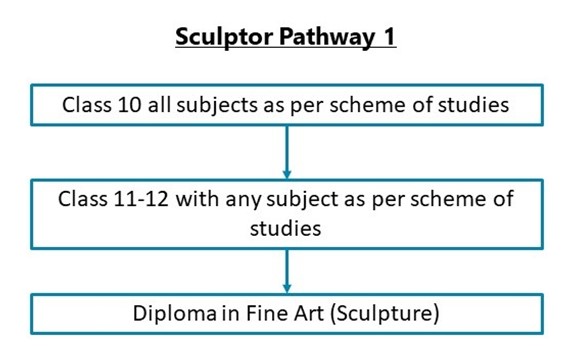
After completing Class 10 all subjects as per the scheme of studies and after Class 11-12 with any subject as per the scheme of studies, you can then pursue a Diploma in Fine Art (Sculpture) wherein you’ll have to explore innovative content like working in object-making, performance, installation, time-based art and skills like mold-making, welding, fabrication, etc.
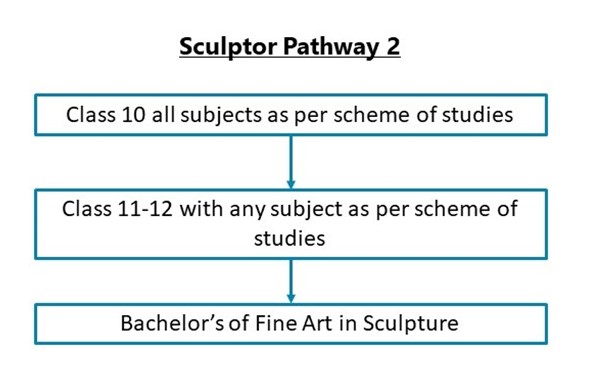
After completing Class 10 all subjects as per the scheme of studies and after Class 11-12 with any subject as per the scheme of studies, you can then pursue a Bachelor’s of Fine Art in Sculpture wherein you’ll have to study theoretical basis like art history, as well as, engage in practical applications like casting and molding.
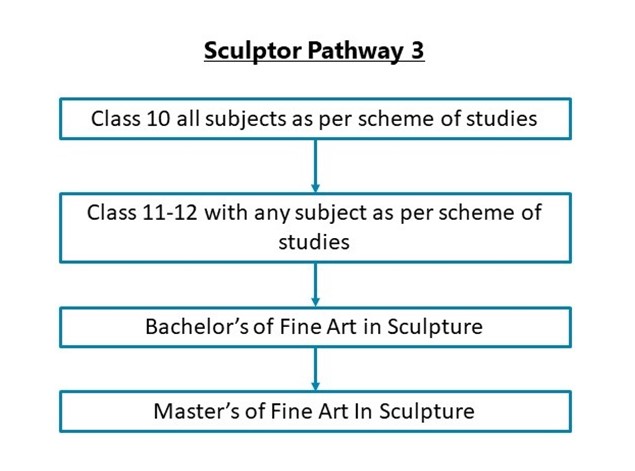
After completing Class 10 all subjects as per the scheme of studies and after Class 11-12 with any subject as per the scheme of studies, you can then pursue a Bachelor of Fine Art in Sculpture. Then, you can move on to a postgraduate degree like Master of Fine Art in Sculpture where you will be developing your observational, analytical, and systematic skills regarding sculpture and fine arts.
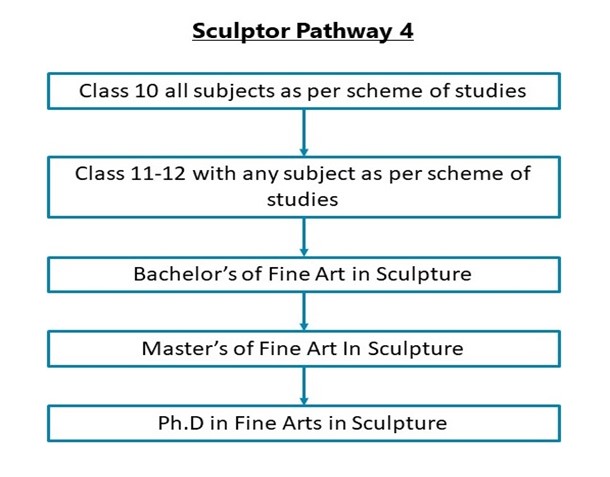
After completing Class 10 all subjects as per the scheme of studies and after Class 11-12 with any subject as per the scheme of studies, you can then pursue a Bachelor of Fine Arts in Sculpture. Then, you can move on to a postgraduate degree like Master of Fine Art In Sculpture. After that, you can go for doctoral courses like a Ph.D. in Fine Arts in Sculpture.
Required Qualification & Competencies
Undergraduate studies after school
1. For a basic knowledge and application of sculpting, you have to get a Bachelor of Fine Art in Sculpture.
2. You can also opt for a Diploma in Fine Art (Sculpture) to learn the basic techniques in sculpture.
Post Graduate studies
If you are interested in specialized knowledge in sculpting after your graduation, then you need to have a Master’s of Fine Art In Sculpture.
Doctoral Studies
A Doctorate Degree in Fine Arts is the highest degree in the field of study. It is necessary to have a master’s degree before you can go for a Ph.D. in Fine Arts in Sculpture.
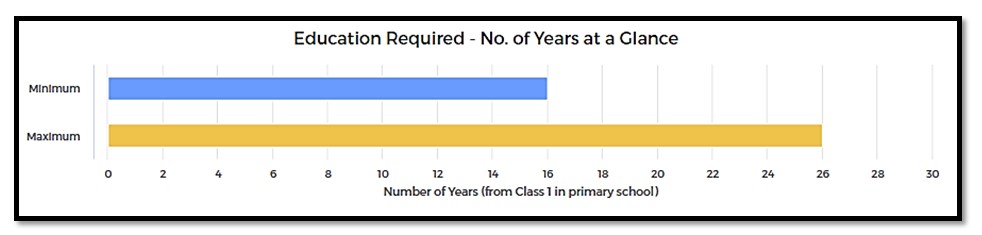
MINIMUM EDUCATION REQUIRED | MAXIMUM EDUCATION REQUIRED |
Under Graduate Undergraduate Degree / Honours Diploma / Graduate Diploma (equivalent to a Degree) Programs for which the minimum eligibility is a pass in Higher Secondary / Class XII School Leaving examination. | Post-Doctoral Post-Ph.D. programs for which the minimum eligibility is a Doctoral degree. |
Competencies Required
Interests
1. Artistic: You should have an interest in Artistic Occupations. Artistic occupations mostly involve working with creative ideas, art, and designs. These occupations involve abstract or conceptual thinking, and creative self-expression and often do not follow any set processes or rules for getting things done.
2. Enterprising: You should have an interest in Enterprising Occupations. Enterprising occupations involve taking initiative, initiating actions, and planning to achieve goals, often business goals. These involve gathering resources and leading people to get things done. These require decision-making, risk-taking, and action orientation.
Abilities
1. Abstract Reasoning: The ability to understand ideas that are not expressed in words or numbers; the ability to understand concepts that are not clearly expressed verbally or otherwise.
2. Bodily-Kinaesthetic Intelligence: The ability to coordinate the movement of your arms, legs, and bodily motion; the ability to keep or regain your body balance when in an unstable position; the ability to quickly and repeatedly bend, stretch, twist, or reach out with your body, hands, arms, fingers, or legs.
3. Emotional Intelligence: The ability to understand your own and others' emotions and feelings; empathy for others; adjusting your behavior or self-control and self-regulation according to others' emotions and situations.
4. Fluency of Ideas: The ability to come up with several ideas about a topic (the number of ideas is important, not their quality, correctness, or creativity).
5. Hearing Sensitivity: The ability to detect or tell the differences between sounds that vary in pitch and loudness.
6. Originality: The ability to come up with unusual or innovative ideas about a given topic or situation, or to develop creative ways to solve a problem.
7. Physical Stamina: The ability to exert yourself physically over long periods without getting winded or out of breath.
8. Selective Attention: The ability to concentrate on a task over a long period without being distracted.
Skills
1. Active Listening: Giving full attention to what other people are saying, understanding the points being made by others, asking questions, etc.
2. Judgment and Decision Making: Skills in considering the pros and cons of various decision alternatives; considering costs and benefits; and making appropriate and suitable decisions.
Personality
1. You are always or mostly a soft-hearted person.
2. You are always imaginative in most situations.
3. You always prefer to experience new things and have new experiences or you mostly do.
4. You can always act independently or can do so in most situations.
5. You trust others sometimes but not always.
Career - Job Opportunities & Profiles
After you get your diploma or graduation you can work as an assistant or apprentice under an established Senior Sculptor. You can also work independently at your studio. However, if you want, you can look into teaching art to run your expenses until you become established as a Sculptor. You can also earn a decent amount of money if you work as an assistant under a well-known Sculptor. You may also get commissioned to build various sculptures like decorative items, statues, etc. You can also be commissioned to make idols of Gods and Goddesses.
Work Environment
A sculptor can be employed by a firm or they can work as a freelancer. Generally, they have to work in a warehouse or an art studio. The studios tend to be roomy, and the artist is given privacy to complete their work. Artists generally do not have a working period, however, they may have a deadline to complete a work. They can have their working hours too.
Specialisation Tracks In This Career
1. Sculptor (Abstract Art)
Abstract art is a kind of art that depicts visual reality without actual representation but by using different shapes, gestural marks, forms, or colors to achieve the effect of the same. As an abstract art sculptor, you will have to do experiments regarding proportion, shape, and technique and use non-traditional sculpting methods for manufacturing a sculpture.
2. Sculptor (Assemblage Art)
Assemblage is an artistic style in which different three-dimensional elements are made to project out of a surface. As a Sculptor specializing in assemblage art, you will have to deal with various found items and know how to put them together on a surface for a desired effect.
3. Sculptor (Construction Art)
In construction art sculpture, three-dimensional models are created by using scrap material. As a Construction art sculptor, you have to understand how items should be probably placed to provide an abstract or aesthetic effect, though it need not have a discernible ‘style’.
4. Sculptor (Installation Art)
Installation art is a kind of site-specific art in which three-dimensional objects are fitted in a specific area in such a way as to alter the perception of space and achieve an immersive effect for the audience. As a sculptor specializing in installation art, you will have to deal with either interior spaces, or even exterior spaces, which is often referred to as public art.
5. Sculptor (Kinetic Art)
Kinetic art is a kind of sculpting technique in which the object appears to be moving even though it is just fixed. As a kinetic sculptor, you will have to ensure that the perception of the movement is a part of the design and hence, it will achieve the desired illusion when seen by the audience.
6. Sculptor (Post Modern Art)
Postmodern sculpting is a form of sculpting that reacts or rejects the traditions of modernism and develops a new form of style that conflates high and low art. As a postmodern sculptor, you may have to be involved in found items sculpture, and also, postmodern forms of sculpture like Ice Sculpture and Sand Art.
7. Sculptor (Representational Art)
Representational art refers to the kind of sculpting where the figure formed will be representative of the object it purports to be. The sculpture may not be true to life in terms of color, but it must be recognizable and easy to identify in form and structure. It is based on realism and is the opposite of abstract art.
Career Growth
Sculptors can gain career advancement only after their work circulates among specific channels and they gain a lot of reputation. For growth, sculptors have to develop new ideas, engage in specific styles, and let their work evolve. Many sculptors hold a full-time job until they are reputed enough to become professional sculptors. Others can work part-time in schools, develop experience, and maintain a portfolio. Self-employed and freelance sculptors can create a customer base who can regularly contact them for work, and they can grow accordingly in this area.
Salary Offered
At first, the growth of a sculptor is slow. As an entry-level sculptor, you may earn about Rs. 9000-10,000 a month. However, as you start gaining experience, you may earn about Rs. 35,000-40,000 a month as well.
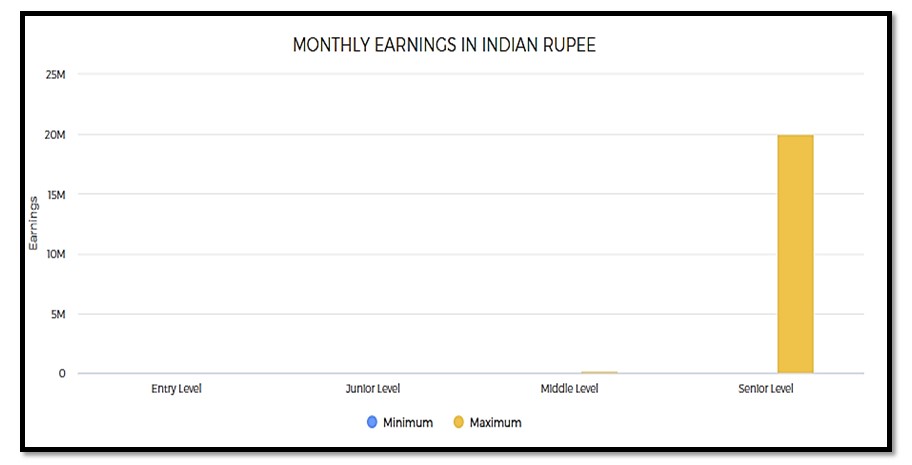
Monthly Earnings In Indian Rupee
Entry Level | Junior Level | Mid Level | Senior Level | ||||
Min Earning | Max Earning | Min Earning | Max Earning | Min Earning | Max Earning | Min Earning | Max Earning |
25000 | 100000 | 25000 | 150000 | 50000 | 200000 | 100000 | 300000 |
1. Entry level: 0 - 2 years of work experience
2. Junior Level: From 1 to 12 years of work experience
3. Mid Level: From 5 to 20+ years of work experience
4. Senior Level: From 10 to 25+ years of work experience (there could be exceptions in some high-end technical, financial, engineering, creative, management, sports, and other careers; also shortly, people will reach these levels much faster in many careers and some careers, these levels will have no meaning as those careers will be completely tech skill driven such as even now, there is almost no level in a Cyber Security Expert’s job)
Work Activities
1. Inspecting equipment, systems, structures, and materials: Inspecting equipment, systems, structures, and materials to ascertain quality, performance, defects, causes of errors, etc.
2. Creative thinking: Developing new ideas, concepts, innovative solutions to problems, newer ways of getting things done, designing products and services, creating works of art and craft, etc.
3. Assessing and evaluating quality: Assessing and evaluating the quality of materials, systems, processes, products, services, etc.
Future Prospects
The growth of sculptors can be slower than average. However, if a sculptor can work hard, and earn fame for themselves, then there can be substantial growth. Also, since high-net-worth individuals are generally the people who invest in sculpting and other fine arts, the future outlook shows that the assets of a high-net-worth individual are expected to reach USD 2.3 trillion, indicating an increase in the opportunity pool.
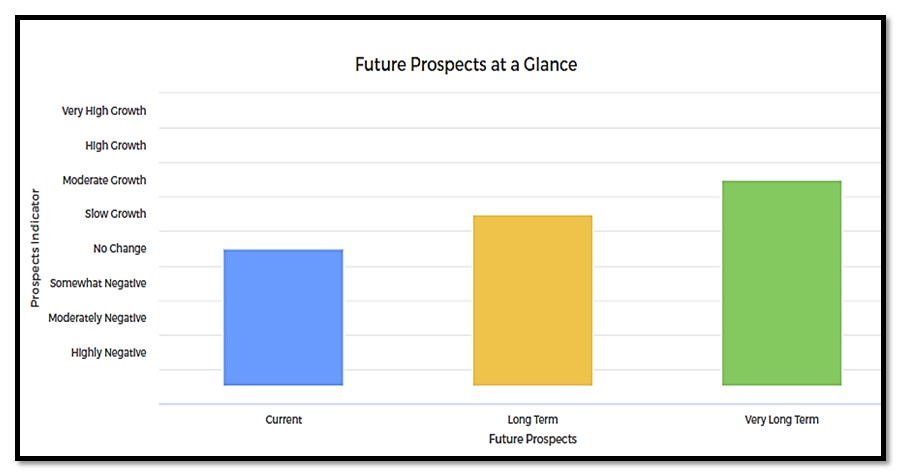
Future Prospects At A Glance
Current (0-1 year) | Long Term (2-5 years) | Very Long Term (6-10 years) |
No Change | Slow Growth | Moderate Growth |