 CURRENT AFFAIRS

 CURRENT AFFAIRS
Description

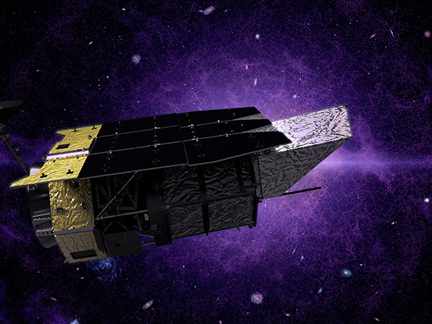
NASA has successfully completed the final assembly of the Nancy Grace Roman Space Telescope, reaching a significant milestone ahead of its scheduled launch in 2026. The telescope was built at the Goddard Space Flight Center in Maryland and is expected to rank among the most advanced survey telescopes ever created. Considered the next major space observatory after the Hubble and James Webb Space Telescopes, the Roman mission aims to investigate dark energy, galaxy evolution, and distant planetary systems on a much larger scale than previous missions.
The Roman Space Telescope is engineered to observe the universe using visible and near-infrared wavelengths. It features a 2.4-metre primary mirror, similar in size to that of the Hubble Space Telescope. However, its imaging capability covers an area nearly 100 times larger in a single observation. This expanded field of view allows the telescope to survey vast sections of the cosmos more quickly. According to NASA, Roman will gather survey data nearly 1,000 times faster than Hubble, making it particularly effective for large-scale mapping of the universe.
Studying Dark Energy and Dark Matter
A major objective of the Roman mission is to deepen scientific understanding of dark energy and dark matter, which together account for the majority of the universe’s composition. Dark matter remains invisible but influences the movement and formation of galaxies, while dark energy is believed to be responsible for the universe’s accelerating expansion. Roman will produce extensive three-dimensional maps of galaxies and monitor how cosmic structures evolve over time, enabling researchers to test and refine existing cosmological theories.
Repeated Observations and Detection of Cosmic Events
The telescope is designed to repeatedly observe the same large regions of the sky, enabling scientists to identify short-duration cosmic phenomena such as supernova explosions. By scanning identical regions multiple times, astronomers can detect sudden changes that might otherwise remain unnoticed. NASA expects Roman to discover thousands of supernovae during its operational lifetime, generating valuable data for studying the rate of cosmic expansion.
In addition, Roman will include a specialised instrument known as a coronagraph, which blocks intense starlight to make faint nearby planets visible. This technology could allow direct imaging of large exoplanets, particularly gas giants similar to Jupiter. NASA reports that the coronagraph can identify planets up to 100 million times dimmer than their parent stars. Although the telescope is not specifically designed to detect Earth-like planets, the technologies tested on Roman are expected to support future missions aimed at locating potentially habitable worlds.
Welcome to Notopedia.com, your free learning platform that caters to the diverse needs of students and aspirants across a spectrum of entrance exams and educational endeavors. Whether you're preparing for highly anticipated exams like CAT, NEET, JEE Main, or bank job vacancies, our platform offers a wealth of resources to guide you towards success. Stay up-to-date with the latest exam dates, announcements, and results for various government recruitment exams, including SSC CGL, CHSL, NDA, and UPSC. Explore comprehensive study materials, sample papers, and exam patterns to hone your skills and boost your confidence. From important dates like CBSE Class 10 and 12 date sheets to exam-specific information like JEE Main application form date, we cover it all. Notopedia.com is your go-to source for everything from admissions and admit cards to scholarships and college information. Whether you're aiming for a career in defense, government, banking, or higher education, our free learning platform equips you with the knowledge and resources you need to excel. Join us in your educational journey and unlock a world of opportunities, guidance, and comprehensive support.
For more Updates and Information - Visit Notopedia's Bulletin Board
For Latest Sarkari Jobs - Visit Notopedia's Sarkari Jobs Section
For access to more than 20,000 Colleges - Visit Notopedia's College Section
For School Studies and Exams Preparation across 14 Boards - Visit Notopedia's School Section
For Comprehensive Preparation of Sarkari Job Exams - Visit Notopedia's Sarkari Exams Section
- Nancy Grace Roman Space Telescope
- NASA Roman Telescope 2026 launch
- Roman vs Hubble telescope
- NASA space telescope news
- dark energy research NASA
- Roman telescope features
- galaxy mapping telescope
- exoplanet coronagraph NASA
- NASA Goddard Space Flight
The Notopedia Bulletin Board
News about the latest admissions, results, upcoming government jobs, Sarkari exams and many more.


