 CURRENT AFFAIRS

 CURRENT AFFAIRS
Description

Some traditional dances are more than just steps and music—they use colourful masks to transform the dancer’s identity. In these performances, masks become storybooks, showing gods, demons, animals, and heroes without any words. These dances are closely linked to ancient rituals and religious beliefs and were traditionally performed in temples or village grounds during festivals to teach moral lessons and retell mythological stories.
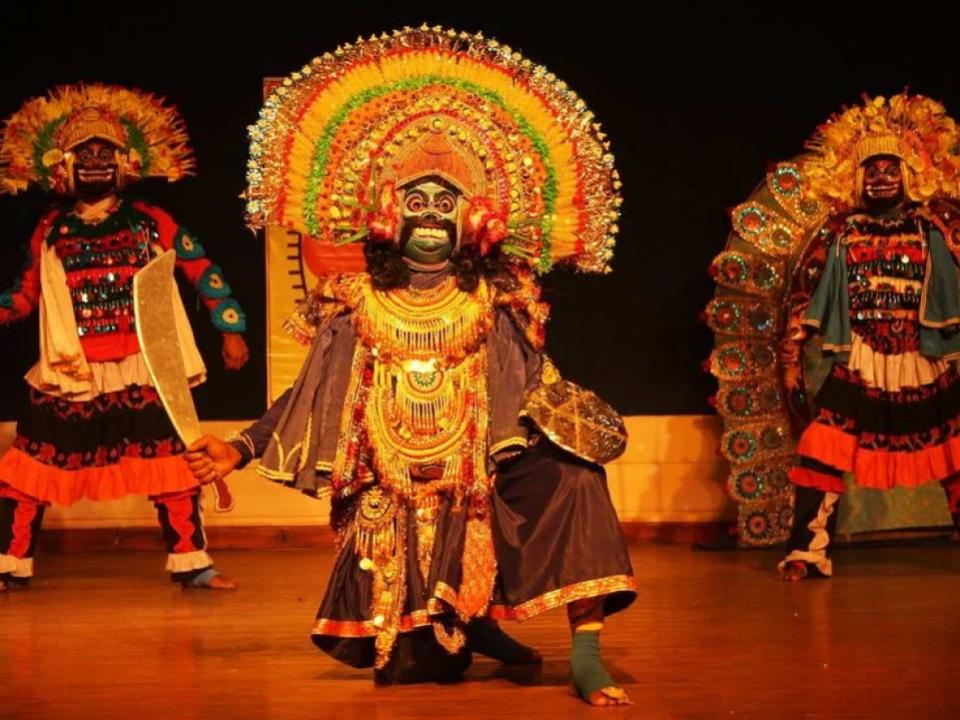
Dancers wear grand costumes, including heavy ornaments, bright clothes, and carefully crafted masks made from wood, clay, or paper. Each mask represents a specific character. Performances can range from energetic jumps to slow, dramatic movements, with music, drums, and expressive gestures creating a captivating atmosphere. Over time, this masked dance has become an important symbol of cultural heritage and is now performed on stages worldwide, admired for its storytelling and visual beauty.
Which Dance Form is Called the Dance of Masks?
The dance form known as the Dance of Masks is Chhau dance. Originating from eastern India—primarily West Bengal, Jharkhand, and Odisha—Chhau combines martial arts, music, and storytelling from epics like the Ramayana and Mahabharata. Dancers wear colourful masks to represent gods, demons, animals, and heroes, expressing emotions mainly through body movements rather than facial expressions. This makes the dance both energetic and visually striking.
Origin and History
Chhau developed in the eastern regions of India—present-day Odisha, Jharkhand, and West Bengal. Historically, warriors practised combat techniques using rhythmic movements, jumps, and gestures. These exercises eventually became performances during festivals and celebrations. Later, mythological stories from the Mahabharata and Ramayana were incorporated, transforming it into a rich cultural folk theatre.
Why is it Called the Dance of Masks?
Chhau dancers wear elaborate masks made from clay or paper-mâché. Each mask represents a specific character, such as a god, demon, animal, or hero. Since the masks cover the face, dancers convey emotions using:
Body posture
Eye movements
Powerful steps
Dramatic jumps
Because the mask serves as the “face” of the character, the dance is popularly known as the Dance of Masks.
Three Main Styles of Chhau Dance
Seraikella Chhau (Jharkhand): Graceful and symbolic, with delicate masks and subtle expressions. Traditionally supported by royal families.
Purulia Chhau (West Bengal): Energetic and acrobatic, featuring high leaps, fast spins, and colourful heavy masks.
Mayurbhanj Chhau (Odisha): Performed without masks. Emotions are expressed through facial expressions and complex footwork.
Costumes, Music, and Instruments
Chhau performances are visually spectacular. Dancers wear:
Large headgear
Bright, colourful costumes
Decorative jewellery
The dance is accompanied by traditional instruments, including the deep Dhumsa drum and shehnai-like wind instruments. The rhythm complements the warrior-like movements of the performers.
Themes and Stories
Chhau performances often depict mythological battles and heroic tales, such as:
Durga defeating Mahishasura
Rama fighting Ravana
Shiva’s cosmic dance
Stories of animals and nature
The dance blends tribal culture, folk beliefs, and Hindu mythology into a single performance.
UNESCO Recognition
In 2010, Chhau dance was added to UNESCO’s Representative List of Intangible Cultural Heritage, highlighting its importance in preserving traditional knowledge, tribal identity, and performing arts.
Interesting Facts About Chhau Dance
The word “Chhau” may mean shadow or refer to a military camp.
Masks can weigh up to 5 kilograms.
Mainly performed during the spring festival Chaitra Parva.
Originally performed only by men, but now women also participate.
Dancers maintain fitness levels comparable to professional athletes.
Meta Title:
Dance of Masks in India: Chhau Dance – Origin, Styles & Cultural Importance | Notopedia
Meta Description:
Discover Chhau Dance, the traditional Indian Dance of Masks from West Bengal, Jharkhand, and Odisha. Learn about its origin, styles, costumes, music, and UNESCO recognition.
H1:
Which Dance Form is Known as the Dance of Masks? – Chhau Dance
Keywords:
Chhau dance, Dance of Masks India, traditional Indian dance, Chhau dance styles, Purulia Chhau, Seraikella Chhau, Mayurbhanj Chhau, Indian folk dance, UNESCO Chhau dance, masked dance India, Indian cultural heritage
- Chhau dance
- Dance of Masks India
- traditional Indian dance
- Chhau dance styles
- Purulia Chhau
- Seraikella Chhau
- Mayurbhanj Chhau
- Indian folk dance
- UNESCO Chhau dance
- masked dance India
- Indian cultural heritage
The Notopedia Bulletin Board
News about the latest admissions, results, upcoming government jobs, Sarkari exams and many more.


