 CURRENT AFFAIRS

 CURRENT AFFAIRS
Description

Have you ever wondered how an entire civilization survived in the middle of a vast desert? In Egypt’s case, the answer lies in one powerful river. Long before skyscrapers and highways existed, people built their homes along its banks because it offered something rare in the region reliable water, fertile soil, and food.
For thousands of years, this river followed a predictable flooding cycle. Each year, it overflowed and spread nutrient-rich silt across the surrounding land. Even though rainfall was minimal, this natural process allowed crops to grow successfully. Because of this dependable system, communities were able to settle permanently and build one of the world’s greatest ancient civilizations.
The river also functioned as a transportation network. Boats carried goods, traders, workers, and officials between settlements, strengthening trade and communication. Important temples, monuments, and cities were constructed close to the water, making it the center of daily life.
Even in modern times, millions of Egyptians rely on this river for drinking water, farming, fishing, electricity, and transport. Without it, most of the country would be uninhabitable desert. For this reason, historians often describe it as the nation’s lifeline.
Which River Is Called the Lifeline of Egypt?
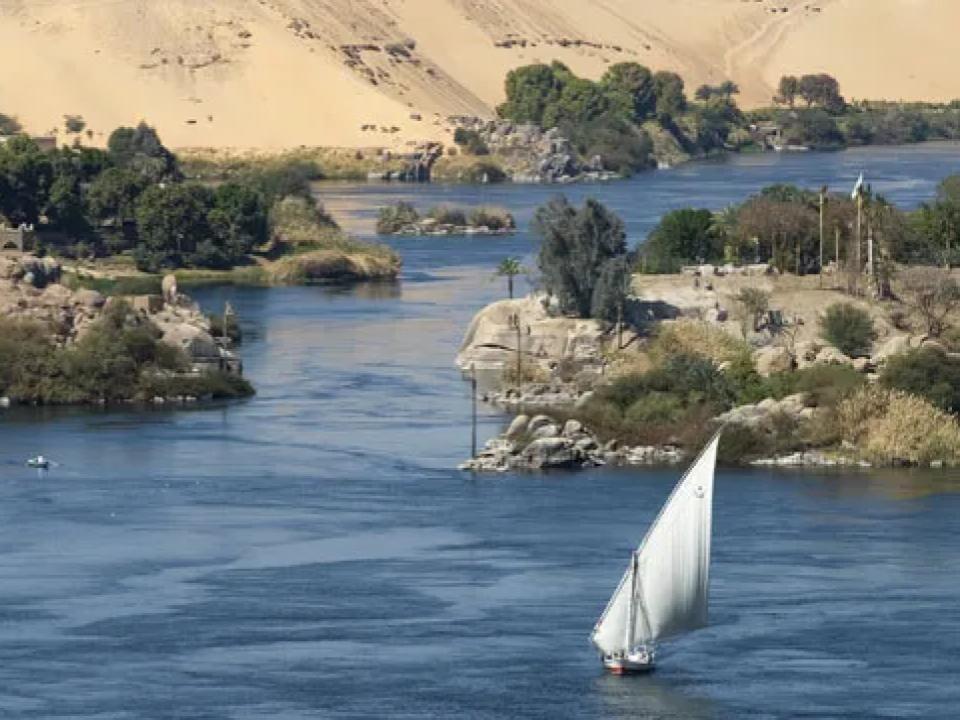
The river known as the Lifeline of Egypt is the Nile River. Since the majority of Egypt consists of arid desert land, the population depends heavily on this river for survival. Ancient agriculture flourished because of its annual floods, and even today, most towns, cities, and farmland are concentrated along its banks.
Why the Nile Earned This Title
Egypt receives very little rainfall, making freshwater extremely valuable. The Nile supports the country by providing:
Safe drinking water for millions
Irrigation for crops such as wheat, rice, and cotton
A transportation route connecting different regions
Fish that support food supply and local livelihoods
Hydroelectric power generated by major dams
Without the Nile, large-scale agriculture and dense population centers would not be possible in Egypt.
Length and Flow Direction
The Nile stretches approximately 6,650 kilometers, making it one of the longest rivers on Earth.
One interesting feature is its direction of flow. Unlike what many might expect, the river moves from south to north, eventually emptying into the Mediterranean Sea. This happens because northern Egypt sits at a lower elevation than the southern region.
Main Sources of the Nile
The river is formed by two primary tributaries:
White Nile
Originates near Lake Victoria
Supplies a steady flow of water throughout the year
Blue Nile
Begins at Lake Tana in Ethiopia
Carries fertile silt that enriches farmland
These two branches meet in Khartoum, Sudan, before continuing northward into Egypt.
Countries Connected by the Nile
The Nile Basin includes 11 African nations: Burundi, Rwanda, Democratic Republic of Congo, Tanzania, Kenya, Uganda, Ethiopia, Eritrea, South Sudan, Sudan, and Egypt. Because so many countries share its waters, the river plays an important role in regional cooperation and water agreements.
The Role of Annual Floods
In ancient times, seasonal flooding covered nearby land with dark, nutrient-rich soil. This natural fertilization process turned dry terrain into productive farmland. The Greek historian Herodotus famously referred to Egypt as the “Gift of the Nile,” recognizing the river’s central role in sustaining the civilization.
Ancient Names for the River
The ancient Egyptians used the word “Aur” or “Ar,” meaning black, to describe the river a reference to the dark silt it left behind. They also called their land “Kemet,” or “Black Land,” highlighting the fertile soil along the riverbanks compared to the surrounding desert.
The Nile in the Time of Cleopatra
During the reign of Cleopatra, the Nile remained crucial for trade, transportation, and political influence. Agricultural wealth generated along the river contributed significantly to Egypt’s power and prosperity.
Importance in Modern Egypt
Today, the Nile continues to sustain the nation by:
Providing the majority of its freshwater
Supporting large-scale irrigation
Generating electricity through the Aswan High Dam
Supporting fishing, tourism, and daily transportation
Nearly 95% of Egypt’s population lives close to the river, demonstrating that its importance has remained constant from ancient times to the present day.
Welcome to Notopedia.com, your free learning platform that caters to the diverse needs of students and aspirants across a spectrum of entrance exams and educational endeavors. Whether you're preparing for highly anticipated exams like CAT, NEET, JEE Main, or bank job vacancies, our platform offers a wealth of resources to guide you towards success. Stay up-to-date with the latest exam dates, announcements, and results for various government recruitment exams, including SSC CGL, CHSL, NDA, and UPSC. Explore comprehensive study materials, sample papers, and exam patterns to hone your skills and boost your confidence. From important dates like CBSE Class 10 and 12 date sheets to exam-specific information like JEE Main application form date, we cover it all. Notopedia.com is your go-to source for everything from admissions and admit cards to scholarships and college information. Whether you're aiming for a career in defense, government, banking, or higher education, our free learning platform equips you with the knowledge and resources you need to excel. Join us in your educational journey and unlock a world of opportunities, guidance, and comprehensive support.
For more Updates and Information - Visit Notopedia's Bulletin Board
For Latest Sarkari Jobs - Visit Notopedia's Sarkari Jobs Section
For access to more than 20,000 Colleges - Visit Notopedia's College Section
For School Studies and Exams Preparation across 14 Boards - Visit Notopedia's School Section
For Comprehensive Preparation of Sarkari Job Exams - Visit Notopedia's Sarkari Exams Section
- Nile River
- Lifeline of Egypt
- Why Nile is important to Egypt
- Nile River facts
- Ancient Egypt civilization
- Gift of the Nile
- Nile River length
- Sources of Nile River
- Aswan High Dam
- Notopedia
The Notopedia Bulletin Board
News about the latest admissions, results, upcoming government jobs, Sarkari exams and many more.


