 CURRENT AFFAIRS

 CURRENT AFFAIRS
Description

Constituent Assembly of India: Formation and Contribution
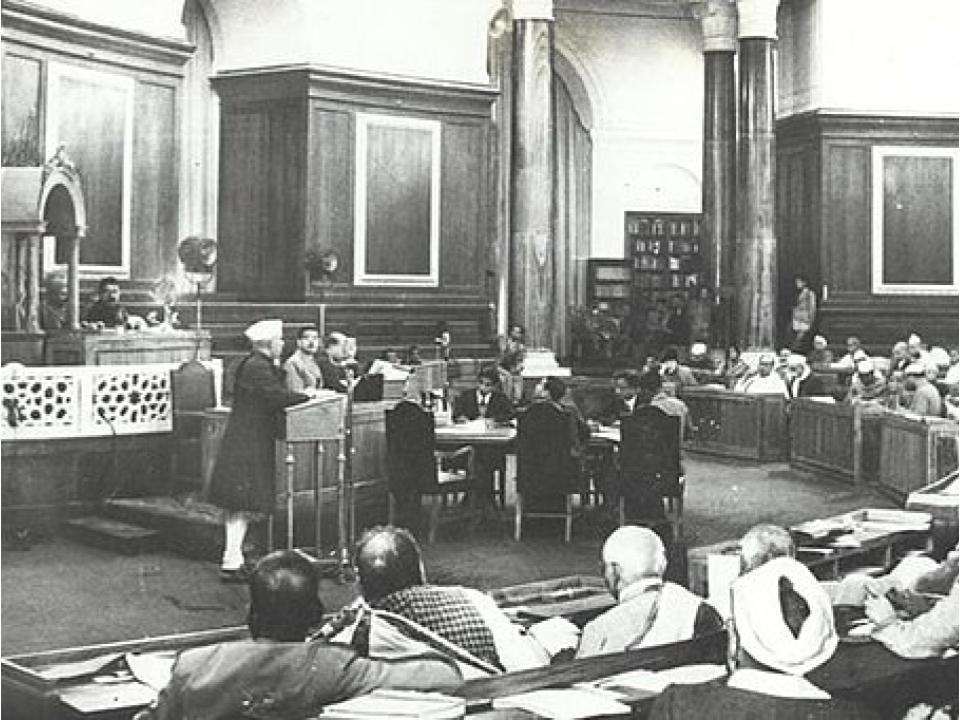
India’s Constitution was created through a long and deliberate process carried out by the Constituent Assembly between 1946 and 1950. This body was responsible for deciding how independent India would be governed and what values its political system would uphold. After years of discussion and revision, the Constitution was formally accepted on 26 November 1949 and became legally effective on 26 January 1950, officially transforming India into a republic governed by democratic principles.
Nature of the Constituent Assembly
The Constituent Assembly was a temporary institution set up specifically to prepare a Constitution. India’s Assembly came into existence in November 1946 as part of the Cabinet Mission framework. Its members were chosen through indirect elections and nominations rather than direct public voting. The Assembly held its first sitting on 9 December 1946. Once the Constitution was completed, the same body acted as the law-making authority of the country until India conducted its first national elections in the early 1950s. Its purpose was to give Indians control over their own constitutional future.
Reasons Behind the Demand
Before independence, India was governed by constitutional laws framed by the British Parliament. These laws provided limited powers to Indians and kept real authority with the colonial administration. Opposition to this arrangement gradually led to the demand for a body that could frame a Constitution independently. The proposal was first put forward by M. N. Roy in the mid-1930s and later supported by the Indian National Congress. Indian leaders, especially Jawaharlal Nehru, stressed that no foreign power should influence the drafting process. Although the British government acknowledged this demand during the Second World War, it was implemented only in 1946.
Membership and Representation
At the time of its creation, the Constituent Assembly had 389 members. Most were selected from British Indian provinces, while representatives from princely states were chosen by their rulers. Provincial members were elected by legislative bodies rather than the general population. After the Partition of India in 1947, members belonging to the areas that became Pakistan withdrew, reducing the size of the Assembly and altering its composition.
Leadership and Key Contributors
The work of the Constituent Assembly was guided by several prominent leaders. Dr. B. R. Ambedkar headed the committee responsible for preparing the draft of the Constitution and played a major role in shaping its legal framework. Rajendra Prasad presided over the Assembly and ensured continuity in its functioning. Sardar Vallabhbhai Patel handled matters related to administrative structure and the integration of states. Jawaharlal Nehru outlined the guiding vision of the Constitution through a resolution that emphasized democratic and social ideals.
Steps in Drafting the Constitution
The drafting process unfolded in stages. Soon after the Assembly began functioning, it adopted a statement defining the goals of the Constitution. Different committees were then formed to study specific subjects such as governance, rights and financial arrangements. Their reports were combined into a draft document, which was examined in detail over many months. Each provision was debated individually before being finalized. The completed Constitution was approved in November 1949 and implemented two months later.
Committee-Based Working System
Given the complexity of its task, the Assembly relied heavily on committees. Some dealt with internal organization, while others focused on major constitutional questions. There were also committees assigned to technical and region-specific issues. The Drafting Committee played a central role by bringing together the recommendations of all other committees into a single coherent document.
Enforcement and Significance
Most parts of the Constitution came into force on 26 January 1950. This date was chosen to recall the earlier declaration of complete independence made in 1930. With the enforcement of the Constitution, India formally ended colonial rule and adopted a republican system of governance. Since then, this date has been observed annually as Republic Day.
Limitations and Criticism
The Constituent Assembly has also been criticized on several grounds. Its members were not directly elected by all adults, and its establishment took place while British authority still existed. The drafting process took several years, which some viewed as excessive. Critics have also argued that one political group had greater influence within the Assembly. Even so, the Constitution framed by this body has remained effective and adaptable over time.
Welcome to Notopedia.com, your free learning platform that caters to the diverse needs of students and aspirants across a spectrum of entrance exams and educational endeavors. Whether you're preparing for highly anticipated exams like CAT, NEET, JEE Main, or bank job vacancies, our platform offers a wealth of resources to guide you towards success. Stay up-to-date with the latest exam dates, announcements, and results for various government recruitment exams, including SSC CGL, CHSL, NDA, and UPSC. Explore comprehensive study materials, sample papers, and exam patterns to hone your skills and boost your confidence. From important dates like CBSE Class 10 and 12 date sheets to exam-specific information like JEE Main application form date, we cover it all. Notopedia.com is your go-to source for everything from admissions and admit cards to scholarships and college information. Whether you're aiming for a career in defense, government, banking, or higher education, our free learning platform equips you with the knowledge and resources you need to excel. Join us in your educational journey and unlock a world of opportunities, guidance, and comprehensive support.
For more Updates and Information - Visit Notopedia's Bulletin Board
For Latest Sarkari Jobs - Visit Notopedia's Sarkari Jobs Section
For access to more than 20,000 Colleges - Visit Notopedia's College Section
For School Studies and Exams Preparation across 14 Boards - Visit Notopedia's School Section
For Comprehensive Preparation of Sarkari Job Exams - Visit Notopedia's Sarkari Exams Section
- Constituent Assembly of India
- Indian Constitution drafting
- Making of Indian Constitution
- Constituent Assembly 1946–1950
- Framing of Indian Constitution
- Indian Constitution history
- Dr B R Ambedkar Drafting Committee
- Objective Resolution
- Indian polit
The Notopedia Bulletin Board
News about the latest admissions, results, upcoming government jobs, Sarkari exams and many more.


