 CURRENT AFFAIRS

 CURRENT AFFAIRS
Description

For almost forty years, access to space was controlled by government agencies using expendable rockets—highly complex machines built for a single flight before being discarded. That model is rapidly fading. A commercial space revolution is underway, led by private companies that are launching more often and redefining how humanity reaches orbit. With the global space economy expected to exceed $1 trillion by 2030, reusable rockets have become the most critical factor driving lower launch costs and higher flight rates.
Why spaceflight has always been costly
Reaching orbit is one of engineering’s toughest challenges. Rockets must fight Earth’s gravity while also pushing through thick atmospheric drag. With nothing to push against in space, forward motion is achieved by ejecting exhaust gases at extremely high speeds in the opposite direction.
This constraint is captured by the Tsiolkovsky rocket equation, which links a rocket’s achievable speed to its mass and fuel. The equation reveals a harsh reality: fuel is heavy, so rockets must carry enormous amounts of fuel just to lift additional fuel. As a result, more than 90% of a rocket’s launch mass consists of propellant and fuel tanks, leaving only a small fraction—often under 4%—for the actual payload.
Human spaceflight raises costs even further. Crewed missions are typically three to five times more expensive than satellite launches due to life-support systems, safety redundancies, abort mechanisms, and intensive mission planning. Satellites, in contrast, are usually designed for one-way journeys with relatively simpler systems.
Why rockets use multiple stages
Staging is a long-standing solution to the mass problem. Rockets are built in segments that separate once their fuel is depleted, allowing the vehicle to shed unnecessary weight during ascent. This approach significantly improves efficiency. Conventional launch vehicles—including India’s PSLV and LVM-3—use expendable stages that fall into the ocean after use. While reliable, this method treats rockets as disposable assets, locking in high costs for every launch.
How reusability reshaped the space sector
The real disruption began when private companies started treating rockets more like reusable machines than one-time fireworks. SpaceX led this shift by introducing innovations such as vertical integration, modular designs, 3D-printed components, and autonomous landing systems.
The outcome was partial reusability, now widely recognised as the most transformative change in modern spaceflight. Reusing major rocket components has reduced launch costs per kilogram by five to twenty times compared to fully expendable systems, while dramatically increasing launch frequency.
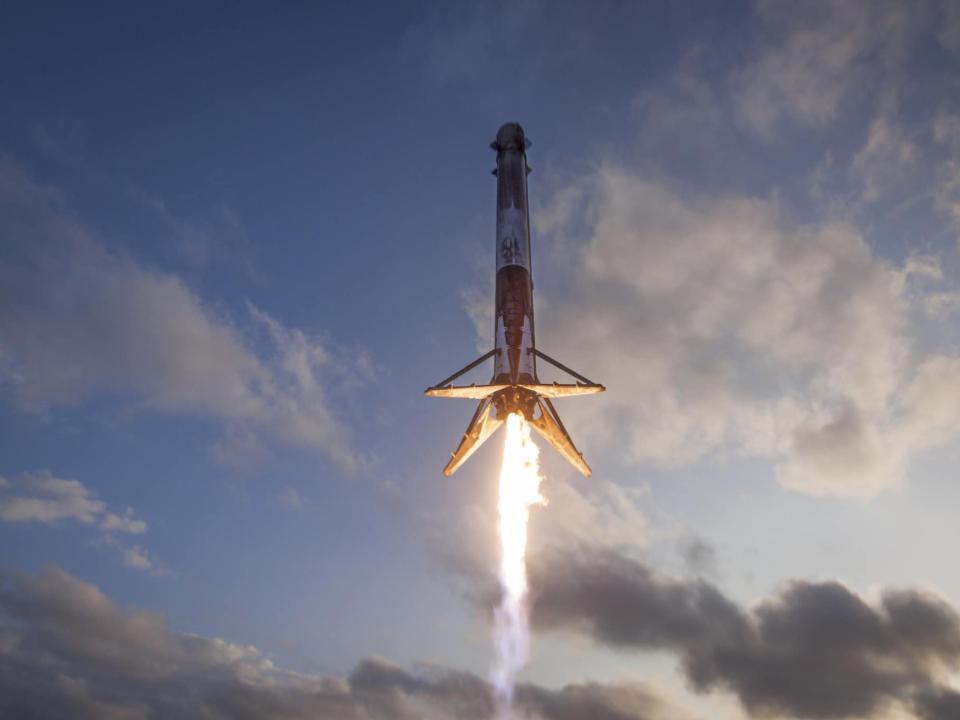
Falcon 9 is the most prominent example. Its first stage returns to Earth by reigniting its engines to slow down, with the remaining energy dissipated through atmospheric drag. SpaceX has recovered Falcon 9 boosters more than 520 times, with some stages flying over 30 missions something once considered impossible.
The move toward fully reusable launch systems
Partial reuse is only a stepping stone. SpaceX is now developing Starship, a fully reusable vehicle intended to carry large payloads and astronauts to orbit, the Moon, and eventually Mars. By eliminating expendable hardware altogether, such systems aim to turn space access into a true transportation network.
Other companies are following similar paths. Blue Origin has demonstrated vertical booster recovery for its New Glenn rocket. In China, private firms such as LandSpace are experimenting with recovery techniques for orbital-class launch vehicles. Worldwide, more than a dozen start-ups are pursuing reusable launch technologies, though achieving full reusability remains one of aerospace engineering’s toughest challenges.
How many times can a rocket be reused?
Reusability has limits. Each flight exposes rocket structures and engines to extreme conditions—cryogenic temperatures, intense combustion heat, massive pressure changes, and high g-forces during ascent and re-entry. Over repeated missions, these stresses lead to material fatigue, microcracks, and wear, especially in engines and fuel tanks.
In practice, the reuse limit is determined as much by economics as by physics. As boosters age, inspections become more detailed, refurbishment takes longer, and components must be replaced to maintain safety. Eventually, refurbishment costs exceed the savings gained from reuse, making retirement the more practical option.
India’s position in the reusable rocket landscape
India is closely tracking these global developments. The Indian Space Research Organisation is working on several recovery concepts, including the Reusable Launch Vehicle (RLV) programme a winged, shuttle-like craft designed to re-enter the atmosphere and land on a runway. ISRO is also exploring stage recovery using aerodynamic braking combined with engine-powered descent, similar to SpaceX’s approach.
Technology demonstration missions are already in progress. However, competition is intensifying. As fully reusable systems become the norm in commercial spaceflight, lowering launch costs is no longer optional it is essential.
What future launch systems must focus on
The trajectory is unmistakable. Reusability must be built into future rockets from the start. Improvements in engine performance and propellant efficiency now allow two-stage rockets to handle missions that once required three stages, simplifying designs and improving cost efficiency. Key challenges ahead include optimising energy distribution between stages, minimising the cost share of recoverable hardware, developing compact high-performance engines, and enabling rapid refurbishment to support frequent launches.
For India and the wider space industry, the age of disposable rockets is coming to an end. Replacing it is a more complex but transformative vision spaceflight as everyday infrastructure, not a rare spectacle.
Welcome to Notopedia.com, your free learning platform that caters to the diverse needs of students and aspirants across a spectrum of entrance exams and educational endeavors. Whether you're preparing for highly anticipated exams like CAT, NEET, JEE Main, or bank job vacancies, our platform offers a wealth of resources to guide you towards success. Stay up-to-date with the latest exam dates, announcements, and results for various government recruitment exams, including SSC CGL, CHSL, NDA, and UPSC. Explore comprehensive study materials, sample papers, and exam patterns to hone your skills and boost your confidence. From important dates like CBSE Class 10 and 12 date sheets to exam-specific information like JEE Main application form date, we cover it all. Notopedia.com is your go-to source for everything from admissions and admit cards to scholarships and college information. Whether you're aiming for a career in defense, government, banking, or higher education, our free learning platform equips you with the knowledge and resources you need to excel. Join us in your educational journey and unlock a world of opportunities, guidance, and comprehensive support.
For more Updates and Information - Visit Notopedia's Bulletin Board
For Latest Sarkari Jobs - Visit Notopedia's Sarkari Jobs Section
For access to more than 20,000 Colleges - Visit Notopedia's College Section
For School Studies and Exams Preparation across 14 Boards - Visit Notopedia's School Section
For Comprehensive Preparation of Sarkari Job Exams - Visit Notopedia's Sarkari Exams Section
- reusable rockets
- space economy
- space launch costs
- commercial space industry
- SpaceX reusable rockets
- rocket reusability
- global space economy 2030
- India reusable launch vehicle
- ISRO RLV programme
- future of spaceflight
- Notopedia
The Notopedia Bulletin Board
News about the latest admissions, results, upcoming government jobs, Sarkari exams and many more.


