 CURRENT AFFAIRS

 CURRENT AFFAIRS
Description

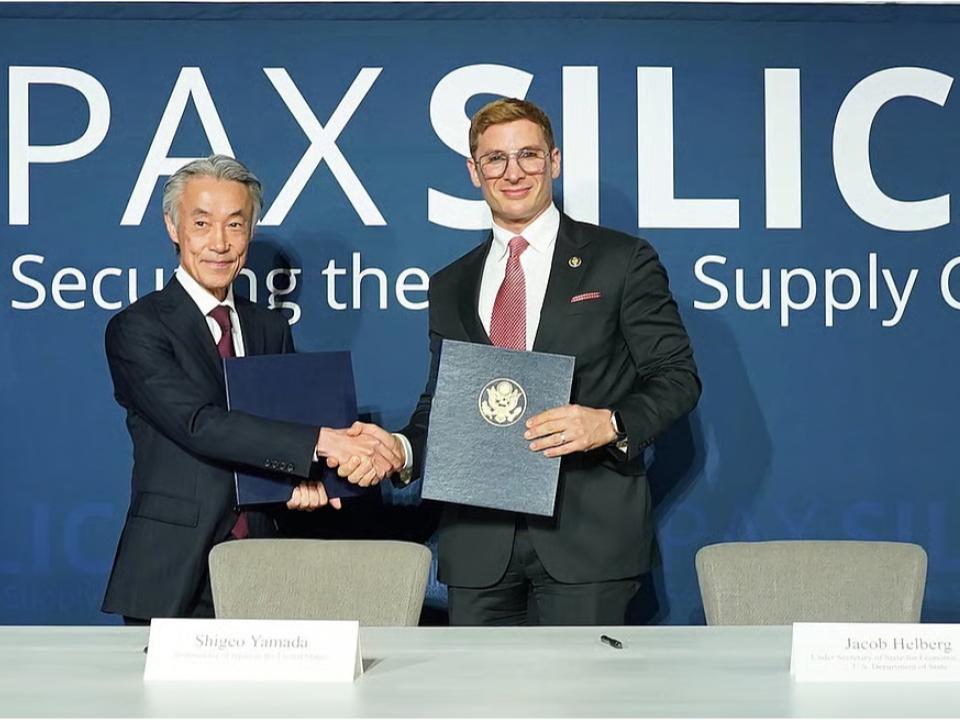
The modern global economy is no longer defined solely by historical inequalities in wealth and development. While the gap between the Global North and South in income and resource use continues, power is increasingly shaped by control over frontier technologies. Semiconductors, Artificial Intelligence (AI), and high-end digital infrastructure have become central to economic competitiveness and strategic influence. Beneath these visible technologies lies a quieter but decisive factor: access to Rare Earth Elements (REEs) and the industrial systems that turn them into critical components. Against this backdrop, the United States hosted the inaugural Pax Silica Summit in December 2025.
Pax Silica: concept and purpose
The Pax Silica initiative was formally launched on December 12, 2025, when the U.S. convened a group of technologically advanced and resource-rich nations. The term carries deliberate symbolism. “Pax,” the Latin word for peace, is paired with “Silica,” a core input for semiconductor manufacturing. Together, the phrase reflects an effort to link long-term global stability with secure and reliable technology supply chains.
The Pax Silica Declaration outlined three principal objectives: limiting strategic vulnerabilities arising from dependence on hostile suppliers, safeguarding global supply chains for advanced technologies and AI, and developing trusted digital infrastructure. In effect, the initiative aims to shield the foundations of the digital economy from geopolitical pressure and supply disruptions.
Composition of the Pax Silica group
The founding members of Pax Silica were chosen to reflect a balance of technological leadership, access to critical minerals, and financial capacity. The United States and Japan provide cutting-edge research and advanced manufacturing capabilities. Australia contributes its role as a major supplier of lithium and holder of significant rare earth reserves. The Netherlands is indispensable through companies such as ASML, whose lithography machines are essential for producing advanced chips. South Korea brings its global leadership in memory semiconductors, while Singapore offers decades of experience as a trusted semiconductor manufacturing and logistics hub.
Israel adds strengths in AI software, defence innovation, and cybersecurity. The United Kingdom contributes a dense ecosystem of universities, research centres, and start-ups, supported by one of the world’s largest AI markets. Qatar and the United Arab Emirates bring substantial sovereign investment capacity and ambitious plans to emerge as AI and digital innovation hubs.
The European Union, OECD, Canada, and Taiwan participated as observers, signalling that the grouping could expand over time.
China’s dominance and the strategic value of rare earths
Pax Silica is, in large measure, a response to China’s commanding position in the global rare earth supply chain. Over the past decades, China has become the leading miner, processor, and exporter of REEs, giving it significant leverage over industries ranging from electronics and electric vehicles to defence systems.
This leverage has increasingly been exercised for strategic ends. Following tariff measures announced by U.S. President Donald Trump, China halted exports of rare earths to the United States and other countries. India also experienced supply disruptions, particularly of rare-earth magnets essential for automotive and electronics manufacturing, until firms complied with strict Chinese licensing conditions, including commitments that the materials would not be used for defence or dual-use purposes.
The COVID-19 pandemic had already revealed the fragility of globally dispersed supply chains dependent on a single dominant supplier. Pax Silica builds on earlier efforts such as the India–Japan–Australia Supply Chain Resilience Initiative of 2021 and the Quad Critical Minerals Initiative announced in 2025.
India’s absence and possible entry
India’s exclusion from the first Pax Silica Summit was notable, given its growing technology market and strategic relevance. However, on January 12, the newly appointed U.S. Ambassador to India, Sergio Gor, suggested that New Delhi would likely be invited to join in the near future. If admitted, India would become the first developing economy and the first non-treaty ally of the United States to participate in the framework.
India’s potential role within Pax Silica
India’s significance lies primarily in its long-term potential rather than its present scale. Collaboration between Indian and U.S. firms in information technology spans several decades. India has also developed extensive digital public infrastructure and is witnessing rapid growth in enterprise-level AI adoption. Although its semiconductor and AI ecosystems remain less mature than those of current Pax Silica members, the Indian government has launched dedicated Semiconductor and AI Missions backed by substantial public funding.
Private sector involvement is expanding as well. The Tata Group has entered semiconductor manufacturing, and global firms such as Micron have announced investments in India. In addition, India continues to produce a large pool of highly trained engineers and researchers. With many Indian students pursuing advanced degrees in the United States, tighter visa regimes could accelerate the return of skilled talent, strengthening domestic capabilities.
India is already cooperating with countries such as Japan and Singapore on resilient semiconductor supply chains and is working with Israeli partners on fabrication and advanced manufacturing projects.
Policy trade-offs and strategic concerns for India
Membership in Pax Silica would also present India with difficult choices. The group is dominated by high-income economies with established technology ecosystems, while India remains focused on industrial catch-up and inclusive growth. New Delhi will seek to retain the freedom to support domestic industries through subsidies, public procurement preferences, and selective trade measures—policies that may clash with U.S. scepticism toward industrial intervention.
India will also be cautious about preserving strategic autonomy, ensuring that participation does not translate into pressure to align on security or geopolitical issues where its positions differ in emphasis.
The emergence of rival technology blocs
The global economy appears to be moving toward the formation of two parallel technology and mineral ecosystems—one centred on China and the other around Pax Silica. China has shown limited willingness to accommodate the development priorities of emerging economies within its rare earth framework, making alternative arrangements more attractive.
Given its deep ties with Western technology firms, India may ultimately lean toward the Pax Silica grouping. However, amid ongoing frictions in India–U.S. economic relations, New Delhi is likely to proceed cautiously, watching how the initiative evolves and how inclusive its governance structure becomes.
As semiconductors, AI, and critical minerals increasingly define global power, Pax Silica represents an early attempt to reshape the technological balance. India’s eventual decision on participation will significantly influence how this emerging order is structured.
Welcome to Notopedia.com, your free learning platform that caters to the diverse needs of students and aspirants across a spectrum of entrance exams and educational endeavors. Whether you're preparing for highly anticipated exams like CAT, NEET, JEE Main, or bank job vacancies, our platform offers a wealth of resources to guide you towards success. Stay up-to-date with the latest exam dates, announcements, and results for various government recruitment exams, including SSC CGL, CHSL, NDA, and UPSC. Explore comprehensive study materials, sample papers, and exam patterns to hone your skills and boost your confidence. From important dates like CBSE Class 10 and 12 date sheets to exam-specific information like JEE Main application form date, we cover it all. Notopedia.com is your go-to source for everything from admissions and admit cards to scholarships and college information. Whether you're aiming for a career in defense, government, banking, or higher education, our free learning platform equips you with the knowledge and resources you need to excel. Join us in your educational journey and unlock a world of opportunities, guidance, and comprehensive support.
For more Updates and Information - Visit Notopedia's Bulletin Board
For Latest Sarkari Jobs - Visit Notopedia's Sarkari Jobs Section
For access to more than 20,000 Colleges - Visit Notopedia's College Section
For School Studies and Exams Preparation across 14 Boards - Visit Notopedia's School Section
For Comprehensive Preparation of Sarkari Job Exams - Visit Notopedia's Sarkari Exams Section
- Pax Silica
- Pax Silica initiative
- rare earth elements geopolitics
- semiconductor supply chains
- global tech economy
- AI and geopolitics
- US technology alliances
- China rare earth dominance
- India semiconductor mission
- India AI strategy
- critical mineral
The Notopedia Bulletin Board
News about the latest admissions, results, upcoming government jobs, Sarkari exams and many more.


