 CURRENT AFFAIRS

 CURRENT AFFAIRS
Description

The implementation of the Mandal Commission recommendations in 1990 marked a turning point in India’s social and political history. Rooted in Bihar’s strong socialist traditions and intricate caste hierarchies, the “Mandal Wave” fundamentally altered power equations by formalising reservations for the Other Backward Classes (OBCs), setting off a nationwide debate that reshaped Indian democracy.
Origins Of Mandal Commission
The movement’s foundation was laid by Bindeshwari Prasad Mandal, born on August 25, 1918, in Varanasi, into a Yadav family. A staunch opponent of caste discrimination, Mandal became an active voice in socialist politics. He established the Shoshit Dal in 1967 and, a year later, became the Chief Minister of Bihar forming the state’s first OBC-led government.
In 1978, the Morarji Desai government appointed him as chairperson of the Backward Classes Commission, later known as the Mandal Commission. The Commission submitted its report in December 1980, highlighting widespread social and educational inequalities. It recommended a 27% quota in central government jobs and educational institutions for OBCs, aiming to create a more inclusive system.
Implementation By V.P. Singh And Nationwide Protests
On August 7, 1990, Prime Minister V.P. Singh announced the decision to implement the Commission’s recommendations a move reaffirmed in his Independence Day address. This raised the total share of reservations for OBCs, Scheduled Castes, and Scheduled Tribes to nearly 49%.
However, the announcement triggered massive protests across the country, particularly among upper-caste students. Delhi University became the focal point of resistance, culminating in the self-immolation of student Rajiv Goswami on September 19, 1990. The protests sparked a fierce national debate on the balance between merit and social equity, forcing India to confront deep-rooted questions about justice and opportunity.
Political Consequences And Social Reconfiguration
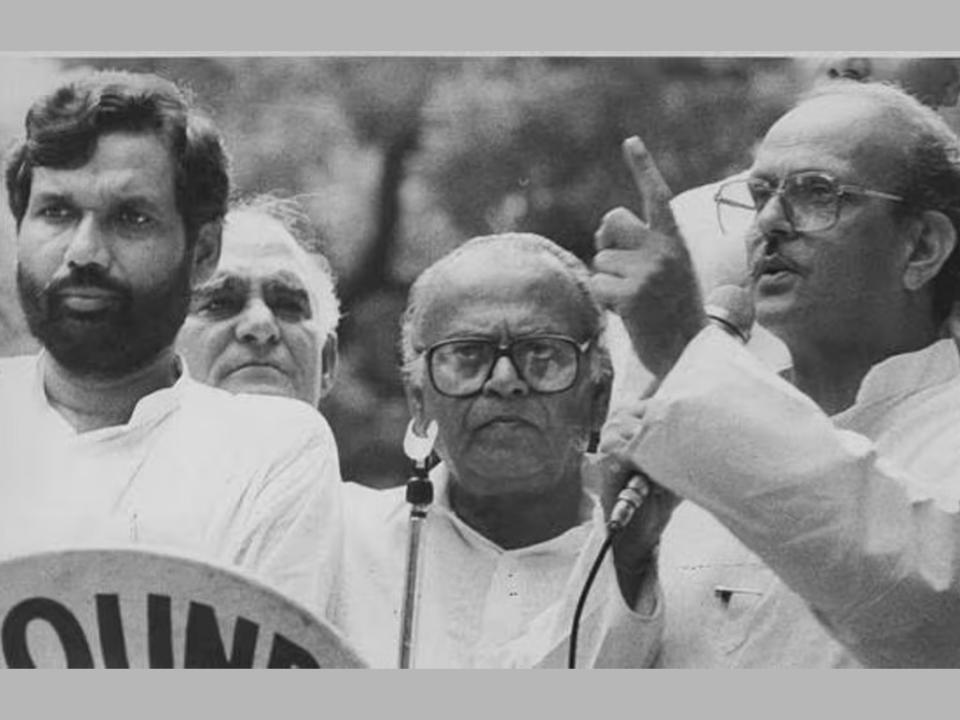
The “Mandal era” redefined Indian politics. Regional parties representing backward and marginalised communities began to assert significant influence. Leaders such as Lalu Prasad Yadav, Mulayam Singh Yadav, Nitish Kumar, Sharad Yadav, and Ram Vilas Paswan rose to prominence, reshaping politics in Bihar and Uttar Pradesh.
Simultaneously, the backlash among upper-caste groups energised counter-mobilisations, including the rise of the Ram Janmabhoomi movement led by L.K. Advani. Together, these parallel movements redrew India’s political boundaries, blending caste and religious identities into new forms of political expression.
Enduring Legacy And Legal Safeguards
Though B.P. Mandal passed away in 1982, before seeing his recommendations implemented, his legacy remains deeply embedded in India’s affirmative action framework. The landmark 1992 Indra Sawhney judgment by the Supreme Court upheld the OBC quota while imposing a 50% ceiling on total reservations striking a balance between representation and fairness.
Decades later, the Mandal movement continues to shape India’s political narrative and governance. It not only empowered historically excluded groups but also cemented the principle that social justice is integral to India’s democratic foundation.
Welcome to Notopedia.com, your free learning platform that caters to the diverse needs of students and aspirants across a spectrum of entrance exams and educational endeavors. Whether you're preparing for highly anticipated exams like CAT, NEET, JEE Main, or bank job vacancies, our platform offers a wealth of resources to guide you towards success. Stay up-to-date with the latest exam dates, announcements, and results for various government recruitment exams, including SSC CGL, CHSL, NDA, and UPSC. Explore comprehensive study materials, sample papers, and exam patterns to hone your skills and boost your confidence. From important dates like CBSE Class 10 and 12 date sheets to exam-specific information like JEE Main application form date, we cover it all. Notopedia.com is your go-to source for everything from admissions and admit cards to scholarships and college information. Whether you're aiming for a career in defense, government, banking, or higher education, our free learning platform equips you with the knowledge and resources you need to excel. Join us in your educational journey and unlock a world of opportunities, guidance, and comprehensive support.
For more Updates and Information - Visit Notopedia's Bulletin Board
For Latest Sarkari Jobs - Visit Notopedia's Sarkari Jobs Section
For access to more than 20,000 Colleges - Visit Notopedia's College Section
For School Studies and Exams Preparation across 14 Boards - Visit Notopedia's School Section
For Comprehensive Preparation of Sarkari Job Exams - Visit Notopedia's Sarkari Exams Section
- Mandal Commission 1990
- B.P. Mandal
- OBC reservation
- V.P. Singh
- Indra Sawhney judgment
- Indian social justice
- Mandal movement
- Bihar politics
The Notopedia Bulletin Board
News about the latest admissions, results, upcoming government jobs, Sarkari exams and many more.


