 CURRENT AFFAIRS

 CURRENT AFFAIRS
Description

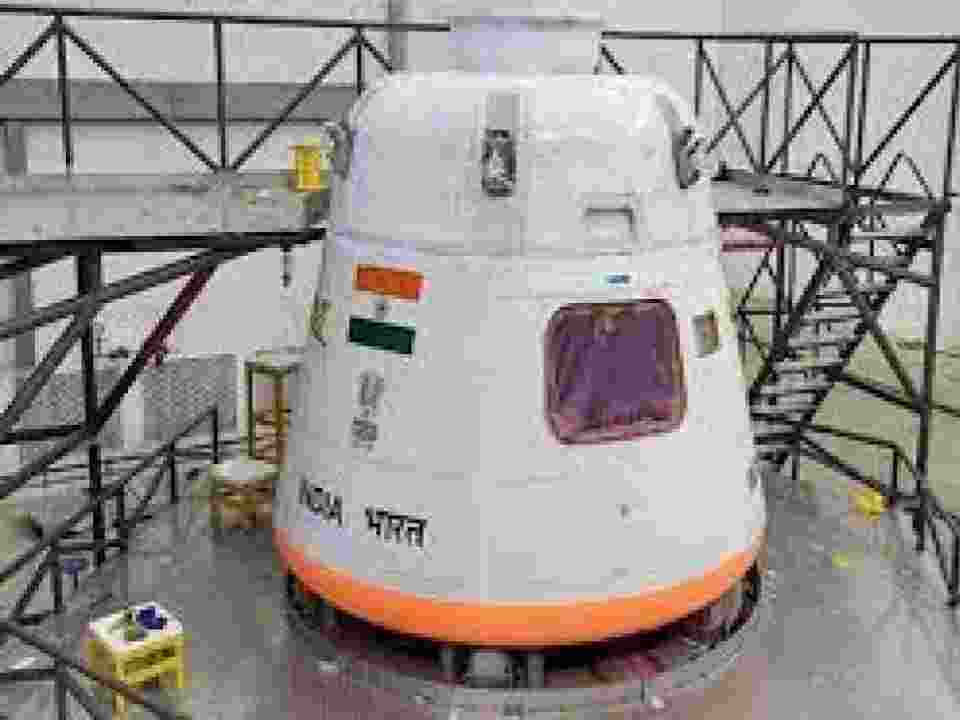
The Indian Space Research Organisation (ISRO) has successfully developed a cost-effective, single-stage test vehicle powered by the Vikas engine to validate its Crew Escape System (CES), a critical safety technology designed to protect astronauts during launch emergencies. This development represents a significant milestone in India’s human spaceflight program, Gaganyaan, underscoring the country’s commitment to astronaut safety and mission reliability.
Understanding Crew Escape System (CES)
The Crew Escape System is an emergency safety mechanism designed to quickly separate the crew module along with astronauts from a failing launch vehicle. Its primary function is to move the crew module to a safe distance in case of a critical anomaly or launch abort scenario, ensuring astronaut safety under extreme conditions.
CES systems worldwide generally fall into two categories:
Puller Type: In this design, a solid-fuel rocket mounted atop the crew module pulls it away from the rocket. This is the system chosen for India’s Gaganyaan mission.
Pusher Type: Used in launch vehicles like SpaceX Falcon 9, the crew module is pushed away from the rocket using compact, high-thrust liquid-fuel engines.
Globally, major crewed launch vehicles such as the U.S. Saturn V, Russian Soyuz, and China’s Long March also adopt the puller-type design, highlighting its reliability for safe crew evacuation.
Crew Escape System Works
The CES is engineered to ensure controlled and safe separation of the crew module through a series of carefully orchestrated steps:
Rapid Separation: Upon detecting a critical failure or abort situation, the CES propels the crew module away from the launch vehicle using solid-fuel rockets.
Multi-Stage Deceleration: After separation, the module is gradually slowed using a multi-stage parachute system, ensuring the impact velocity is within safe limits for human survival.
Safe Splashdown: The module descends into the sea, with astronauts remaining inside throughout the process until splashdown. This ensures minimal risk and maximum protection.
Integrated Vehicle Health Management (IVHM) System
A key component of the CES is the Integrated Vehicle Health Management system (IVHM), a sophisticated network of sensors, electronics, and software that continuously monitors both the vehicle systems and crew health. The IVHM system:
Tracks all vital parameters of the launch vehicle in real time
Continuously assesses astronaut physiological data
Detects anomalies and failures early to enable timely CES activation
Minimizes false alarms while ensuring prompt emergency response
This intelligent system ensures that CES activation is automatic and precise, providing the crew with the maximum possible safety margin during any critical event.
Significance Of CES Validation Test
Validating the CES through a dedicated Vikas-engine-powered test vehicle is crucial for the Gaganyaan program, India’s first human spaceflight initiative. The test ensures that:
The CES performs reliably under real launch conditions
Crew safety is guaranteed even in extreme failure scenarios
All technical systems, including parachute deployment, propulsion, and IVHM coordination, function as intended
The success of this test demonstrates India’s growing capabilities in human-rated space technologies and positions ISRO alongside the few space agencies globally that have developed sophisticated crew escape mechanisms.
Global Context And Future Prospects
The CES technology aligns India with global standards for human spaceflight safety, comparable to systems developed by NASA, Roscosmos, and CNSA. By integrating advanced monitoring, precise engineering, and fail-safe mechanisms, ISRO is setting the foundation for safe, reliable, and repeatable crewed space missions.
With the upcoming Gaganyaan missions, the CES will be a cornerstone of astronaut safety, providing confidence in India’s ability to send humans to space while adhering to international safety benchmarks.
Welcome to Notopedia.com, your free learning platform that caters to the diverse needs of students and aspirants across a spectrum of entrance exams and educational endeavors. Whether you're preparing for highly anticipated exams like CAT, NEET, JEE Main, or bank job vacancies, our platform offers a wealth of resources to guide you towards success. Stay up-to-date with the latest exam dates, announcements, and results for various government recruitment exams, including SSC CGL, CHSL, NDA, and UPSC. Explore comprehensive study materials, sample papers, and exam patterns to hone your skills and boost your confidence. From important dates like CBSE Class 10 and 12 date sheets to exam-specific information like JEE Main application form date, we cover it all. Notopedia.com is your go-to source for everything from admissions and admit cards to scholarships and college information. Whether you're aiming for a career in defense, government, banking, or higher education, our free learning platform equips you with the knowledge and resources you need to excel. Join us in your educational journey and unlock a world of opportunities, guidance, and comprehensive support.
For more Updates and Information - Visit Notopedia's Bulletin Board
For Latest Sarkari Jobs - Visit Notopedia's Sarkari Jobs Section
For access to more than 20,000 Colleges - Visit Notopedia's College Section
For School Studies and Exams Preparation across 14 Boards - Visit Notopedia's School Section
For Comprehensive Preparation of Sarkari Job Exams - Visit Notopedia's Sarkari Exams Section
- ISRO Crew Escape System
- CES Gaganyaan 2025
- Vikas engine test vehicle
- human spaceflight safety India
- puller-type CES
- IVHM monitoring system
- Gaganyaan crew module safety
- launch abort system India
- ISRO astronaut safety
- multi-stage parachute descent
The Notopedia Bulletin Board
News about the latest admissions, results, upcoming government jobs, Sarkari exams and many more.


