 CURRENT AFFAIRS

 CURRENT AFFAIRS
Description

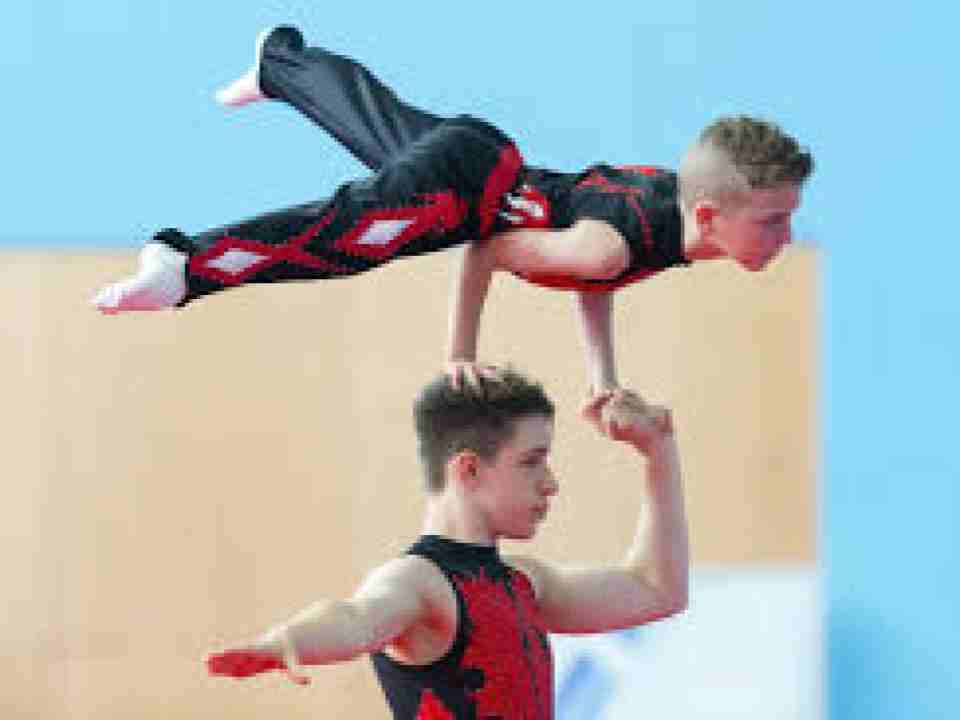
Acrobatic gymnastics, commonly referred to as “Acro,” is a competitive sport where teams of gymnasts perform choreographed routines that combine balance, flips, throws, and dance movements set to music. The sport is governed globally by the International Gymnastics Federation (FIG), which standardizes rules, scoring, and competition formats.
Types Of Routines In Acrobatic Gymnastics
Acrobatic gymnastics routines are classified into three main categories:
Balance Routine – Emphasizes strength, flexibility, and maintaining static poses.
Dynamic Routine – Features explosive elements such as throws, somersaults, and catches.
Combined Routine – Integrates both balance and dynamic skills, creating a comprehensive performance.
Each routine is meticulously choreographed to showcase athleticism and artistic expression in harmony with the accompanying music.
Teams And Roles In Acrobatic Gymnastics
Gymnasts compete in pairs or groups depending on the category:
Pairs: Two gymnasts, either of the same gender or mixed.
Women’s Groups: Three gymnasts.
Men’s Groups: Four gymnasts.
Within these teams, gymnasts take on specific roles:
Bases: Typically larger and stronger, they provide support and stability for lifts and balances.
Tops: Smaller and lighter gymnasts who perform acrobatic elements on the bases.
Middles: In larger groups, they act as connectors between the top and base.
This collaboration allows teams to form human pyramids, execute impressive throws, and create visually striking formations.
Performance And Judging Criteria
Acrobatic gymnastics routines are performed to music, blending acrobatic skills with dance and rhythm. Judges evaluate performances based on three core components:
Execution: Precision, technique, and cleanliness of movements.
Artistry: Creativity, presentation, and the gymnast’s connection to the music.
Difficulty: Complexity and technical challenge of the performed skills.
Scoring System:
The FIG Code of Points governs scoring and is updated every four years in alignment with the Olympic cycle. Scores are divided into:
Difficulty Score: Evaluates the planned elements.
Execution Score: Deductions are applied for errors such as falls, misalignments, or poor landings.
Artistry Score: Rewards originality, performance style, and choreography.
Penalties are also imposed for stepping outside the floor area, failing to maintain balances, or missing catches.
Historical Background
Acrobatics has been part of human entertainment for thousands of years, appearing in festivals, circuses, and royal courts. Its evolution into a formal sport began in the Soviet Union in the 1930s:
1939: First official men’s competition held.
1940: Women’s competitions introduced.
1957: First international competition between the Soviet Union, Poland, Bulgaria, and East Germany.
1973: Formation of the International Federation of Sports Acrobatics (IFSA).
1974: First Acrobatic Gymnastics World Championships held in Moscow.
1998: Sport incorporated under FIG; officially named Acrobatic Gymnastics in 2007.
Age Categories In Competitions
FIG organizes competitions into four primary age groups:
Pre-Youth: 11–16 years (regional or national events).
Youth: 12–18 years.
Juniors: 13–19 years.
Seniors: 15+ years.
Younger athletes perform simpler routines, while senior competitors execute complex, high-difficulty skills.
Safety Considerations
Acrobatic gymnastics involves high-risk moves, making safety paramount:
Training uses mats, harnesses, and spotters.
Facilities require high ceilings to accommodate throws and pyramids.
Bases often apply chalk or shave grip areas to ensure stability for the tops.
Common Injuries:
Tops: Risk of falls, sprains, and minor fractures.
Bases: More prone to overuse injuries in knees, wrists, or back due to supporting roles.
Acrobatic gymnastics is a visually stunning and physically demanding sport that combines teamwork, strength, flexibility, and artistry. With rigorous training, precise execution, and creative choreography, athletes push the boundaries of human performance while maintaining strict adherence to safety standards.
Welcome to Notopedia.com, your free learning platform that caters to the diverse needs of students and aspirants across a spectrum of entrance exams and educational endeavors. Whether you're preparing for highly anticipated exams like CAT, NEET, JEE Main, or bank job vacancies, our platform offers a wealth of resources to guide you towards success. Stay up-to-date with the latest exam dates, announcements, and results for various government recruitment exams, including SSC CGL, CHSL, NDA, and UPSC. Explore comprehensive study materials, sample papers, and exam patterns to hone your skills and boost your confidence. From important dates like CBSE Class 10 and 12 date sheets to exam-specific information like JEE Main application form date, we cover it all. Notopedia.com is your go-to source for everything from admissions and admit cards to scholarships and college information. Whether you're aiming for a career in defense, government, banking, or higher education, our free learning platform equips you with the knowledge and resources you need to excel. Join us in your educational journey and unlock a world of opportunities, guidance, and comprehensive support.
For more Updates and Information - Visit Notopedia's Bulletin Board
For Latest Sarkari Jobs - Visit Notopedia's Sarkari Jobs Section
For access to more than 20,000 Colleges - Visit Notopedia's College Section
For School Studies and Exams Preparation across 14 Boards - Visit Notopedia's School Section
For Comprehensive Preparation of Sarkari Job Exams - Visit Notopedia's Sarkari Exams Section
- Acrobatic Gymnastics
- Acro sport
- Acrobatic gymnastics routines
- FIG gymnastics
- Balance routine
- Dynamic routine
- Combined routine
- Gymnastics team roles
- Acrobatic gymnastics history
- Safety in gymnastics
- Gymnastics age categories
The Notopedia Bulletin Board
News about the latest admissions, results, upcoming government jobs, Sarkari exams and many more.


