 CURRENT AFFAIRS

 CURRENT AFFAIRS
Description

The Advanced Mo-based Rare Process Experiment (AMoRE), a major international experiment based in South Korea, has recently announced that it did not observe any signs of the highly sought-after neutrinoless double beta decay during its latest phase. This result has significant implications for neutrino physics and the search for physics beyond the Standard Model.
About Neutrinos
Neutrinos are among the most mysterious particles in the universe. They are extremely light, neutral, and interact only via the weak nuclear force and gravity, making them incredibly difficult to detect.
Properties - Neutrinos are electrically neutral and are part of the lepton family of particles, which includes electrons, muons, and tau particles.
Sources of Neutrinos - These elusive particles are abundantly produced in: The core of the Sun during nuclear fusion. Radioactive decays of unstable atomic nuclei. Supernova explosions. Interactions of cosmic rays with Earth's atmosphere.
Abundance - Neutrinos are the second most common particle in the universe after photons. On average, about 100 trillion neutrinos pass through every human being every second without leaving any trace.
Detection Difficulty - Due to their weak interactions with matter, massive underground or cryogenic detectors are needed, and even then, neutrino detection requires years of observation to capture meaningful data.
Neutrinos And Majorana Particle Hypothesis
A key question in modern particle physics is whether neutrinos are their own antiparticles. Such particles are known as Majorana particles, named after physicist Ettore Majorana.
Majorana vs. Dirac Neutrinos
Dirac particles have distinct particles and antiparticles (e.g., electron and positron).
Majorana particles are identical to their antiparticles.
Why It Matters: If neutrinos are Majorana particles, it could explain:
The imbalance between matter and antimatter in the universe.
The mechanism behind the small mass of neutrinos, which remains unexplained by the Standard Model.
Understanding Double Beta Decay
Beta Decay - Beta decay is a nuclear process where a neutron inside a nucleus converts into a proton, emitting an electron (beta particle) and an anti-neutrino.
Double Beta Decay (2???) - This rare process involves two neutrons transforming into two protons simultaneously, emitting two electrons and two anti-neutrinos. Double beta decay has been experimentally confirmed in a few isotopes like molybdenum-100 (Mo-100).
Neutrinoless Double Beta Decay - This hypothetical version of double beta decay occurs without emitting any neutrinos:
Only two electrons would be emitted.
The absence of neutrinos would indicate that neutrinos and anti-neutrinos are the same particle (Majorana particle).
Confirming this process would not only prove the Majorana nature of neutrinos but could also help in estimating their absolute mass.
AMoRE Experiment: Overview And Results
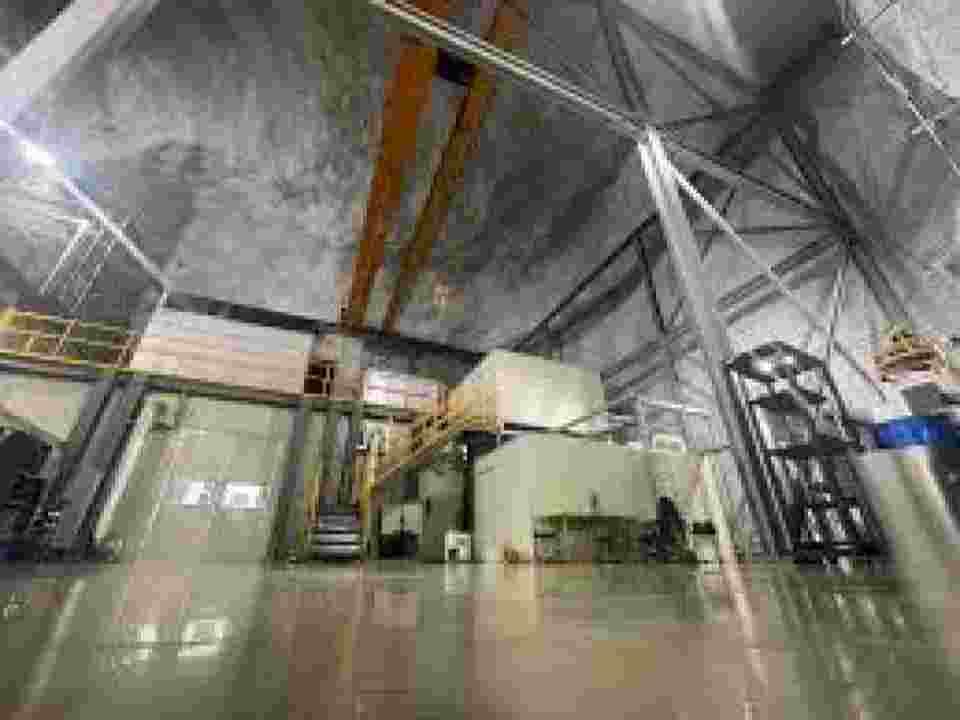
Location - The AMoRE experiment is situated deep underground in South Korea to shield it from cosmic rays and background noise.
Objective - To search for the elusive neutrinoless double beta decay using isotopes of molybdenum-100 (Mo-100).
Methodology - Utilized about 3 kilograms of molybdenum-100 crystals. Maintained detectors at extremely low temperatures (close to absolute zero) to capture minute energy releases from possible decay events.
Findings - No definitive evidence of neutrinoless double beta decay was found. However, the experiment was able to set a strong constraint: If this decay process occurs, it must have a half-life of at least 10²? years, which is about a trillion times longer than the current age of the universe (~13.8 billion years). The mass of neutrinos, if non-zero, is estimated to be less than 0.22 to 0.65 billionths of the mass of a proton, but is not definitively zero.
Significance Of Findings
Although AMoRE did not detect neutrinoless double beta decay, setting a stricter limit on its half-life is an important achievement.
These results help narrow down the search space for future experiments worldwide, including LEGEND, nEXO, and KamLAND-Zen.
Confirming or refuting the existence of 0??? will be key to unlocking the secrets of neutrino masses and understanding why the universe is dominated by matter rather than antimatter.
Welcome to Notopedia.com, your comprehensive and free online education resource that covers a vast array of competitive exams and government job opportunities in India. We understand the importance of excelling in sarkari exams, such as UPSC, IBPS, and SSC CGL, SSC CHSL which serve as gateways to esteemed government positions. Our platform offers detailed insights into exam patterns, syllabus, and previous year question papers for various exams, including NEET, JEE, CAT, CLAT, GATE and more. Whether you're preparing for banking exams like IBPS, SBI, railway recruitment or railway exams like RRB, or seeking admission to top-notch MBA and law programs, Notopedia provides you with a wealth of free study materials, mock tests, online test series and expert guidance. Stay up-to-date with the latest exam dates, results, and admit cards for exams like JEE Main, UGC NET, and CET. As you embark on your educational journey, make Notopedia your go-to destination for free mock tests, comprehensive resources, and the latest updates on sarkari results, government job vacancies, and competitive exams. Empower your learning with Notopedia and achieve your academic and career aspirations with confidence.
For more Updates and Information - Visit Notopedia's Bulletin Board
For Latest Sarkari Jobs - Visit Notopedia's Sarkari Jobs Section
For access to more than 20,000 Colleges - Visit Notopedia's College Section
For School Studies and Exams Preparation across 14 Boards - Visit Notopedia's School Section
For Comprehensive Preparation of Sarkari Job Exams - Visit Notopedia's Sarkari Exams Section
- Neutrinoless double beta decay
- AMoRE experiment
- neutrinos
- Majorana particles
- double beta decay explained
- AMoRE results 2025
- neutrino mass
- particle physics
- South Korea neutrino experiment
- Mo-100 double beta decay
- AMoRE news
- latest in
The Notopedia Bulletin Board
News about the latest admissions, results, upcoming government jobs, Sarkari exams and many more.


