 CURRENT AFFAIRS

 CURRENT AFFAIRS
Description
R K Singh, the Union Minister for Power, New and Renewable Energy, revealed the government's intention to delicense "stand-alone Energy Storage Systems."
Facts to Remember
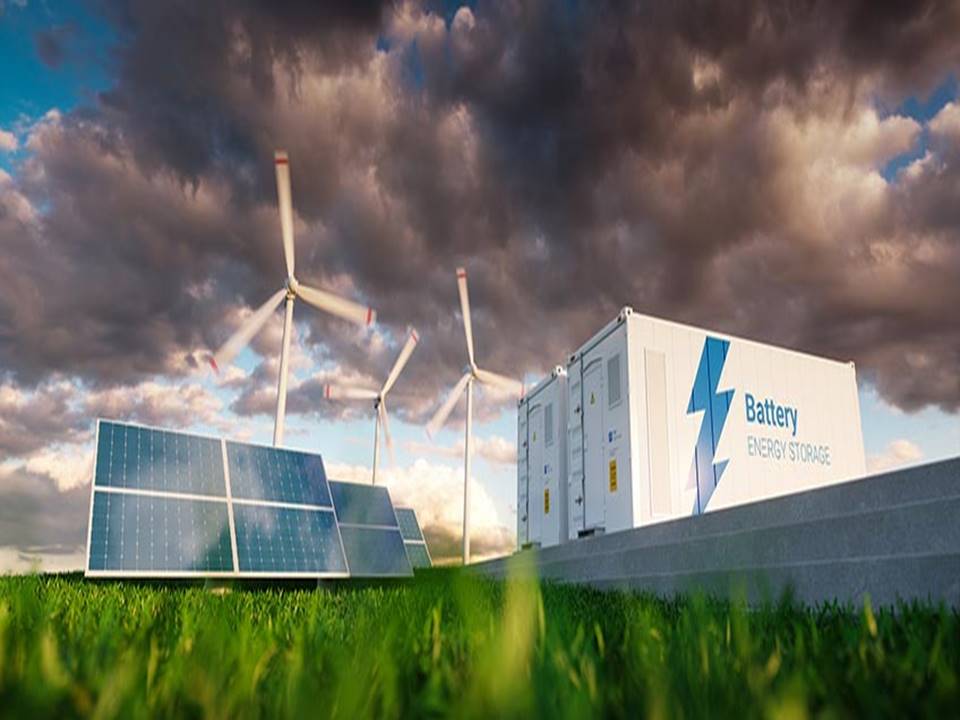
People may now be able to build up their own energy storage systems (ESS).
Renewable energy producers, business, and government leaders addressed elements of a proposed policy on energy storage systems.
Concerning the proposed policy
The draught policy on energy storage systems aims to encourage the development of large-scale storage systems in India.
The policy also aspires to develop a technology-neutral storage system in the electrical value chain at the generation, transmission, and distribution levels.
The ESS developer will be awarded inter-state transmission system connectivity under the proposed policy under general network access (GNA). As a result, it will be possible to sell or buy power from anywhere in India.
The value of an energy storage system
Under the Electricity Act, energy storage systems (ESS) will be an important element of the power system. Electrical producing firms, distribution companies, grid operators, and other actors in the electricity value chain will gain from this system. Peak shifting, ramp-up or ramp-down, peak shaving, and frequency management will all be made easier in the system. It will also improve the efficiency of the transmission system. This technology is critical for a smooth transition from coal to renewable energy sources, which will result in a cleaner environment. The renewable purchasing requirement will include storage (RPO).
Purchase obligation that is renewable (RPO)
ESS Quantum will be counted as RPO for storage purposes when combined with round-the-clock (RTC) renewable energy. ESS will also receive renewable energy credits (RECs).
Electricity sales
Open competitive bidding, power exchanges, or tariffs set under Section 62 of the Electricity Act can be used to sell electricity from storage and to sell or lease storage space. Transmission costs for RE will be eliminated as per policy, both when charging the storage and when selling the stored RE.
The energy transformation in India
India has made preparations for the transition from fossil fuel to non-fossil fuel energy systems. By 2030, it wants to cut GHG (carbon dioxide) emissions by one billion tonnes. India will construct a total of 500 gigawatts (GW) of non-fossil fuel capacity to achieve this.
For more Updates and Information - Click here
For access to more than 10,000 Colleges - Click here
For Latest Sarkari Jobs - Click here
For Comprehensive Preparation of Competitive Exams - Click here
For School Studies and Exams Preparation across Eight Boards - Click her


