
Aerospace Engineer
Entry Level Qualification
Class 12
Career Fields
Engineering & Technology
For Specially Abled


Career Entrance Exam
About Career
As an Aeronautical Engineer, you will design, develop, and build prototypes, test, construct and commission models, as well as maintain various types of aircraft such as helicopters, airplane, drones, defense aircraft, etc. As an Aerospace Engineer, you will be responsible for designing, developing, and building prototypes as well as testing, constructing, commissioning, and maintaining various types of spacecraft such as space shuttles, rockets, and space stations.
Key roles and responsibilities:
1. Both aerospace engineers and aeronautical engineers have a set of common duties such as:
2. Chalk out the conceptual design of aeronautical/aerospace products and components airplane, helicopter, drones, defense aircraft, etc., according to client requirements.
3. Supervise or coordinate activities related to technical designing, fabricating, modifying, or testing of aerospace products such as space vehicles like the Mars Rovers, space shuttles like the Columbia, and space stations like the ISS (International Space Station).
4. Plan and conduct experimental, environmental, operational, and stress tests on both prototypes and finished models of aircraft/spacecraft systems and equipment.
5. Evaluate product data and design from inspections and reports to ensure they conform to engineering principles, customer requirements, and industry standards.
6. Prepare technical reports and other necessary documentation for the perusal of engineering staff, management, and clients.
PARTICULARS | DESCRIPTION |
Name | Aerospace Engineer |
Purpose | Design and Development |
Career Field | Engineering & Technology |
Required Entrance Exam | JEE MAIN BE/BTECH, JEE ADVANCED, GATE |
Average Salary | 500000 - 1000000 Rs. Per Year |
Companies For You | SpaceX, Nasa, European Space Agency & Many More |
Who is Eligible | Class 12th Pass |
Career Entry Pathway
Class 10 all subjects as per scheme of studies - Diploma in Aerospace/Aeronautical Engineering.
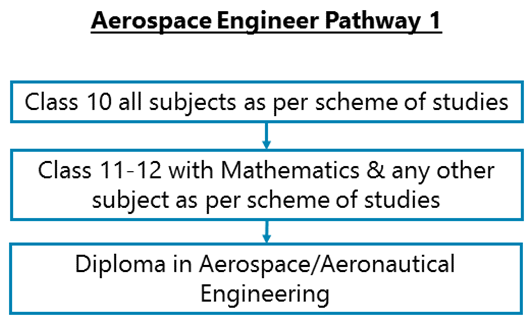
Once you’ve completed Class 10 all subjects as per scheme of studies, you can opt for a Diploma course in Aerospace/Aeronautical Engineering. The duration of this course is 3 years.
Class 10 all subjects as per scheme of studies – Class 11-12 Physics, Chemistry, and Mathematics along with any other subject as per scheme of studies - B.Tech. in Aerospace/Aeronautical Engineering
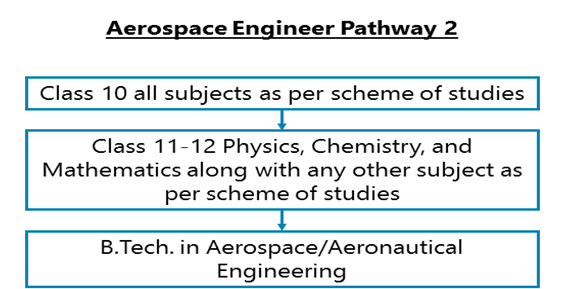
After completing your secondary level studies, you can pursue Class 11-12 Physics, Chemistry, and Mathematics along with any other subject as per scheme of studies. Following this, you can graduate with a B.Tech. degree in Aerospace/Aeronautical Engineering.
Class 10 all subjects as per scheme of studies – Class 11-12 Physics, Chemistry, and Mathematics along with any other subject as per scheme of studies - B.Tech in Mechanical/ Civil/ Electrical/Electronics/Instrumentation/Aerospace/Aeronautical Engineering - M.Tech in Aerospace/Aeronautical Engineering.
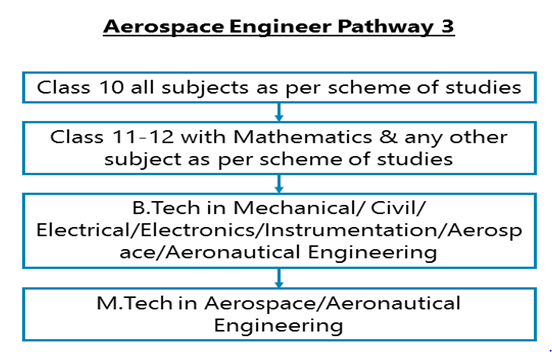
After completing your secondary level studies, you can pursue Class 11-12 Physics, Chemistry, and Mathematics along with any other subject as per scheme of studies. Following this, you can graduate with a B.Tech. degree in any of the above-mentioned specializations. After this, you can go for a more specialized course - M.Tech degree in Aerospace/Aeronautical Engineering.
Class 10 all subjects as per scheme of studies – Class 11-12 Physics, Chemistry, and Mathematics along with any other subject as per scheme of studies - B.Tech in Mechanical/ Civil/ Electrical/Electronics/Instrumentation/Aerospace/Aeronautical Engineering - M.Tech in Aerospace/Aeronautical Engineering - PhD in Aerospace/Aeronautical Engineering
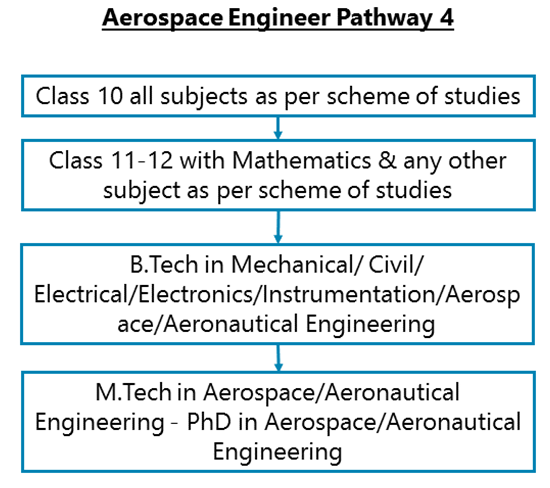
After completing your secondary level studies, you can pursue Class 11-12 Physics, Chemistry, and Mathematics along with any other subject as per scheme of studies. Following this, you can graduate with a B.Tech. degree in any of the above-mentioned specializations and then you can opt for an M.Tech degree in Aerospace/Aeronautical Engineering. If you wish to study even further, you can opt for a Ph.D. in Aerospace/Aeronautical Engineering.
Required Qualification & Competencies
Undergraduate studies after school:
To build a career in Aerospace/Aeronautical Engineering, you must complete your Class 11-12 with Physics, Chemistry, and Mathematics along with any other subject as per scheme of studies. Thereafter, you can do a graduation in Aeronautical / Aerospace / Mechanical / Civil / Electrical / Electronics / Instrumentation Engineering.
Post Graduate studies:
In this career, to build a rewarding career, it is a good idea to pursue a Postgraduate degree in Aeronautical / Aerospace Engineering or in any of the following fields:
1. Aerodynamics
2. Astronautical Engineering
3. Avionics
4. Aircraft and Spacecraft Design Engineering
5. Jet & Rocket Engineering
6. Propulsion Engineering
7. Space Engineering
8. Structural Engineering (Aircraft & Spacecraft)
9. Vehicle Dynamics & Control
Doctoral Studies:
Doctoral studies in Aerospace/Aeronautical Engineering are for those aspirants who wish to get into research and development areas in the field. Usually, Ph.D. courses focus on extensive research and coursework in areas like aerospace structures, aerodynamic systems, mechanics, thermodynamics, and other such related areas of study.

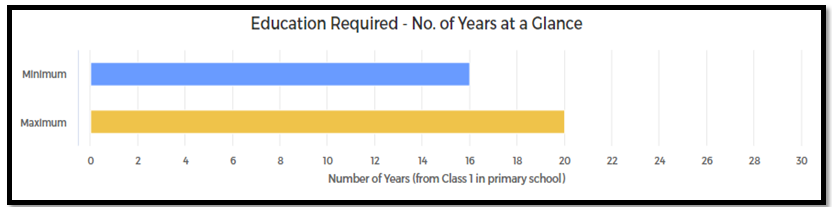
COMPETENCIES REQUIRED
1. You should have interests for Realistic Occupations. Realistic occupations involve more practical and hands-on activities than paperwork or office work. Realistic occupations often involve physical activities for getting things done using various tools and equipment.
2. You should have interests for Investigative Occupations. Investigative occupations involve working with ideas and quite a lot of thinking, often abstract or conceptual thinking. These involve learning about facts and figures; involve the use of data analysis, assessment of situations, decision making and problem-solving.
3. You should have interests for Conventional Occupations. Conventional occupations involve repetitive and routine tasks as well as fixed processes or procedures for getting things done. These occupations involve working more with data, systems, and procedures and less with ideas or creativity.
Personality traits:
1. You are always or mostly organized in your day-to-day life and activities.
2. You are always practical or in most situations.
3. You are always calm or generally remain calm in most situations.
4. You always prefer to experience new things and have new experiences or you mostly do.
Skills:
1. Critical thinking - Skills in the analysis of complex situations, using logic and reasoning to understand the situations and take appropriate actions or make interpretations and inferences.
2. Problem Solving - Skills in analysis and understanding of problems, evaluating various options to solve the problems and using the best option to solve the problems.
3. Scientific - Skills in using various scientific rules and methods to get things done or solve problems.
4. Technical - Skills in using various technologies and technical methods to get things done or solve problems.
5. Technical Design and Drawing - Skills in creating and developing designs and drawings for various structures, machines, equipment, and devices.
Knowledge:
1. Engineering and Technology - Knowledge of various applications of one or more branches of Engineering Science & Technology to manufacture and produce various goods or construct or erect various structures. This includes knowledge about design, development, prototype testing, manufacturing, construction, installation, repair, and maintenance.
2. Technical and Engineering Design - Knowledge of various techniques, methods, specifications and tools for creating, developing and laying out designs of various machines, equipment, devices, manufacturing plants, structures, systems, and processes. This includes developing blueprints, drawing, and models.
Abilities
1. Deductive Reasoning - The ability to apply general rules and common logic to specific problems to produce answers that are logical and make sense. For example, understanding the reasons behind an event or a situation using general rules and common logic.
2. Mechanical Reasoning - The ability to apply basic physical principles and theories to understand how mechanical objects such as tools and machinery works and the ability to understand the rules or laws governing the work of machinery, tools, and bodies in motion.
3. Numerical Reasoning - The ability to add, subtract, multiply, divide, and perform other basic numerical calculations correctly.
4. Spatial Ability - The ability to visualize three-dimensional objects by looking at the objects in paper or visualize objects mentally in three dimensions.
Career - Job Opportunities & Profiles
After your Bachelor Degree in Aeronautical/Aerospace Engineering, you may get an entry level opportunity as a Graduate Engineering Trainee in various organizations such as:
1. Aircraft manufacturing companies such as Hindustan Aeronautics Limited.
2. Government and defense organizations such as Defence Research and Development Laboratories (DRDO), Indian Space Research Organization (ISRO), Civil Aviation Department, Airport Authority of India, etc.
3. Airline companies such as Air India, Jet Airways and Indigo.
If you go abroad for Master's and higher studies or could obtain your degrees from a premier institution like IIT and IISc., you may get opportunities in organizations such as:
1. Boeing
2. Airbus
3. SpaceX
4. NASA (The National Aeronautics & Space Administration), USA
5. ESA (European Space Agency), Paris
6. Lockheed Martin
7. Beechcraft
Work Environment
As aerospace/aeronautical engineers have to work in engineering labs, manufacturing facilities or in the field, their working conditions often vary. They can perform their duties from an indoor office, engineering lab, factory or aircraft hanger or they can even work in testing sites where working prototypes of aircraft and weapon systems are unveiled and tested. Usually, aerospace/aeronautical engineers work nearly 40-50 hours every week.
SPECIALISATION TRACKS IN THIS CAREER
1. Aerodynamics and Flight Mechanics Specialist
These professionals are extremely well versed with the concepts of aerodynamics and flight mechanics. They use this knowledge to design aircraft/spacecraft that are both environmental friendly and efficient. Aerodynamics and Flight Mechanics Specialists use a combination of various aerodynamic principles to ensure that all aircraft/spacecraft products operate safely.
2. Aircraft Structures and Materials Engineer
Aircraft Structures and Materials Engineers study the mechanical behavior of solids and structures relevant to all aircraft products and components. They possess extensive knowledge of material and structural stability, computational material/structural design, thermo-mechanical and electro-mechanical interactions, structural dynamics, aeroelasticity, etc. They use composite materials and advanced multifunctional materials to construct modern aircraft structures.
3. Propulsion Engineer
Propulsion Engineers design propulsion systems and parts including engines, pumps, propellant systems, pressurization tanks, and control systems. It is their duty to monitor the performance of rocket motors, jet engines, compressors, etc., and improve on it.
4. Astronautical Engineer
Astronautical engineers use a combination of scientific, technical, and practical skills to design, develop, research, test, and enhance aerospace products such as space shuttles, space launch vehicles, satellites, rockets, space capsules, and planetary probes. They often take on specialist roles that focus exclusively on particular sub-categories of astronautical engineering such as electrical and electronic engineering, spacecraft design, structural engineering, etc.
5. Avionics Engineer
Avionics Engineers are primarily involved in designing and developing electrical systems of spacecraft, aircraft, satellites, missiles, etc. They also design the computer system support for communication, navigation, as well as guidance systems. Apart from this, they conduct researches to identify and solve issues related to flight safety systems, electronic navigation systems, etc.
6. Aircraft/Spacecraft Systems and Control Engineer
Aircraft/Spacecraft Systems and Control Engineers are responsible for developing system-level design concepts and requirements such as system requirement definition and allocation, architecture design, specification development, performance analysis and simulation, system modeling, simulation tool development, etc. Also, they provide support for hardware design, manufacturing, integration, and testing.
7. Drone Engineer
Drone Engineers design, develop, build, test, repair, and maintain different types of drones, which are in the class of UAV (Unmanned Aerial Vehicle). Drones are robotic aerial vehicles that can fly autonomously using various electronic processors and software. Drones' flight plans and paths are generally remotely controlled by people who are often termed as Drone Pilots or Drone Operators. Drones are widely used for defense purposes as well as a variety of civil purposes. Unmanned Aerial Vehicles are now capable of flying a few meters to hundreds of kilometers across countries. Military drones of some countries can fire powerful bombs at precise targets. Police use drones for traffic control, crowd control, monitoring movements of people during riot like situations, and for surveillance. Drones are widely used for aerial photography, firefighting, geographical surveys, agricultural surveys, and even for delivery of goods from warehouses to customers' houses. In the future UAVs will be used as air taxis as well.
CAREER GROWTH
You can begin your career in Aerospace/Aeronautical Engineering with job positions such as Materials Lab Technician, Avionics Technician, etc. after your Diploma or as Graduate Engineer Trainee after your Degree.
However, after you’ve gained enough industry experience, you can aim for more challenging job roles like Thermal Design Engineers, Consultants, Mechanical Design Engineers, Aerospace Technologist, Aircraft Production Manager, Assistant Technical Officers, Structural Analysis Engineer, and much more. Once you have more than 20 years of experience, you can get promoted to senior-level jobs like that of Senior Aerospace Engineers, Senior Project Engineer, Senior Aerodynamics Engineer, Director of Operations, Chief Technology Officer, Senior Mechanical Engineer, etc.
Salary Offered
1. After your bachelor degree program, you may expect to earn about Rs. 40,000 - 80,000 or even more per month.
2. In junior level roles, you can expect to earn about Rs. 70,000 - 1,00,000 or more per month.
3. In mid-level roles, you can earn about Rs. 1,20,000 - 2,50,000 or even more per month.
4. In senior level roles, you can earn about Rs. 2,00,000 - 5,00,000 or even more per month.
5. If you are working abroad, depending on your qualifications and experience, you may earn USD 5,000 to 20,000 or more per month.
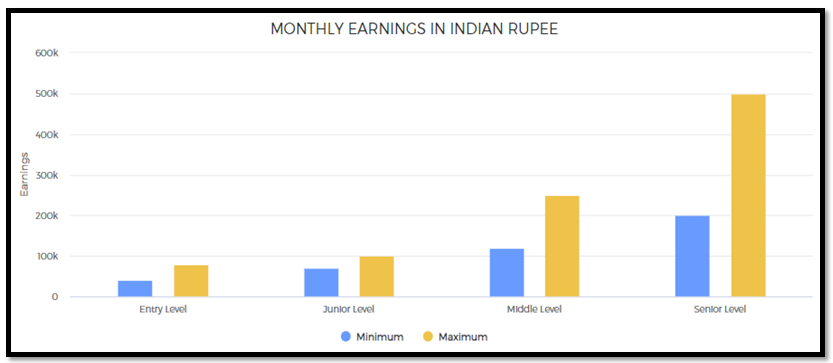
MONTHLY EARNINGS IN INDIAN RUPEE

1. Entry level: 0 - 2 years of work experience
2. Junior Level: From 1 to 12 years of work experience
3. Mid-Level: From 5 to 20+ years of work experience
4. Senior Level: From 10 to 25+ years of work experience (there could be exceptions in some high-end technical, financial, engineering, creative, management, sports, and other careers; also in the near future, people will reach these levels much faster in many careers and in some careers, these levels will have no meaning as those careers will be completely tech skill driven such as even now, there is almost no level in a Cyber Security Expert’s job).
Work Activities
Although the branches of aerospace engineering and aeronautical engineering have their own specific set of core responsibilities, there are a few things that are common to both:
1. Creative thinking: Developing new ideas, concepts, innovative solutions to problems, newer ways of getting things done, designing products and services, creating work of art and craft, etc.
2. Assessing and evaluating quality: Assessing and evaluating the quality of materials, systems, processes, products, services, etc.
3. Decision making and problem-solving: Analysis of data and information; evaluation of alternative decisions and results of decisions; taking the right decisions and solving problems.
4. Drawing, drafting, laying out and specifying objects, equipment, devices, tools, and systems: Creating and developing designs, drawings, layouts and specifications about how to construct, manufacture, assemble, build, use, and maintain various equipment, devices, tools, and systems.
5. Monitoring processes, systems, and performance: Observing and recording information on various criteria to monitor mechanical, electronics, electrical and other processes and systems; monitoring the progress of projects and tasks.
6. Fabricating, assembling, and constructing equipment, devices, and products: Fabricating, assembling, constructing or otherwise manufacturing products, equipment, devices and tools; testing and calibrating products, equipment, devices, tools and systems.
7. Strategic planning: Developing visions and goals, developing strategies and action plans for achieving visions and goals.
8. Working in a team: Working in a team of people; developing a team; maintaining professional relationships among team members.
Future Prospects
India’s aviation industry depicts a high-growth trajectory, thanks to the rapid economic growth and high demand across the civil, defense and space segments. According to the International Air Transport Association (IATA), by 2026, India will emerge as the third-largest aviation market. India’s aviation industry is predicted to witness an investment of Rs. 35,000 crore (US$ 4.99 billion) in the next four years. Also, IBEF (Indian Brand Equity Foundation) reports show that by 2026, the Indian government will be investing nearly US$ 1.83 billion for the development of airport infrastructure along with aviation navigation services. These statistics establish the fact that there will be a significant rise in the demand for skilled professionals both in India as well as overseas in the field of Aerospace and Aeronautical engineering.
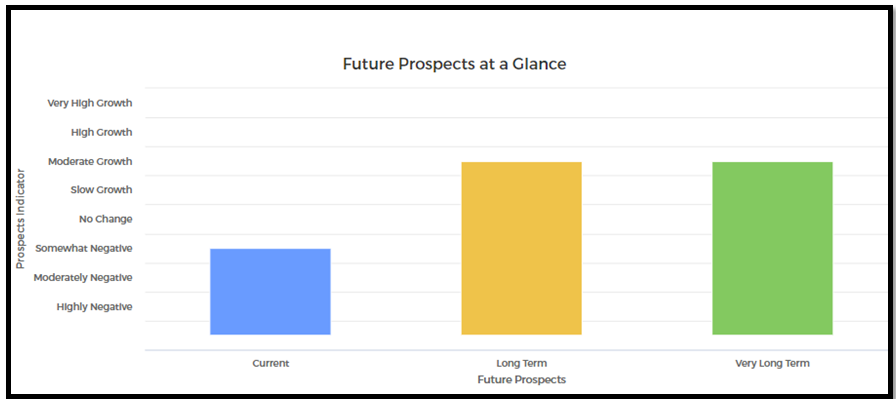
FUTURE PROSPECTS AT A GLANCE
