

Professional Blogger
Entry Level Qualification
Class 12
Career Fields
Mass Media, Journalism & Entertainment
For Specially Abled


About Career
1. As a Blogger, you will have to write different articles, prose, poetry, essays, and other textual material or create videos focusing on diverse topics ranging from finance, food, and travel to consumer products, cars, and movies following your interests in specific fields. Your written articles or videos will be published online on Websites, Webpages or mobile / Web applications. Video Bloggers are also called ‘Vloggers’.
2. You may work independently to maintain your personal Website or you may work for any company. You may also find work with content related agencies which employ bloggers to write for their clients. This field demands the ability to conduct extensive exploration and investigation about several topics that you may not be aware of initially.
3. You should have good research and writing skills although you do not need any formal education or certification to become a professional Blogger. You will need to work for long hours and type for extended periods to generate written textual matter keeping in mind the target audience and the latest trends, without losing your creativity.
4. Since your work will mostly be published online, you may need to know how to grow your search traffic (increase the chance of people discovering your writing first while searching on a particular topic online). This strategy is more commonly known as SEO (Search Engine Optimization) today. You may need to attend SEO courses in order to know more about this.
5. The best thing about being a professional blogger is that you can set your own targets and work accordingly. As a professional blogger you get to decide your area of interest and create a platform that can then further promoted for viewer traffic on which your earnings highly depend. With the growing pace of digitalization, blogs have become a great platform to start earning and this is entirely based on two things- good content and viewership traffic.
Key Roles and Responsibilities
A professional blogger is responsible for writing, editing and promoting the content of a personal blog or for a corporate organisation. The core responsibilities of a blogger is to research for each post, pitch in unique and creative ideas, write in an engaging way, adding related pictures and tables and other relevant data.
As a blogger, you will be involved in following key roles and responsibilities:
1. Receiving assignments or evaluating tips or leads to create story ideas.
2. Choosing subject matter and suitable forms to express concepts and ideas, or to narrate events or stories.
3. Conducting research on a subject's background information to obtain authentic detail and factual information providing accurate and complete information, using sources like diaries, online resources, books, newspaper accounts or other material.
4. Developing factors such as context, themes, framework, sub-sections, and textual design to create required material.
5. Writing nonfiction or fiction prose, such as short stories, biographies, novels, articles, critical or descriptive reports, and essays.
6. Writing narrative, lyrical, dramatic, or other kinds of poetry to be published.
7. Following appropriate procedures to obtain your copyrights for finished work.
8. Attending product launches and publicity events, or conducting public readings.
PARTICULARS | DESCRIPTION |
Name | Professional Blogger |
Purpose | Share Information, Ideas, & Thoughts |
Career Field | Mass Media, Journalism & Entertainment |
Required Entrance Exam | No Entrance Exam |
Average Salary | 2,00,000 - 4,00,000 Rs. Per Year |
Companies For You | Writing agencies, Media / Entertainment, Publishing & Many More |
Who is Eligible | Any One |
Career Entry Pathway
Class 10 all subjects as per scheme of studies –– Class 11-12 with any subject as per scheme of studies – B. Voc / Bachelor degree in any discipline
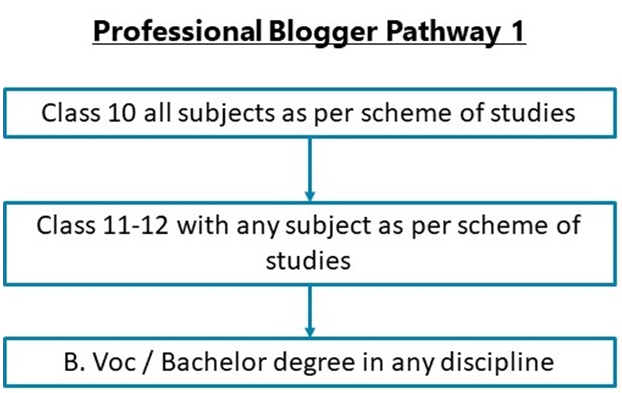
After completing Class 10 all subjects as per scheme of studies then Class 11-12 with any subject as per scheme of studies, you can finish your B. Voc (Bachelor of Vocation) / Bachelor degree in any discipline. If you have a degree in English or other language, it may be useful for creative writing (although not essential). If you have a degree in engineering, technology, or science, you may do well in technical writing. If you want to learn the skill, you may do a course in creative writing or professional blogging. There are many online courses, both free and at a cost.
Class 10 all subjects as per scheme of studies –– Class 11-12 with any subject as per scheme of studies – B. Voc / Bachelor degree in any discipline - PG Dip. / Certificate / PG Programme in your respective field
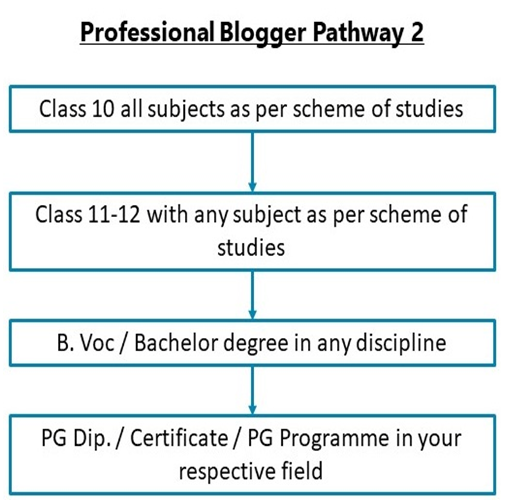
After completing Class 10 all subjects as per scheme of studies then Class 11-12 with any subject as per scheme of studies then B. Voc / Bachelor degree in any discipline, you can finish your Post Graduate Diploma or any Post Graduate Certificate or a Post Graduate Programme in your respective field. If you have a degree in English or another language, it may be useful for creative writing (although not essential). If you have a degree in engineering, technology, or science, you may do well in technical writing. If you want to learn the skill, you may do a course in creative writing or professional blogging. There are many online courses, both free and at a cost.
Required Qualification & Competencies
1. Structured and formal education is not necessary to become a Blogger. However, it is advisable to complete at least a graduation to become a Blogger as you will have to conduct extensive researches on varied topics according to your work requirements for reproducing the gathered information in your own words.
2. While continuing with your education, you can attend training lessons related to blogging offered by several private educational establishments, digital marketing, and allied companies, training wings of privately owned businesses, etc. across the country.
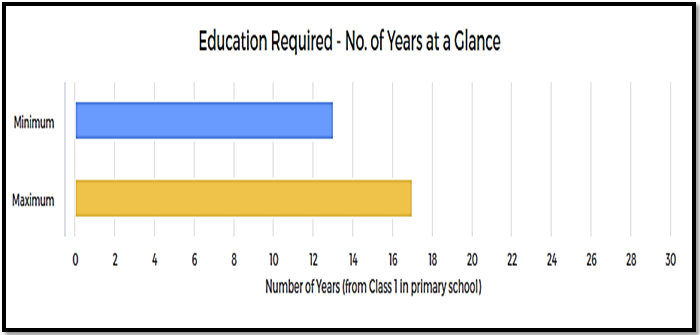
MINIMUM EDUCATION REQUIRED | MAXIMUM EDUCATION REQUIRED |
Post Higher Secondary Diploma / Certificate Programs for which the minimum eligibility is a pass in Higher Secondary / Class XII School Leaving examination. | Post Graduate Postgraduate Degree / Diploma / Certificate Programs for which the minimum eligibility is a pass in Graduation / equivalent Diploma program like Honours Diploma or Graduate Diploma. |
Competencies Required
1. You should have an interest in Artistic Occupations. Artistic occupations mostly involve working with creative ideas, art, and designs. These occupations involve abstract or conceptual thinking, and creative self-expression and often do not follow any set processes or rules for getting things done.
2. You should have an interest in Investigative Occupations. Investigative occupations involve working with ideas and quite a lot of thinking, often abstract or conceptual thinking. These involve learning about facts and figures; involve use of data analysis, assessment of situations, decision making and problem-solving.
3. You should have an interest in Enterprising Occupations. Enterprising occupations involve taking initiative, initiating actions, and planning to achieve goals, often business goals. These involve gathering resources and leading people to get things done. These require decision-making, risk-taking, and action orientation.
4. You should have knowledge of Communications and Media - how different media such as print, television, radio, and social media works. This includes various ways to inform and entertain people via print, audio, audio-visual, and online media.
5. You may need knowledge of English Language - English grammar, words, spelling, sentence construction, using English to communicate with others, reading in English, etc.
6. You should have Writing Skills - communicating effectively in writing as appropriate for the needs of the readers.
7. You should have Critical Thinking Skills- Skills in the analysis of complex situations, using logic and reasoning to understand the situations and take appropriate actions or make interpretations and inferences.
8. You should have Reading Comprehension Skills - Skills in understanding written sentences and paragraphs in work-related documents.
9. You should have Active Learning Skills - Focused and continuous learning from various sources of information, observation and otherwise for application in getting work done.
10. You should have Originality - The ability to come up with unusual or innovative ideas about a given topic or situation or to develop creative ways to solve a problem.
11. You should have Fluency of Ideas - The ability to come up with a number of ideas about a topic (the number of ideas is important, not their quality, correctness, or creativity).
12. You should have Written Expression Ability - communicate information and ideas in writing so others will understand.
13. You should have Oral Comprehension Ability - listen to and understand information and ideas presented through spoken words and sentences.
13. You should have Oral Expression Ability - communicate information and ideas in speaking so others will understand.
14. You should have Speech and Language Recognition Ability - identify and understand the speech and language of another person.
15. You are always imaginative or in most situations.
16. You act independently sometimes but do not do so in some other times.
17. You prefer to experience new things and have new experiences sometimes.
18. You are mostly impulsive in your action and behavior.
Career - Job Opportunities & Profiles
At the beginning, you must start writing your own blogging website using tools such as WordPress, Blogger, Squarespace, Wix, etc. or microblogging sites like Facebook, Twitter, Tumblr, Dailybooth, Posterous, Instagram, Pinterest, 12 Seconds. If you can gather a large number of followers, you may start earning through your own blog. You earn simply by using google ads on your blog. But to earn sufficient money, you need to have a large number of followers or a large number of subscribers to your vlog.
Apart from that, various companies may hire you on a freelance basis to write their blogs. Some examples are:
1. Writing agencies
2. Media / Entertainment
3. IT-Software / Software Services
4. Internet / E-commerce
5. Advertising / PR / MR / Event Management
6. Education / Teaching / Training
7. Banking / Financial Services / Broking
8. Travel / Hotels / Restaurants / Airlines / Railways
9. Strategy / Management Consulting Firms
10. Publishing
11. KPO / Research / Analytics
12. NGO / Social Services / Regulators / Industry Associations
Specialisation Tracks In This Career
1. Professional Blogger
Professional Bloggers are full-time employees with various companies who want company related information or general information to be relayed to stakeholders (interested parties like clients, investors, competitors, general public etc.) through written textual materials (blogs) on their company Websites.
2. Freelance Blogger
Freelance bloggers get hired by companies or entrepreneurs to write on specific topics. This is usually flexible hiring for a certain period of time and for definite work related projects only on a freelance basis. They usually work from home or their personal studio office. This way they can gather a number of clients and develop their personal business networks too.
3. Personal Blogger
Personal Bloggers select their own subjects and write independently. Business owners also write blogs about their businesses to reach a wider audience (business bloggers). Personal Bloggers build their own Websites with help from online services like GoDaddy, HostGator, Bluehost etc. They select the kind of advertisements they want to display on their Websites so that when readers visit their pages, they might see and click on those advertisements. Personal Bloggers get paid through these advertisements. They select advertisements using services like Google AdSense, Infolinks, Chitika, and Media.net
4. Vlogger
Vloggers shoot videos following their interests in specific fields and post them online. The topics may be finance, food and travel or consumer products, cars and movies. The videos can be related to anything like music, dance, politics, news, beauty / self care, comedy, parody, film reviews, mobiles / gadget reviews, car reviews or the ‘how-to’ categories like how to build something or how to cook something or how to do something etc.
5. Microblogging
Microbloggers post short messages (with or without associated pictures, images or videos) or only images and videos on Facebook, Twitter, Tumblr, Dailybooth, Posterous, Instagram, Pinterest, 12 Seconds or similar social networks and microblogs. Most companies today look for Microbloggers or content writers for posting regular updates (company related information) on their social networks or official Websites. Microblogging is becoming extremely popular these days as less time is spent for developing content and consuming it, blogs can be posted more frequently (being less time consuming), urgent and time-sensitive posts can be shared easier, communication with the followers is much more direct as compared to bigger and longer posts.
Career Growth
Career progress in this career is about garnering more and more followers to your blogs or subscribers to your video blogs. The more you garner, the more fame you have and the more money you have. Reputed professional bloggers earn in millions.
Salary Offered
1. If you are working as a freelancer, you may get about 80 paisa per word at the beginning of your career. Depending upon the quality of your work over a period of time, you may start getting about Rs. 1 – 2 per word. Senior freelancers may charge even Rs. 4 per word. Your monthly earning will depend upon how much work you can take. It’s difficult to get work initially. You will need 2-3 years to get work regularly. Once you start getting work regularly, you may earn anything between Rs. 25,000 – 75,000 or even more a month. It’s not impossible to earn more than a lakh a month too.
2. If you have your own blog, you have to build a very large base of followers. When that happens, say, you have a follower base of 50,000, you may activate google advert on your blog and start earning money from it. This will take time but when you reach a great number of followers, it will not be impossible to earn Rs. 50,000 – 1,00,000 or much more per month on an average.
3. The same is true for vlogging on Youtube. Depending on the number of unique viewers or subscribers on your channel, Youtube may show ads and you can start earning money. Quality of your videos will matter a lot. If you can hit something like 50,000 – 100,000 subscribers or views, you can earn decent money. It’s not impossible to earn Rs. 50,000 – 2,00,000 or even more per month from Youtube.
4. Similarly, you can make money from microblogging sites like Facebook, Twitter, Tumblr, Dailybooth, Posterous, Instagram, Pinterest, 12 Seconds.
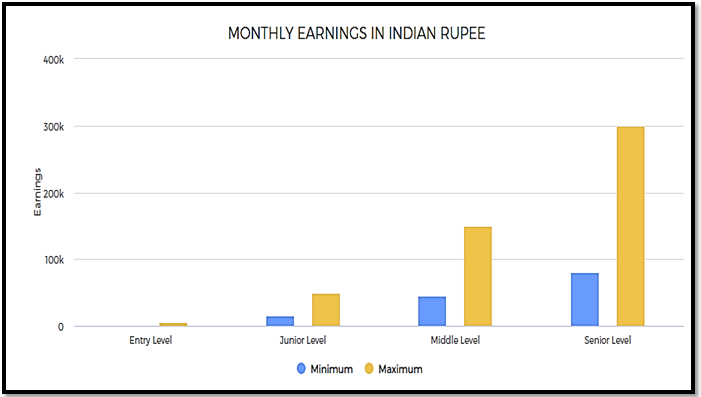
Monthly Earning In Indian Rupee
Entry Level | Junior Level | Mid Level | Senior Level | |||||
Min Earning | Max Earning | Min Earning | Max Earning | Min Earning | Max Earning | Min Earning | Max Earning | |
1000 | 5000 | 15000 | 50000 | 45000 | 150000 | 80000 | 300000 | |
1. Entry level: 0 - 2 years of work experience
2. Junior Level: From 1 to 12 years of work experience
3. Mid-Level: From 5 to 20+ years of work experience
4. Senior Level: From 10 to 25+ years of work experience (there could be exceptions in some high-end technical, financial, engineering, creative, management, sports, and other careers; also in the near future, people will reach these levels much faster in many careers and in some careers, these levels will have no meaning as those careers will be completely tech skill driven such as even now, there is almost no level in a Cyber Security Expert’s job)
Work Activities
1. Creative thinking - Developing new ideas, concepts, innovative solutions to problems, newer ways of getting things done, designing products and services, creating work of art and craft, etc.
2. Getting Information and learning - Observing, hearing, and reading using computers, or otherwise obtaining information and learning from it.
3. Using computers for work - Using computers for day-to-day office work; using computer software for various applications in day-to-day professional work; entering data and process information; for writing.
4. Updating and using relevant knowledge - Keeping updated with the latest knowledge relevant to your fields of work and use of the relevant knowledge in getting things done.
5. Scheduling tasks - Scheduling project timelines, tasks and activities.
6. Organizing, planning and prioritizing tasks - Planning and organizing tasks in order to achieve work goals; prioritizing tasks to achieve goals and making the best use of the time available.
7. Analysing and interpreting data and information - Analysis of data and information to find facts, trends, reasons behind situations, etc.; interpretation of data to aid in decision making.
8. Processing information - Searching, compiling, tabulating, calculating, auditing, verifying or otherwise dealing with information processing including data entry, transcription, recording, storing and maintaining databases.
9. Translating and interpreting - Translating or interpreting information for other people who are written or spoken in languages that other people do not understand.
Future Prospects
1. The road ahead for this pathway looks bright. India is the 2nd largest global online market behind China. The number of Internet users in India is reportedly going to reach a hefty 630 million. Such a massive online audience is profitable for Indian Bloggers who depend on organic reach (unpaid distribution) through social media, Google, or other search engines. This number has reported an annual growth rate of around 18%. Out of the total user base, 87% are regular users accessing the Internet daily. More than 40% of these regular users are from rural India which validates the tremendous Internet penetration in the country through faster networks, cheap data plans, and easier accessibility.
2. The urban growth rate of Internet users is around only 7% whereas the rural one is around 35%. Indian Bloggers can easily adopt this profession as digital consumption has peaked recently in the country. Active social media penetration (through mobile phones) has reached 21%. The average time per week spent by users across rural India is almost 437 minutes on online written material, digital advertisements, news, chat applications, entertainment, and social media.
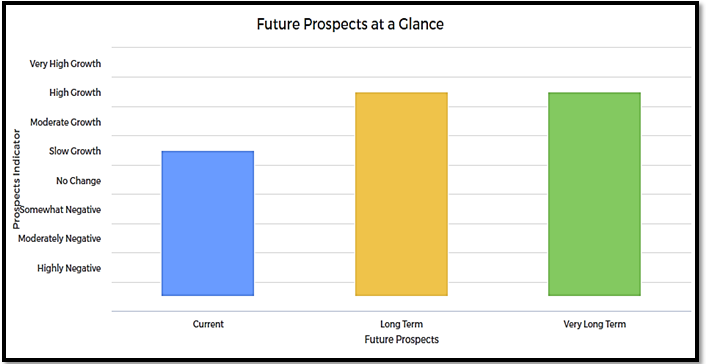
Future Prospects At A Glance
Current (0-1 year) | Long Term (2-5 year) | Very Long Term (6-10 years) |
Slow Growth | High Growth | High Growth |