

Geologist / Earth Scientist
Entry Level Qualification
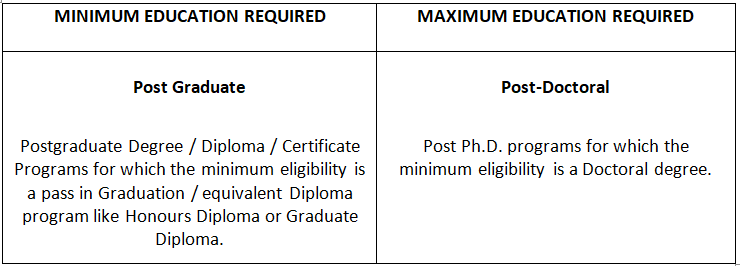
Class Post Graduate
Career Fields
Education & Teaching
For Specially Abled


Career Entrance Exam
About Career
PARTICULARS | DESCRIPTION |
Name | Geologist / Earth Scientist |
Purpose | Studies The Structure, Composition, & History of Earth |
Career Field | Mathematics & Science |
Required Entrance Exam | No Entrance Exam |
Average Salary | 5,00,000 - 15,00,000 Rs. Per Year |
Companies For You | SLB, Shell, Reliance Industries & Many More |
Who is Eligible | Post Graduate |
Geology is the study of our planet, the Earth, as well as other planetary objects like moon or natural satellites in near-earth space. This includes study of the materials that these planets are made of, the chemical / physical processes resulting in the properties on the surface and the interior. Geology includes study of the history of Earth formation and the materials with which the Earth is made of.
What do Geologists primarily do?
1. Geologists are involved in exploration and scientific assessment of minerals, energy and water resources through ground, satellite, airborne, and marine surveys.
2. Some Geologists study formation, supply and conservation of ground water or subsurface water that can be collected with wells, drainage pipes etc. or that flow naturally to the earth surface via springs and seeps. Some study mineral / ore deposits across the globe. Some Earth Scientists are involved in ecosystem modeling specifically to define wildlife sustainability.
3. Soil dynamics (land movements) are of special importance for Earth Scientists. In seismic (earthquake) engineering this affects the stability of dams, slopes, building foundations, walls and tunnels, while vibrations caused due to traffic and construction activities represent a significant concern as well.
4. Earth Scientists / Geologists, through their studies and analyses, help in decision-making for formulating policies as well as plans commercial, economic and societal needs, help in critical mineral assessments, infrastructure projects / urban planning, flood prediction and hazard mitigation by assessing water availability, oil / mineral deposits, assessing the risks of rock falls or landslides, earthquakes, underwater volcanic eruptions to humans, property and the environment on the whole.
What will professional work be like?
Work will be field-based involving physical collection of geological data from field areas according to work projects or will be laboratory-based for analyzing already collected data through experimentation, with the help of state of art methodologies, apparatuses and instruments and new emerging computer-based technologies. Work hours may also partially be office based surrounding interpretation and assessment of experimental outcomes and results.
As a Geologist/Earth Scientist, you will study and analyze geological materials likerocks, minerals, water and soil as well as the formation / movements of these. You will be studying the dynamic processes in the Earth's core, mantle, and crust.
You will be involved in locatingsuitable agricultural areas, valuable mineral formations, water resources, abandoned mines, contaminated land, by assessing the physical and chemical characteristics of the ground beneath our feet.
However, whether you would work at agricultural land, minerals, rocks, water, moon or mines, will depend on the branch of Geology that you are practicingat the professional level, such as Planetary Geology, Mining Geology, Structural Geology or Hydrogeology etc.
Functional Fields of Work
As a Geologist/Earth Scientist, you will be involved in any one of the following broad functional domains and will assume responsibilities accordingly:
1. Investigation, Fieldwork, Data Interpretation/Presentation
Work will involve physical collection of geological data from field areas according to work projects. Work hours will also partially belaboratory / office based surrounding computational analyses / interpretation of scientific data already acquired through field research in a corporate set-up or General Government Sector institutional units.
Work projects will generally be targeted at a specific sector of a certain industry for e.g. Agriculture, Communications & IT, Rural Development, Water Resources, Defense, Urban Planning, Consumer Services, Civil Construction, Mining etc.
2. Inspection, Research, Analysis and Modeling
Work is primarily laboratory based involving scientific inspection of collected geological data through experimentation, with the help of state of art methodologies, apparatuses and instruments and new emerging computer-based technologies. Work may involve physical collection of geological data from field areas as well. Team members build geological maps and models too (2 D and 3 D), through simulation and computational designing.
3. Issuing Authority - Permissions and Legal Notices
Work will be office based typically in General Government Sector departmental units.Work will involve reviewing and processing applications followed by issuing permits and notices for various geological and geophysical explorations or scientific research activities / projects before they begin. Existing knowledge of Geology and geological concerns has to be profound before investigating into different project objectives.
4. Education and Training
Typically, in universities, all educators are involved in research – both fundamental and basic as well as applied research. For an example, being an educator you may be working on your research project that uses geochemical data and modeling to identify all the ways saline groundwater can be contaminated. Simultaneously, you can be teaching a class of post graduate students as well as supervising different doctoral researches that PhD scholars in your team are completing.
Education here refers to both self-propelled independent research activities in a laboratory setting owned by an academic institution and imparting education / training to students or scholars pursuing higher studies in the disciplines of Geological Sciences, Earth Sciences, Geochemistry, Geodynamics, and all similar sub-branches.
Key Roles and Responsibilities
As a Geologist/Earth Scientist, depending on your functional field of work, you will be engaged with one or more of the following roles and responsibilities: -
For Investigation, Fieldwork, Research, Modeling
1. You will be working on a wide range of projects which will include mining and resources, roads, rail, civil and industrial.
2. You will be analyzing and interpreting geological, geochemical, or geophysical information from various sources.
3. You will be preparing geological maps, cross-sectional diagrams, models, charts, or reports relating to mineral extraction, land use, or resource management, from results of fieldwork or laboratory research.
4. You will be planning or conducting geological, geochemical, or geophysical field studies or surveys, sample collection, or drilling and testing programs to collect data for research or application.
5. You will be creating visual representations of geological data, using complex procedures such as analytical modeling or software algorithms.
6. You will be performing integrated or computerized analyses to address scientific problems.
7. You will be applying standard mathematical formulas to identify and measure elevations, geographic locations etc.
8. You will be reading current literature, talking with colleagues, continuing education, or participating in professional organizations or conferences to keep yourself informed of developments in relevant technology, equipment, or systems.
For Issuing Project Permits
1. You will be reviewing and processing applications and issue permits to drill and operate oil and gas wells, or all other geological and geophysical explorations or scientific research activities.
2. You will have to ensure compliance with all applicable mitigation measures so that those activities do not interfere with or endanger aquatic life or cause harm to the marine, coastal, or human environment.
3. You will have to assess the possibility of hydrocarbon emissions relating to various geological projects.
4. You will have to ensure that all applications relating to shallow or deep drilling activities (involving solid or liquid explosives) for mineral exploration or scientific research utilizes the best available and safest technologies.
5. You will have to check that the concerned project does not involve restricted areas or geographical locations banned from anyproject activities.
For Education and Training
1. You will be involved in conducting research regarding new technologies, experimental techniques, instruments and laboratory supplies that can improve research standards as well as operating procedures and outcomes.
2. You will be preparing detailed written or verbal presentations, technical reports and compilations based upon research outcomes for publication, grant or patent applications.
3. You may be involved in teaching/demonstrating to a class of post graduate students or a team of research scholars pursuing this academic discipline in an educational establishment.
4. You will participate in seminars, science congresses, conferences across the world.
Career Entry Pathway
Class 10 all subjects as per scheme of studies – Class 11-12 Physics, Chemistry, and Mathematics along with any other subject as per scheme of studies –Bachelor’s degree in Geology / Earth Science / related subject – Master’s degree in Geology / Applied Geology / Earth Science / Oceanography / related subject
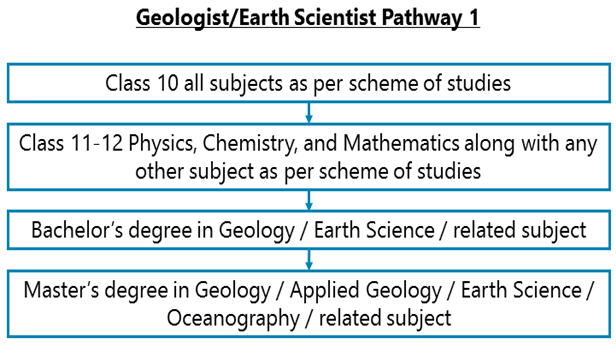
After your Class 11-12 Physics, Chemistry, and Mathematics along with any other subject as per scheme of studies. Then you can opt to study for a Bachelor degree in Geology / Earth Science / related course. Along with your major in Geology or a related course, it is better to keep both Physics and Chemistry as minor subjects or Physics and Mathematics. After your Bachelor’s degree, you should do a Master’s degree in Geology/ Geosciences/ Earth Sciences / Applied Geology / Environmental Geology / Exploration Geosciences / Geochemistry / Marine Geology / Oceanography (Geological) / Geoinformatics / Petrology or a related subject.
Class 10 all subjects as per scheme of studies – Class 11-12 Physics, Chemistry, and Mathematics along with any other subject as per scheme of studies – Bachelor’s degree in Geology / Earth Science / related subject – Master’s degree in Geology / Applied Geology / Earth Science / Oceanography / related subject – Ph.D. in Geology / Applied Geology / Geosciences / Applied Geophysics / Geophysics / Geochemistry / Oceanography / or a related subject
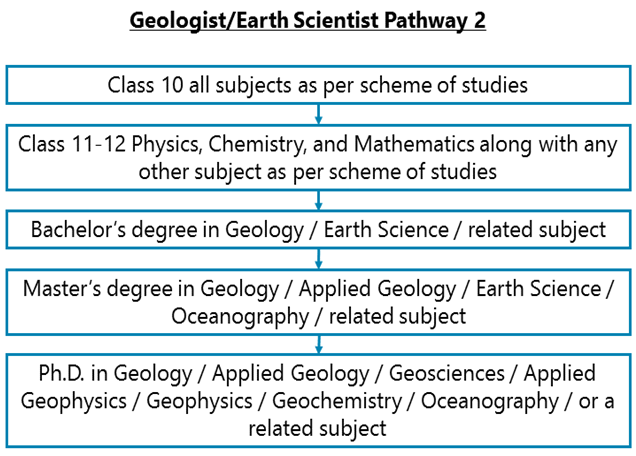
After your Class 11-12 Physics, Chemistry, and Mathematics along with any other subject as per scheme of studies, Then you can opt to study for a Bachelor degree in Geology / Earth Science / related course. Along with your major in Geology or a related course, it is better to keep both Physics and Chemistry as minor subjects or Physics and Mathematics. After your Bachelor’s degree, you should do a Master’s degree in Geology/ Geosciences/ Earth Sciences / Applied Geology / Exploration Geosciences / Geochemistry / Marine Geology / Oceanography (Geological) / Geoinformatics / Environmental Geology / Petrology or a related subject. Post your Master’s degree, you can opt for a Ph.D. in Geology / Applied Geology / Geosciences / Applied Geophysics / Geophysics / Exploration Geosciences / Geochemistry / Marine Geology /Oceanography (Geological) / Geoinformatics / Petrology / Minerology / Environmental Geology / or a related subject.
Class 10 all subjects as per scheme of studies – Class 11-12 Physics, Chemistry, and Mathematics along with any other subject as per scheme of studies – Bachelor’s degree in Physics – M.Sc. Tech. in Geophysics / Applied Geophysics or related OR M.Sc. in Geophysics / Geophysics and Geosciences / Applied Geophysics / or a related subject
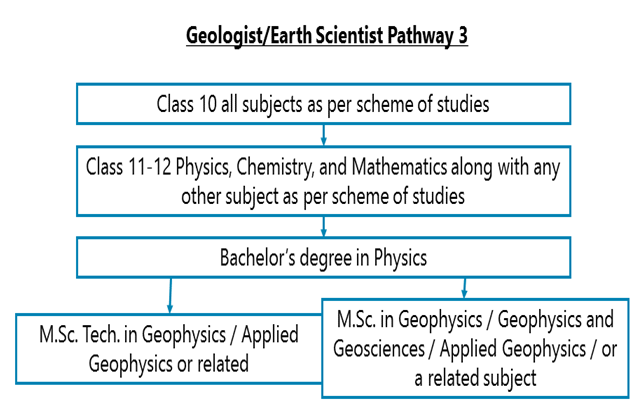
After your Class 11-12 Physics, Chemistry, and Mathematics along with any other subject as per scheme of studies you can opt to study for a Bachelor degree in Physics. Along with your major in Physics, you must keep Mathematics as a minor subject. Apart from Physics as major and Mathematics as a minor, you must also study Chemistry / Geology / Computer Science / Statistic as the second minor subject. After your Bachelor’s degree, you should study for a Master’s degree. You can do a 3-year M.Sc. Tech. in Geophysics / Applied Geophysics / a related subject or do a 2-year M.Sc. in Geophysics / Geophysics & Geosciences / Applied Geophysics / or a related subject.
Class 10 all subjects as per scheme of studies – Class 11-12 Physics, Chemistry, and Mathematics along with any other subject as per scheme of studies – Bachelor’s degree in Physics – M.Sc. Tech. in Geophysics / Applied Geophysics or related OR M.Sc. in Geophysics / Geophysics and Geosciences / Applied Geophysics / or a related subject – Ph.D. in Geology / Geophysics / Earth Sciences / Applied Geology / Applied Geophysics / related subject
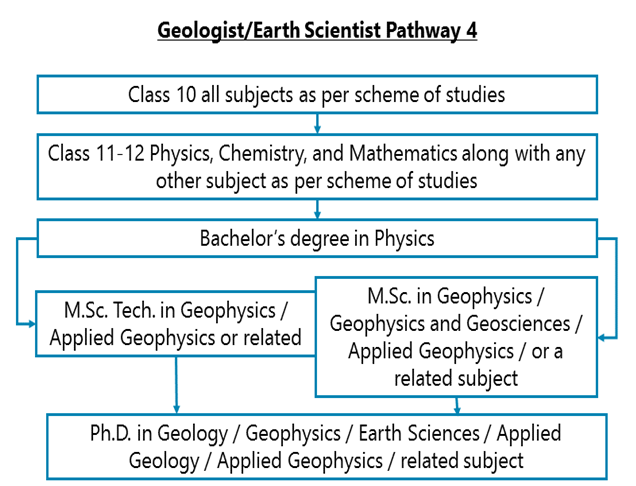
After your Class 11-12 Physics, Chemistry, and Mathematics along with any other subject as per scheme of studies you can opt to study for a Bachelor degree in Physics. Along with your major in Physics, you must keep Mathematics as a minor subject. Apart from Physics as major and Mathematics as a minor, you must also study Chemistry / Geology / Computer Science / Statistic as the second minor subject. After your Bachelor’s degree, you should study for a Master’s degree. You can do a 3-year M.Sc. Tech. in Geophysics / Applied Geophysics / a related subject or do a 2-year M.Sc. in Geophysics / Geophysics & Geosciences / Applied Geophysics / or a related subject. After your Master’s degree, you can do a Ph.D. in Geology / Geophysics / Earth Sciences / Applied Geology / Applied Geophysics / Geosciences / Exploration Geosciences / Geochemistry / Marine Geology / Geoinformatics / Petrology / Minerology / Environmental Geology / related subject.
Class 10 all subjects as per scheme of studies – Class 11-12 Physics, Chemistry, and Mathematics along with any other subject as per scheme of studies – B.E. / B.Tech. / similar degree in Civil Engineering / Geoscience Engineering / similar – M.Tech. in Engineering Geology / Engineering Geosciences / similar degree
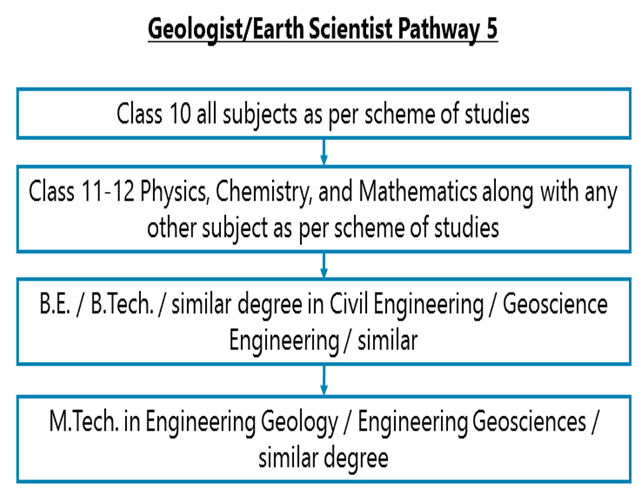
After your Class 11-12 Physics, Chemistry, and Mathematics along with any other subject as per scheme of studies you can opt to study for a Bachelor degree in Civil Engineering or in Geoscience Engineering or in a similar field. Then you can do an M.Tech. in Engineering Geology / Engineering Geoscience / a similar course.
Class 10 all subjects as per scheme of studies – Class 11-12 Physics, Chemistry, and Mathematics along with any other subject as per scheme of studies – Bachelor’s degree in Geology / Earth Science / Physics / related subject – Master’s degree in Applied Geology / Applied Geophysics / related subject – M.Tech. in Engineering Geology / Engineering Geosciences / a similar course
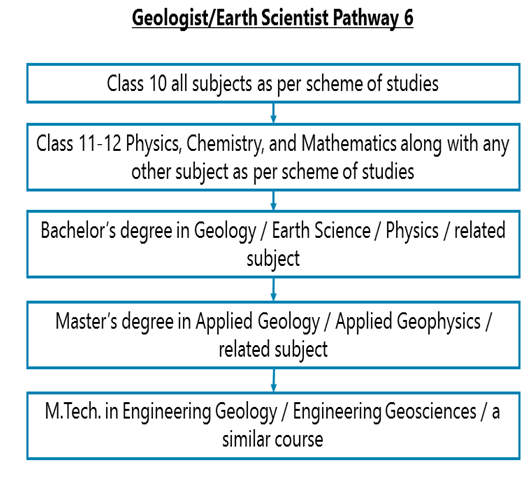
After your Class 11-12 Physics, Chemistry, and Mathematics along with any other subject as per scheme of studies you can opt to study for a Bachelor degree in Geology / Earth Science / related course. Along with your major in Geology or a related course, it is better to keep both Physics and Chemistry as minor subjects or Physics and Mathematics. You may also do a Bachelor degree in Physics (major) along with Chemistry and Mathematics / Mathematics and Geology as minor subjects. After your Bachelor’s degree, you should do a Master’s degree in Applied Geology / Applied Geophysics / or a related subject.Then you can do an M.Tech. in Engineering Geology / Engineering Geoscience / a similar course.
Required Qualification & Competencies
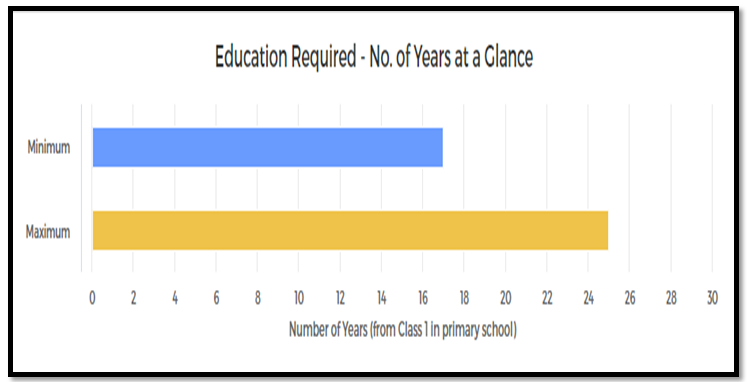
After Class 11-12 preferably with Mathematics along with any other subject as per scheme of studies, you can study for an undergraduate degree in Civil Engineering (with PCM)/ Geological Sciences / Earth Sciences / Physics. Then you can do a Master’s degree. Then you may either opt for a job opportunity or do a Ph.D. and thereafter go for post-doctoral studies.
You can study for a Bachelor’s / Master’s / Doctoral degree in any of the following fields (Note that all these fields may not offer you a degree at all three levels, that is in Bachelor’s, Master’s and Doctoral. Some fields may offer a degree only at the Master’s or at the Doctoral level or may be a certificate/specialization course only):
1. Applied Geophysics
2. Applied Geology
3. Earth Sciences
4. Engineering Geology
5. Exploration Geology
6. Geoarchaeology
7. Geochemistry
8. Geoinformatics
9. Geology
10. Geophysics
11. Marine Geology
12. Minerology
13. Mining Geology
14. Petroleum Geology
15. Physical Oceanography
16. Planetary Geology
17. Sedimentology
18. Seismology
19. Stratigraphy
20. Structural Geology
Compentencies Required
1. You should have interests for Investigative Occupations. Investigative occupations involve working with ideas and quite a lot of thinking, often abstract or conceptual thinking. These involve learning about facts and figures; involve the use of data analysis, assessment of situations, decision making and problem-solving.
2. You should have interests for Realistic Occupations. Realistic occupations involve more practical and hands-on activities than paperwork or office work. Realistic occupations often involve physical activities for getting things done using various tools and equipment.
3. You should have interests for Conventional Occupations. Conventional occupations involve repetitive and routine tasks as well as fixed processes or procedures for getting things done. These occupations involve working more with data, systems, and procedures and less with ideas or creativity.
4. You should have knowledge of Geographyand Geology- principles and methods for describing the features of land masses, including their physical characteristics, locations, interrelationships, and distribution of plant, animal, and human life; knowledge of earth sciences and geotechnical aspects.
5. You should have knowledge of Physical Science - physical principles, laws, their interrelationships, and applications to understand fluid, material, earth, ocean, atmosphere, and space dynamics.
6. You should have knowledge of Mathematics - arithmetic, algebra, geometry, trigonometry, and other mathematical disciplines and their applications.
7. You should have knowledge of Planning and Development - various principles, ways and processes to plan, implement, and monitor projects for human development, environmental conservation and protection, etc.
8. You should have knowledge of Production and Processing - raw materials, production systems, production processes, quality control, and other techniques for manufacturing or construction and distribution of goods.
9. You should have Critical Thinking Skills - analysis of complex situations, using logic and reasoning to understand the situations and take appropriate actions or make interpretations and inferences.
10. You should have Problem Solving Skills- analysis and understanding of problems, evaluating various options to solve the problems and using the best option to solve the problems.
11. You should have Active Learning Skills - Focused and continuous learning from various sources of information, observation and otherwise for application in getting work done.
12. You should have Judgment and Decision Making Skills- considering the pros and cons of various decision alternatives; taking appropriate and suitable decisions.
13. You should have Inductive Reasoning Ability- combine pieces of information from various sources, concepts, and theories to form general rules or conclusions. For example, analyzing various events or situations to come out with a set of rules or conclusions.
14. You should have Deductive Reasoning Ability- apply general rules and common logic to specific problems to produce answers that are logical and make sense. For example, understanding the reasons behind an event or a situation using general rules and common logic.
15. You should have Written Comprehension Ability- read and understand information and ideas presented in writing.
16. You should have Information Ordering Ability- arrange things or actions in a certain order or pattern according to a specific rule or set of rules (e.g., patterns of numbers, letters, words, pictures, mathematical operations).
17. You should have Perceptual Speed- quickly and accurately compare similarities and differences among sets of letters, numbers, objects, pictures, or patterns. The things to be compared may be presented at the same time or one after the other. This ability also includes comparing a presented object with a remembered object.
18. You always or mostly prefer tostick within a routine or carry out routine and repetitive activities.
19. You are always or mostly organized in your day-to-day life and activities.
20. You are always or mostly disciplined in your action and behavior.
21. You are practical always or in most situations.
22. You are always or mostly dependent on others or on set rules and procedures.
Career - Job Opportunities & Profiles
After your Bachelor’s degree you may get a work opportunity as a Project Assistant in organisations like Geological Survey of India. However, there are rare opportunities to get a job after a Bachelor’s degree.
After your Master’s degree, you may get a work opportunity as an Assistant Geologist / Geoscientist / Geophysicist / Field Geologist / Project Geologist / Engineering Geologist / Petroleum Geologist / Exploration Geologist / Scientist – Geoscience / Mine Surveyor / in similar positions in organisations such as:
1. Geological Survey of India, Central Ground Water Board, Indian Bureau of Mines, etc. / or if you are in other countries, similar survey organisations under the country’s Government
2. Geological / Mineral research organisations such as CSIR – Geophysical Research Institute, CSIR-North East Institute of Science & Technology, etc.
3. Geological / Geoscience research divisions of Space Research organisations and other similar organisations like Indian Institute of Remote Sensing, ISRO, NASA, etc.
4. Petroleum exploration / oil & gas companies such as Oil India Limited, ONGC, ExxonMobil, British Petroleum, Royal Dutch Shell, Chevron, Saudi Aramco, Reliance Industries Ltd., Essar Oil, Cairn India, etc.



5. Mineral exploration, extraction, processing, refining, and production companies such as Coal India Ltd., Rio Tinto, BHP Billiton, Rosneft, Sterlite Industries, etc.
6. Large-scale Infrastructure and construction companies such as L&T, Bechtel, TechnipFMC, Fluor Corporation, McDermott International, Gammon India Ltd., etc.



7. Large-scale oilfield consulting and services companies such as Schlumberger, Halliburton, Engineers India Ltd., Baker Hughes, etc.



8. Universities which carry out research in Geological / Earth Sciences and offer courses in these areas – you can either join a Junior Research Fellow / Doctoral Fellow after your Master’s degree or as Post-Doctoral Fellow after your Ph.D. After your Ph.D., you can get a teaching position as an Assistant Professor or a similar position.
Specialisation Tracks In This Career
Geochemist
Geochemists try to understand the principles governing the distribution and re-distribution of elements, ionic species and isotope ratios in earth materials, to interpret processes such as magmatic crystallization (when molten magma solidifies), weathering, chemical precipitation, metamorphism (how rocks are formed), etc. There are further sub-branches that Geochemists specialize in, such as Pure, Applied, Analytical, Experimental and Theoretical Geochemistry.
Geoarchaeologist
Geology has the longest history of association with archaeology. This is a specialty dealing with the application of the geosciences to solve research problems in archaeology. Topics like the age of the earth, the mechanism of evolution and the antiquity (history) of humankind are dealt with by Geoarchaeologists.
Geophysicist
Geophysicists study the origin, structure, texture, density, depths, magnetic properties, etc. of different types of rocks and rock formations. This has a major application in oil/mineral exploration. Geophysicists use a method called ‘gravimetry’ which is based on the fact that gravity of the Earth has a stronger pull for rocks with higher density. Geophysicists spend most of their time outdoors studying various features of the Earth or near-Earth space, and use computers for modeling and calculations when indoors!
Hydrogeologist
Hydrogeologists or more commonly hydrologists study formation, supply and conservation of groundwater or subsurface water that can be collected with wells, drainage pipes etc.or that flow naturally to the earth surface via springs and seeps. They specifically focus on the ‘hydrologic cycle’ which combines the water movements throughout the atmosphere, on the surface, and in the subsurface of the Earth, trace amounts of extraterrestrial water brought in by comets or the small amounts of water vapor that are lost to outer space. There is a constant volume of water in the entire water cycle. They also study about the hydraulic potential and kinetic energy of water (how it can be used to produce power).
Geodynamicist (Seismology)
Geodynamics primarily focuses on the Earth’s interior and topics such as mantle convection, plate motion, and deformation of Earth. Seismology is a sub-specialty under Geodynamics. Seismologists specifically focus on the formation and progression of earthquakes. You must have heard about the different layers inside the Earth. Do you also remember that the Earth’s crust is divided into tectonic plates which are constantly moving and colliding against each other? Geodynamics is an interesting specialty specifically concerned with deep mantle processes, dynamic plate subsidence, and uplift (plate tectonic processes). Geodynamicists have estimated that these movements began 3.3 and 3.5 billion years ago.
Mining Geologist
Mining Geologists study mineral / ore deposits across the globe including gold, iron, platinum, tin, coal, copper, sulfur, aluminum, chromium, arsenic, antimony, cobalt, lead, manganese, nickel, silver, zinc as well as gems such as diamond, ruby, sapphire or even useful naturally occurring chemical compounds salt, borax, phosphates, fluorites or gypsum in rivers, sand beaches, water beds, reefs or other geological formations.
Geologist (Photo geology and Planetary Science)
Photogeologists and Planetary Geologists try to understand the natural processes that shape not only our planet, Earth but all objects in the solar system including moons and natural satellites. They study the forces that are responsible for a planet’s evolution and overall shape by creating geological maps (officially called photogeologic mapping) which are representations /graphic portrayal of the distribution and age of rock types / structural features on their surfaces.
Petroleum Geologist / Petrologist
Petroleum geology is the application of geology to exploration and production of oil and natural gas. Subsurface sedimentary rocks act as a natural reservoir of petroleum which is formed through the accumulation of fluids (derived from plants and animals) over time(105 to 106 years) under the action of geothermal heating and extreme pressure. Petrologists also study‘palaeontology’ (for dating rocks and carbonate reservoirs), ‘structuralgeology and basin analyses (for studying the trapping of petroleum) and ‘geochemistry - petroleum chemistry’.
Geologist (Stratigraphy)
Stratigraphy is the study of stratified (layered) rocks. These layers/belts or strata can be few millimeters up to many meters in thickness. Specifically, stratigraphists study the formation of sedimentary and volcanic rocks. They spend most of their time in “field areas” meaning they go out in the fields to study such rocks. Fields may be coastal shores, riverbanks, glacial areas, crust surrounding lakes, seafloor, etc.
Geologist/Earth Scientist (Marine Geoscience)
Geoscientists are also involved in studying both local and global marine environments to better understand the big challenges facing Earth today, such as coastal erosion, climate change and depletion of renewable energy sources. They assist in maximizing marine resources including oil, gas, aquaculture, marine aggregates, fishing. They also research into common geohazards like tsunamis, submarine landslides, etc. They are involved in drilling and coring into seabed from ships and platforms too.
Geologist/Earth Scientist (Geo Analytics and Modeling)
This is comparatively a newly emerging field for Earth Scientists who are interested in connecting their geological knowledge with location prediction and using satellite data to create maps for businesses that need such spatial and geographical data. They are involved in making 3-D geological models for example to locate abandoned mines, contaminated land, suitable agricultural areas, valuable rock formations, water resources by assessing the physical and chemical characteristics of the ground beneath our feet.
Environmental Geologist
Environmental Geologists focus on using geological principles in solving environmental problems. They study the interaction of humans with the geologic environment that includes the biosphere (living things), the lithosphere (land), and the hydrosphere (water). Hydrogeology is a sub-discipline of Environmental Geology.
Geologist (Minerology)
Mineral Geologists study naturally occurring solid inorganic crystalline substances having a fixed chemical composition and physical structure. These substances are minerals and are either freely occurring in nature or are found as deposits of a larger chemical compound from which the mineral has to be extracted industrially.
Sedimentologist
Sedimentologists study the formation of modern sediments like sand, silt, clay and the processes that have caused such formations like weathering and soil erosion. They also analyze the formations of sedimentary rocks and structures which constitute about 75% of the surface of the Earth.
Geologist (Engineering Geosciences/Engineering Geology)
Engineering Geologists focus on the interaction of geological factors with civil or structural engineering designs regarding the location, construction, operation and maintenance of engineering works. Their most important responsibility is the interpretation of earth processes and landforms to identify potential geologic and associated man-made hazards that may have a huge impact on human development and civil structures.
Career Growth
If you begin your careers as an Assistant Geologist / Geoscientist / Field Geologist / Project Geologist / Geophysicist / Engineering Geologist / Petroleum Geologist / Exploration Geologist / Scientist – Geoscience / Mine Surveyor / in a similar position then you will progress as:
Senior Geologist/Geoscientist/similar position – Division Head / Principal Geologist / similar position – Director / General Manager – Vice President – President / Executive Director (In India, the highest position is that of an organisation Director / Managing Director).
If you are joining a University as a faculty member, then your career progression path will be:
Assistant Professor or similar – Associate Professor or similar – Professor or similar – Director of a School / Institute – Dean (In India, however, Director is the highest position for a school/institute).
Salary Offered
1. If you join as a Project Assistant after your Bachelor’s degree, you will get about Rs. 27,000 per month.
2. After your Master’s degree, if you opt for a work opportunity, at the beginning of your career in India, you will earn about Rs. 40,000-1, 00,000 in a private sector organisation (higher salaries are offered to those with M.Tech. from IITs or similar institutions). However, in Government organisation such as Geological Survey of India and CSIR research organisations, you may get about Rs. 60,000 per month in the beginning. If you join a University, you will get similar salaries.
3. However, if you join as a Junior Research Fellow after your Master’s degree, you will receive about Rs. 35,000 per month. As a Senior Research Fellow, you will receive about Rs. 38,000 per month.
4. After your Doctoral degree, if you join a corporate private sector organisation, you may expect to get about Rs. 70,000 – 1, 25,000 per month.
5. After having 4-6 years of industry experience, you may expect to earn about Rs. 70,000 – 1, 50,000 per month. Mid-level salaries will be about Rs. 1, 20,000-2, 50,000 per month and senior level salaries will be about Rs. 2, 50,000 – 4, 50,000 per month.
Global (US)
1. Remember that, if you are not a US citizen, getting a job in USA after a bachelor’s degree will be a rare case. However, after your Graduate (Master’s or Ph.D.), you may look forward to if you do really well in your course. The chances of getting a job after graduate courses increase with the reputation of the university from where you graduate. However, if you are from a premier institute like IIT, you may get a campus placement in USA. But even that is few and far between.
2. At the entry level jobs, after your Bachelor’s degree depending upon the institution where you are graduating from, you may expect to get about USD 3,000 – 4,500 or even more a month.
3. After 4-5 years of work experience, you may expect to earn around USD 4,000 to USD 7,000 a month or more depending on your job location and roles.
4. At the entry level jobs after post-graduation, you may expect to get about USD 4,500 – 6,000 or even more a month. Entry level job packages hover around USD 55,000-70,000per annum for candidates with 0-5 years of experience.
5. In junior level jobs (after 4-5 years of post-graduation), you can make about USD 5,000 – 8,000 or more per month.
6. In mid-level jobs (after having 8-10 years of experience), you can expect to earn about USD 7,000 – 10,000 or even more a month.
7. In senior-level jobs (after having 15 years of experience), you can expect to earn about USD 10,000 – 15,000 or even more a month.
8. Petroleum Geologists are undoubtedly the highest paid among all geologists owing to industry profitability. Currently, normal range for the majority of roles is $85,002 - $104,733 p.a. Annual bonuses are $2,682 - $45,933 p.a.
9. For an example, a Hydrogeology Project Officer after completing her tertiary studies may get a base salary of $68,334 p.a - $84,915 p.a or more.
10. As a Staff Geologist after completing post-graduation studies you may expect a base salary of $75,000 - $90,000 or more per year and as a Geoscience Remediation Analyst you may expect a base salary of $86000 p.a.
11. Likewise after your PhD, as a Sustainability Scientist you may expect a base salary of $95,198 or more per year, as a Senior Environmental Planner you may expect a base salary of $105,000 - $120,999 or more per year and as a Director –Resource Estimation and Scientific Advancement you may expect a base salary of $125,000 - $140,000 or more per year.
Middle Eastern, North African and South East Asian countries
1. Remember that unless you have 5-10 years of good work experience, it is not feasible to get a job. If you get, that’s a rare case or you may get placed in these countries only from your campus interview.
2. After having 5-10 years of experience, in these countries, you may get about Rs. 1,50,000 – 2,50,000 or more a month along with other benefits like tax free salaries, travel expenses, etc. Mid-level salaries range from Rs. 3,00,000 – 5,00,000 or more a month. Senior level salaries range from 5,00,000 – 15,00,000 or more a month. All salaries are mentioned when exchanged for Indian Rupee. Salaries could also be lesser in some countries like Egypt and Malaysia.
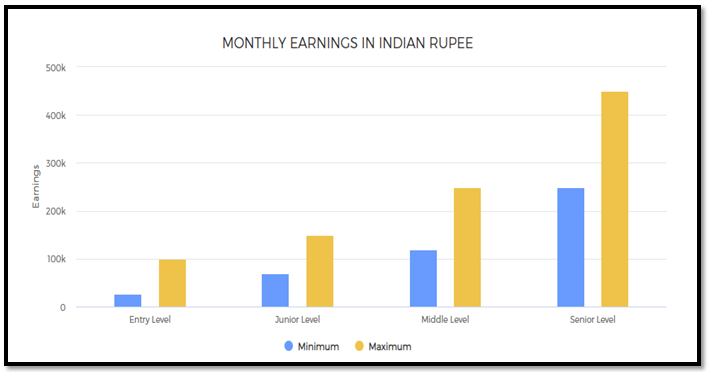
Monthly Earnings In Indian Rupee
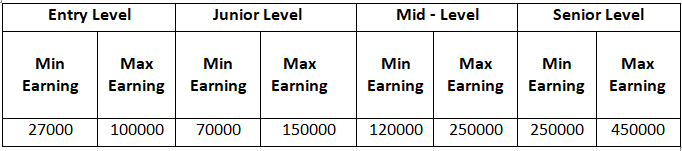
1. Entry level: 0 - 2 years of work experience
2. Junior Level: From 1 to 12 years of work experience
3. Mid-Level: From 5 to 20+ years of work experience
4. Senior Level: From 10 to 25+ years of work experience (there could be exceptions in some high-end technical, financial, engineering, creative, management, sports, and other careers; also in the near future, people will reach these levels much faster in many careers and in some careers, these levels will have no meaning as those careers will be completely tech skill driven such as even now, there is almost no level in a Cyber Security Expert’s job)
Work Activities
1. Analyzing and interpreting data and information - Analysis of data and information to find facts, trends, reasons behind situations, etc.; interpretation of data to aid in decision making.
2. Assessing and evaluating quality - Assessing and evaluating quality of materials, processes, etc.
3. Creative thinking - Developing new ideas, concepts, innovative solutions to problems, newer ways of getting things done, designing products and services, creating work of art and craft, etc.
4. Drawing, drafting, laying out and specifying objects, equipment, devices, tools, and systems - Creating and developing technical designs, drawings, layouts and specifications about how to construct, manufacture, assemble, build, use, and maintain various systems and processes.
5. Getting Information and learning - Observing, hearing, and reading, using computers, or otherwise obtaining information and learning from it.
6. Handling and moving objects and materials - Using hands or otherwise use physical strength to handle and move objects and materials; maneuver, install, lift, place, manipulate, etc.
7. Identifying objects, actions, and events - Identifying various characteristics of objects; observing and understanding actions and events; understanding changes in actions and events.
8. Inspecting situations, events, and people - Inspecting situations, events to understand the reasons and causes for the situation or events to happen.
9. Making decisions and solving problems - Analysis of data and information; evaluation of alternative decisions and results of decisions; taking the right decisions and solving problems.
10. Organizing, planning and prioritizing tasks - Planning and organizing tasks in order to achieve work goals; prioritizing tasks to achieve goals and making the best use of the time available.
11. Processing information - Searching, compiling, and tabulating, calculating, auditing, verifying or otherwise dealing with information processing including data entry, transcription, recording, storing and maintaining databases.
12. Strategic planning - Developing visions and goals, developing strategies and action plans for achieving visions and goals.
13. Updating and using relevant knowledge - Keeping updated with the latest knowledge relevant to your fields of work and use of the relevant knowledge in getting things done.
14. Working in a team - Working in a team of people; developing team; maintaining professional relationships among team members.
Future Prospects
You can expect a decent future in this field as the industry growth prospects are encouraging. The Environmental Testing market was valued at USD 8.47 billion in 2016 and is expected to achieve 12.75 billion USD by upcoming years, at a rate of 7.1% compounded annually.
Analyst’s estimate that the Global Environmental Sensor and Monitoring business may grow from $13.2 billion to almost $17.6 billion, a rate of 5.9% compounded annually.The market in Asia-Pacific is projected to grow at the highestrateowing to the increasing industrial activities and rising concern for environmental pollution.
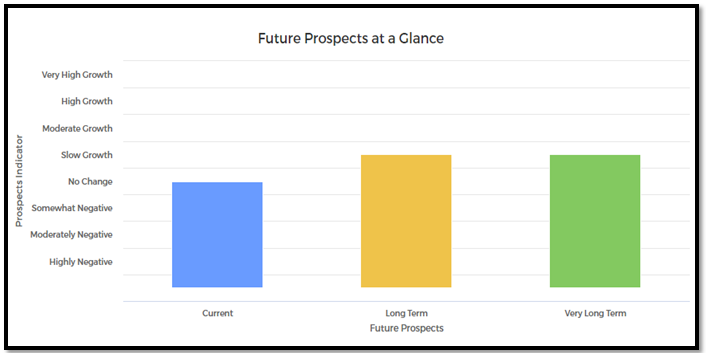
Future Prospects At a Glance
