

Pulmonologist/ Chest Specialist
Entry Level Qualification
Class Graduate
Career Fields
Medical Services
For Specially Abled


About Career
PARTICULARS | DESCRIPTION |
Name | Pulmonologist/ Chest Specialist |
Purpose | Diagnose Respiratory Conditions |
Career Field | Allied & Para Medical Science |
Required Entrance Exam | NEET UG, NEET PG, AIIMS PG INICET |
Average Salary | 1200000 - 1500000 Rs. Per Year |
Companies For You | UCLA Health, Rush University Medical Center, Mount Sinai Health System & Many More |
Who is Eligible | Post Graduate |
As a Pulmonologist, you will be a super-specialist doctor who specifically treats various diseases & ailments associated with our lungs, upper airways, thoracic cavity, and chest wall. Pulmonologists are chest specialists. A Pulmonologist is also variably called a Pneumologist or a Respirologist.
What do Pulmonologists treat?
1. Pulmonologists treat a wide range of respiratory diseases & disorders (may be viral, bacterial, chemical, environmental or genetic), ranging from asthma, pneumonia, influenza and bronchitis to lung cancer and the very common “COPD” or Chronic Obstructive Pulmonary Diseases(which block airflow & cause breathing difficulties). Lung-cancer specialists are also alternatively called Pulmo-oncologists.
2. While primary care doctors handle mild or short-term conditions, such as those caused by a cold or respiratory infection, one needs to see a Pulmonologist to typically diagnose, treat & manage more complex illnesses that primarily affect the lungs or associated regions.
How do Pulmonologists treat?
1. Pulmonologists are mostly ‘Internists’ which means they treat with medication or internal drugs. Medication, either by inhalation or in oral form, is the single most important treatment for most pulmonary diseases or disorders of the respiratory system.
2. Most surgeries, if and when required, are performed by thoracic surgeons or cardiothoracic surgeons or cardiovascular surgeons and not Pulmonologists. Rather, Pulmonologists may use radiographic techniques to view vasculature of the lungs & heart to assist with diagnosis and treat with internal medication. They may often perform specialized procedures to get samples from the inside of the chest or inside of the lung.
Diagnosis of diseases by a Pulmonologist can be done both invasively and non-invasively.
Invasive
1. Invasive methods, such as a “bronchoscopy”, are those which require a Pulmonologist to use a specialized instrument or tool to physically ‘invade’ or enter into the patient’s body to find out and cure a condition. These methods generally make use of anesthesia and the patient is made completely or partially or locally numb before the process.
2. Bronchoscopy is now perhaps the most common invasive procedure in the study of lungs. It allows a doctor to use a tube like an instrument called a “bronchoscope” to examine the inside of a person's airway & lungs for any abnormality such as foreign bodies, bleeding, tumors, or inflammation. A local anesthetic spray is applied to the nose & throat of the patient as well as a sedative for relaxation.
Non-invasive
Non-invasive methods, such as a “plethysmography”, do not require such invasions or anesthesia and can be successfully completed with minimal or no incisions on the patient’s body. Plethysmography is used to measure changes in volume in different areas of the body. It measures these changes with blood pressure cuffs or other sensors which require no cuts or incisions on the body. The cuffs or sensors are connected to a machine called the “plethysmograph”.
Functional Fields of Work
Clinical / Diagnostic / Therapeutic Care:
Work involves diagnoses and treatment/therapy for patients suffering from pulmonary or lung-related disorders involving lungs, upper airways, thoracic cavity, and chest wall. Treatment may be extended through the administration of internal medicine or patient may be referred to a surgeon for surgery. Work hours are primarily consumed in a hospital, nursing home, personal clinic, intensive care units or operation theatres.
Medical Research:
1. Practicing physicians are also involved in independent research studies that are either sponsored by the industry or leading institutes or government health departments etc. which are operating in this domain.
2. For example, you may be board certified in Pulmonology (for a practice license) and an Associate Professor of Medicine as well, simultaneously you may also be a recipient of research grants from different sources and may pursue scientific research on postoperative pulmonary complications or cardio-pulmonary problems, etc.
3. Or you may be investigating about the efficiencies of sealing air-leaks after a lung surgery(you need not be a surgeon for this) specifically if you are researching on the development of novel screening and therapeutic strategies or new therapies. Research may also revolve around novel drug delivery mechanisms such as heat-responsive lipid vehicles for delivering drugs to treat lung cancer.
Education and Training:
Typically, in medical colleges and universities, all educators are involved in training and educating aspiring doctors. This includes operative techniques & experiences as well as theoretical lectures to develop a deep understanding of clinical and basic sciences surrounding pulmonology including the principles of pulmonary investigation, interpretation of diagnostic test results and employed technologies.
Key Roles and Responsibilities
As a pulmonologist, depending on your functional field of work, you will be engaged with one or more of the following roles and responsibilities: -
Clinical / Diagnostic / Therapeutic Care:
1. You will manage& treat common health problems, such as infections, influenza or pneumonia, as well as serious, chronic, and complex illnesses, in adolescents, adults, and the elderly.
2. You will be examining a patient (physical examination and primary screening) for diagnosis of and obtaining information on medical/physical conditions, history, and tendencies to ascertain necessary medical attention or required surgical procedures.
3. You will be diagnosing bodily disorders and clinical conditions and suggest therapeutic treatments, such as prescribing medicines or necessary surgeries, in hospital wards, clinics, or operating rooms.
4. You will be determining the nature of the treatment, conferring with other medical professionals if required for or to obtain historical data to construct a patient’s medical portfolio and plan further treatment - advising throughout the prognosis (progression) of a disease.
5. You will advise a surgeon of a patient's risk status and recommend appropriate intervention to minimize risk.
6. You will explain procedures and discuss test results or prescribed treatments with patients.
7. You will be involved in recording patient’s condition or progress throughout the tenure of your treatment sessions, writing reports and maintaining proper registers containing patient information (case histories).
8. You will provide& manage long-term, comprehensive medical care, including diagnosis and nonsurgical treatment of diseases, for adult patients in an office or hospital.
Medical Research
1.You will conduct research to develop or test medications, treatments, or procedures to prevent or control disease or injury.
2. You will plan, organize, coordinate & participate in scientific research projects, in collaborative work on study/experiment design, data analysis, & manuscript preparation for various scientific projects.
3. You will be engaged in testing of laboratory product on human patients diagnosed chronic/ acute conditions or diseases as well as healthy volunteers.
4. You will recruit such healthy & affected participants for a period of close monitoring of their personal clinical response to disease stimulants or to obtain biologic samples from these participants for extensive analysis.
5. You will determine specific goals or objectives to be obtained; evaluate research data and develop & revise techniques or approaches to work problems.
6. You will function in a separate & independent manner in the design and initiation of research experiments.
7. You will design, develop or adapt equipment used in experiments or research to obtain desired results. You will be responsible for laboratory equipment and implementing safety procedures.
8. You will independently compose abstracts, technical reports, slide presentations, posters, spreadsheets, and manuscripts for submission to corporate and federal sponsors, conferences, and scientific journals.
9. You will produce medical illustrations, scientific posters, publication graphics, and slide presentations for national & international meetings.
Education and Training:
1. You will be involved in instructing/teaching to a class of students pursuing graduate, postgraduate or higher levels of study in the fields of Pulmonology, Critical Care, Internal Respiratory Medicine or related disciplines.
2. You will demonstrate techniques or handling of instruments/tools to your students and counsel / guide them to detect & treat various ailments via medications or surgically.
3. You will participate in seminars, medical congresses, conferences across the world.
Career Entry Pathway
Class 10 all subjects as per scheme of studies – Class 11-12 Physics, Chemistry, and Biology along with any other subject as per scheme of studies – MBBS – MD in Pulmonary Medicine /Respiratory Medicine or similar
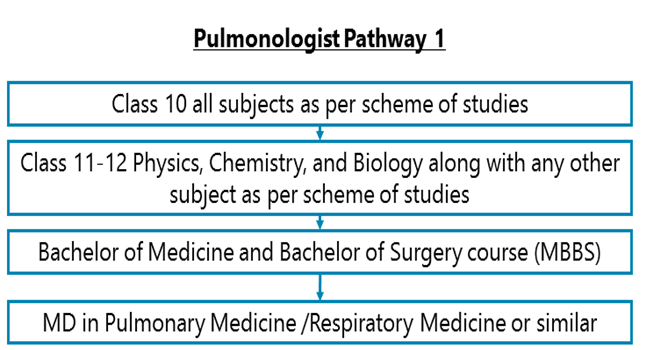
After completing Class 11-12 Physics, Chemistry, and Biology along with any other subject as per scheme of studies, you must do a Bachelor degree in Medicine (MBBS). After an MBBS, you should do a 3-year MD in Pulmonary Medicine /Respiratory Medicine or similar field.
Class 10 all subjects as per scheme of studies – Class 11-12 Physics, Chemistry, and Biology along with any other subject as per scheme of studies – MBBS – Diploma in Tuberculosis & Chest Diseases or similar
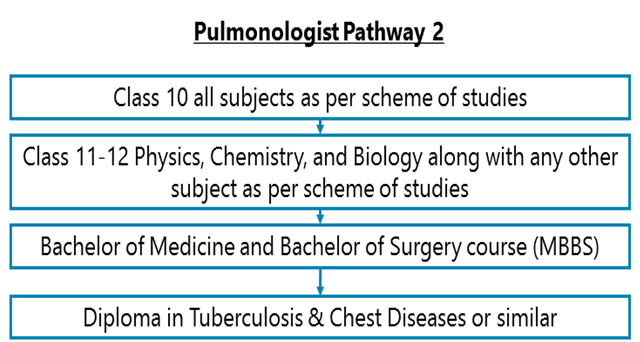
After completing Class 11-12 Physics, Chemistry, and Biology along with any other subject as per scheme of studies, you must do a Bachelor degree in Medicine (MBBS). After an MBBS, you can go for a Diploma in Tuberculosis & Chest Diseases or similar disciplines.
Class 10 all subjects as per scheme of studies – Class 11-12 Physics, Chemistry, and Biology along with any other subject as per scheme of studies – MBBS – MD in Pulmonary Medicine /Respiratory Medicine or similar – D.M. in Pulmonary Medicine or similar disciplines
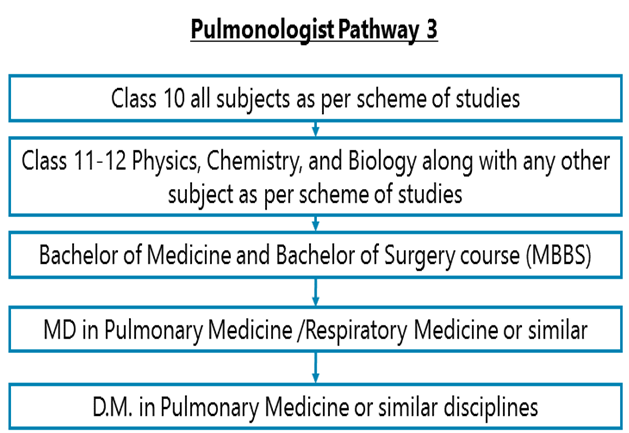
After completing Class 11-12 Physics, Chemistry, and Biology along with any other subject as per scheme of studies, you must do a Bachelor degree in Medicine (MBBS). After an MBBS, you should do a 3-yearMD in Pulmonary Medicine /Respiratory Medicine or similar field, then you should do a super specialization in Pulmonary Medicine. In India, the option is doing a DM in Pulmonary Medicine, which is of 3 years duration. In Medicine, MD is said to be a Doctor in Medicine program and a DM is said to be a Doctorate in Medicine program.
Class 10 all subjects as per scheme of studies – Class 11-12 Physics, Chemistry, and Biology along with any other subject as per scheme of studies – MBBS – MD in General Medicine/ Internal Medicine/ Pediatrics or similar – D.M. in Pulmonary Medicine or similar disciplines
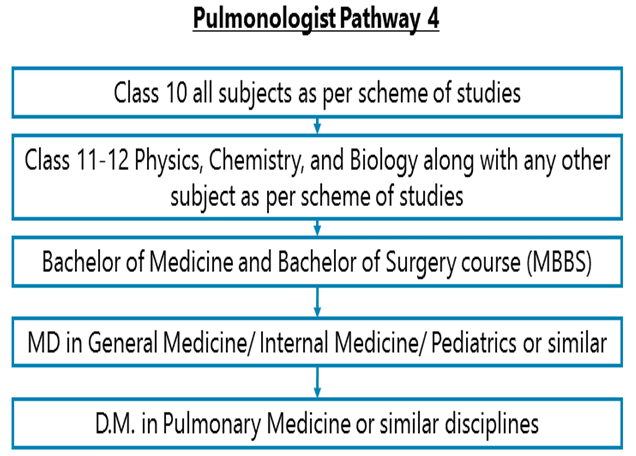
After completing Class 11-12 Physics, Chemistry, and Biology along with any other subject as per scheme of studies, you must do a Bachelor degree in Medicine (MBBS). After an MBBS, you should do a 3-year MD in General Medicine/ Internal Medicine/ Pediatrics or similar field, then you should do a super specialization in Pulmonary Medicine. In India, the option is doing a DM in Pulmonary Medicine, which is of 3 years duration. In Medicine, MD is said to be a Doctor in Medicine program and a DM is said to be a Doctorate in Medicine program.
Class 10 all subjects as per scheme of studies – Class 11-12 Physics, Chemistry, and Biology along with any other subject as per scheme of studies – MBBS – DNB in Pulmonary Medicine / Respiratory Medicine /General Medicine/Internal Medicine/ Pediatrics or Related – FNB in Pulmonary Medicine /related
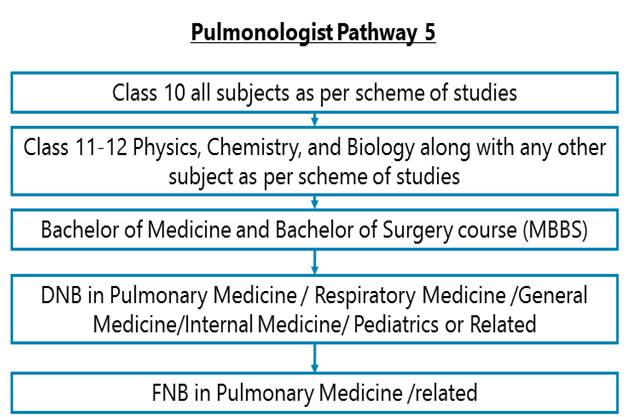
After completing Class 11-12 Physics, Chemistry, and Biology along with any other subject as per scheme of studies, you must do a Bachelor degree in Medicine (MBBS). After an MBBS, you should do a 3-year DNB (Diplomate of National Board) in Pulmonary Medicine / Respiratory Medicine /General Medicine/ Internal Medicine or in a similar field. Then you should do a super specialization in Pulmonary Medicine. In India, after a DNB the option is doing an FNB (Fellow of National Board) in Pulmonary Medicine, which is of 3 years duration. Both DNB and FNB are practice based programs, for which you should be working at a concerned department at a super speciality hospital. You will have to first qualify in the DNB entrance examination (called DNB CET), then work at a hospital. Once the designated period of practice is completed, you will have to appear in the DNB final examination. Similarly, for getting into a Fellowship program, you must first qualify in the Fellowship entrance examination.
Class 10 all subjects as per scheme of studies – Class 11-12 Physics, Chemistry, and Biology along with any other subject as per scheme of studies – MBBS - MD in Pulmonary Medicine/ Respiratory Medicine /General Medicine/ Medicine/ Internal Medicine/ Pediatrics /Related – MRCP exams (Specific to UK, Ireland)
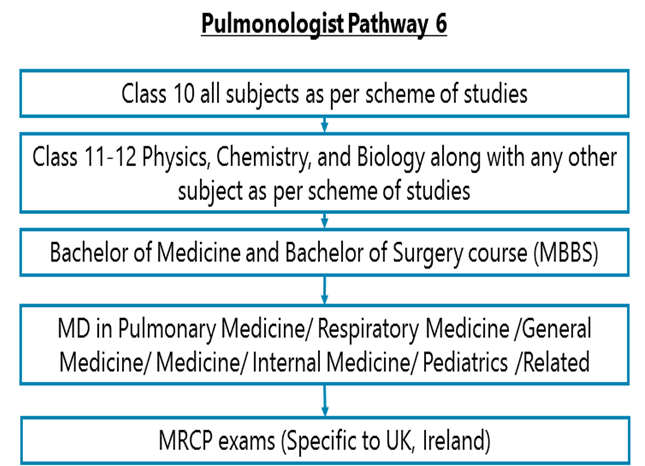
After completing Class 11-12 Physics, Chemistry, and Biology along with any other subject as per scheme of studies, you need to finish your graduation with a MBBS degree. Then you must acquire an MD in Pulmonary Medicine/ Respiratory Medicine /General Medicine/ Medicine/ Internal Medicine/ Pediatrics or in a related field. After MD and while you are practicing, go for MRCP certifications in Pulmonary or Respiratory Medicine. These exams are conducted in India at various locations.
Required Qualification & Competencies
1. After Class 11-12 with Physics, Chemistry, and Biology along with any other subject as per scheme of studies, you must study for a Bachelor of Medicine and Bachelor of Surgery (MBBS) degree. Various forms of this qualification’s name are MB ChB, MB BChir, BM BCh, BMBS and MB BCh around the globe.
2. After your graduation, you can study for a Diploma in Tuberculosis & Chest Diseases or postgraduate level degree like MD (for medicine specialties), or DNB, or an equivalent qualifications and complete junior residencies to specialize in various branches of Medicine.
3. DNB is considered equivalent to MD. The only difference is for MD you will be trained in medical colleges whereas for DNB you will be trained mostly at private hospitals (with at least 500 beds).
4. After postgraduation, you may complete senior residencies and obtain a DM /FNB (Fellow of National Board). This is not possible after a Diploma level qualification.
5. You can obtain a Ph.D. after MD if you want to pursue a career only in medical research. Otherwise, all physicians with MD or DM or equivalent & higher qualifications may also publish scientific research studies in journals without a Ph.D.
6. In the UK, MRCP is mandatory to practice as a Pulmonologist
7. You have to qualify for graduation from any medical school (in UK or any other country including India), complete MD (if you are studying in India) and obtain your MRCP qualification from any of the Royal Colleges (Edinburgh, Glasgow, London – for medicine).
8. There are 3 Royal Colleges that grant membership certifications: in Edinburgh, Glasgow and London.
9. MRCP is conducted by each college separately. So, there are 3 different MRCP exams by 3 different colleges. Each exam has its own format that can be referred to from respective portals of conducting bodies.
10. You can appear for any MRCP exams from India. You can also appear for the International Fellowship Examination (JSCFE) exam from India. Exam centers in India include many cities such as New Delhi, Hyderabad, Chennai etc.
11. For JSCFE, you will have a maximum of 7 years to complete the 2 sections of this exam, Section 1 & Section 2. You will have a 2 year period from your 1st attempt with a maximum of 4 attempts for Section 1 and a maximum of 4 attempts with no re-entry for Section 2. Section 1 is further divided into Paper 1 and Paper 2. Section 2 is the clinical component of JSCFE consisting of a series of carefully designed & structured interviews on clinical topics.
If you are targeting US or Canada,
1. Remember, you will have to clear USMLE after you complete an MBBS program in India to be able to directly practice in the US. To study in medical schools in the USA or Canada for an MD degree before practicing there, you will have to clear MCAT. Medical College Admission Test (MCAT) is a compulsory test for anyone who plans to get admission in medical schools of USA and Canada. MD degrees are followed by 3 to 7 years of residency. Graduates can practice any specialty. Physicians are fully certified after passing board exams.152 MD-granting schools are in the United States and 17 are in Canada.
2. MCAT consists for 4 distinct sections which are individually scored. Each section is allotted either 90 or 95 minutes and tests between 50 and 60 questions. Including breaks, the full examination lasts approximately 7.5 hours.
3. Most MBBS graduates go for further study by passing MCAT, completing 4- year MD in US or Canada and then appearing for USMLE because this way is easier. However, some MBBS graduates avoid this path and directly aim at USMLE from India but cannot succeed as they lack US-based education which is extremely essential in order to pass USMLE.
4. MCAT is administered 25 times in a year. With a pass in MCAT, they will need to complete a medical degree (MD) in the US or Canada which is for 4 years. Then they can appear for USMLE and get a practice license.
5. Remember: after passing USMLE once, you cannot repeat it for attempting a better score. Programs usually eliminate candidates with multiple attempts. For this reason, it is essential to do extremely well in the first attempt. Further, your answers will not be evaluated on a population curve basis; you will be marked on the level of difficulty of the items you have attempted during the examination.
6. Graduates from any other biological/ allied medical disciplines in India (other than MBBS) are also eligible to practice as a Medical Professional in the US but they have to appear for MCAT with a ‘special permission ‘from Association of American Medical Colleges (AAMC) (before registering for the exam, mail to mcat@aamc.org stating the reasons why you wish to take the exam). If you are specially permitted by AAMC, which is rare, you can then attempt & clear MCAT, then pass 4-year MD, then clear USMLE and then practice in US / Canada.
So, in short
MBBS in India > MCAT > Basic Medical Degree in US / Canada (MD) > USMLE > Practice
Alternatively, a tougher route is,
MBBS in India > USMLE > Practice
For non-medical graduates from India,
Bachelor degree (duration is not a factor) > MCAT with special permission>Basic Medical Degree in US / Canada (MD) > USMLE >Practice
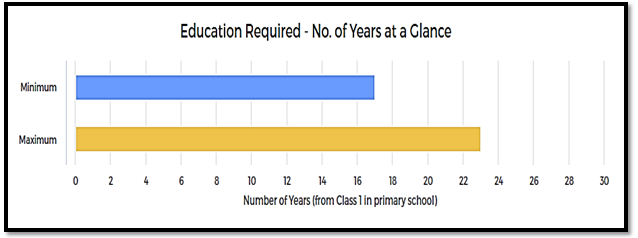
MINIMUM EDUCATION REQUIRED | MAXIMUM EDUCATION REQUIRED |
Under Graduate Undergraduate Degree / Honours Diploma / Graduate Diploma (equivalent to a Degree) Programs for which the minimum eligibility is a pass in Higher Secondary / Class XII School Leaving examination. | Doctoral All Ph.D. or equivalent degree programs for which the minimum eligibility is a Postgraduate or a Pre-Doctoral degree. |
Competencies Required
Interests
1. You should have interests for Investigative Occupations. Investigative occupations involve working with ideas and quite a lot of thinking, often abstract or conceptual thinking. These involve learning about facts and figures; involve use of data analysis, assessment of situations, decision making and problem solving.
2. You should have interests for Realistic Occupations. Realistic occupations involve more practical and hands-on activities than paperwork or office work. Realistic occupations often involve physical activities for getting things done using various tools and equipment.
3. You should have interests for Social Occupations. Social occupations involve helping or assisting others; these involve working with and communicating with people to provide various services; these may involve educating and advising others.
Knowledge
1. You should know about Medicine - the science of diagnosis, treatment and prevention of human diseases, ailments, injuries and disorders. This includes understanding the symptoms, knowledge of the diagnostic processes, knowledge of the treatment procedures and medicines, and preventive healthcare measures.
2. You should know about Healthcare Science and Services - different fields that are related to offering various types of healthcare services to people; and assisting physicians and surgeons to carry out diagnosis, treatment and prevention of human diseases, ailments and disorders. This includes knowledge of different practices apart from medicine which are used to treat and prevent human diseases or to provide holistic healthcare and wellness. This also includes knowledge about drugs and medicines.
3. You should know Biological Sciences - humans, their anatomical structure, cell structure, tissues, physiological functions, evolution, and all other related aspects.
Skills
1. You should have Active Listening Skills - Giving full attention to what other people are saying, understanding the points being made by others, asking questions, etc.
2. You should have Critical Thinking skills- Skills in the analysis of complex situations, using logic and reasoning to understand the situations and take appropriate actions or make interpretations and inferences.
3. You should have Reading Comprehension Skills - Skills in understanding written sentences and paragraphs in work related documents.
4. You should have Instruction Skills - training others how to do something.
5. You should have Judgment and Decision Making Skills - considering pros and cons of various decision alternatives; considering costs and benefits; taking appropriate and suitable decisions.
6. You should have Problem Solving Skills - Skills in analysis and understanding of problems, evaluating various options to solve the problems and using the best option to solve the problems.
7. You should have Persuasion Skills- persuading others to change their minds or behaviour.
Ability
1. You should have Oral Comprehension Ability - listen to and understand information and ideas presented through spoken words and sentences.
2. You should have Oral Expression Ability - communicate information and ideas in speaking so others will understand.
3. You should have Deductive Reasoning Ability - apply general rules and common logic to specific problems to produce answers that are logical and make sense. For example, understanding the reasons behind an event or a situation using general rules and common logic.
4. You should have Problem Sensitivity - The ability to tell when something is wrong or is likely to go wrong. It does not involve solving the problem, only recognizing there is a problem.
5. You should have Inductive Reasoning Ability - The ability to combine pieces of information from various sources, concepts, and theories to form general rules or conclusions. For example, analyzing various events or situations to come out with a set of rules or conclusions.
6. You should have Near Vision - The ability to see details at close range (within a few feet of the observer).
7. You should have Perceptual Speed - The ability to quickly and accurately compare similarities and differences among sets of letters, numbers, objects, pictures, or patterns. The things to be compared may be presented at the same time or one after the other. This ability also includes comparing a presented object with a remembered object.
8. You should have Arm-Hand Steadiness - The ability to keep your hand and arm steady while moving your arm or while holding your arm and hand in one position.
Personality Traits
1. You are always or mostly careful about your actions and behavior.
2. You are always or mostly disciplined in your actions and behavior.
3. You are always or mostly a soft-hearted person.
4. You are always or mostly helpful to others.
5. You are always calm or generally remain calm in most situations.
6. You can always act independently or can do so in most situations.
Career - Job Opportunities & Profiles
In India, after a DM/ MCh you can get a job as a Consultant Pulmonologist in any of the following healthcare establishments:
1. Multi-Specialist Government and private hospitals such as All India Institute of Medical Sciences (AIIMS), Christian Medical College& Hospital, Apollo, Fortis, Narayana, Kasturba, Tata, Lilavati, Medanta, Kokilaben, King Edward Memorial, Max, Wockhardt, Sterling, Shalby, Medica, King George, Assam Medical College, Columbia Asia, Jaslok, AMRI, and so on.
2. You may also consult patients at various health clinics.
Most jobs for Specialist Consultant Physicians and Surgeons are contractual. Many of the Consultants work in more than one hospital.
1. If you want to pursue a career in teaching along with practice(practice means you will be involved in treating patients), you may join a teaching hospital as an Associate Professor, generally referred to as Medical College and Hospital such as the AIIMS, St. John, Kasturba Medical College, Maulana Azad Medical College, King George’s Medical College, Christian Medical College Vellore, Grant Medical College, Calcutta Medical College, Lady Hardinge Medical College, etc.
2. If you want to pursue a career in Medical Research along with practice(practice means you will be involved in treating patients), then you may join any of the medical colleges which are involved in research such as the AIIMS, JIPMER Pondicherry, Institute of Medical Sciences, BHU, University College of Medical Science, Delhi University, Sri Ramachandra Medical College & Research Institute, Regional Medical Research Centre at Bhubaneswar and Dibrugarh, PGIMER, Chandigarh, IPGMER at Kolkata, etc.
Specialisation Tracks In This Career
1. Pulmonary Internists (Respiratory Medicine)
Medication, either by inhalation or in oral form, is the single most important treatment for most pulmonary diseases such as disorders of the respiratory system, including the lungs, upper airways, thoracic cavity, and chest wall. Pulmonary Internists treat the most common respiratory problems as well as assist in managing difficult, unusual, or complicated diseases of the respiratory system. They have expertise in structural, inflammatory, and infectious disorders of the lung and their effects on the cardiovascular (heart & blood supply) system, as well as in occupational & environmental lung diseases too.
2. Intensivist/ Pulmonologist (Critical Care)
Many Pulmonologists are certified to practice critical care medicine in addition to pulmonary medicine because Pulmonologists have expertise in respiratory failure & complex interventions such as mechanical ventilation etc. They frequently oversee medical Intensive Care Units (ICUs) in hospitals. This role involves care of critically ill patients.
3. Pulmonologist (Interventional Medicine)
This is a maturing medical sub-specialty of Pulmonology or Pneumology. Interventional Pulmonologists specifically deal with minimally invasive procedures (with minimal or no incisions in the body) for the diagnosis & treatment of diseases of the airways and lungs. Some of these procedures are: a) Medical thoracoscopy: used for patients suffering from pleural diseases. Pleura are a 2-layered membrane that covers each lung; b) Rigid bronchoscopy: for patients with central airway obstruction and lung cancer etc.
4. Pulmonologist (Pulmonary & Sleep Medicine)
Some Pulmonologists focus on sleep-disordered breathing (such as sleep apnea etc.) and provide diagnostic & therapeutic services in sleep laboratories. This is an extremely popular sub-specialty among Pulmonologists as related disorders are very common. Some of the disorders are ‘lymphangioleiomyomatosis’ (LAM-growth of unwanted muscle cells throughout the lungs), pulmonary hypertension, restless legs syndrome, REM sleep behavior disorder etc. Some of the tests used by Sleep Medicine Experts are polysomnography (records brain waves, oxygen level in blood, heart rate & breathing, as well as & and leg movements during a sleep study), multiple sleep latency test (for excessive daytime sleepiness by measuring how quickly one falls asleep in a quiet environment during the day) etc.
5. Pediatric Pulmonologist
Pediatric Pulmonologists deal with pulmonary or lung diseases in children and their associated clinical conditions. This includes children in the age range of 0 - 18 years. Pulmonary diseases in children include lung growth abnormalities, tuberculosis, pertussis, cystic fibrosis, bronchiolitis (inflammation in lung) etc.
6. Pulmo-oncologist (Lung Cancer)
Pulmo-oncologists are responsible for, and are involved with, lung cancer patients from their initial diagnosis through treatment. They are involved in the management of co-morbidities (presence of 1 or more additional conditions with cancer) and complications arising either from the tumor itself or from the treatment, as well palliative (pain eliminating) and end-of-life care.
7. Pulmonologist (Occupational Lung Diseases)
Some Pulmonologists focus on occupational, or work-related, lung conditions which are caused or made worse by the materials a person is exposed to within their workplace. These diseases can be caused directly by inhalation or due to response to an exposure to a variety of proteins, organisms, dusts or chemicals like arsenic, cadmium, nanoparticles, nickel, silica or tobacco smoke. Work-related lung conditions include a broad group of diseases like occupational asthma, industrial bronchitis, inhalation injury, pneumoconiosis (due to inhalation of dust), chronic obstructive pulmonary disease (COPD), as well as lung cancer.
8. Pulmonologist (Interstitial Lung Diseases)
Many Pulmonologists are Interstitial Lung Disease Experts. This is a group of disorders that cause progressive scarring and persistent inflammation of lung tissue. Once lung scarring occurs, it's generally irreversible. There is currently no cure for damage caused by scarring and inflammation. Such diseases may be caused by long-term exposure to hazardous materials, such as asbestos or coal dust, or it can be caused by an auto-immune disease such as rheumatoid arthritis. Treatments may include medications, supportive care such as oxygen therapies, pulmonary rehabilitation (exercise, nutritional counseling & education to improve overall fitness of the diseased), etc.
Career Growth
1. In hospitals, if you are engaged as a practicing Consultant, there is no growth as such in terms of job positions, except being called a Senior Consultant. However, in teaching hospitals, if you are engaged in teaching along with practice, you may grow from an Associate Professor’s role to a Professor and then to a ‘Senior Professor’ and then ‘Professor & Head’.
2. If you are engaged at a medical research institution, you may grow from the position of a Senior Scientist to that of a Principal Scientist, then to a Deputy Director and Director.
Salary Offered
1. Remember that by the time you complete a DM, you will have at least 8 years of practice experience, first as a junior resident (3 years during MD), then as a senior resident (3 years during DM) and considering 1 year gaps between MBBS and MD and then another 1-year gap between MD and DM).
2. In most cases, however, it takes at least 10 years to complete a DM. If you intend to stop with an MD in Pulmonary Medicine without going further for a DM, you may expect less than these figures.
3. After your DM, as a super-specialist Consultant Pulmonologist, you will be getting about Rs. 1, 00,000-1, 30,000 a month to begin with at a Government hospital.
4. At the private hospitals, you may get about Rs. 1, 50,000-2, 00,000 or even more a month depending upon your experience.
5. With about 2-5 years post qualification experience (after DM), you will be making about Rs. 1, 20,000 – 3, 00,000 or more per month.
6. With about 6-12 years post qualification experience (after DM), you will be making about Rs. 1, 80,000 – 5, 00,000 or more per month.
7. Senior Specialist Consultants with about 15-20+ years post qualification experience (after DM), you will be making about Rs. 2, 50,000 – 12, 00,000 or more per month.
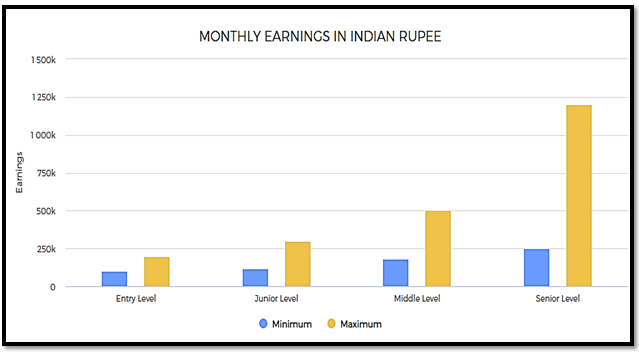
Monthly Earning In Indian Rupee
Entry Level | Junior Level | Mid-Level | Senior Level | |||||
Min Earning | Max Earning | Min Earning | Max Earning | Min Earning | Max Earning | Min Earning | Max Earning | |
100000 | 200000 | 120000 | 300000 | 180000 | 500000 | 250000 | 1200000 | |
1. Entry level: 0 - 2 years of work experience
2. Junior Level: From 1 to 12 years of work experience
3. Mid-Level: From 5 to 20+ years of work experience
4. Senior Level: From 10 to 25+ years of work experience (there could be exceptions in some high-end technical, financial, engineering, creative, management, sports, and other careers; also in the near future, people will reach these levels much faster in many careers and in some careers, these levels will have no meaning as those careers will be completely tech skill driven such as even now, there is almost no level in a Cyber Security Expert’s job)
Work Activities
1. Inspecting situations, events, and people - Inspecting situations, events and people to understand the reasons and causes for the situation or events to happen; inspecting people to understand reasons behind their conditions, behavior, and actions.
2. Analyzing and interpreting data and information - Analysis of data and information to find facts, trends, reasons behind situations, etc.; interpretation of data to aid in decision making.
3. Providing advice and consultation to others - Giving advice or consultation to others about various issues, conceptual matters, know-hows, scientific matters, products or services.
4. Getting Information and learning - Observing, hearing, reading, using computers, or otherwise obtaining information and learning from it.
5. Working directly with people - working directly with people to offer them products and services, providing assistance, etc.
6. Assisting and caring for people - Assisting people in availing of services; taking care of people in different situations; offering help and services to others.
7. Developing and maintaining inter-personal relationships - Developing professional relationships with co-workers and others outside organizations and maintaining good relationships.
8. Processing Information - Compiling, tabulating, calculating, auditing, verifying or otherwise dealing with information processing including data entry, transcription, recording, storing and maintaining databases.
9. Strategic planning - Developing visions and goals, developing strategies and action plans for achieving visions and goals.
10. Making decisions and solving problems - Analysis of data and information; evaluation of alternative decisions and results of decisions; taking the right decisions and solving problems.
11. Updating and using relevant knowledge - Keeping updated with the latest knowledge relevant to your fields of work and use of the relevant knowledge in getting things done.
12. Using computers for work - Using computers for day-to-day office work; using computer software for various applications in day-to-day professional work; entering data and process information; for writing.
Future Prospects
1. The future of this pathway seems bright as the industry statistics are encouraging. The Healthcare Market in India has the potential to increase 3 fold to 133.44 billion US Dollars. Indian Government is willing to expand public health spending to 2.5% of GDP by 2025. Pradhan Mantri Jan Arogya Yojana (PMJAY) launched in 2018 provides 7,124.54 US Dollars each to over 100 million families every year.
2. The Healthcare Industry in India is one of the fastest-growing sectors and it is expected to reach $280 billion. The major focus is on quality of service and hence skilled labor is much required to sustain the growth of this industry.
3. By 2025, medical spending in India is expected to grow by almost 9 to 12% making India one of the world’s top ten in this zone. India’s earnings from medical tourism could exceed US$ 9 billion.
4. The Indian Life Sciences industry will sustain its growth trajectory of 11 to 12% and grow 7 to 8 times to a size of USD 190 billion to 200 billion by 2030. The industry will also create nearly 4 million new jobs for the country
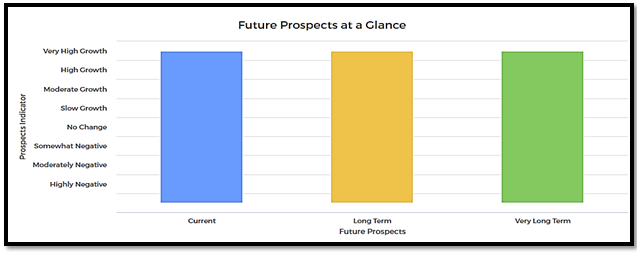
Future Prospects At A Glance
Current (0-1 year) | Long Term (2-5 year) | Very Long Term (6-10 years) |
Very High Growth | Very High Growth | Very High Growth |