

Political Scientist
Entry Level Qualification
Class Graduate
Career Fields
Humanities, Liberals Arts & Social Science
For Specially Abled


 ,
,
About Career
1. Political scientists are the specialise who usually conduct research in the field of national politics, comparative politics, international relations and political theories. Political scientists work to understand the relationships between different political events and from these understanding they try to construct general principles on which world of politics is based.
2. As a political scientist, you would be involved in comparative politics, political economy, international relations, political theory, public administration, public policy, and political methodology. Also, several political scientists also used the field of economics, law, sociology, history, philosophy and geography to understand and solve political issues.
3. As a political scientist, you will often use qualitative methods to do research. Through these qualitative methods, you will gather information from different sources. Some of the methods will include using historical documents to analyse past government’s structure and policies. Some of you will be involved in quantitative methods to develop and research political theories. Some of you may work as a political analyst for organizations like government, labour unions, political group and parties. Thus, as such, you will evaluate current political policies using public opinion, surveys, economic data and election result. From these sources, you will anticipate the effect of new policies.
PARTICULARS | DESCRIPTION |
Name | Political Scientist |
Purpose | Develop And Test Political Theories |
Career Field | Humanities, Liberals Arts & Social Science |
Required Entrance Exam | CUET UG, CUET PG |
Average Salary | 300000 - 400000 Rs. Per Year |
Companies For You | Times of India, HT, India Today NDTV & Many More |
Who is Eligible | Graduate |
Key Roles And responsibilities
As a political Scientist, depending on your field of specialisation, you would have the following roles and responsibilities:
1. You will develop theories using interviews, periodicals, cases, historical paper, polls, statistical sources and then these theories.
2. As a political scientist, you will identify issues for research and analysis in the field of politics and political science.
3. You will analyse and interpret political policies, public issues, laws, legislation, government work, business and organization operations related to the political field, etc.
4. You will work and research of various political subjects like Indian political system, Indian foreign relations, etc.
5. You will collect data from sources like public opinions, surveys, etc. and analyse results.
6. You will develop political theories and test them.
7. You will evaluate the effects of policies and laws on government, businesses and people.
8. You will monitor and evaluate current political events, policies, and other political issues.
9. Develop and test political theories
10.You will forecast political, economic and social trends.
11. You will share political research results through publishing articles, academic publications, written reports, presentations to journals, public and government.
Career Entry Pathway
Class 10 all subjects as per scheme of studies - Class 11-12 with any subject as per scheme of studies – UG in B.A. (Political Science) – PG in Political Science – Ph.D. in Political Science
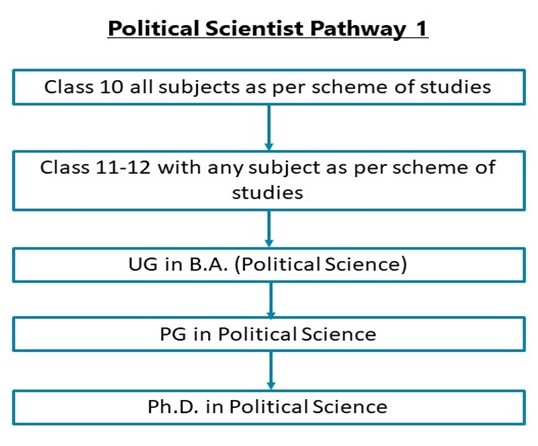
After your Class 10 all subjects as per scheme of studies, you can study Class 11-12 with any subject as per scheme of studies and then study for an undergraduate degree in Political Science / similar subject (Honours or specialisation is an advantage) followed by a master’s degree in Arts stream in Political Science. After a Master’s Degree, you can take a Ph.D. in Political Science.
Class 10 all subjects as per scheme of studies - Class 11-12 with any subject as per scheme of studies – UG in B.A. (Political Science) – PG in Political Science
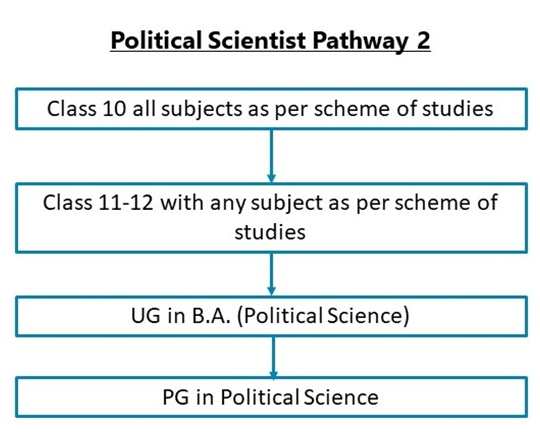
After your Class 10 all subjects as per scheme of studies, you can study Class 11-12 with any subject as per scheme of studies and then study for an undergraduate degree in Political Science / similar subject (Honours or specialisation is an advantage) followed by a master’s degree in Arts stream in Political Science.
Class 10 all subjects as per scheme of studies - Class 11-12 with any subject as per scheme of studies – UG in B.A. (Political Science) – PG in Political Science – M.Phil. in Political Science
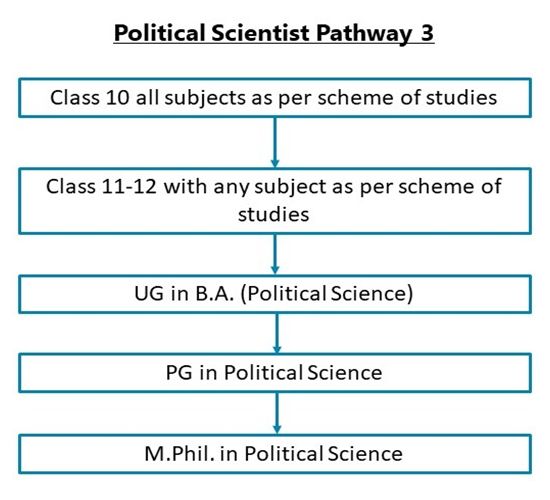
After your Class 10 all subjects as per scheme of studies, you can study Class 11-12 with any subject as per scheme of studies and then study for an undergraduate degree in Political Science / similar subject (Honours or specialisation is an advantage) followed by a master’s degree in Arts stream in Political Science. Now you can study for an M.Phil. degree in Political Science.
Required Qualification & Competencies
To become a Political Scientist, you can study for a Bachelor’s degree followed by a Master’s degree in any of the following disciplines (mark that in India, you may not option other than Political Science, Politics and International Relations in Bachelor’s level):
1. Comparative Politics
2. Conflict and Resolution
3. Defense & Security Studies (Political Science)
4. Diplomatic Studies
5. Global Politics
6. Governance and Regulatory Studies
7. International Policies
8. International Relations
9. Legislative Studies
10. Other Political Science Studies
11. Peace Studies
12. Political Geography
13. Political Marketing
14. Political Science
15. Politics
16. Public Affairs and Public Policy
17. Public Communication
18. Quantitative Methods in Political Science
19. Regional Studies
20. Security, Peace & Conflicts
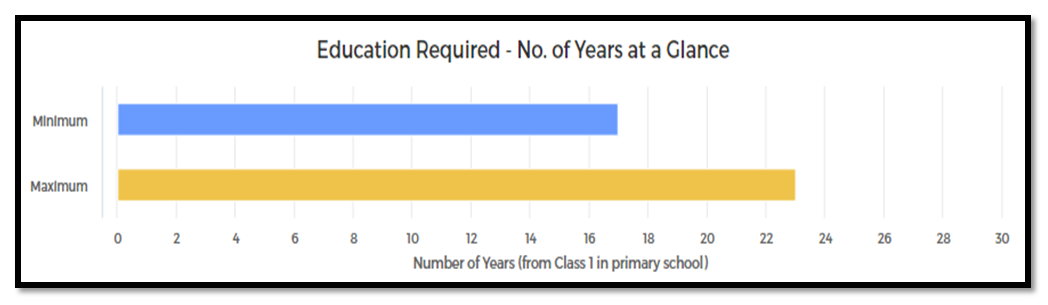
MINIMUM EDUCATION REQUIRED | MAXIMUM EDUCATION REQUIRED |
Post Graduate Postgraduate Degree / Diploma / Certificate Programs for which the minimum eligibility is a pass in Graduation / equivalent Diploma program like Honours Diploma or Graduate Diploma. | Doctoral All Ph.D. or equivalent degree programs for which the minimum eligibility is a Postgraduate or a Pre-Doctoral degree. |
Competencies Required
Interests
1. Investigative: You should have interests for Investigative Occupations. Investigative occupations involve working with ideas and quite a lot of thinking, often abstract or conceptual thinking. These involve learning about facts and figures; involve use of data analysis, assessment of situations, decision making and problem solving.
2. Artistic: You should have interests for Artistic Occupations. Artistic occupations mostly involve working with creative ideas, art and designs. These occupations involve abstract or conceptual thinking, creative self-expression and often do not follow any set processes or rules for getting things done.
3. Social: You should have interests for Social Occupations. Social occupations involve helping or assisting others; these involve working with and communicating with people to provide various services; these may involve educating and advising others.
Abilities
1. Abstract Reasoning: The ability to understand ideas which are not expressed in words or numbers; the ability to understand concepts which are not clearly expressed verbally or otherwise.
2. Deductive Reasoning: The ability to apply general rules and common logic to specific problems to produce answers that are logical and make sense. For example, understanding the reasons behind an event or a situation using general rules and common logic.
3. Emotional Intelligence: The ability to understand your own and others' emotions and feelings; empathy for others; adjusting your behavior or self-control and self-regulation according to others' emptions and situations.
4. Fluency of Ideas: The ability to come up with a number of ideas about a topic (the number of ideas is important, not their quality, correctness, or creativity).
5. Inductive Reasoning: The ability to combine pieces of information from various sources, concepts, and theories to form general rules or conclusions. For example, analysing various events or situations to come out with a set of rules or conclusions.
6. Oral Comprehension: The ability to listen to and understand information and ideas presented through spoken words and sentences.
7. Oral Expression: The ability to communicate information and ideas in speaking so others will understand.
8. Verbal Reasoning: The ability to think and reason with words; the ability to reason out ideas expressed in words.
9. Written Comprehension: The ability to read and understand information and ideas presented in writing.
10. Written Expression: The ability to communicate information and ideas in writing so others will understand.
Knowledge
1. Politics & Governance: Knowledge about different political ideologies, political systems and processes, governance standards and processes, constitutions, etc.
2. Sociology: Knowledge of how humans behave in groups, how societies form, social norms, human relationships, social interactions, cultures and societal trends.
Skills
1. Active Learning: Focused and continuous learning from various sources of information, observation and otherwise for application in getting work done.
2. Critical Thinking: Skills in analysis of complex situations, using of logic and reasoning to understand the situations and take appropriate actions or make interpretations and inferences.
3. Instruction: Skills in training others how to do something.
4. Judgment and Decision Making: Skills in considering pros and cons of various decision alternatives; considering costs and benefits; taking appropriate and suitable decisions.
5. Reading Comprehension: Skills in understanding written sentences and paragraphs in work related documents.
6. Teaching: Skills in teaching and educating others about various academic and applied subjects across different academic fields.
7. Writing: Skills in communicating effectively in writing as appropriate for the needs of the readers.
Personality
1. You are a soft-hearted person sometimes.
2. You trust others sometimes but not always.
3. You are helpful to others sometimes.
4. You are self-satisfied sometimes but some other times you don't feel satisfied with your life and situations.
5. You are imaginative sometimes.
6. You prefer to experience new things and have new experiences sometimes.
7. You act independently sometimes but do not do so in some other times.
8. You are caring, supportive, sympathetic and kind to others sometimes.
Career - Job Opportunities & Profiles
1. Most of the universities and college will hire you as a professor at the position of Junior Professor or Assistant Professor.
2. If you are into research, then you will be hired at the position of research associate.
3. You may join as a political analyst, public opinion analyst with print, TV and online media houses.
4. You may join as a political consultant with various non-government bodies.
5. You may join as a public policy analyst with public policy organizations.
You will find career opportunities at these institutions:
1. Embassies
2. Political Parties like BJP, Congress, etc.
3. NGOs. Working on political studies.
4. Colleges and Universities teaching Political Science.
5. Politics, Public Administration, Public Policies related research companies and policymakers.
6. Print, TV and online Media houses like Times of India, HT, India Today, NDTV, etc.



7. UN and its agencies.
Work Environment
Political Scientists typically work in an office. However, while working on the research, you might be required to move into the field for completing research. Many times, this will include moving to rural areas, under-developed areas of cities, or remote regions. If you are in media as political, budget, election analysts, then you will tend to work more during budget and election times.
Specialisation Tracks In This Career
1. Political Scientist (Comparative Politics)
Political Scientist (Comparative politics) is an expert who studies and compares the domestic politics, political institutions and conflicts of countries. They often compare political patterns between different countries, or through time even the same country.
2. Political Scientist (Global Politics)
Political Scientist (Global politics) studies and research on the political and economic patterns of the world. They study the relationships between cities, nations, multinational corporations, non-governmental organizations and international organizations. They research about conflict regulation, democracy, politics of national self-determination, globalization and its effect of democracy, conflicts and peace studies, political economics, etc.
3. Political Scientist (Political Economy)
Political Scientist (Political Economy) is an expert who studies and researches on production and trade and their relations with laws, customs and government. As a political scientist (political economy) you will also study the distribution of national income and wealth. You may play an important role in policies formation related to the economic development of the nation.
4. Political Scientist (International Relations)
Political Scientist (International Relations) is a specialist who studies and researches on the interconnection of politics, economics and law at the global level. They are responsible for analyzing and formulating the foreign policy of the country.
5. Political Sociologist
Political sociologists specialise in the study of political factors like the state, civil society, family, citizenships, social-political movement through sociological analysis. You will study, why particular class, caste, group of people and nationality vote or do not vote. You will study how certain class; a caste of people has been popular in politics, what make cast-based politics in India, etc.
Career Growth
1. The career growth in university and college states from Assistant Professor and then Associate Professor, Professor and Professor Emeritus. Professors can also get administrative positions such as Director/Dean/Vice Chancellor, etc.
2. If you are hired as a research associate (JRF and SRF), then you will go on to become a Doctoral Research Fellow, then Post-Doctoral Research Fellow and then Scientist in Progressive Grades.
3. If you join media houses as Political Analyst, you may become senior political analyst, senior editor and then editor in chief.
Salary Offered
1. At the entry level, you can join as a research associate with a basic salary of Rs. 25,000 to 30,000. As a doctoral research fellow (junior research fellow) you would be earning around Rs. 35,000 to 38,000 per month. As an assistant professor, you would be earning anything between Rs. 65,000 to 70,000 per month.
2. At the junior level with a work experience of 2-6 years, you would be earning anything between Rs.80,000 to 1,90,000 per month.
3. At the middle level with an experience of 10-12 years, you would be earning anything between Rs. 1,00,000 to 2,00,000 per month.
4. At the senior level of over 15 years of work experience, you would be earning anything between Rs. 1,20,000 to 2,25,000 per month.
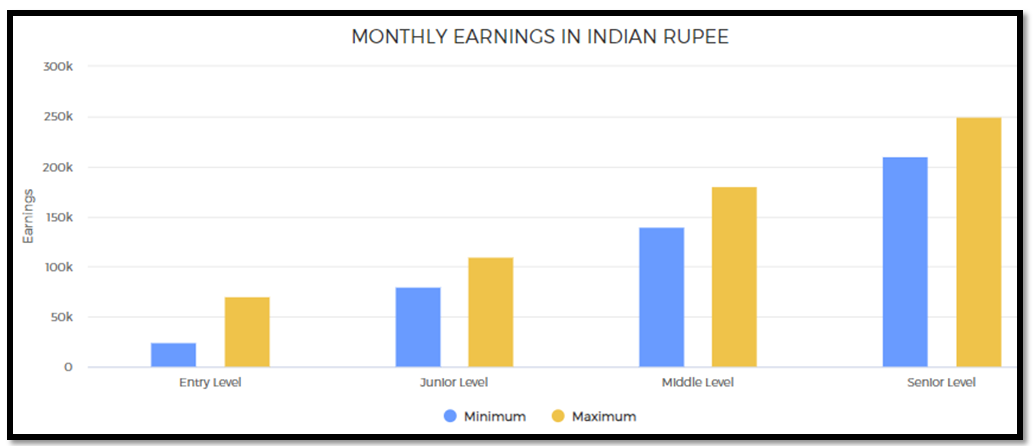
Monthly Earnings In Indian Rupee
Entry Level | Junior Level | Mid Level | Senior Level | ||||
Min Earning | Max Earning | Min Earning | Max Earning | Min Earning | Max Earning | Min Earning | Max Earning |
25000 | 70000 | 80000 | 110000 | 140000 | 180000 | 210000 | 250000 |
1. Entry level: 0 - 2 years of work experience
2. Junior Level: From 1 to 12 years of work experience
3. Mid Level: From 5 to 20+ years of work experience
4. Senior Level: From 10 to 25+ years of work experience (there could be exceptions in some high-end technical, financial, engineering, creative, management, sports, and other careers; also in the near future, people will reach these levels much faster in many careers and in some careers, these levels will have no meaning as those careers will be completely tech skill driven such as even now, there is almost no level in a Cyber Security Expert’s job)
Work Activities
1. Communicating with co-workers and others: Communicating with people in writing, verbally or otherwise inside your workplace and various other people who have professional relationships with your place of work including vendors, government officials, etc. or with people at large.
2. Creative thinking: Developing new ideas, concepts, innovative solutions to problems, newer ways of getting things done, designing products and services, creating work of art and craft, etc.
3. Decision making and problem-solving: Analysis of data and information; evaluation of alternative decisions and results of decisions; taking the right decisions and solving problems.
4. Getting Information and learning: Observing, hearing, reading, using computers, or otherwise obtaining information and learning from it.
5. Providing advice and consultation to others: Giving advice or consultation to others about various issues, conceptual matters, know-how, scientific matters, products or services.
6. Training and teaching: Understanding educational and training needs of others, developing training programs and educational programs, conducting training programs, teaching and instructing others.
7. Translating and interpreting: Translating or interpreting information for other people who are written or spoken in languages that other people do not understand.
8. Updating and using relevant knowledge: Keeping updated with the latest knowledge relevant to your fields of work and use of the relevant knowledge in getting things done.
9. Using computers for work: Using computers for day-to-day office work; using computer software for various applications in day-to-day professional work; entering data and process information; for writing.
Future Prospects
For a Political Scientist, most of the job opportunities are in the government sector, NGOs, Media Houses and Education. NGOs and Government jobs are not market dependent,and thus they are limited with limited growth. In education also currently there is a moderate growth as India overall is not much focused on this side of education. In media houses, political scientists have great opportunity especially because there are elections every year in India in some states.
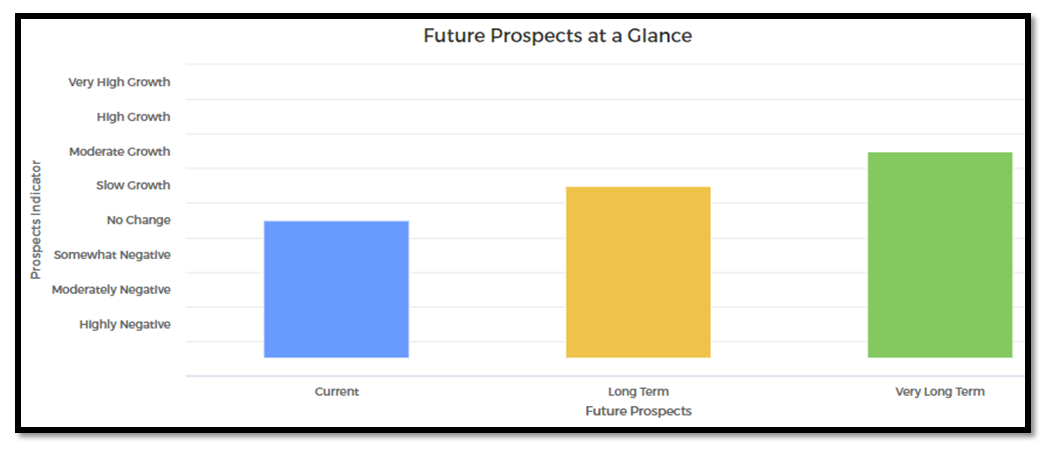
Future Prospects At A Glance
Current (0-1 year) | Long Term (2-5 year) | Very Long Term (6-10 years) |
No Change | Slow Growth | Moderate Growth |