

Academic Research Associate & Fellow
Entry Level Qualification
Class Graduate
Career Fields
Education & Teaching
For Specially Abled


 ,
,
About Career
PARTICULARS | DESCRIPTION |
Name | Academic Research Associate & Fellow |
Purpose | Analyze, Interpret, And Evaluate Research Projects |
Career Field | Education & Teaching |
Required Entrance Exam | BHU PET, CUET PG, IPU CET PHD, JAM, GRE, TOEFL, SAT |
Average Salary | 300000 - 500000 Rs. Per Year |
Companies For You | All India Institute of Medical Sciences (AIIMS), Bose Institute, Indian Institute of Astrophysics & Many More |
Who is Eligible | Graduate |
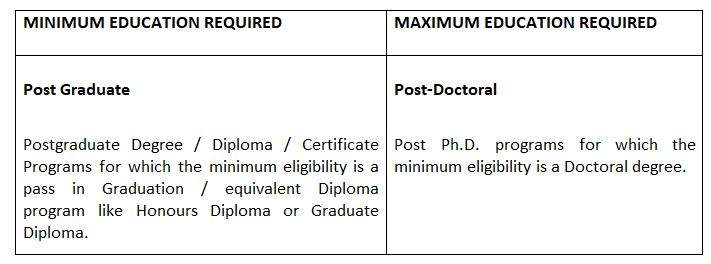
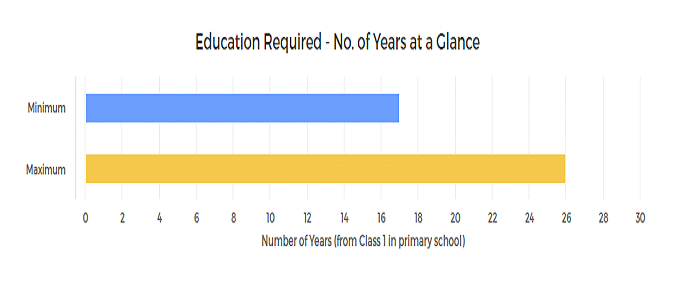
As an Academic Research Associate, you will be assisting faculty members and Research Fellows in conducting research work in an academic/applied field. Typically, a Research Associate (referred to as RA) gets an offer for a particular research project, which is time-bound and contractual. RAs must have at least a Master's degree with a specialisation in an academic/applied area. So RAs are on contract. This is not a permanent job position.
Research Fellows conduct research in association with other fellows and research associates under the guidance of one or more faculty members. Research Fellows get a stipend or a grant. Typically, Junior Research Fellows join after their Master's degree to pursue a Ph.D. After 2 years of work (a Ph.D.'s duration is 3-4/5 years), they are designated as Senior Research Fellow. In some institutions, they are simply called Doctoral Research Fellow.
Then there are Post-Doctoral Research Fellows who get offers for a particular research project which is time bound. Post-Doctoral Fellows get a monthly pay out of the research fund. So their job is also contractual. Typically, Post-Doctoral Fellows must have at least a Ph.D.
Key roles and responsibilities:
1. To contribute to the various learning and teaching programmes within the University and supervise postgraduate research students.
2. To actively collaborate within the University and even with external institutions/organizations to complete research projects.
3. To plan, coordinate, and implement research programmes along with colleagues and students.
4. To collaborate with colleagues to decide on research programmes and methodologies.
5. To outline research objectives and develop project proposals.
6. To analyze, interpret, and evaluate the outcomes of research projects.
7. To writing to different publications or distribute research findings through appropriate media platforms.
8. To present the results of scientific research to sponsors at conferences, seminars, and other such meetups.
9. To assist senior scholars and associates in research projects.
10. To assist with the editing and preparation of manuscripts.
11. To regularly meet with the senior scholars/supervisor to discuss research assignments.
Career Entry Pathway
Class 10 all subjects as per scheme of studies- Class 11-12 with any subject as per scheme of studies - Bachelor degree in any subject - Academic Research Associate at a recognized University / Institution.
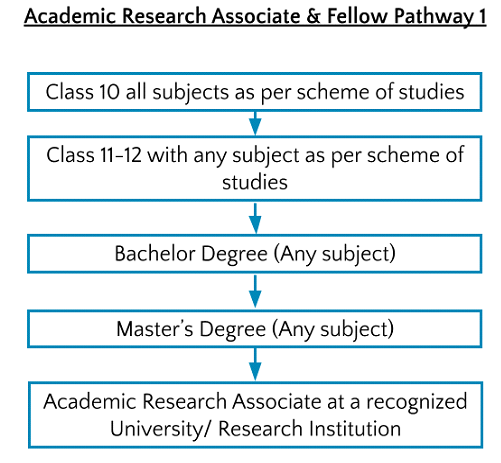
After completing Class 11-12 with any subject as per scheme of studies, you can complete your higher secondary level studies in any stream (Arts, Science, Commerce). Then you can complete your graduation in any subject of your choice. Following this, you can apply for the position of an Academic Research Associate at a recognized University/Institution.
Class 10 all subjects as per scheme of studies- Class 11-12 with any subject as per scheme of studies- Bachelor degree in any subject - Master’s degree in any subject - Academic Research Associate at a recognized University/Institution.
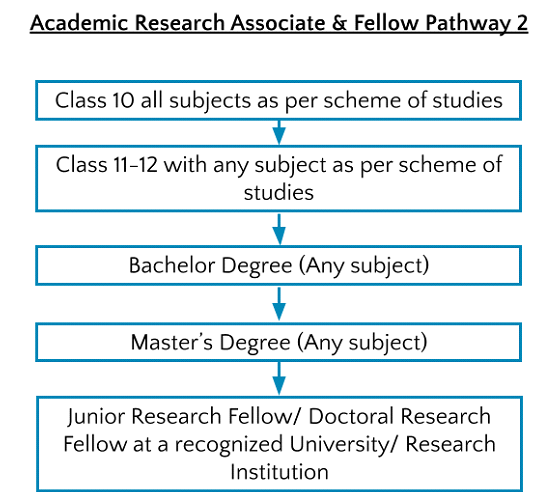
After completing Class 11-12 with any subject as per scheme of studies, you can complete your higher secondary level studies in any stream (Arts, Science, Commerce). Then you can complete your graduation and post-graduation in any subject of your choice. Following this, you can apply for the position of an Academic Research Fellow at a recognized University/Institution.
Class 10 all subjects as per scheme of studies- Class 11-12 with any subject as per scheme of studies- Bachelor Degree in any subject - Master Degree in any subject - Ph.D. - Post-Doctoral Research Fellow at a recognized University/Research Institution
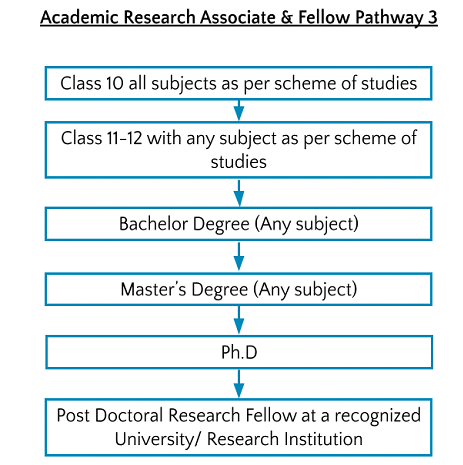
After Class 11-12 with any subject as per scheme of studies, you can complete your higher secondary level studies in any stream (Arts, Science, Commerce). Then you can complete your graduation and post-graduation in any subject of your choice. For further studies, you can complete your Ph.D. and then apply for the position of a Post-Doctoral Research Fellow at a recognized University/Research Institution.
Required Qualification & Competencies
Undergraduate studies after school:
You can pursue your graduation in any subject and discipline (Arts, Science, and Commerce) of your choice and then apply for the position of an Academic Research Fellow/Academic Research Associate/Junior Research Fellow in your specialization subject or a branch of that subject.
Post Graduate studies:
You can pursue your post-graduation in any subject and discipline (Arts, Science, Commerce) of your choice and then apply for the position of an Academic Research Associate/Academic Research Fellow/Junior Research Fellow/Doctoral Research Fellow/ in your specialization subject or a branch of that subject.
Doctoral Studies:
You can choose to obtain a Ph.D. in your specialization subject and then apply for the position of a Post-Doctoral Research Fellow at a recognized University/Research Institution.
COMPETENCIES REQUIRED
1. Conventional: You should have interests for Conventional Occupations. Conventional occupations involve repetitive and routine tasks as well as fixed processes or procedures for getting things done. These occupations involve working more with data, systems, and procedures and less with ideas or creativity.
2. Investigative: You should have interests for Investigative Occupations. Investigative occupations involve working with ideas and quite a lot of thinking, often abstract or conceptual thinking. These involve learning about facts and figures; involve the use of data analysis, assessment of situations, decision making and problem-solving.
Personality traits:
1. You are always or mostly organized in your day-to-day life and activities.
2. You are always or mostly careful about your actions and behaviour.
3. You are always calm or generally remain calm in most situations.
4. You can always act independently or could do so in most situations.
5. You always prefer to experience new things and have new experiences or you mostly do.
Skills:
1. Active Listening: Giving full attention to what other people are saying, understanding the points being made by others, asking questions, etc.
2. Active Learning: Focused and continuous learning from various sources of information, observation and otherwise for application in getting work done.
3. Critical Thinking: Skills in the analysis of complex situations, using of logic and reasoning to understand the situations and take appropriate actions or make interpretations and inferences.
4. Writing: Skills in communicating effectively in writing as appropriate for the needs of the readers.
5. Coordination: Skills in working together with other people to get things done.
6. Judgment and Decision Making: Skills in considering the pros and cons of various decision alternatives; considering costs and benefits; taking appropriate and suitable decisions.
7. Time Management: Skills in prioritizing work, managing time effectively.
Knowledge:
1. Education and Training: Knowledge of various principles and methods of developing training or teaching curriculum, the design of instructional methods, developing course materials, teaching and giving instruction individuals and groups.
2. Administration: Knowledge of various administrative and operational functions in managing a business or an organisation such as general administration, facility management, front office management, back office management, etc.
Career - Job Opportunities & Profiles
Job Opportunities
As an Academic Research Associate & Fellow, you will find job opportunities in educational institutions like universities or research institutions/organizations such as the All India Institute of Medical Sciences (AIIMS), Bose Institute, Indian Institute of Astrophysics, Indian Institute of Chemical Biology (IICB), Indian Institute of Information Technology (IIIT), etc.
1. All India Institute of Medical Sciences (AIIMS)
2. Bose Institute, Indian Institute of Astrophysics
3. Indian Institute of Chemical Biology (IICB)
4. Indian Institute of Information Technology (IIIT)
Work Environment
The work environment of Academic Research Associate & Fellows is a typically educational and research environment. They may work in classrooms, offices, or laboratories, depending upon their choice of specialization. Some specializations may also demand field work. The working hours are normal ranging between 9-10 hours a day.
Generally, you begin your career as a Junior Research Fellow and then upgrade to the level of Senior Research Fellow. The career progression path of a Research Associate is also the same. First, you begin as a Junior Research Associate and then upgrade to the level of a Senior Research Associate.
Salary Offered
The average monthly stipend of a Junior Research Associate/Fellow is Rs. 35,000 and the average monthly stipend of a Senior Research Associate/Fellow is Rs. 38,000. Apart from the monthly stipend, Research Associates and Fellows get numerous other benefits/allowances.
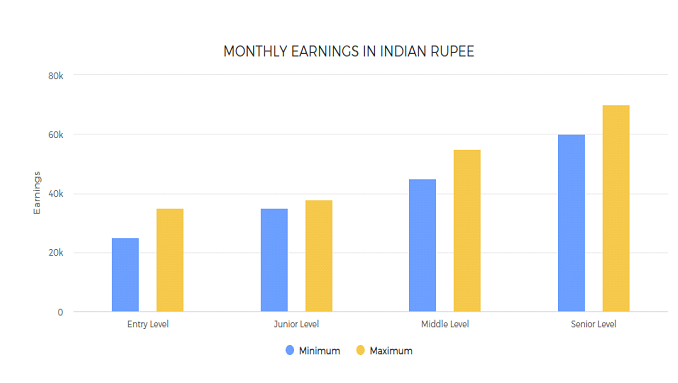
MONTHLY EARNINGS IN INDIAN RUPEE
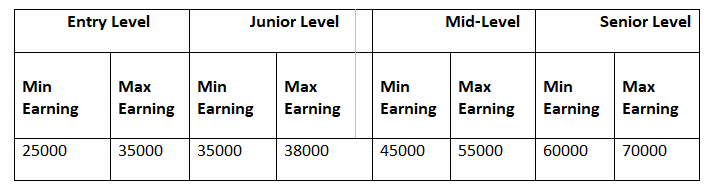
1. Entry level: 0 - 2 years of work experience
2. Junior Level: From 1 to 12 years of work experience
3. Mid-Level: From 5 to 20+ years of work experience
4. Senior Level: From 10 to 25+ years of work experience (there could be exceptions in some high-end technical, financial, engineering, creative, management, sports, and other careers; also in the near future, people will reach these levels much faster in many careers and in some careers, these levels will have no meaning as those careers will be completely tech skill driven such as even now, there is almost no level in a Cyber Security Expert’s job)
Work Activities
1. Analysis and interpretation of data and information: Analysis of data and information to find facts, trends, reasons behind situations, etc.; interpretation of data to aid in decision making.
2. Communicating with co-workers and others: Communicating with people in writing, verbally or otherwise inside your workplace and various other people who have professional relationships with your place of work including vendors, government officials, etc. or with people at large.
3. Getting Information and learning: Observing, hearing, reading, using computers, or otherwise obtaining information and learning from it.
4. Training and teaching: Understanding educational and training needs of others, developing training programs and educational programs, conducting training programs, teaching and instructing others.
5. Updating and using relevant knowledge: Keeping updated with the latest knowledge relevant to your fields of work and use of the relevant knowledge in getting things done.
6. Organising tasks: prioritising, planning and Planning and organising tasks in order to achieve work goals; prioritising tasks to achieve goals and making the best use of the time available.
7. Decision making and problem solving: Analysis of data and information; evaluation of alternative decisions and results of decisions; taking the right decisions and solving problems.
Future Prospects
According to the latest IBEF (Indian Brand Equity Foundation) stats, by 2025, India’s higher education segment is projected to reach US$ 35.03 billion. With the government’s increased funding in the higher education sector, universities can increase the number of research job positions and hence, more and more aspiring candidates can apply for research roles in Academia.
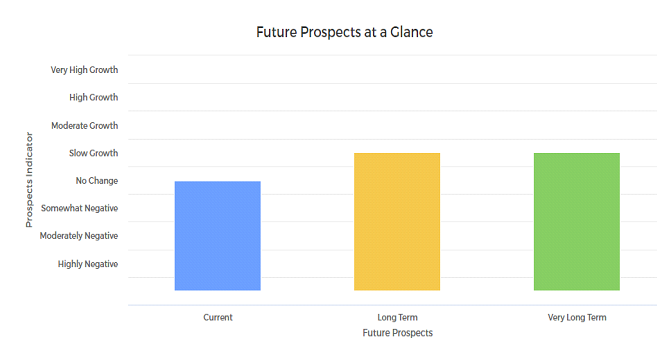
FUTURE PROSPECTS AT A GLANCE
