

Neurologist/ Neurosurgeon
Entry Level Qualification
Class 12
Career Fields
Medical Services
For Specially Abled


About Career
PARTICULARS | DESCRIPTION |
Name | Neurologist/ Neurosurgeon |
Purpose | Diagnose and Treat Nervous System Disorders |
Career Field | Allied & Para Medical Science |
Required Entrance Exam | NEET UG, NEET PG, AIIMS PG INICET |
Average Salary | 8,00,000 - 10,00,000 Rs. Per Year |
Companies For You | Christian Medical College, Apollo, Fortis, Narayana & Many More |
Who is Eligible | Graduate |
1. Neurologists / Neurosurgeons treat patients (through medication or surgery) who are suffering from diseases and disorders that affect the brain, spinal cord, and nerves (Central Nervous System and Peripheral Nervous System). Diseases and disorders like: cerebrovascular diseases; demyelinating diseases of the central nervous system (CNS) such as multiple sclerosis; migrain; infections of the brain & peripheral nervous system (PNS); movement disorders such as Parkinson's disease; neurodegenerative disorders such as Alzheimer's disease and Amyotrophic Lateral Sclerosis; seizure disorders such as epilepsy; spinal cord disorders; speech & language disorders etc.
2. CNS is the term to collectively refer to the brain and the spinal cord.
3. PNS is the term to collectively refer to all other neural elements, such as all the nerves - sensory nerves and motor nerves.
Commonly treated clinical conditions by the Neurologists and Neurosurgeons
1. A patient may be referred to a Neurologist for any symptoms that point to the nervous system. These include seizures, confusion, loss of memory, changes in sensation, muscle & coordination problems, headaches, injury to the head or spinal cord and damages to peripheral nervous systems dues to injuries and trauma.
2. Some of the commonly encountered conditions are neuropathy, stroke, dementia, seizures, attention-deficit/hyperactivity disorder, Tourette's syndrome, multiple sclerosis, head trauma, sleep disorders, neuromuscular diseases, and various infections or tumors of the nervous system.
3. Neurologists can also evaluate unresponsive patients on life support to confirm brain death (making a finding of brain death when it is suspected that a patient has died).
Treatment Options
1. The main diagnostic procedure in neurology is a very thorough history and physical examination.
2. Treatment options vary depending on the neurological problem. They can include referring the patient to a physiotherapist, prescribing medications, or recommending a surgical procedure. The most common treatment for many neurological diseases is medication, the modality of which is determined through various tests and treatments.
3. Such as biopsies, Computed Tomography (CT or CAT) scan of the brain, carotid artery ultrasound, electroencephalogram (EEG), electromyography (EMG), lumbar puncture (LP), magnetic resonance imaging (MRI) of the spine and brain, positron emission tomography (PET) scan etc. Surgery may be an option for some patients.
Neurologist or a Neurosurgeon - Who will you be?
1. Neurology is a “medical specialty” and neurosurgery is a “surgical specialty”.
2. All Neurologists are not Neurosurgeons. You will need specific degrees (MS, MCh or higher) to be able to practice as a Neurosurgeon.
3. Any Neurologist/ Neurosurgeon is a specially trained doctor who has a basic postgraduate level training (MD/MS) in Internal Medicine/ Pathology/ Pediatrics/ Radio-diagnostics/ General Surgery etc. as well as further higher education in either Neuro Surgery or Neurology. A Neurologist who prescribes medication does not usually take on surgical cases, but the reverse may be true.
4. Some specialize in surgical/operative processes (after MS & M Ch degrees) for the management of neurologic disorders through surgery and medication, while some others (after MD & DM/ DNB & FNB) treat neurological diseases primarily through medication.
5. In India, the degrees are different for being a Neurologist and a Neurosurgeon. In US, for example, you will have to get your MD like all other Doctors of other disciplines and then specialize in Neurology or Neurosurgery through internships (usually for 1 year in either internal medicine or surgery), followed by residencies (3 years of specialty training) and fellowships. In Germany, however, a compulsory year of psychiatry must be done to complete a residency of neurology. In the United Kingdom and Ireland, neurology is a subspecialty of general (internal) medicine.
Preliminary Neurological Diagnosis
1. Neurologists examine patients who are referred to them by other physicians. The keystone of a neurological diagnosis is the examination of a patient's history. During a neurological examination, a Neurologist (or a Neurosurgeon) reviews the patient's health history with special attention to the existing clinical condition.
2. The patient takes the neurological exam. Typically, this exam tests mental status, muscle coordination, motor strength, function of the cranial nerves (including vision), reflexes, and sensation.
3. This information helps the doctor determine whether the problem exists in the nervous system and if it does, determine the clinical location of it (localization of the site).
Supplementary diagnostic tests
1. Ancillary diagnostic tests may be needed to ultimately guide therapy. For example, if a right-handed patient reports an episode of difficulty in speaking, the examiner will search for signs of left hemisphere dysfunction.
2. The neurologist may order a lumbar puncture to test spinal fluid. An EEG, CAT scan, MRI, sleep studies, EMG, nerve conduction studies, lumbar punctures, PET scan, or angiography may also be ordered and examined.
3. Apart from the mentioned technologies, advances in genetic testing have made it an important tool in the classification of several inherited neuromuscular diseases. The role of genetic influences is an active area of research currently.
Many Neurologists have advanced specific training
1. This refers to to additional training in areas such as stroke, epilepsy, neuromuscular, sleep medicine, pain management, movement disorders or in certain parts of the nervous system or in specific procedures. However, for all practicing Neurologists/ Neurosurgeons, it is essential to possess a basic knowledge of neuro anatomy.
2. Neuro anatomy is a vast & complex subject about all the building blocks of the brain & the spinal cord and their interconnections. This knowledge is absolutely necessary for the interpretation of clinical findings and for the localization of neurological lesions (any type of abnormal tissue growth in/ on brain tissue).
3. For example, Clinical Neurophysiologists specialize in the use of EEG and intraoperative monitoring.
4. Some others may specialize in the use of electrodiagnostic medicine studies – needle EMG and nerve conduction studies (NCSs). Physicians do not typically specialize in all the aspects together i.e. sleep, EEG, EMG, and NCSs. Also, generally, there are different boards to certify specialists in particular diagnostic procedures.
Functional Fields of Work
1. Clinical / Diagnostic / Operative Care:
Work involves diagnoses, prognoses (how a disease progresses & assessing that progress) and treatment/therapy (by surgery or through administration of medications) provided to patients suffering from neurodegenerative illnesses or clinical conditions some of which are cerebrovascular diseases such as stroke, seizure disorders such as epilepsy, demyelinating diseases of the central nervous system such as multiple sclerosis, movement disorders such as Parkinson's disease, spinal cord disorders, headache disorders, infections of the brain & peripheral nervous system, etc.
2. Medical / Clinical Research:
You can pursue a career as a physician-scientist. Work will be completely laboratory-based sometimes involving field collections of biologic samples (human/animal). Researchers often work at academic medical centers, for the pharmaceutical industry, or with the government. It is important to maximize your research experiences during medical school by participating in a research project, or taking a gap year for a research scholars’ program or participating in summer research internships.
For example, you may be board certified in Neurology (for a practice license) and an Associate Professor of Medicine as well, simultaneously you may also be a recipient of research grants from different sources and pursue scientific research, say suppose specifically on changes of the retinal structure & microvasculature, neuroimaging techniques, acute sleep loss on diurnal plasma dynamics etc. or potential of monoclonal antibody in migraine therapy if you are researching on the development of novel screening and therapeutic strategies or new therapies.
3. Education and Training:
Typically, in medical colleges and universities, all educators are involved in training and educating aspiring doctors. This includes operative techniques & experiences as well as theoretical lectures to develop a deep understanding of clinical and basic sciences surrounding Neurology/ Neurosurgery and its various sub-specialties including the principles of disease investigation, interpretation of diagnostic test results and employed technologies.
Key Roles and Responsibilities
As a Neurologist/ Neurosurgeon, depending on your functional field of work, you will be engaged with one or more of the following roles and responsibilities: -
Clinical / Diagnostic / Operative Care:
1. You will be examining a patient (physical examination and primary screening) for diagnosis and obtaining information on medical/physical conditions, history, and tendencies to ascertain necessary medical attention.
2. You will be diagnosing neurological disorders and clinical conditions and suggest therapeutic treatments, such as prescribing medicines, in hospital wards, clinics, or operating rooms.
3. You will be determining the nature of treatment, conferring with or referring to other medical professionals if required, to ensure safe, effective, and timely treatment as well as continuity of patient care.
4. You will have to obtain historical data to construct a patient’s medical portfolio and plan for consecutive further treatment sessions as required - advising throughout the prognosis (progression) of a disease.
5. You will be involved in recording the patient’s condition or progress throughout the tenure of your treatment sessions, writing reports and maintaining proper registers containing patient information(case histories).
6. You will be managing surgery services, including performing surgeries, planning, arranging, scheduling and coordinating processes, or facilitating procurement of equipment & supplies.
7. You may participate in seminars, medical congresses, and conferences across the world.
Medical Research:
1. You will plan, organize, coordinate & participate in scientific research projects, in collaborative work on study/experiment design, data analysis, & manuscript preparation for various scientific projects.
2. You will determine specific goals or objectives to be obtained; evaluate research data and develop & revise techniques or approaches to work problems.
3. You will design, develop or adapt equipment used in experiments or research to obtain desired results. You will be responsible for laboratory equipment and implementing safety procedures.
4. You will bring new agents for disease treatment more quickly from the laboratory to clinical trials (testing of laboratory products on human patients diagnosed with multiple tumor types).
5. You will identify & implement strategies to enhance collaboration between investigators and clinical or research scientists.
6. You will recruit healthy & affected individuals for a period of close monitoring of their personal clinical response to disease stimulants or to obtain biological samples from these participants for extensive analysis.
7. You will independently compose abstracts, technical reports, slide presentations, posters, spreadsheets, and manuscripts for submission to corporate and federal sponsors, conferences, and scientific journals.
8. You will produce medical illustrations, scientific posters, publication graphics, and slide presentations for national & international meetings.
9. You may participate in seminars, medical congresses, and conferences across the world.
Education and Training:
1. You will be involved in instructing/teaching to a class of students pursuing postgraduate or higher levels or study in the fields of Medical / Surgical Neurological Sciences or related disciplines.
2. You will demonstrate techniques or handling of instruments/tools to your students inside an operation theatre and counsel/guide students in the performance of operative experiments.
3. You may participate in seminars, medical congresses, and conferences across the world.
Career Entry Pathway
Class 10 all subjects as per scheme of studies – Class 11-12 Physics, Chemistry, and Biology along with any other subject as per scheme of studies – MBBS –MD in General Medicine/ Internal Medicine/ Pediatrics – DM in Neurology
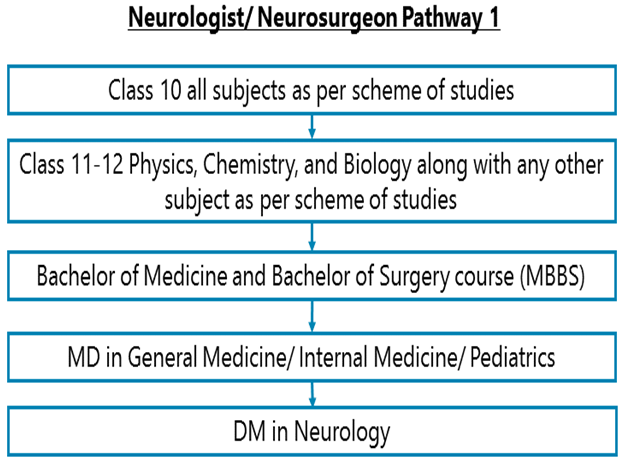
After completing Class 11-12 Physics, Chemistry, and Biology along with any other subject as per scheme of studies, you need to finish your graduation with a MBBS degree. Then go for MD in Medicine/ Pediatrics or similar. Thereafter pursue DM in Neurology.
Class 10 all subjects as per scheme of studies – Class 11-12 Physics, Chemistry, and Biology along with any other subject as per scheme of studies – MBBS – MS General Surgery – M Ch in Neuro-surgery
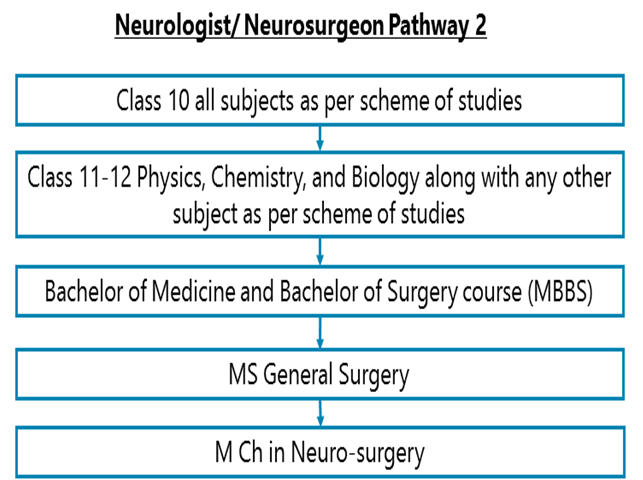
After completing Class 11-12 Physics, Chemistry, and Biology along with any other subject as per scheme of studies, you need to finish your graduation with a MBBS degree. Then go for MS in General Surgery. Thereafter pursue M Ch in Neuro-surgery.
Class 10 all subjects as per scheme of studies – Class 11-12 Physics, Chemistry, and Biology along with any other subject as per scheme of studies – MBBS –MD in Radio-diagnosis–DM in Neuro-radiology
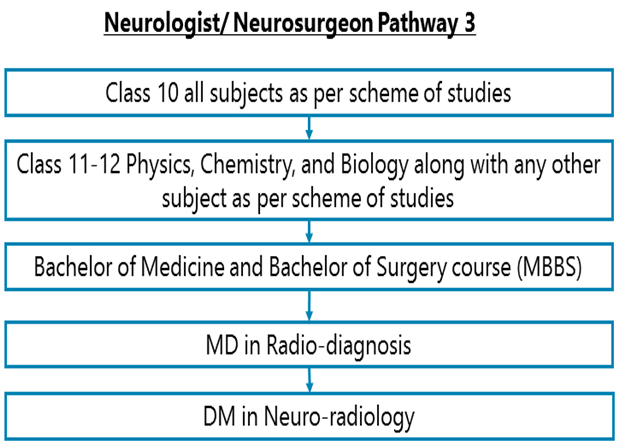
After completing Class 11-12 Physics, Chemistry, and Biology along with any other subject as per scheme of studies, you need to finish your graduation with a MBBS degree. Then go for MD in Radio-diagnosis. Thereafter pursue DM in Neuro-radiology. MD in Radio-diagnosis is essential for DM in this discipline in India.
Class 10 all subjects as per scheme of studies – Class 11-12 Physics, Chemistry, and Biology along with any other subject as per scheme of studies – MBBS - MD in General Medicine/ Radio-diagnosis/ Pediatrics/ Pathology or similar– PhD in Neuro Magnetic Resonance, or Neurology
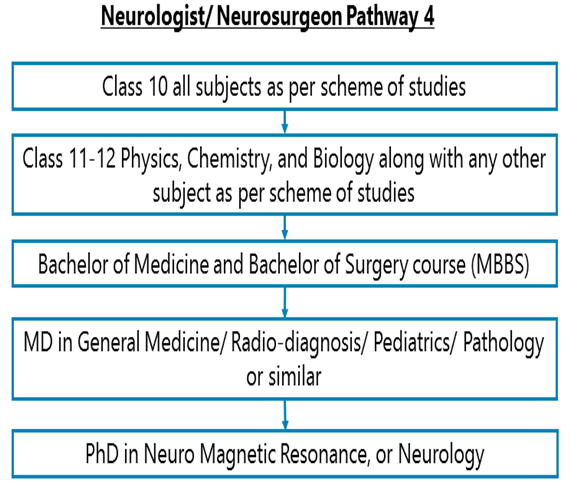
After completing Class 11-12 Physics, Chemistry, and Biology along with any other subject as per scheme of studies, you need to finish your graduation with a MBBS degree. Then go for MD in General Medicine/ Radio-diagnosis/ Pediatrics/ Pathology or similar. Thereafter pursue PhD in Neuro Magnetic Resonance, or Neurology or similar.
Class 10 all subjects as per scheme of studies – Class 11-12 Physics, Chemistry, and Biology along with any other subject as per scheme of studies – MBBS – MD in General Medicine/ Radio-diagnosis/ Pediatrics/ Pathology or MS in Neuro-surgery or DNB – PDCC in Neuro-radiology/ Clinical neurology/ Neurosurgery or similar
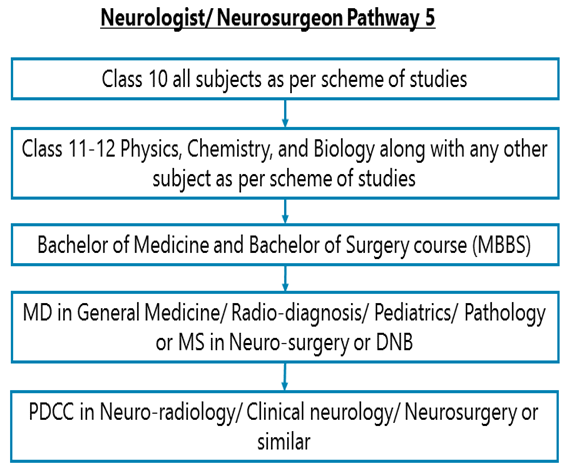
After completing Class 11-12 Physics, Chemistry, and Biology along with any other subject as per scheme of studies, you need to finish your graduation with a MBBS degree. Thereafter, go for either MD or MS or DNB: MD in General Medicine/ Radio-diagnosis/ Pediatrics/ Pathology or MS in Neuro-surgery. Then pursue a PDCC in Neuro-radiology, Clinical neurology, Neurosurgery or similar. Remember that, PDCC can be done only after MD or MS or DNB.
Class 10 all subjects as per scheme of studies – Class 11-12 Physics, Chemistry, and Biology along with any other subject as per scheme of studies - MBBS - MCAT - MD in USA - USMLE
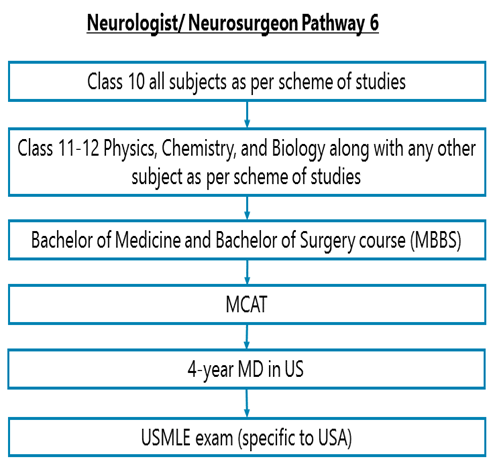
After completing Class 11-12 Physics, Chemistry, and Biology along with any other subject as per scheme of studies, you need to finish your graduation with a MBBS degree then appear for MCAT. While you are completing your graduation degree, you will have to decide whether you want to obtain further education in the US or practice directly there. If you want to study further and then practice medicine or surgery in the US, you will have to first appear for the MCAT exam and finish the 4 year MD course there (equivalent to MBBS in India). After your MD from an American medical college, you will have to appear for USMLE to obtain licensure for practicing as a medical professional in the US and begin with a MD residency there.
Class 10 all subjects as per scheme of studies – Class 11-12 Physics, Chemistry, and Biology along with any other subject as per scheme of studies – MBBS - MS / MD in General Surgery or Medicine respectively – FRCS / MRCS / MRCP exams (Specific to UK, Ireland)
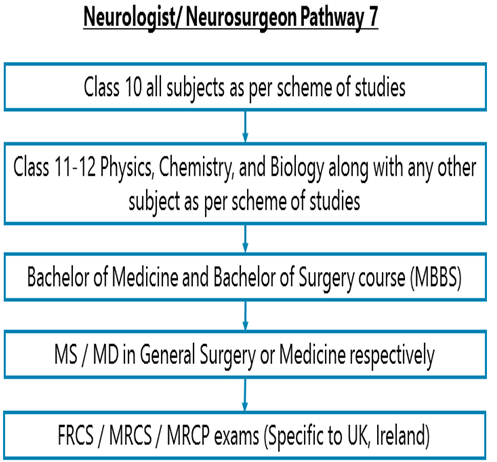
After completing Class 11-12 Physics, Chemistry, and Biology along with any other subject as per scheme of studies, you need to finish your graduation with a MBBS degree. Then you mustacquire MD / MS degree in any discipline. MD is oriented towards Internal Medicine but if you want to be a Surgeon, you will have to go for an MS instead of MD after MBBS. Then go for MRCP / MRCS / FRCS certifications. These exams are conducted in India at various locations.
Required Qualification & Competencies
1. After Class 11-12, you must go for your Bachelor of Medicine and Bachelor of Surgery course (MBBS). Various forms of this qualification’s name are MB ChB, MB BChir, BM BCh, BMBS and MB BCh around the globe.
2. After MBBS, you must go for a Master / post-graduation PG level program like MD, DNB, MS and then complete senior residencies to specialize in various branches of Neurology or Neurosurgery.
3. DNB is considered equivalent to MD / MS. The only difference is for MD and MS you will be trained in medical colleges with hundreds of patients and for DNB you will be trained in private hospitals (with at least 500 beds).
4. After post-graduation, you can further proceed with FNB (after DNB), M Ch (for neuro-surgical specialities), DM (for neuro- medicine specialities) or PDCC if you want to higher qualifications or obtain a Ph.D. if you want to be a physician-scientist.
You are also advised to obtain memberships (life/short term) of various associations / societies such as:
1. Neurological Society of India
2. The Indian Academy of Neurology
3. World Federation of Neurosurgical Societies (WFNS)
4. International Neuro toxicology Association (INA)
5. International Society for Pediatric Neurosurgery (ISPN)
6. National Academy of Neuropsychology (NAN)
7. World Federation of Neurology (WFN)
8. International Child Neurology Association (ICNA)
9. National Institute of Neurological Disorders and Stroke (NINDS)
10. International Neuropsychiatric Association (INA)
11. International Neuropsychological Society (INS)
12. European College of Neuro psychopharmacology (ECNP)
13. International Society for Neurochemistry (ISN)
15. International Society of Musculoskeletal and Neuronal Interactions (ISMNI)
In the UK, MRCP / MRCS / FRCS is mandatory to practice as a Neurologist.
1. You have to qualify graduation from any medical school (in UK or any other country including India), complete MD/MS (if you are studying in India) and obtain your MRCP / MRCS qualification from any of the Royal Colleges (Edinburgh, Glasgow, London – for medicine/radiation; England, Edinburgh, Glasgow, Ireland – for surgery).
2. For Medicine, there are 3 Royal Colleges that grant membership certifications: in Edinburgh, Glasgow, and London.
3. MRCS (for membership) and FRCS (for fellowship) are for practicing surgeons.
4. For Surgery, membership certificates are granted by any of the 4 Royal Colleges: Royal College of Surgeons of England, the Royal College of Surgeons of Edinburgh, the Royal College of Physicians and Surgeons of Glasgow and the Royal College of Surgeons in Ireland.
5. MRCS and MRCP are conducted by each college separately. FRCS (only for surgical specialties) is an examination which is jointly conducted by a mutual committee formed by all 4 Royal Colleges of Surgery (called Joint Committee on Intercollegiate Examinations).
6. So, there are 3 different MRCP exams by 3 different colleges, 4 different MRCS exams by the 4 different colleges and 1 FRCS exam jointly conducted which is the International Fellowship Examination (JSCFE).Each exam has its own format that can be referred to from respective portals of conducting bodies.
7. Also, if you (an aspiring surgeon) pass MRCS of 1 college or FRCS (the joint exam for Fellowship), you are eligible to be transferred as a member of any RCS by submitting the relevant transfer form.
US or Canada
1. All practicing neurologists or neurosurgeons in the US, after MD, go for 1-year internship in either internal medicine or medicine/surgery then at least 3 years of specialty training in an accredited residency program.
2. Many neurologists also have additional training or interest in one area of neurology, such as stroke, epilepsy, neuromuscular, sleep medicine, pain management, or movement disorders.
3. If you are targeting the US or Canada, remember, you will have to clear USMLE after you complete an MBBS program in India to be able to directly practice in the US. To study in medical schools in the USA or Canada for an MD degree before practicing there, you will have to clear MCAT. Medical College Admission Test (MCAT) is a compulsory test for anyone who plans to get admission in medical schools of the USA and Canada. MD degrees are followed by 3 to 7 years of residency. Graduates can practice any specialty. Physicians are fully certified after passing board exams.152 MD-granting schools in the United States and 17 in Canada.
4. MCAT consists of 4 distinct sections that are individually scored. Each section is allotted either 90 or 95 minutes and tests between 50 and 60 questions. Including breaks, the full examination lasts approximately 7.5 hours.5. Many MBBS graduates from India, targeting Psychiatry, directly aim at USMLE instead of going the long way as residencies in the Psychiatry domain are easier to get through with a lower mean USMLE score. After MBBS and USMLE, graduates from India have sequentially completed internships, residencies, fellowships &observership and are currently practicing in the US with a medical license.
5. However, after your MBBS here if you further want to study in US, then clear MCAT, join medical school in US and then finally appear for USMLE. MCAT is administered 25 times in a year. With a pass in MCAT, they will need to complete a medical degree (MD) in the US or Canada which is for 4 years. Then they can appear for USMLE and get a practice license.
6. Remember: after passing USMLE once, you cannot repeat it for attempting a better score. Programs usually eliminate candidates with multiple attempts. For this reason, it is essential to do extremely well in the first attempt. Further, your answers will not be evaluated on a population curve basis; you will be marked on the level of difficulty of the items you have attempted during the examination.
7. Indian graduates from any other discipline (other than MBBS) are also eligible to practice as a Medical Professional in the US but they have to appear for MCAT with a ‘special permission’ from Association of American Medical Colleges (AAMC) (before registering for the exam, mail to mcat@aamc.org stating the reasons why you wish to take the exam). If you are specially permitted by AAMC, which is rare, you can then attempt & clear MCAT, then pass 4-year MD, then clear USMLE and then practice in US / Canada.
So, precisely for aspiring Psychiatrists
MBBS in India > USMLE >Internship> Residency > Fellowship >Observership>Practice
Alternatively, a longer router (preferable for medicine specialties other than Psychiatry) is,
MBBS in India > MCAT > Basic Medical Degree (MD) in US / Canada > USMLE> Internship > Residency > Fellowship >Observership> Practice
For non-medical graduates from India,
Bachelor degree (duration is not a factor) > MCAT with special permission> Basic Medical Degree in US / Canada (MD) > USMLE > Internship > Residency > Fellowship >Observership> Practice
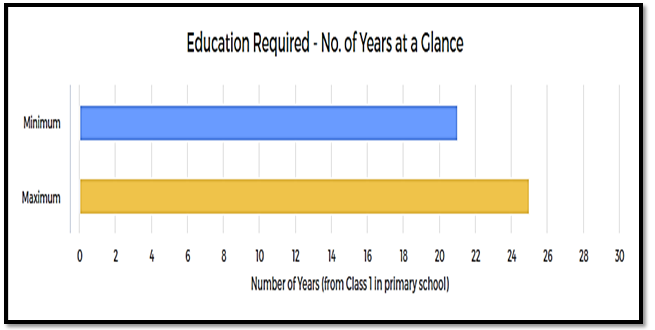
MINIMUM EDUCATION REQUIRED | MAXIMUM EDUCATION REQUIRED |
Post Graduate Postgraduate Degree / Diploma / Certificate Programs for which the minimum eligibility is a pass in Graduation / equivalent Diploma program like Honours Diploma or Graduate Diploma. | Post-Doctoral Post Ph.D. programs for which the minimum eligibility is a Doctoral degree. |
Competencies Required
Interests
1. You should have an interest in Investigative Occupations. Investigative occupations involve working with ideas and quite a lot of thinking, often abstract or conceptual thinking. These involve learning about facts and figures; involve use of data analysis, assessment of situations, decision making and problem-solving.
2. You should have an interest in Realistic Occupations. Realistic occupations involve more practical and hands-on activities than paperwork or office work. Realistic occupations often involve physical activities for getting things done using various tools and equipment.
3. You should have an interest in Social Occupations. Social occupations involve helping or assisting others; these involve working with and communicating with people to provide various services; these may involve educating and advising others.
Knowledge
1. You should have knowledge of Medicine - the science of diagnosis, treatment and prevention of human diseases, ailments, injuries and disorders. This includes understanding the symptoms, knowledge of the diagnostic processes, knowledge of the treatment procedures and medicines, and preventive healthcare measures.
2. You should have knowledge of Therapy and Counseling - Knowledge of the principles, methods, and procedures for diagnosis, treatment, and rehabilitation of dysfunctions or disorders in humans.
3. You should have knowledge of Biological Sciences - humans, their anatomical structure, cell structure, tissues, physiological functions, evolution, and all other related aspects.
Skills
1. You should have Active Listening Skills - Giving full attention to what other people are saying, understanding the points being made by others, asking questions, etc.
2. You should have Critical Thinking skills- Skills in the analysis of complex situations, using logic and reasoning to understand the situations and take appropriate actions or make interpretations and inferences.
3. You should have Reading Comprehension Skills - Skills in understanding written sentences and paragraphs in work-related documents.
4. You should have Instruction Skills - training others how to do something.
5. You should have Judgment and Decision Making Skills - considering pros and cons of various decision alternatives; considering costs and benefits; making appropriate and suitable decisions.
6. You should have Problem Solving Skills - Skills in analysis and understanding of problems, evaluating various options to solve the problems and using the best option to solve the problems.
7. You should have Persuasion Skills- persuading others to change their minds or behavior.
Ability
1. You should have Oral Comprehension Ability - listen to and understand information and ideas presented through spoken words and sentences.
2. You should have Oral Expression Ability - communicate information and ideas in speaking so others will understand.
3. You should have Deductive Reasoning Ability - apply general rules and common logic to specific problems to produce answers that are logical and make sense. For example, understanding the reasons behind an event or a situation using general rules and common logic.
4. You should have Problem Sensitivity - The ability to tell when something is wrong or is likely to go wrong. It does not involve solving the problem, only recognizing there is a problem.
5. You should have Inductive Reasoning Ability - The ability to combine pieces of information from various sources, concepts, and theories to form general rules or conclusions. For example, analysing various events or situations to come out with a set of rules or conclusions.
6. You should have Near Vision - The ability to see details at close range (within a few feet of the observer).
7. You should have Perceptual Speed - The ability to quickly and accurately compare similarities and differences among sets of letters, numbers, objects, pictures, or patterns. The things to be compared may be presented at the same time or one after the other. This ability also includes comparing a presented object with a remembered object.
8. You should have Arm-Hand Steadiness - The ability to keep your hand and arm steady while moving your arm or while holding your arm and hand in one position.
Personality Traits
1. You are always or mostly care about your actions and behavior.
2. You are always or mostly disciplined in your actions and behavior.
3. You are always or mostly a soft-hearted person.
4. You are always or mostly helpful to others.
5. You are always calm or generally remain calm in most situations.
6. You can always act independently or could do so in most situations.
Career - Job Opportunities & Profiles
In India, after a you can get a job as a Consultant Neurologist and after MCh as a Consultant Neurosurgeon in any of the following healthcare establishments:
1. Multi-Specialist Government and private hospitals such as All India Institute of Medical Sciences (AIIMS), Christian Medical College, Apollo, Fortis, Narayana, Kasturba, Tata, Lilavati, Medanta, Kokilaben, King Edward Memorial, Max, Wockhardt, Sterling, Shalby, Medica, King George, Assam Medical College, Columbia Asia, Jaslok, AMRI, and so on.
2. You may also consult patients at various health clinics or set up your own practice after a few years of experience at a super-speciality hospital.
Most jobs for Specialist Consultant Physicians are contractual. Many of the Consultants work in more than one hospital.
1. If you want to pursue a career in teaching along with practice (practice means you will be involved in treating patients), you may join a teaching hospital as an Associate Professor, generally referred to as Medical College and Hospital such as the AIIMS, St. John, Kasturba Medical College, Maulana Azad Medical College, King George’s Medical College, Christian Medical College Vellore, Grant Medical College, Calcutta Medical College, Lady Hardinge Medical College, etc.
2. If you want to pursue a career in Medical / Clinical Research along with practice(practice means you will be involved in treating patients), then you may join any of the medical colleges/organizations which are involved in research such as the National Drug Dependence Treatment Centre, Sri Ganga Ram Hospital, Institute of Human Behaviour & Allied Sciences, AIIMS, JIPMER Pondicherry, Institute of Medical Sciences, BHU, University College of Medical Science, Delhi University, Sri Rama chandra Medical College & Research Institute, Regional Medical Research Centre at Bhubaneswar and Dibrugarh, PGIMER, Chandigarh, IPGMER, Kolkata, etc.
Specialisation Tracks In This Career
1. Clinical Neurophysiologist
This is a medical subspecialty which involves Neurologists who focus on the central & peripheral nervous systems through the recording of bioelectrical activity. They conduct tests that are concerned with measuring the electrical functions of the brain, spinal cord, and nerves in the limbs and muscles to precisely define the affected site, the type & degree of damage, along with revealing the abnormalities that are in question.
2. Neuroimmunologist
The brain is considered an immune privileged site which means it has the ability to tolerate introduction of infection causing “antigens” without always eliciting a response. Nonetheless, extensive bi-directional interactions take place between the nervous and the immune system in both healthy and diseased conditions. Neuroimmunologists strive to understand these temporal (relating to time) interactions at the molecular level of the immune system with the nervous system of humans, the pathology of certain neurological diseases some of which have no clear etiology (study of causes, origins or reasons)and the physical/ chemical/ environmental stressors that affect the two systems. Their studies contribute to novel pharmacological/ surgical treatments for several misdiagnosed neurological conditions. As commonly believed, cytokines (small proteins) are released by activated white blood cells of the immune system during an infection (brain injury, viral & bacterial infections, and in neurodegenerative processes). These proteins again in turn have neural targets and they ultimately affect thermogenesis (production of heat in our bodies), behavior, sleep, and mood. This forms the basis of neuro immunological studies.
3. Neuro psycho pharmacologist
Neuro psycho pharmacologists seek to study the neural mechanisms that drugs act upon to influence behavior. Drugs such as opium, cannabis, belladonna and certain other plants have been used for centuries by us to ease suffering or change awareness but the knowledge of how these substances actually worked was quite limited. Now, the nervous system is progressively being studied at the microscopic and chemical level with particular focus on clinical specificity. Treatments for complex illnesses such as schizophrenia and depression are now targeted with increased diagnostic precision. This field can be considered a confluence of many professionals including neurologists, psychiatrists, researchers in chemistry or generics etc. This is primarily as research oriented specialty.
4. Neurologist (Experimental Neuro therapeutics)
This sub-specialty covers research on novel experimental treatments of neurological disorders. These treatment modalities may be surgical or through medications. Some examples include spine instrumentation, devices used for neuromodulation, intra the cal drug delivery, sacral nerve stimulation, vagal nerve stimulation for epilepsy, deep brain stimulation (DBS) of the sub thalamic nucleus (STN) etc. Most of such therapies have been developed from basic science experiments by studying about the structure & function of various brain nuclei and pathways. Most of these are not approved pathways of treatments and only very few are temporarily approved for a very small patient population. The devices (such as responsive neurostimulators) used for extending these kinds of treatments are also under trial. Currently, multiple leaders in this field are actively developing new ways of delivering electrical stimulation, medications, and gene therapy into the CNS. Several translational researches are ongoing and are at a nascent stage such as brain–machine interfaces for people who are locked in after stroke, traumatic brain injury, or spinal cord injury.
5. Neuro radiologist
Neuroradiologists use neuroimaging techniques to study the diagnosis & characterization of abnormalities of the central & peripheral nervous system, spine, head and neck. They use medical equipment and other diagnostic & therapeutic techniques such as computed tomographic angiography (CTA), embolization, coil placement, catheter angiography, perfusion & diffusion techniques, contrast-enhanced techniques or magnetic resonance imaging (MRI) to identify problems. These techniques allow Neuroradiologists to diagnose strokes, tumors, genetic conditions, aneurysms, Alzheimer's disease, and many other causes of neurological dysfunction at an early stage. They study the X-rays and scans to interpret the findings. “Stroke” is one of the most active areas of medical imaging research & innovation. They can now look inside the brains of stroke patients and offer revolutionary treatments using advanced techniques that were unavailable even just a few years ago. Other doctors may also seek guidance in choosing the correct imaging test and for understanding the interpretation of neuroimaging studies & diagnoses to assist patients with a variety of disorders.
6. Pediatric Neurosurgeon
Pediatric neurosurgeons concentrate on the special surgical problems of children involving the brain, spine or peripheral nerves. They care for infants, children, and adolescents. They also help to counsel parents expecting a baby who may have been diagnosed before birth with a neurosurgical problem. They may specialize further in particular conditions such as acute head injuries (also includes sports-related injuries which are fairly common among children), brain tumors & spinal cord tumors, congenital spinal cord problems, craniofacial disorders, vascular malformations of the brain or spinal cord etc.
7. Neurologist (Hospice and Palliative Medicine)
Neurologists dealing with this sub-specialty focus on symptom management, relief of suffering and end-of-life care. They have advanced knowledge and skills to prevent & relieve the suffering of patients with life-limiting, life-threatening and terminal illnesses.
8. Interventional Neuroradiologist or Neuro interventionalist
Interventional Neuroradiologists or Neuro interventionalists use minimally invasive image-based technologies and procedures used in diagnosis and treatment of diseases of the head, neck, and spine. This subspecialty is also called Endovascular Surgical Neuroradiology. Minimally invasive procedures are those surgical processes which need comparatively small incisions to be made to the operative area and hence this involves shorter healing time, lesser associated pain and reduced risk of infection.
9. Vascular Neurosurgeon
Vascular Neurosurgeons aim to treat disorders concerning the blood vessels of the brain and the spinal cord. If you want some medical names to these disorders, take brain aneurysms, arteriovenous malformations, spinal arteriovenous fistulas etc. Such patients are managed by both neurosurgeons and in erventional neuro radiologists. Some techniques used by these Neurosurgeons are imaging (perfusion CT, Xenon-CT monitoring) and monitoring (trans-cranial Doppler, brain tissue oxygen) to manage vasospasms (sudden constriction of a blood vessel, reducing its diameter and flow rate).
10. Neurosurgeon (Stereotactic, Functional, Epilepsy Surgery)
Neurosurgeons specializing in stereotactic, functional or epilepsy surgeries are trained in severing (removal) part or all of certain sections in the brain to stop or lessen seizure spread & activity or for palliative (painkilling) reasons. They are skilled in the surgical removal of functional, physiological and/or anatomical pieces or divisions of the brain that are operable and are causing seizures. They also sometimes use the very rare processes of hemispherectomy or total lobectomy which means removal of part or all of one of the cerebral hemispheres or one of the lobes of the brain. These processes are seldom used in specific oncological cases or for treating very severe neurological trauma such as a stab or gunshot wounds to the brain.
11. Oncological Neurosurgeon
Oncological Neurosurgeons are skilled in surgically treating benign & malignant central and peripheral nervous system cancers and pre-cancerous lesions in both adults and children. This includes brain stem cancers, spinal cancers, secondary metastases to the brain (coming into the brain from where the cancer is primarily localized), tumors of the meninges & intracranial spaces etc. Precancerous lesions are identifiable local signs (abnormalities) that, with time, have an increased risk of developing into tumorous formations.
12. Neurosurgeon (Skull Base Surgery)
Neurosurgeons specializing in skull base surgeries remove a tumor or other growth at the base, or bottom, of the skull. A specific type called “minimally invasive skull base surgery” allows surgeons to do this delicate surgery through the nose. Such surgeries are done at times for treating a brain tumor near the pituitary gland or tumors in the pituitary gland or tumors of the sinuses and nasal cavities. Besides removing tumorous growths, these surgeries can also be done to treat a cyst, encephaloceles (hernias in the brain), and some birth defects. Depending on a patient’s diagnosis, the care team of doctors may include an ENT surgeon, a neurosurgeon, an ophthalmologist, an anesthesiologist, an endocrinologist, an oncologist, a radiologist. A CAT scan and/or an MRI scan along with other additional tests are usually ordered to prepare for surgery. The conditions treated with skull base surgery are serious. Minimally invasive skull base surgery allows for faster recovery, less pain, no scars, fewer complications, and less chance of damage to other parts. In some cases, though, traditional skull base surgery can be the better option.
13. Spinal Neurosurgeon
Spinal Neurosurgeons are specialists in treating abnormalities and instabilities in the spinal cord, the craniocervical junction (the interface between the skull and cervical spine), age-related degeneration, minimally invasive spinal deformities, spinal trauma & spinal cord injuries, congenital spinal conditions in adults, treatment of spinal tumors. They also treat spine fractures caused by osteoporosis, burst fractures and dislocations. Such conditions may occur following motor vehicle accidents, lifting very heavy weights or falls from height too. They also treat deformities that may have been caused from previous fusion surgeries/failed scoliosis surgeries. They also perform disc replacements.
14. Neurosurgeon (Peripheral Nerve Surgery)
Peripheral nerves are the ones outside our brain and spinal cord. Peripheral nerve disorders distort or interrupt the messages between the brain and the rest of the body.There are more than 100 kinds of peripheral nerve disorders. They can affect one nerve or many nerves. Some are the result of other diseases, like diabetic nerve problems or may also happen after a virus infection or after an injury. Some people may also be born with peripheral nerve disorders i.e. congenital conditions. Neurosurgeons specializing in peripheral nerve surgeries treat acute nerve injuries, entrapment neuropathies and nerve sheath tumours (an abnormal growth within the cells that cover nerves). Entrapment neuropathies involve pain and/or loss of function (motor and/or sensory) of the nerves as a result of chronic compression concerning the peripheral nerves. This is a highly specialized surgical specialty and requires years of practice. Such surgeons may also come from varying backgrounds with expertise in orthopaedic, neurological, plastic and reconstructive surgery.
15. Neuropsychiatrist
Neuropsychiatrists tackle mental disorders that occur due to diseases of the nervous system. This is a relatively new field as there has always been a certain monism between neurology and psychiatry. However, in recent times traditional neurological disorders, like Parkinson's disease, are being recognized for their high incidence of psychiatric symptoms, such as psychosis and depression. These symptoms, which are largely ignored in neurology, can be addressed by Neuropsychiatrists which would lead to improved patient care.
16. Geriatric Neurologist
Geriatric Neurologists deal with the study, prevention, and treatment of neurologic disorders in humans with old age. There are a number of acute and chronic neurological disorders associated with advancing age. Geriatric Neurologists have to be equipped with a unique body of knowledge about the aging nervous system, its vulnerabilities, the prevalence & expression of associated neurologic disorders and its influence on other body functions. The diagnosis, treatment & management of Alzheimer's disease, Lewy Body dementia, Parkinson's disease, and vascular dementia, are the most common areas of expertise among geriatricians. This field is also synonymously referred to as Neuro geriatrics.
17. Neuro endocrinologist
Neuroendocrinologists seek to study how the brain regulates the hormonal activity in the body and the clinical aspects of disorders associated with the malfunctioning of such regulatory interactions. The nervous system communicates with the help of neurotransmitters and the endocrine system does through hormones. Neuroendocrinology therefore investigates the influences of local & widespread systems for signaling in our bodies. Hormone secretion is determined by numerous behavioral events (e.g., stress, sleep, and emotions) & other metabolic events and all of these in turn are regulated by the secretions inside our CNS and PNS. Hence the intricacies between the nervous & hormonal systems are enormous and clinical implications are also vast.
18. Neurologist (Brain Injury Medicine)
For acute traumatic brain injury, a multidisciplinary approach is key to optimizing outcome involving neurologists, psychiatrists, physiotherapists, speech and language therapists, occupational therapists etc. In some cases, neuropsychiatric symptoms such as emotional distress and clinical depression may emerge to be evaluated and managed by Neurologists so some of them may also specialize in this. Medication is also used to control post-traumatic epilepsy in some cases.
Career Growth
1. You may grow through the following roles depending on your functional field of work.
2. If you are practicing independently and/or are associated with any public/private sector healthcare provider/hospital/nursing home, there is no discrete designation growth that happens. You will simply have to specialize in your area of interest and work as part of that department in the hospital/clinic / super-specialty establishments etc. Generally, all Consultant Neurologists or Neurosurgeons are associated with some public/private hospitals or healthcare providers and some also practice individually alongside.
3. You can work in roles such as that of Attending Consultant, Associate Consultant, Consultant Senior Consultant, Deputy Director, Associate Director, Director/Clinical Director, Senior Director, Chief of Division, etc.
4. If you are working in the drug development or formulation departments of research-oriented organizations, you can gradually move up the ladder as Senior, Head of Assay Development, Product Development Leader, Chief/Clinical Chief of Service, etc.
5. If you are working in the R&D departments for pharmaceutical companies, you can grow from say a Research Associate, to Senior Research Consultant, Principal Investigator, etc. Growth usually takes long and is gradual.
Salary Offered
1. An MD/ DNB joins at about Rs. 75,000 – Rs. 80,000 a month at the beginning. At private hospitals in entry-level positions, one can get about the same or slightly higher.
2. After your DM/M Ch degrees, you may expect to get about Rs. 80,000 – 1,00,000 or even more a month. Earnings also depend on the number of therapeutic cases handled in a month.
3. Private hospitals prefer to take people with prior experience. In such cases with 2-3 years of experience, one may get about Rs. 1,00,000-1,20,000 a month.
4. After MD/MS, one begins first as a Senior Resident and then gradually to Consultant / Reader / Assistant Professor etc. and after DM/MCh, one begins as a Neurologist / Neurosurgeon / Senior Consultant / Senior Researcher or Associate Professor depending on which area you are working in. Salary increases with years of practice/teaching experience and the number of cases handled, that’s all.
5. After 7 to 10+ years of experience post-residency, you can expect to earn about Rs. 2,00,000 – 5,00,000 or even more a month.
6. With 10 to 15+ years of experience post residency, you can expect to earn about Rs. 2,50,000 – 10,00,000 or even more a month.
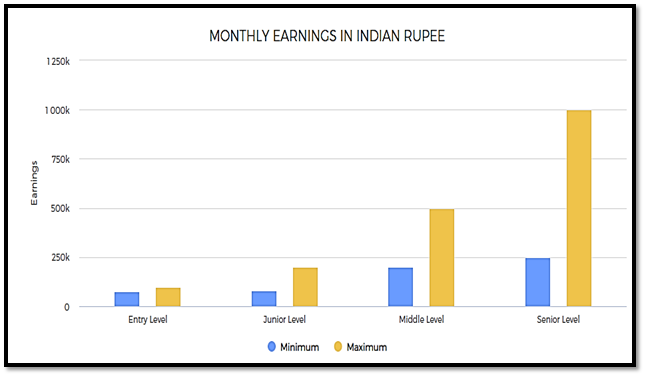
Monthly Earning In Indian Rupee
Entry Level | Junior Level | Mid-Level | Senior Level | |||||
Min Earning | Max Earning | Min Earning | Max Earning | Min Earning | Max Earning | Min Earning | Max Earning | |
75000 | 100000 | 80000 | 200000 | 200000 | 500000 | 250000 | 1000000 | |
1. Entry level: 0 - 2 years of work experience
2. Junior Level: From 1 to 12 years of work experience
3. Mid-Level: From 5 to 20+ years of work experience
4. Senior Level: From 10 to 25+ years of work experience (there could be exceptions in some high-end technical, financial, engineering, creative, management, sports, and other careers; also in the near future, people will reach these levels much faster in many careers and in some careers, these levels will have no meaning as those careers will be completely tech skill driven such as even now, there is almost no level in a Cyber Security Expert’s job)
Work Activities
1. Analyzing and interpreting data and information - Analysis of data and information to find facts, trends, reasons behind situations, etc.; interpretation of data to aid in decision making.
2. Assisting and caring for people - Assisting people in availing of services; taking care of people in different situations; offering help and services to others.
3. Communicating with co-workers and others - Communicating with people in writing, verbally or otherwise inside your workplace and various other people who have professional relationships with your place of work including vendors, government officials, etc. or with people at large
4. Developing and maintaining inter-personal relationships - Developing professional relationships with co-workers and others outside organisations and maintaining good relationships.
5. Getting Information and learning - Observing, hearing, reading, using computers, or otherwise obtaining information and learning from it.
6. Inspecting situations, events, and people - Inspecting situations, events and people to understand the reasons and causes for the situation or events to happen; inspecting people to understand reasons behind their behaviour and actions
7. Making decisions and solving problems - Analysis of data and information; evaluation of alternative decisions and results of decisions; taking the right decisions and solving problems.
8. Processing information - Compiling, tabulating, calculating, auditing, verifying or otherwise dealing with information processing including data entry, transcription, 9. Recording, storing and maintaining databases
10. Providing advice and consultation to others - Giving advice or consultation to others about various issues, conceptual matters, know-how, scientific matters, products or services
11. Strategic planning - Developing visions and goals, developing strategies and action plans for achieving visions and goals.
12. Updating and using relevant knowledge - Keeping updated with the latest knowledge relevant to your fields of work and use of the relevant knowledge in getting things done.
13. Using computers for work - Using computers for day-to-day office work; using computer software for various applications in day-to-day professional work; entering data and process information; for writing.
14. Working directly with people - Working directly with people to offer them services, providing assistance, etc.
Future Prospects
1. The future of this pathway seems bright as the industry statistics are encouraging.
2. The prevalence of neurological disorders (more in rural areas) in India ranges from 967-4,070 with a mean of 2394 patients per 100,000 population. A study revealed that not a single member, among the 3666 members of the Neurological Society of India & the Indian Academy of Neurology, lived in a geographical area covering 934.8 million people. 30.09% live in the four major metropolitan cities, 29.54% in the state capitals, 30.58% in Tier 2 cities, 7.12% in tier 3 cities and 2.67% in rural areas covering a population of 84.59 million.
3. 80% of India's specialist doctors live in urban India. 700 million people living in rural India have to travel a distance of 75 to 100 km for a tertiary consultation. Also, the neurological community in India has been very gradual in adopting the use of Information and Communication Technology (ICT) as an integral part of their health care delivery system.
4. It is extremely crucial that the reach of urban specialists is extended to suburban and rural India, by virtual means at least, because building additional neurological centers cannot be the immediate answer given the acute shortage of funds.
5. The Healthcare Market in India has the potential to increase 3 fold to 133.44 billion US Dollars. Indian Government is willing to expand public health spending to 2.5% of GDP by 2025. Pradhan Mantri Jan Arogya Yojana (PMJAY) launched in 2018 provides 7,124.54 US Dollars each to over 100 million families every year.
6. The entire Healthcare Industry in India is one of the fastest-growing sectors and it is expected to reach $280 billion. The major focus is on quality of service and hence skilled labor is much required to sustain the growth of this industry.
7. By 2025, medical spending in India is expected to grow by almost 9 to 12% making India one of the world’s top ten in this zone. India’s earnings from medical tourism could exceed US$ 9 billion.
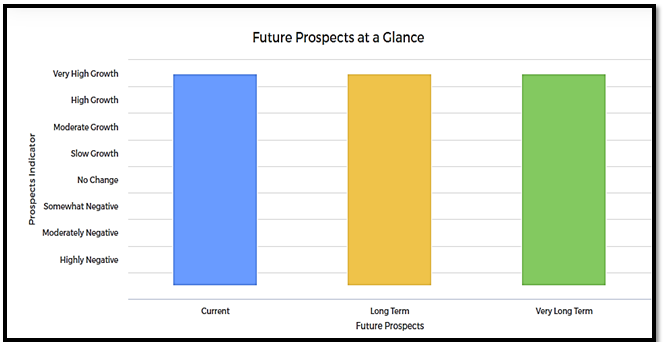
Future Prospects At A Glance
Current (0-1 year) | Long Term (2-5 year) | Very Long Term (6-10 years) |
Very High Growth | Very High Growth | Very High Growth |