
Spinning Mill Operator
Entry Level Qualification
Class 8
Career Fields
Apparel & Accessories
For Specially Abled


Career Entrance Exam
About Career
PARTICULARS | DESCRIPTION |
Name | Spinning Mill Operator |
Purpose | Operate Different Types of Spinning Systems |
Career Field | Apparel & Accessories |
Required Entrance Exam | No Entrance Exam |
Average Salary | 60000 - 150000 Rs. Per Year |
Companies For You | Textile & Handloom, Apparel, Goods, Accessories & Many More |
Who is Eligible | Any One |
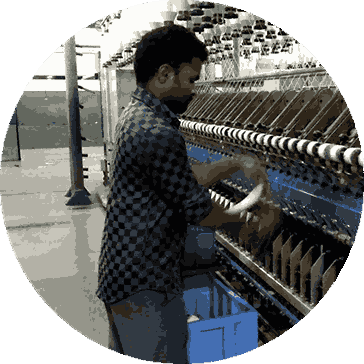
As a Spinning Mill Operator, you will have to operate different types of spinning systems/ machinery to manufacture yarn. Yarn is long continuous threads of any type of fiber (wool, jute, silk, cotton, nylon, polyester).
Manufactured yarn is further used in sewing, crocheting, embroidery, weaving, knitting, rope-making or the production of textiles. You must have seen Coloured fine thread at home (used for stitching) which is also produced through spinning and is a type of yarn.
You will have to feed the sliver (raw input material-wool, cashmere, jute, hemp, bamboo, rayon, silk, cotton, nylon, polyester etc.) into the spinning machines and it will pass through the rollers inside the machine. You will have to adjust the controls and run the machine then draw the output off from the collecting surface.
There are many different types of spinning machinery like ring spinning, open-ended spinning, wet spinning etc. These are names of the different processes that are used to run the yarn machines. Nowadays, Autoconer machines are used which produce high-quality yarn with low man-power because the basic activities are done automatically by the machine.
Key Roles and Responsibilities:
As a Spinning Mill Operator, you will be engaged with one or more of the following roles and responsibilities: -
1. You will be feeding raw input material (sliver) into the machines with the help of large cans.
2. You will have to find out defects or variation in the sliver, inform the supervisor and take prompt corrective action for rectification before running the machine further.
3. You may need to attach and set specially configured gadgets to the machine for achieving specific types of yarn.
4. You will have to adjust the control switches and run the spinning machine then draw the output off from the collecting surface/delivery end.
5. You will have to understand the function of every signal lamp in the machine/drums in order to know why they are glowing or indicating any stoppage when they do so.
6. You will have to view, adjust, set and follow the details of the readings of all parameters on the display panel and plan your work accordingly.
7. You will continuously patrol the machine work area and monitor the signal lamps and display units.
8. You will have to open, oil, clean, lubricate or replace the rollers, rotors, assemblies, winders and other machine parts when necessary.
9. You will have to weigh, collect and remove the wastes periodically, segregate them and put them in the designated bins.
10. You will have to remember to keep the machine action area clean to avoid contaminated output.
Career Entry Pathway
Class 8 in school – NSQF Level 2- NSQF Level 3
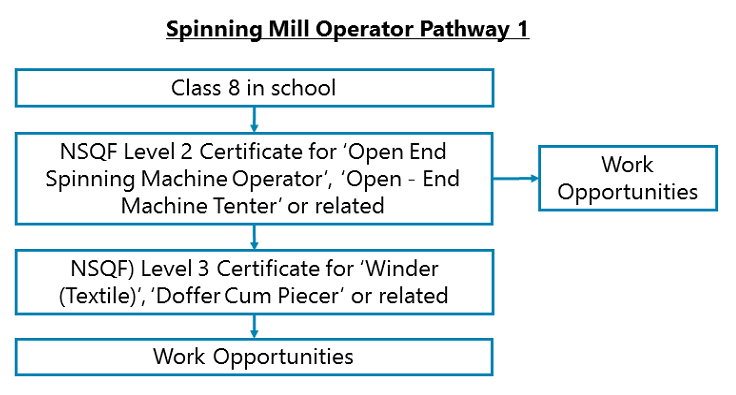
After completing Class 8 in school, you can go for National Skill Qualification Framework (NSQF) Level 2 Certificate for ‘Open End Spinning Machine Operator’, ‘Open - End Machine Tenter’ or related courses. The total number of training hours will vary between 300 and 600. Then you can go for National Skill Qualification Framework (NSQF) Level 3 Certificate for ‘Winder (Textile)’, ‘Doffer Cum Piecer’ or related courses. The total number of training hours will vary between 840 and 1040.
Class 8 in school – MES courses ‘Ring Frame machine operator’
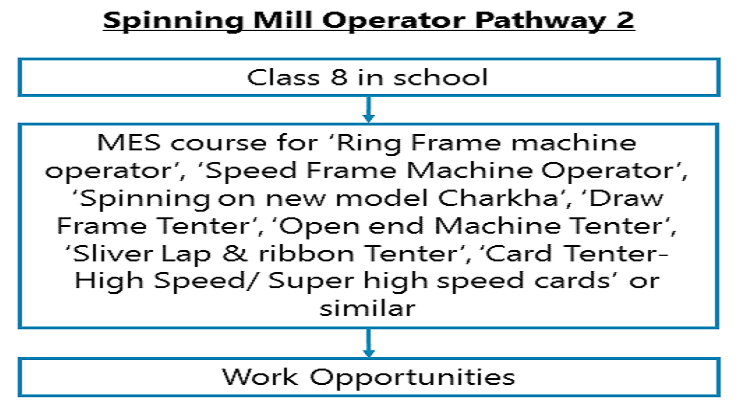
After completing Class 8 in school, you can go for Modular Employable Skills (MES) course for ‘Ring Frame machine operator’, ‘Speed Frame Machine Operator’, ‘Spinning on new model Charkha’, ‘Draw Frame Tenter’, ‘Open end Machine Tenter’, ‘Sliver Lap & ribbon Tenter’, ‘Card Tenter-High Speed/ Super high speed cards’ or similar based on Skill Development Initiative Scheme (SDIS) framework under the Ministry of Labour and Employment of India.
Class 10 all subjects as per scheme of studies – training at an ITI or similar institute for ‘Spinning’ or related courses
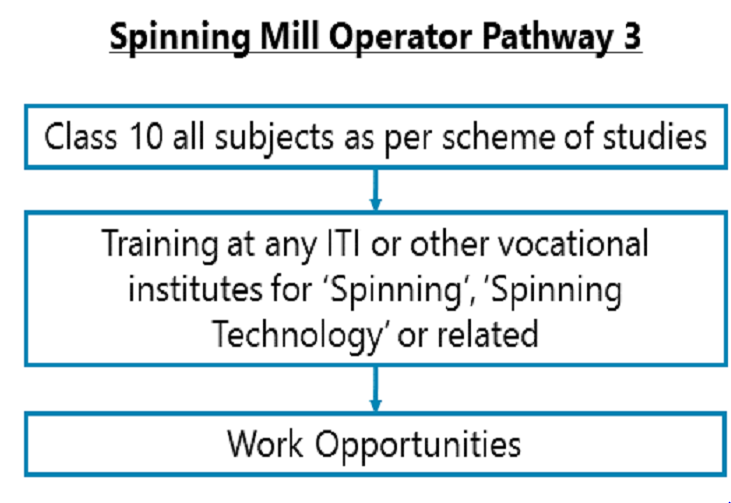
After Class 10, you can go for training at any Industrial Training Institute (ITI), National Skill Training Institute (NSTI), Regional Vocational Training Institute (RVTI), National Vocational Training Institute (NVTI), Industrial Training Center (ITC), Workshop Training Institute (WTI) or other vocational institutes for ‘Spinning’, ‘Spinning Technology’ or related trades. You will sit for All India Trade Test (AITT) to get a National Trade Certificate (NTC) after this course. This exam is held twice a year in the months of February and July.
Class 10 all subjects as per scheme of studies – NSQF Level 2- NSQF Level 3 – NEEM training
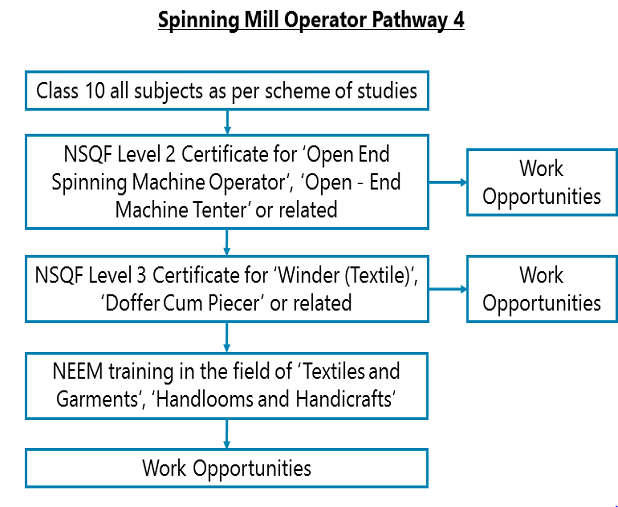
After Class 10, you can go for National Skill Qualification Framework (NSQF) Level 2 Certificate for ‘Open End Spinning Machine Operator’, ‘Open - End Machine Tenter’ or related courses. The total number of training hours will vary between 300 and 600. Then you can go for National Skill Qualification Framework (NSQF) Level 3 Certificate for ‘Winder (Textile)’, ‘Doffer Cum Piecer’ or related courses. The total number of training hours will vary between 840 and 1040. Then you can take National Employability Enhancement Mission (NEEM) training in the field of ‘Textiles and Garments’, ‘Handlooms and Handicrafts’ or similar with any Society / Trust / Company registered as a NEEM facilitator and approved by AICTE (All India Council of Technical Education). NEEM is on-the-job (OJT) training for 3 to 36 months and is completely decided by the company imparting the training. However, you may or may not be retained as a permanent employee after the training. This training contract is not a guarantee of employment but enables an individual to find numerous work opportunities in future.
Class 10 all subjects as per scheme of studies – NSQF Level 2- NSQF Level 3 – NSQF Level 4 – NSQF Level 5
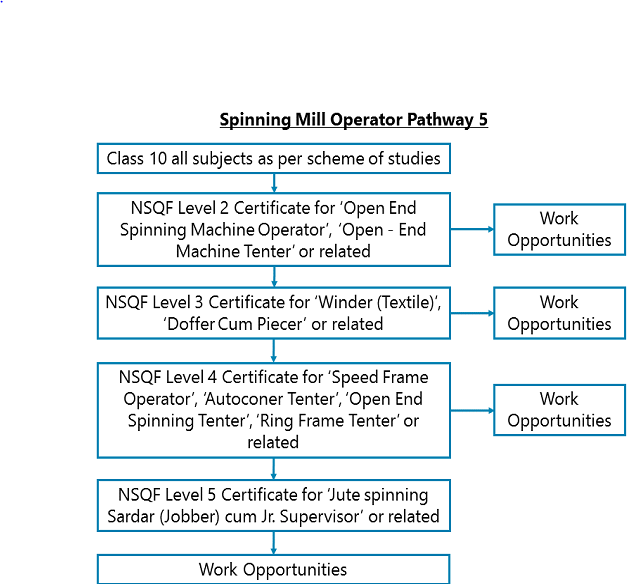
After Class 10, you can go for National Skill Qualification Framework (NSQF) Level 2 Certificate for ‘Open End Spinning Machine Operator’, ‘Open - End Machine Tenter’ or related courses. The total number of training hours will vary between 300 and 600. Then you can go for National Skill Qualification Framework (NSQF) Level 3 Certificate for ‘Winder (Textile)’, ‘Doffer Cum Piecer’ or related courses. The total number of training hours will vary between 840 and 1040. Then you go for National Skill Qualification Framework (NSQF) Level 4 Certificate for ‘Speed Frame Operator’, ‘Autoconer Tender’, ‘Open End Spinning Tenter’, ‘Ring Frame Tenter’ or related courses. The total number of training hours will be 208. Then you go for National Skill Qualification Framework (NSQF) Level 5 Certificate for ‘Jute spinning Sardar (Jobber) cum Jr. Supervisor’ or related courses. The total number of training hours will vary between 400 and 4160.
Class 10 all subjects as per scheme of studies – B. Voc in ‘Textile and Ginning’
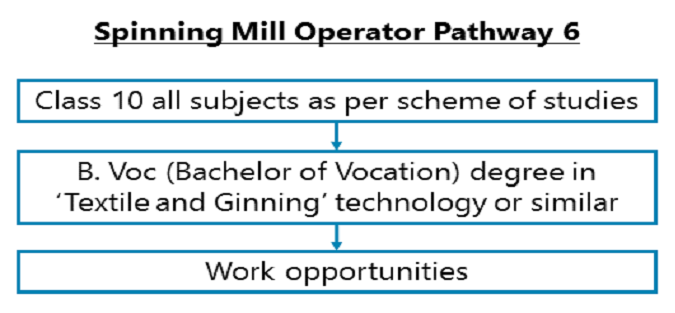
After Class 10, you can go for a B. Voc (Bachelor of Vocation) degree in ‘Textile and Ginning’ technology or similar disciplines. This will be a 5 year course. You have the option of multiple exit points meaning you can quit the course after 1, 2, 3, 4 years too and you will be getting the certificate depending on when you quit. If you leave after 1 or 2 years, you will get NSQF certificates only. If you leave after 3 years you will get a Diploma certificate, after 4 years you get an Advanced Diploma certificate. If you complete the course 5 year course you will obtain a B. Voc degree.
Required Qualification & Competencies
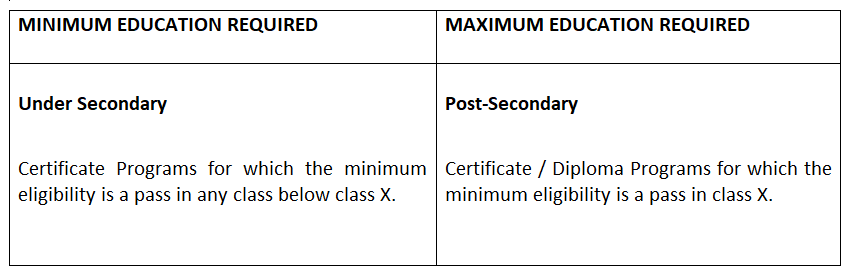
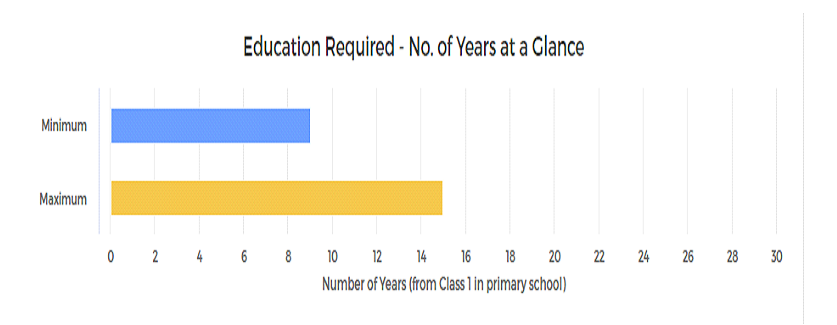
After Class 8, you can go for:
1. NSQF training courses.
2. MES training courses.
After Class 10, you can go for:
1. ITI courses.
2. NSQF Training courses.
3. NEEM training.
4. B. Voc degree.
Various private/public vocational training establishments across India offer related courses on:
1. Service Skills Development Program (Textile & Apparel)
2. Fibres & Textile Processing Technologies
3. Fashion, Apparel, and Textile Design
4. Apparel and Textile Design
5. Textile Design
6. Winder (Textile)
7. Textile Wet Processing Technician
COMPETENCIES REQUIRED
1. You should have interests for Realistic Occupations. Realistic occupations involve more practical and hands-on activities than paperwork or office work. Realistic occupations often involve physical activities for getting things done using various tools and equipment.
2. You should have interests for Conventional Occupations. Conventional occupations involve repetitive and routine tasks as well as fixed processes or procedures for getting things done. These occupations involve working more with data, systems, and procedures and less with ideas or creativity.
3. You should have knowledge of Production and Processing - raw materials, production machinery, production systems, production processes, quality control, and other techniques for manufacturing or construction and distribution of goods.
4. You should have Operating Skills - operating various machines, equipment, devices and systems.
5. You should have Process and Operation Controlling Skills - controlling processes and operations of various machines, equipment, devices and systems using different types electrical and electronic control instruments and systems.
6. You should have Coordination Skills - working together with other people to get things done.
7. You should have Machine Repair and Maintenance - performing repair and maintenance of different machines, equipment, and devices.
8. You have skills in Managing Material Resources - use of appropriate raw materials, machines, equipment, and devices for industrial manufacturing.
9. You should have Arm-Hand Steadiness - The ability to keep your hand and arm steady while moving your arm or while holding your arm and hand in one position.
10. You should have Manual Dexterity - The ability to quickly move your hand, your hand together with your arm, or your two hands to grasp, manipulate, or assemble objects.
11. You should have Near Vision - The ability to see details at close range (within a few feet of the observer).
12. You should have Control Precision - The ability to quickly and repeatedly adjust the controls of a machine to exact positions.
13. You should have Selective Attention - The ability to concentrate on a task over a long period of time without being distracted.
14. You should have Visual Color Discrimination Ability - match or detect differences between colors, including shades of color and brightness.
15. You should have Visualization Ability - The ability to imagine how something will look after it is moved around or when its parts are moved or rearranged.
16. You are always or mostly disciplined in your action and behavior.
17. You are always or mostly organized in your day-to-day life and activities.
18. You are always or mostly dependent on others or on set rules and procedures.
19. You are always calm or generally remain calm in most situations.
20. You are always or mostly careful about your actions and behavior.
21. You are practical always or in most situations.
Career - Job Opportunities & Profiles
There are several work opportunities in this field for roles like:
1. Industrial Spinning Machine Operator
2. Ring Frame Tenter
3. Machine Operator – Yarn and Handloom
4. Ring Spinning – Operator
5. Autoconer Machine Operator
6. Spinning Technician
7. Operator – Spinning Machinery
8. Autoconer Tenter
9. Open - End Machine Tenter
10. Dry Spinning – Operator
11. Operator – Friction Spinning
12. Speed Frame Operator-Tenter and Doffer
13. Winder (Textile)
You will be part of industries like:
1. Textile & Handloom
2. Apparel, Goods, Accessories, and Garments
3. Retail / Wholesale
4. Export / Import
From entry-level job positions you will grow up to roles like Junior / Senior Supervisor; Spinning Sardar, Supervisor and Foreman, Maintenance Manager, Quality Supervisor etc.
Salary Offered
1. Salaries vary according to job profiles and the kind of facilities you get to work at.
2. In the entry-level jobs: You may get about Rs. 10,000 – Rs. 17,000 or more a month.
3. Salaries increase with your work experience and as you get promoted.
4. After having 1-6 years of experience, you may expect about Rs. 15,000 – Rs. 20, 000 a month or more.
5. After having 6-12 years of experience, you may get about Rs. 20,000 – Rs. 30,000 or more a month.
6. In the senior-level jobs, with 12-20 years of work experience, you may expect to get about Rs. 30,000 – Rs. 45, 000 or more a month.
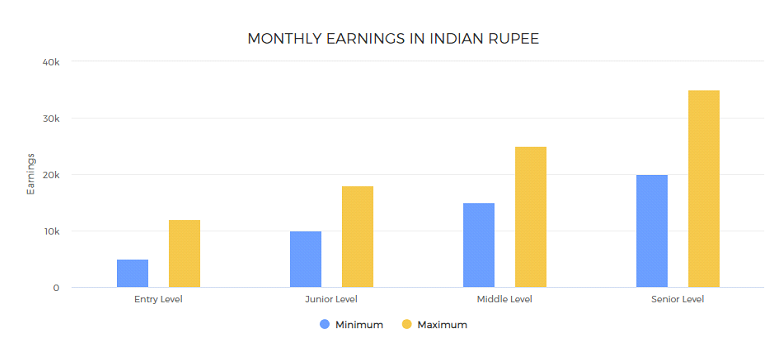
MONTHLY EARNINGS IN INDIAN RUPEE
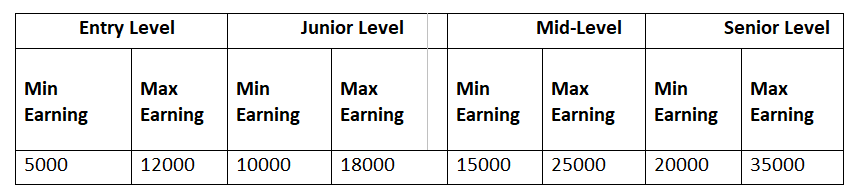
1. Entry level: 0 - 2 years of work experience
2. Junior Level: From 1 to 12 years of work experience
3. Mid Level: From 5 to 20+ years of work experience
4. Senior Level: From 10 to 25+ years of work experience (there could be exceptions in some high-end technical, financial, engineering, creative, management, sports, and other careers; also in the near future, people will reach these levels much faster in many careers and in some careers, these levels will have no meaning as those careers will be completely tech skill driven such as even now, there is almost no level in a Cyber Security Expert’s job).
Work Activities
1. Operating machines, equipment, devices, systems and processes - Using various methods and techniques to operate machines, equipment, devices, systems, and processes in industrial and other settings.
2. Inspecting equipment, systems, structures, and materials - Inspecting equipment, systems, structures, and materials to ascertain quality, performance, defects, causes of errors, etc.
3. Performing physical activities - Performing physical activities that require the use of your arms and legs and moving your whole body, such as climbing, lifting, balancing, walking, stooping, and handling of materials.
4. Handling and moving objects and materials - Using hands or otherwise use physical strength to handle and move objects and materials; maneuver, install, lift, place, manipulate, etc.
5. Organising, planning and prioritising tasks - Planning and organising tasks in order to achieve work goals; prioritising tasks to achieve goals and making the best use of the time available.
6. Getting Information and learning - Observing, hearing, reading, or otherwise obtaining information and learning from it.
7. Communicating with co-workers and others - Communicating with people in writing, verbally or otherwise inside your workplace and various other people who have professional relationships with your place of work including vendors, government officials, etc. or with people at large.
8. Working in a team - Working in a team of people; developing team; maintaining professional relationships among team members.
Future Prospects
You can expect a moderately bright future in this field as the industry growth prospects are encouraging. India is the largest exporter of yarn in the global market. Large spinning companies have reported a comfortable volumetric growth of 5% year-on-year (YOY) in the 1st quarter of 2019 and cotton yarn exports have shown a strong YOY growth of 56% in the same quarter. Exports to particularly China have increased more than 2 folds.
The overall volume of employment in the Apparel Sector will grow from approximately 35 million currently to about 62 million by 2022, hence translating to around 25 million more jobs. The overall volume of employment in the Handlooms and Handicrafts Sector is expected to reach about 17.79 million by 2022from approximately 13.93 million in 2017, hence translating to around 3.86 million more jobs.
This sector is predicted to experience a shift to organized from the unorganized market model. Many small clusters of Handicrafts and Handlooms being developed with the support of private traders/entrepreneurs. The Indian Retail market is expected to reach the mark of 865 billion US Dollars by 2023 from 490 billion US Dollars in 2013, experiencing year-on-year growth of 6%. Corporatized Retail in India is expected to grow to 24% by 2023. A rise in online consumer base is also contributing to the expansion of the online yarn market of India. The number of internet users is expected to grow to 729 million by 2020.
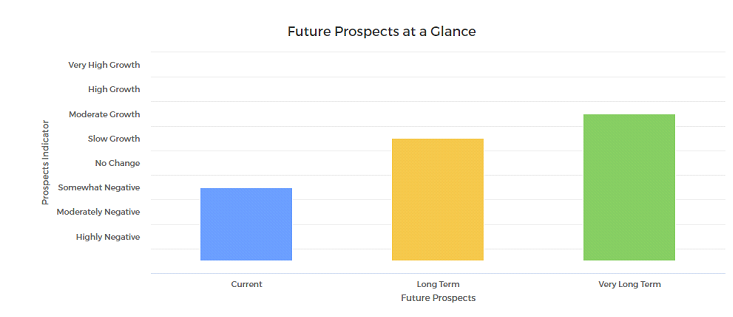
FUTURE PROSPECTS AT A GLANCE
