

Theatre Artist
Entry Level Qualification
Class 12
Career Fields
Performing Arts
For Specially Abled


About Career
A Theatre Artist performs multiple tasks in a theatre. She might be performing or acting live on stage in drama and other theatre shows. She might also be involved in other aspects of work including performance direction and production, playwriting, production design, costume design and doing backstage technician work such as lighting, sound, stage management and managing theatre technology.
Some of you might be involve in creating the sets for theatre in choosing the entertainment theme including music, dance and other artistic work. a theatre artist manages all aspect of theatre’s programs such as raising financial sources, promoting shows, selling tickets, managing staff etc.
There is a team of artist who contributes to the overall management and production of theatre atmosphere. Some artists work as technician plotting the technical cues and help in operating the show. They generally work inthe control room.
As a theatre artist, you also work with many theatre groups as a professional actor to get a chance of acting at the silver screen.
Key Roles and Responsibilities
As a theatre artist/ technologist, you will be responsible for fulfilling the following roles and responsibilities:
1. You will be providing creative and technical support for the performances and theatre activities.
2. You will be planning and managing budgeting activities.
3. You will coordinate with the theatre staff, directors, crew members, technicians and other external parties.
4 You will be working with opera members, music directors and choreographers to execute the performance.
5. You will assistin production work including filming, editing, financing etc.
6. You shall help in hiring crew members and technicians and purchasing special equipment needed.
7. You will be ensuring the health and safety measures of both man and material are meeting the requirements of safety laws.
8. You shall be involved in hiring venue places and collaborating with public relation agencies and media.
9. You shall be tasked to attract an audience while doing various promotional activities such as advertisements of shows using posters, banners and social media.
10. You shall be assisting in all stage and production management while working with crew members such as set designer, costume designer etc.
11. You will be overseeing the overall planning of the theatre’ program and making it a success.
12. You shall assist in raising grants, donations, sponsorship and other membership schemes.
13. You shall if required, sell tickets and providing information about upcoming performances to the audience.
14. As an actor, you will wear various costumes as per the theme of the skit and drama and rehearsing in costumes at the main venue with proper lighting, sound and scenery.
15. You will be giving live performances in front of the audience.
16. You will make contracts with communities and other relevant bodies and organizations involved in artistic work.
PARTICULARS | DESCRIPTION |
Name | Theatre Artist |
Purpose | Perform And Interpret Dramatic Works |
Career Field | Performing Arts |
Required Entrance Exam | No Entrance Exam |
Average Salary | 60000 - 150000 Rs. Per Year |
Companies For You | Theatre Companies, Drama Schools, Entertainment Production Houses & Many More |
Who is Eligible | Class 12th Pass |
Career Entry Pathway
Class 10 all subjects as per scheme of studies - Class 11-12 with any subject as per scheme of studies – Certificate Course in Theatre/Drama
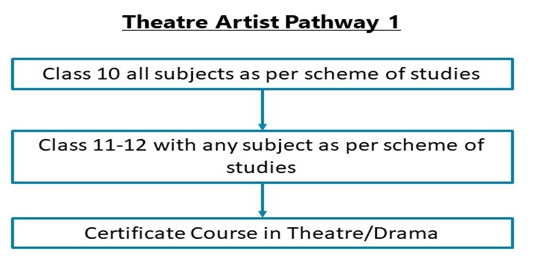
After completing Class 10 all subjects as per scheme of studies, then complete Class 11-12 with any subject as per scheme of studies. Then study for a short-term certificate course in theatre/drama. However, it must be noted that you can become a theatre artist/technologist without having a specific qualification provided you have enough talent and skills
Class 10 all subjects as per scheme of studies - Class 11-12 with any subject as per scheme of studies – UG in Theatre Arts/Drama/ Performing Arts
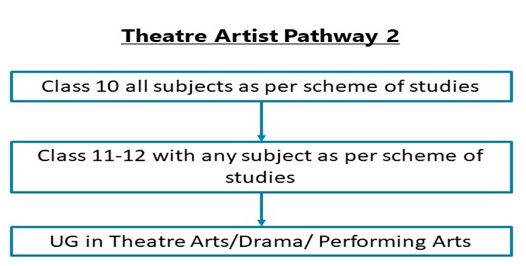
After completing Class 10 all subjects as per scheme of studies, then complete Class 11-12 with any subject as per scheme of studies. Then study for a Bachelor’s Degree in Theatre Arts/Drama/ Performing Arts from any vocational school/college. However, it must be noted that you can become a theatre artist/technologist without having a specific qualification provided you have enough talent and skills
Class 10 all subjects as per scheme of studies - Class 11-12 with any subject as per scheme of studies – UG in any discipline – Post Diploma in Production Arts/Theatre Technology
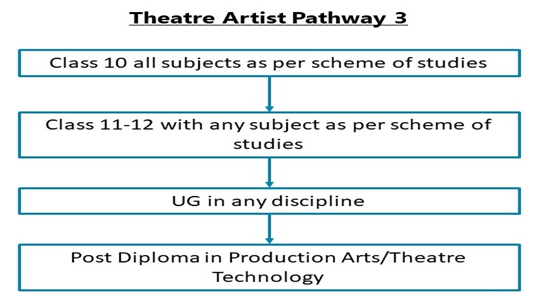
After completing Class 10 all subjects as per scheme of studies, then complete Class 11-12 with any subject as per scheme of studies. Then study for a Bachelor’s Degree in any discipline. After that, you can study for a post diploma in Production Arts/Theatre Technology. However, it must be noted that you can become a theatre artist/technologist without having a specific qualification provided you have enough talent and skills
Class 10 all subjects as per scheme of studies - Class 11-12 with any subject as per scheme of studies – UG in Theatre Arts/Drama/ Performing Arts – PG in Dramatics
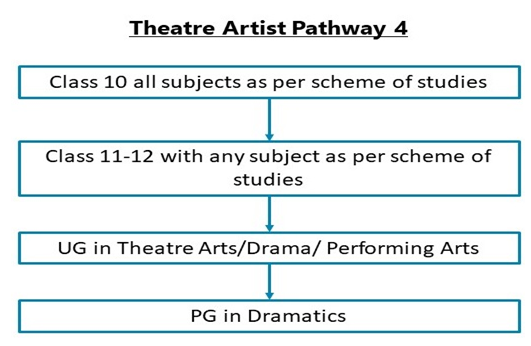
After completing Class 10 all subjects as per scheme of studies, then complete Class 11-12 with any subject as per scheme of studies. Then study for a Bachelor’s Degree in Theatre Arts/Drama/ Performing Arts from any vocational school/college. After that, you can study for a Master’s Degree in Dramatics. However, it must be noted that you can become a theatre artist/technologist without having a specific qualification provided you have enough talent and skills.
Required Qualification & Competencies
To become a Theatre Artist, you may do a Bachelor Degree in Performing Arts with a concentration in Theatre Arts / Theatre Studies/ Dramatics / Drama or in a related field. You may also do a Bachelor degree in any discipline and then do a Master degree/diploma in Dramatics / Theatre. The following are some of the fields which prepare you to get into theatre art:
1. Dramatic Arts
2. Theatre Art & Studies
3. Theatre Design, Production & Technology
4. Theatre Direction & Dramaturgy
5. Theatre Performance
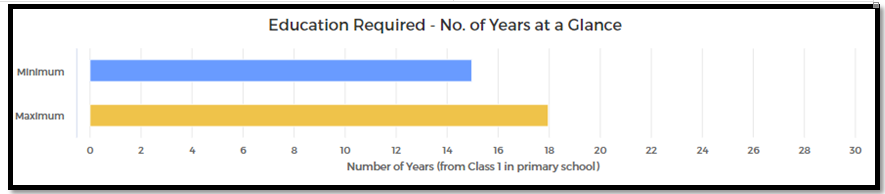
MINIMUM EDUCATION REQUIRED | MAXIMUM EDUCATION REQUIRED |
Under Graduate | Post Graduate |
Compentencies Required
Interests
1. Artistic: You should have interests for Artistic Occupations. Artistic occupations mostly involve working with creative ideas, art and designs. These occupations involve abstract or conceptual thinking, creative self-expression and often do not follow any set processes or rules for getting things done.
2. Enterprising: You should have interests for Enterprising Occupations. Enterprising occupations involve taking initiatives, initiating actions, and planning to achieve goals, often business goals. These involve gathering resources and leading people to get things done. These require decision making, risk taking and action orientation.
Abilities
1. Abstract Reasoning: The ability to understand ideas which are not expressed in words or numbers; the ability to understand concepts which are not clearly expressed verbally or otherwise.
2. Bodily-Kinaesthetic Intelligence: The ability to coordinate the movement of your arms, legs, and bodily motion; the ability to keep or regain your body balance when in an unstable position; the ability to quickly and repeatedly bend, stretch, twist, or reach out with your body, hands, arms, fingers, or legs.
3. Emotional Intelligence: The ability to understand your own and others' emotions and feelings; empathy for others; adjusting your behaviour or self-control and self-regulation according to others' emptions and situations.
4. Fluency of Ideas: The ability to come up with a number of ideas about a topic (the number of ideas is important, not their quality, correctness, or creativity).
5. Hearing Sensitivity: The ability to detect or tell the differences between sounds that vary in pitch and loudness.
6. Originality: The ability to come up with unusual or innovative ideas about a given topic or situation, or to develop creative ways to solve a problem.
7. Physical Stamina: The ability to exert yourself physically over long periods of time without getting winded or out of breath.
8. Selective Attention: The ability to concentrate on a task over a long period of time without being distracted.
Knowledge
Performing Arts: Knowledge about the theories and techniques required for producing various works of performing arts such as music, dance, drama, theatre, film, television series, etc.
Skills
1. Acting: Skills in acting in cinema, drama, theatre, commercial advertisements, etc.
2. Active Listening: Giving full attention to what other people are saying, understanding the points being made by others, asking questions, etc.
3. Directing: Skills in directing others' actions to get things done.
4. Judgment and Decision Making: Skills in considering pros and cons of various decision alternatives; considering costs and benefits; taking appropriate and suitable decisions.
Personality
1. You are always or mostly a soft-hearted person.
2. You are always imaginative or in most situations.
3. You always prefer to experience new things and have new experiences or you mostly do.
4. You can always act independently or could do so in most situations.
5. You trust others sometimes but not always.
6. You are helpful to others sometimes.
7. You are mostly impulsive in your action and behaviour.
Career - Job Opportunities & Profiles
1. If you want to go into the acting side then you can start your career as a Junior Artist in a theatre or drama ensemble.
2. If you are into design and technology side then you can start your career as an Assistant Technician.
3. If you are into production/ marketing or management then you can be hired at a managerial position such as Assistant Marketing Manager/Assistant Production Manager etc.
4. Many schools will hire you as a Theatre/Drama Teacher.
Work Environment
As a theatre artist, you will not have fixed working hours. It will totally depend on the area of work you have chosen along with the size of the theatre. Some artists would have flexible working hours but some of you might be required to spend long hours conducting rehearsals and technological work. Artists hired for full-time work, would carry out weekend and evening work. You would often travel to promote and conduct your shows.
Specialisation Tracks In This Career
Producer (Theatre)
A producer deals in all aspects of theatre management including marketing, financing, promoting and development of the overall business plan. A producer raises funds and accesses the grants. They manage overall cost and prepare the budget. As a producer, you will oversee work from pre-production to the final stage of production by doing all managerial, technical and financial work.
Director (Theatre)
A director executes the overall artistic work helping in the performance of actors/artist while collaborating with stage and crew members. As a director, you will interpret the script and develop a dramatic interpretation of it. You will guide artists and help them to derive their best.
Playwriter (Theatre)
As a play writer, you will write a script of play or skit by developing characters and narration areas. You will write dialogues of characters and plot story while presenting this creation to the audience.
Actor (Theatre)
An actor undertakes the task of playing the role of characters developed by playwriter. They present the live creation of those characters by performing on stage using their facial expressions, dialogue, body language along with proper costume and props.
Theatre designers and technologists
They usually work behind the scene and helps in creating the real world of theatre. A theatre designer or technologist does all creative and technical work, creating a setting for producing the show. They work along with the directors, producers and actors while assisting them to create the show. It includes: Stage designer – A stage designer is responsible for organizing the stage by creating set and props. They help the backstage crews during the performance and assist them to set the positions of props at the stage. Lighting and sound technologist – Light and sound technologist helps in creating the overall lighting and sound system for the show. They contribute to the overall lighting to create the impression at the stage while supervising the work of the electrical crew. A sound designer involves in checking the sound system, locating various sound equipment such as microphones, speakers, amplifiers etc. Costume designer – As a costume designer, you will design the appropriate costumes for artists to execute the overall production.
Theatre Manager
A manager supervises and organizes the whole production work. They assist every crew member and helps in carrying out the activities. They make sure that all theatre activities are meeting the planned budget and timeline. A manager also helps in maintaining and running of bars, box office, selling and checking tickets etc.
Career Growth
1. As a Junior Artist, you will become the Senior Artist and then move into TV or Movies.
2. As an Assistant Technician, you will become Deputy Technical Manager and then Technical Manager.
3. After many years of experience, a theatre artist may continue their journey as a Director/Producer/ Writer/ etc.
4. Some of you might openyour own theatre or even a theatre school.
Salary Offered
1. As a junior artist, working at the theatre would earn Rs. 500 to 1,000 per dhow.
2. After gaining experience in this field you may earn anything between Rs. 2,000 to 10,000 per show.
3. Reputed actors may make about Rs. 10,000-50,000 per show.
4. A Technician, Producer or a Director could earn Rs. 1,000 to 5,000 per show which may increase to Rs. 10,000 to 20,000 per show after gaining years of experience.
5. There are other ways of payment also based on a project which involves producing a theatre or a dram. You may sign for a project and for a particular number of shows for a lump sum payment.
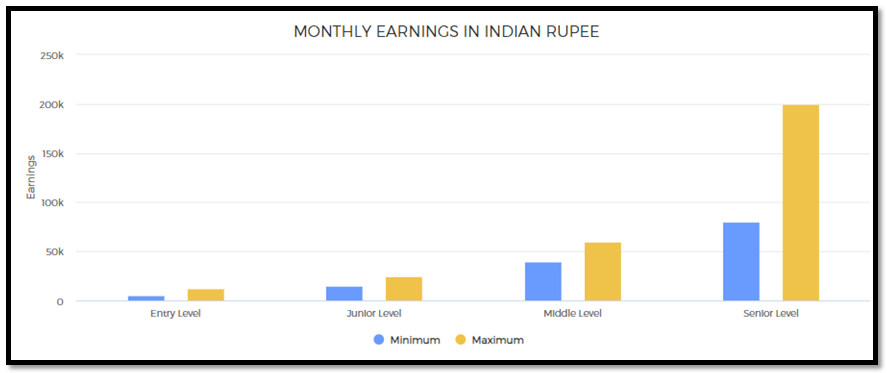
Monthly Earnings In Indian Rupee
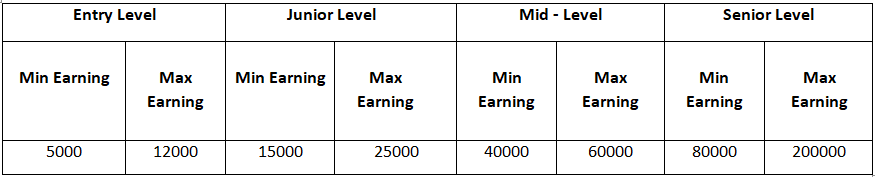
1. Entry level: 0 - 2 years of work experience
2. Junior Level: From 1 to 12 years of work experience
3. Mid Level: From 5 to 20+ years of work experience
4. Senior Level: From 10 to 25+ years of work experience (there could be exceptions in some high-end technical, financial, engineering, creative, management, sports, and other careers; also in the near future, people will reach these levels much faster in many careers and in some careers, these levels will have no meaning as those careers will be completely tech skill driven such as even now, there is almost no level in a Cyber Security Expert’s job)
Work Activities
1. Communicating with co-workers and others: Communicating with people in writing, verbally or otherwise inside your workplace and various other people who have professional relationships with your place of work including vendors, government officials, etc. or with people at large.
2. Creative thinking: Developing new ideas, concepts, innovative solutions to problems, newer ways of getting things done, designing products and services, creating work of art and craft, etc.
3. Decision making and problem-solving: Analysis of data and information; evaluation of alternative decisions and results of decisions; taking the right decisions and solving problems.
4. Getting Information and learning: Observing, hearing, reading, using computers, or otherwise obtaining information and learning from it.
5. Performing for people: Performing various tasks for people to entertain them, help them, and assist them.
Future Prospects
Theatre industry is a vast field providing opportunities to all types of artists including writers, actors, singers, designers, producers and all other fields of entertainment. However, other factors such a strong regional cinema, digitalization, growth of multiplexes, and increasing income of people would drive the growth of the entertainment industry more towards TV series and movies and less toward theatre. Thus, small and medium-sized theatres and performing arts companies might face a decline in demand.
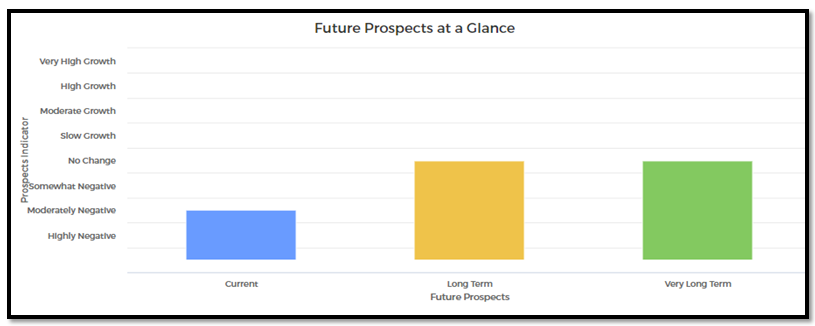
Future Prospects At a Glance
