

Craft Designer
Entry Level Qualification
Class 12
Career Fields
Arts & Design
For Specially Abled


About Career
Craft Designers are involved in using a variety of materials and techniques to create, design, make, and produce hand-made objects for sale and exhibition. Craft Designers work with different materials including textiles, wood, stone, metal, leather, paper, natural fibre, ceramic and glass, jewellery, earthware, stoneware, terracotta, bone china porcelain, etc. to create unique pieces of art.
Craft Designers use several techniques in textile-like crocheting, embroidery, felt-making, knitting, lace-making, macramé, quilting, tapestry art, weaving; in woodcraft like wood-carving, wood-turning; in papercraft like paper modelling, collage, decoupage, origami paper folding, paper-mâché; in clay and glasswork like glass bead making, glass blowing, glass etching, embossing, repoussé work, engraving, enamelling, and granulation etc.
Key Roles and Responsibilities
As a Craft Designer, you would be involved in the following key roles and responsibilities:
1. You would sketch a layout using your creativity or according to the client’s requirements. You would confer with clients to determine needs, build sample models, and templates and draw detailed or technical illustrations for various client needs and demands.
2. You would develop a complete design considering all the graphics and dimensions, texture, surface graphics and other specifications on paper or by using computer software.
3. You would select which materials to use based on colour, texture, strength, and other qualities.
4. You would create, make, or produce hand-made objects for sale and exhibition using a variety of techniques such as welding, weaving, pottery, needlecraft etc.
5. You would use visual elements such as composition, colour, space, and perspective, to produce desired artistic effects.
6. You would use various techniques such as knitting, weaving, glass blowing, painting, drawing, sculpting etc.
7. You would be developing artistic or design concepts for decoration, exhibition, or commercial purposes.
8. You would also develop portfolios highlighting your artistic styles and abilities to show to gallery owners and others interested in their work.
PARTICULARS | DESCRIPTION |
Name | Craft Designer |
Purpose | Developing Artistic or Design Concepts |
Career Field | Arts & Design |
Required Entrance Exam | AIEED, IICD UG, IICD PG |
Average Salary | 150000 - 300000 Rs. Per Year |
Companies For You | TI Cycles, Myntra, Flipkart, Gitanjali & Many More |
Who is Eligible | Class 12th Pass |
Career Entry Pathway
Class 10 all subjects as per the scheme of studies- Class 11-12 with any subject as per the scheme of studies – Bachelors in any discipline– PG Diploma in Craft Design Development & Planning/ Craft and Design.
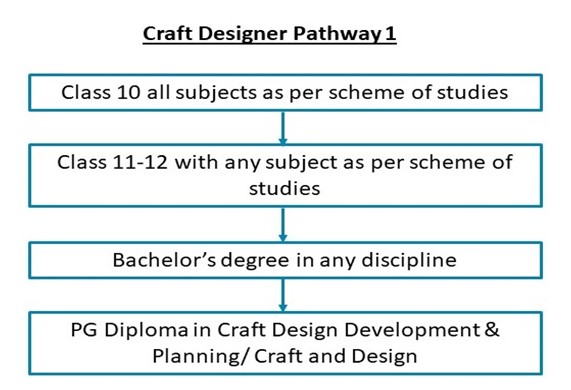
After completing class 10 all subjects as per the scheme of studies and after class 11-12 with any subject as per the scheme of studies you can go for a graduation degree in any discipline. After completing graduation you can pursue a Diploma in Craft Design Development & Planning/ Craft and Design.
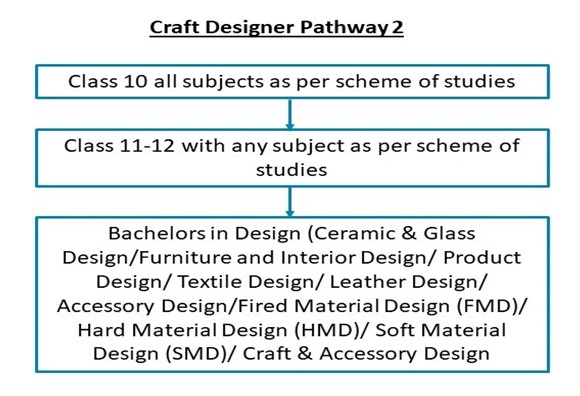
After completing class 10 all subjects as per the scheme of studies and after class 11-12 with any subject as per the scheme of studies you can then go for a bachelor’s degree in Design (Ceramic & Glass Design/Furniture and Interior Design/ Product Design/ Textile Design/ Leather Design/ Accessory Design/Fired Material Design (FMD)/ Hard Material Design (HMD)/ Soft Material Design (SMD)/ Craft & Accessory Design) or similar field. After graduation, you can then start working directly in areas related to Textile/ Lifestyle/ Craft and any other related field.
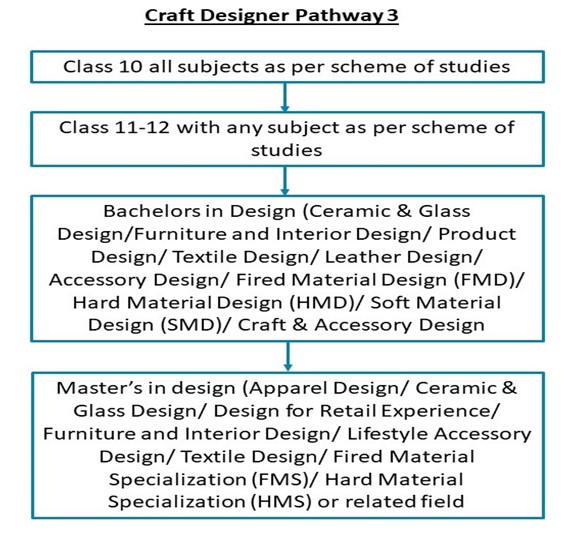
After completing class 10 all subjects as per the scheme of studies and after class 11-12 with any subject as per the scheme of studies you can then go for a Bachelor’s Degree in Design (Ceramic & Glass Design/Furniture and Interior Design/ Product Design/ Textile Design/ Leather Design/ Accessory Design/ Fired Material Design (FMD)/ Hard Material Design (HMD)/ Soft Material Design (SMD)/ Craft & Accessory Design. After graduation, you can then pursue a Master’s in design (Apparel Design/ Ceramic and glass Design/ Furniture and Interior Design/ Lifestyle Accessory Design/ Textile Design/ Fired Material Specialization (FMS)/ Hard Material Specialization (HMS) or a related field. Then you can work in areas of Textile/ Lifestyle/ Craft and any other related field.
Required Qualification & Competencies
After completing your higher or senior secondary examination with any subject as per the scheme of studies, you can study for a Bachelor’s or Master’s degree in any of the following fields to become a Craft Designer:
1. Ceramic and Glass Design
2. Craft Design
3. Earthenware Design
4. Fashion and Lifestyle Design
5. Furniture and Interior Design
6. Knitwear Design
7. Leather Design
8. Lifestyle Accessories Design
9. Metal Work and Design
10. Natural Fibres Craft and Design
11. Product Design
12. Stonework and Design
13. Textile Design
14. Toy Design
15. Wood Craft and Design
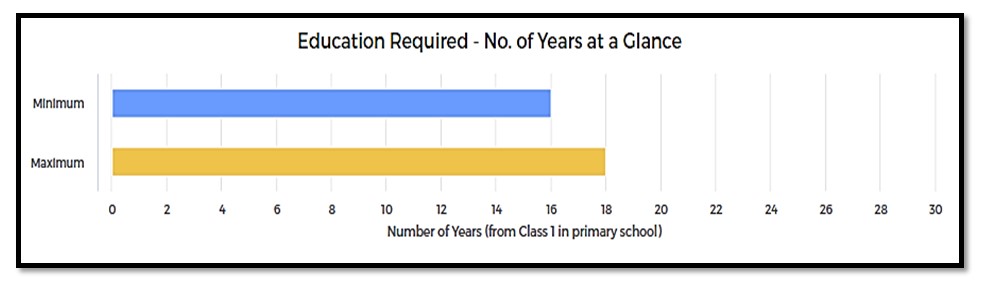
MINIMUM EDUCATION REQUIRED | MAXIMUM EDUCATION REQUIRED |
Under Graduate Undergraduate Degree / Honours Diploma / Graduate Diploma (equivalent to a Degree) Programs for which the minimum eligibility is a pass in Higher Secondary / Class XII School Leaving examination. | Post Graduate Postgraduate Degree / Diploma / Certificate Programs for which the minimum eligibility is a pass in Graduation / equivalent Diploma program like Honours Diploma or Graduate Diploma. |
Competencies Required
Interest
1. Artistic: You should have an interest in Artistic Occupations. Artistic occupations mostly involve working with creative ideas, art, and designs. These occupations involve abstract or conceptual thinking, and creative self-expression and often do not follow any set processes or rules for getting things done.
2. Realistic: You should have an interest in Realistic Occupations. Realistic occupations involve more practical and hands-on activities than paperwork or office work. Realistic occupations often involve physical activities for getting things done using various tools and equipment.
3. Enterprising: You should have an interest in Enterprising Occupations. Enterprising occupations involve taking initiative, initiating actions, and planning to achieve goals, often business goals. These involve gathering resources and leading people to get things done. These require decision-making, risk-taking, and action orientation.
Knowledge
1. Creative Design: Knowledge of various techniques, methods, and specifications for creating and developing designs for various products and materials such as textiles, clothes, interiors, furniture, accessories, jewelry, animation, graphics, materials, film, video, web, user interfaces of digital devices, photography, etc.
Skills
1. Artistic and Visual Design: Skills in creating and developing designs that are visually appealing and attractive.
2. Active Learning: Focused and continuous learning from various sources of information, observation, and otherwise for application in getting work done.
3. Critical Thinking: Skills in the analysis of complex situations, using logic and reasoning to understand the situations and take appropriate actions or make interpretations and inferences.
4. Graphic Design Tools: Skills in using various graphic design tools such as Adobe Photoshop, Adobe Illustrator, Corel Draw, etc.
5. Material Design and Craft: Skills in creating and designing various items using different materials such as clay, wood, iron, gold, silver, gems, etc.
6. Technical Design and Drawing: Skills in creating and developing designs and drawings for various structures, machines, equipment, and devices.
Abilities
1. The flexibility of Closure: The ability to identify or detect a pattern (a figure, object, word, or sound) that is hidden among other distracting materials.
2. Fluency of Ideas: The ability to come up with several ideas about a topic (the number of ideas is important, not their quality, correctness, or creativity).
3. Inductive Reasoning: The ability to combine pieces of information from various sources, concepts, and theories to form general rules or conclusions. For example, analyzing various events or situations to come out with a set of rules or conclusions
4. Visualization: The ability to imagine how something will look after it is moved around or when its parts are moved or rearranged.
5. Spatial Ability: The ability to visualize three-dimensional objects by looking at the objects on paper or visualize objects mentally in three dimensions.
6. Abstract Reasoning: The ability to understand ideas that are not expressed in words or numbers; the ability to understand concepts that are not clearly expressed verbally or otherwise.
7. Oral Expression: The ability to communicate information and ideas in speaking so others will understand.
8. Verbal Reasoning: The ability to think and reason with words; the ability to reason out ideas expressed in words.
Personality
1. You are a soft-hearted person sometimes.
2. You trust others sometimes but not always.
3. You are helpful to others sometimes.
4. You are self-satisfied sometimes but some other times you don't feel satisfied with your life and situations.
5. You are imaginative sometimes.
6. You prefer to experience new things and have new experiences sometimes.
7. You act independently sometimes but do not do so at some other times.
8. You are caring, supportive, sympathetic, and kind to others sometimes.
Career - Job Opportunities & Profiles
You would start as an Intern or a Junior Craft Designer after completing your education. You may find the following companies/industries as per your area of specialization:
1. As a Craft Designer (Accessory Design) you may find job opportunities in the following organizations: Titan Co. Ltd., TI Cycles, Myntra, Flipkart, Gitanjali, Amrapali, Landmark group, Tata, Samsung, Whirlpool, Hyundai, Godrej Intero, Hidesign, Myntra, Amazon, Swatch Watch, etc.





2. As a Craft Designer (Leather Design) you may get job opportunities in the following organizations: Bhartiya International, Diesel India, Index Sports, Lexus, Malaga Exports, P&G Enterprise, Alpha Overseas, Apollo International Ltd., Impulse, Stichwell Bags & Accessories, Lloyd Baker, Orion Conmerx, Baggit, Superhouse Leathers Ltd, Tata International Ltd, Trio Trend (Yamai), Jaya Shree Textile, A Unit of Aditya Birla, Paras Exports, Tritan Leather Works, P&G Enterprises, Snapdeal, etc.



3. As a Craft Designer (Textile Design) you may work with world-leading industry partners such as: Arvind Mills, Welspun, Bombay Dyeing, Madura Garments, D’ décor, Biba, Satya Paul, Fabindia, Maspar, Portico, Trident Group, Samsung, W for Woman, Shades of India, Blackberrys, Jaypore and with designers such as Sabyasachi Mukherjee, Ritu Kumar, Tarun Tahiliani, etc.


Specialisation Tracks In This Career
1. Craft Designer (Leather Design)
Craft Designers who specialize in Leather design are involved in the designing of leather material for varied fashion, footwear, and accessory industries. They work along with other designers and merchandisers in the export and domestic manufacturing, retail, and buying industries.
2. Craft Designer (Accessory Design)
Craft Designers who specialize in Accessory design are involved in the designing of varied personal and lifestyle accessories such as jewelry, body gear, home accessories, craft, furniture, footwear, bags, interiors, etc. They are also responsible for User Interface and Experience design, smart wearables, and Consumer interface design among many others.
3. Craft Designer (Textile Design)
Craft Designers who specialize in Textile design are involved in the designing of a variety of fibers and fabrics. They deal with varied areas like woven, print design, embroidery, surface embellishments, etc. They work in mills, export houses, buying agencies, design studios, handloom, and handicraft cooperatives, etc.
4. Ceramic Designer
A Ceramic Artist is someone who creates art products using clay materials. She would create a wide range of art products including sculptures, tableware, tiles, and vases. A Ceramic Artist is typically adept at using a wide range of ceramic-shaping equipment such as a potter's wheel and ceramic oven.
5. Glass Designer
A Glass Designer/Artist creates art pieces that are partly or entirely made of glass. They specialize in a wide range of glass art, such as wall hangings, tableware, glass jewelry, and monumental works. They are involved in the processing of glass in a variety of ways- such as by blowing, shaping, or joining it—to create artistic pieces.
6. Metalware Designer
A metalware designer is responsible for creating and designing various metals like silver, gold, and platinum into decorative and artistic work. They use processes like glazing, firing, bending, deep drawing, laser cutting, etc. to design and create accessories and other decorative materials.
7. Earthware Designer
Earthware designers are involved in the design and creation of clay items that are fired to a porous state and made impervious (unaffected by) liquids by glazing. Earthenware is used extensively for pottery, tableware, and decorative objects. Designers use processes like forming, glazing, firing, fusing, etc.
8. Stoneware Designer
Stoneware designers are involved in the design and creation of various kinds of supplies used in the kitchen for cooking, baking storing liquids, etc. Stoneware clay is fired at a high temperature until it becomes glass-like and is glazed for decoration purposes.
9. Terracotta Designer
Terracotta designers are involved in the making of sculptures and other decorative objects. Terracotta is a clay-based ceramic that is extensively used in making sculptures, earthen pots and various practical uses including vessels, water and waste water pipes, and surface embellishment in building construction.
Career Growth
You can start working as an Intern/ Trainee/ Assistant Craft Designer or Design Thinker depending on your area of specialization. As a Craft Designer, your career progression would be:
Assistant Craft Designer – Craft Designer – Associate Craft Designer – Senior Craft Designer – Designer in Chief
Salary Offered
1. At an entry-level, you may start on a lower salary or a stipend of around Rs. 10,000 – 15,000 per month.
2. At a junior level, with an experience of 2-4 years, you may start earning a decent pay of around Rs. 20,000 – 50,000 per month or even more.
3. At Middle-level, you may earn around Rs. 45,000 – 1,20,000 per month.
4. At the Senior- level, you may earn around Rs.80,000 – 1,80,000 per month or even more.
5. But you may earn much more if you work independently and make a name for yourself. If you have your studio and supply to various stores or open your store, your earning potential will be much over a period.
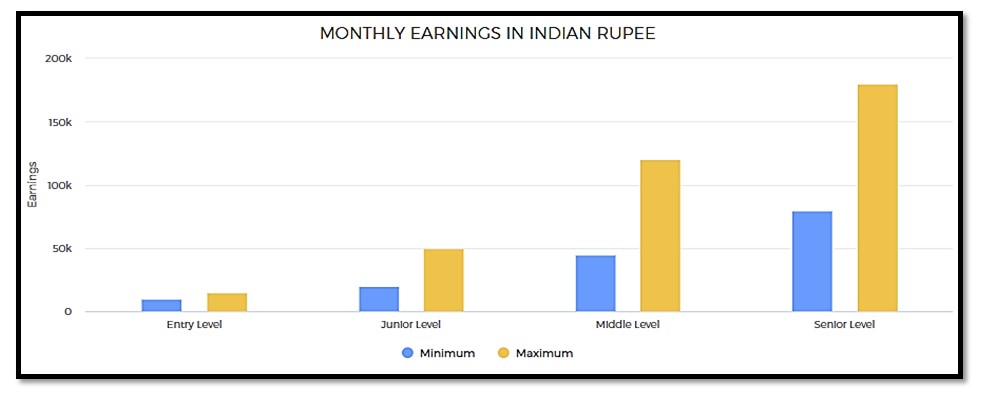
Monthly Earnings In Indian Rupee
Entry Level | Junior Level | Mid Level | Senior Level | ||||
Min Earning | Max Earning | Min Earning | Max Earning | Min Earning | Max Earning | Min Earning | Max Earning |
10000 | 15000 | 20000 | 50000 | 45000 | 120000 | 80000 | 180000 |
1. Entry level: 0 - 2 years of work experience
2. Junior Level: From 1 to 12 years of work experience
3. Mid-Level: From 5 to 20+ years of work experience
4. Senior Level: From 10 to 25+ years of work experience (there could be exceptions in some high-end technical, financial, engineering, creative, management, sports, and other careers; also shortly, people will reach these levels much faster in many careers and some careers, these levels will have no meaning as those careers will be completely tech skill driven such as even now, there is almost no level in a Cyber Security Expert’s job)
Work Activities
1. Identifying objects, actions, and events: Identifying various characteristics of objects; observing and understanding actions and events; understanding changes in actions and events.
2. Getting Information and learning: Observing, hearing, reading, using computers, or otherwise obtaining information and learning from it.
3. Analysing and interpreting data and information: Analysis of data and information to find facts, trends, reasons behind situations, etc.; interpretation of data to aid in decision-making.
4. Creative thinking: Developing new ideas, concepts, innovative solutions to problems, newer ways of getting things done, designing products and services, creating works of art and craft, etc.
5. Fabricating, assembling, and constructing equipment, devices, and products: Fabricating, assembling, constructing, or otherwise manufacturing products, equipment, devices, and tools; testing and calibrating products, equipment, devices, tools, and systems
6. Inspecting equipment, systems, structures, and materials: Inspecting equipment, systems, structures, and materials to ascertain quality, performance, defects, causes of errors, etc.
7. Updating and using relevant knowledge: Keeping updated with the latest knowledge relevant to your fields of work and using the relevant knowledge in getting things done.
Future Prospects
1. India is the world's second-largest exporter of textiles and apparel, with a huge raw material and manufacturing base. It contributes about 7% to industrial output, 2% to the GDP and 15 % to the country's total export earnings and is one of the largest sources of job creation in the country, employing about 45 million.
2. The Indian leather industry accounts for around 12.93 % of the world’s leather production of hides/skins. The growth in demand for leather is driven by the fashion industry, especially the footwear furniture and interior design industries.
3. The Indian Gems and Jewellery (G&J) sector is one of the largest in the world, contributing around 29 % to global jewellery consumption. The sector employs over 4.64 million employees and is home to over 300,000 gems and jewellery players. According to the Gems and Jewellery Export Promotion Council (GJEPC), India’s exports of cut and polished diamonds, gold jewellery and gemstones are forecasted to grow by around 10 % in the coming years. There is immense scope in my career as a Craft Designer.
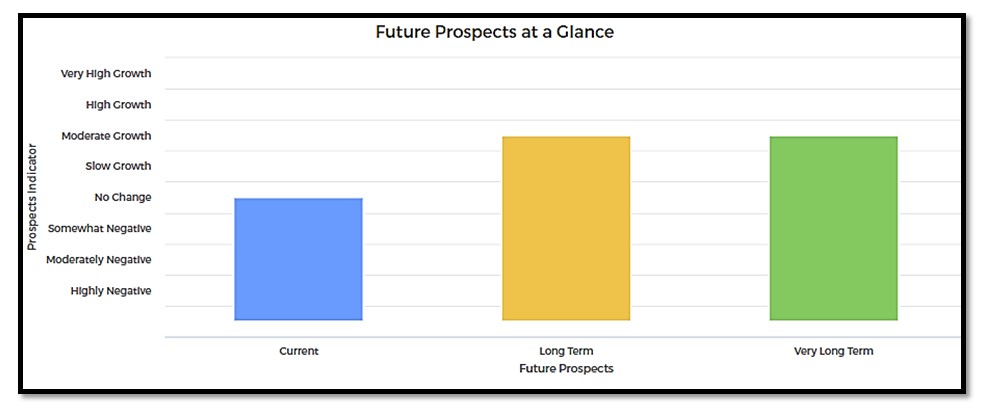
Future Prospects At A Glance
Current (0-1 year) | Long Term (2-5 years) | Very Long Term (6-10 years) |
No Change | Moderate Growth | Moderate Growth |


