


Criminologist
Entry Level Qualification
Class 12
Career Fields
Legal Services
For Specially Abled


About Career
A criminologist is someone who studies and understands the psyche and behavior of those involved in criminal activities. They work and research extensively in the field of Criminology, which is the systematic study of nature, extent, causes, consequences, and rehabilitation of criminal behavior. The study attempts to look closely into what makes someone commit a crime and the consequences after the crime is committed. For example: As a criminologist, you would accumulate both quantitative (statistics of crime rates) and qualitative (profiling offenders and examining criminal behavior) information and then use the end results of your research to develop theories about how crime can be prevented and how new methods of rehabilitation can be formulated for criminals. These research findings help develop an understanding of human behavior and to use the outcome to study, predict and prevent criminal activities.
As a Criminologist, you will be conducting extensive research on crimes and why they occur for an instance: You will be involved in profiling the criminals, studying their behavior, their mental and emotional disposition, social position, education, personal life, and other important aspects of the life of the criminals to obtain the reasons of criminal behavior. Your responsibility as a criminologist would also include conducting thorough research and cultivating theories on why people commit crimes and the risks accompanied by it.
Key Roles and Responsibilities
1. As a Criminologist, you would be interacting with offenders to assist them in gaining insight, defining goals, and planning action to achieve effective personal, social, educational, or vocational development and adjustment.
2. As a Criminologist you would be identifying psychological, emotional, or behavioral issues and diagnose disorders, using information obtained from interviews, tests, records, or reference materials.
3. As a Criminologist you would counsel individuals regarding problems, such as stress, substance abuse, or family situations, to modify behaviour or to improve personal, social, or vocational adjustment.
4. As a Criminologist you would obtain and study medical, psychological, social, and family histories by interviewing those involved in criminal activities or correctional institutions or prisons.
5. As a Criminologist you would also select, administer, score, and interpret assessments to obtain information on individuals' emotional and mental state to examine chances of prevention of crime in future.
6. As a Criminologist you would also identify case issues and evidence that would be needed, based on analysis of charges, complaints, or allegations of law violations.
PARTICULARS | DESCRIPTION |
Name | Criminologist |
Purpose | Study Criminal Behavior |
Career Field | Legal Services |
Required Entrance Exam | BHU UET, BHU PET, CUET UG, CUET PG, CLAT PG |
Average Salary | 300000 - 400000 Rs. Per Year |
Companies For You | National Crime Records Bureau (NCRB), Central Bureau of Investigation (CBI) & Many More |
Who is Eligible | Class 12th Pass |
Career Entry Pathway
Class 10 all subjects as per scheme of studies – Class 11-12 Arts/Humanities along with any other subject as per scheme of studies – Bachelor’s in Criminology/ Psychology / Sociology / Social Work/ Social Sciences / similar fields – Master’s in Criminology
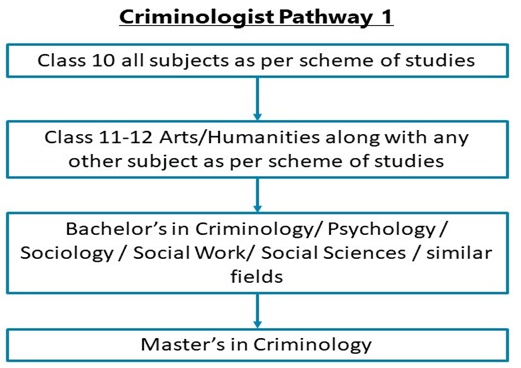
After having completed Class 10 all subjects as per scheme of studies and Class 11-12 Arts/Humanities along with any other subject as per scheme of studies, you can go for a graduation in criminology. After having completed bachelors in Criminology/ Psychology / Sociology / Social Work/ Social Sciences / similar fields, you can do a Master’s degree in Criminology.
Class 10 all subjects as per scheme of studies - Class 11-12 with any subject as per scheme of studies – B.A. LL.B./B.Sc. LL.B./ B.Com. LL.B/ B.B.A. LL.B. – LL.M. with specialization in Criminal law and Criminology
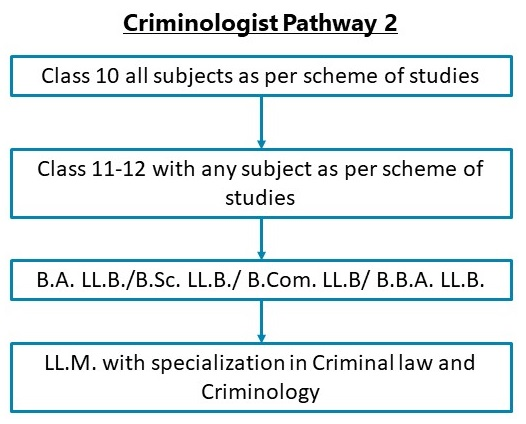
After having completed Class 10 all subjects as per scheme of studies and Class 11-12 with any subject as per scheme of studies, you can go for a degree in Law. After having acquired a degree in Law you can go for a Master’s degree in Criminal law & Criminology
Class 10 all subjects as per scheme of studies - Class 11-12 Science along with any other subject as per scheme of studies – B.Sc. in Forensic sciences and Criminology/B.A. in Criminal Justice/ Psychology/ Sociology – Master’s degree in Criminology
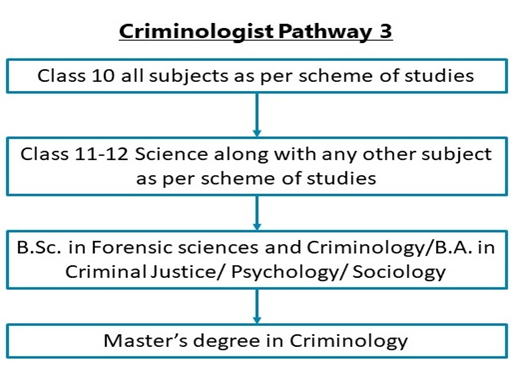
After completing Class 10 all subjects as per scheme of studies and Class 11-12 Science along with any other subject as per scheme of studies, you can go for either a B.Sc. in Forensic Sciences and Criminology or B.A. in Psychology / Sociology/ Social Work/ Social Sciences/ Criminal Justice. After acquiring a graduate degree you can take up a Master’s degree in Criminology.
Class 10 all subjects as per scheme of studies - Class 11-12 Science along with any other subject as per scheme of studies– B.Sc. in Forensic sciences and Criminology/ B.A. in Criminal Justice/ Psychology/ Sociology – Master’s degree in Criminology/ Forensic Sciences – M.Phil./ PhD. Criminology and Forensic Science
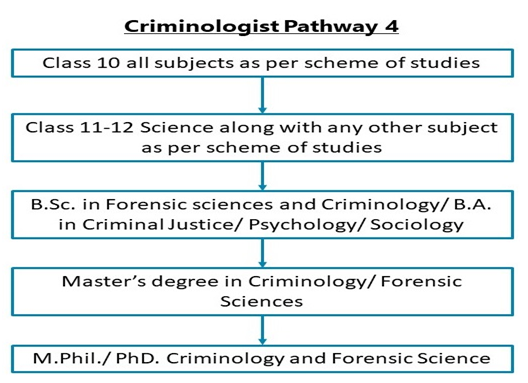
After completing Class 10 all subjects as per scheme of studies and Class 11-12 Science along with any other subject as per scheme of studies, you can go for either a B.Sc. in Forensic Sciences and Criminology or B.A. in Psychology / Sociology/ Social Work/ Social Sciences/ Criminal Justice. After acquiring a graduate degree you can take up a Master’s degree in Criminology. After having acquired a master’s degree in criminology you can further pursue an M.Phil. Followed by a PhD in Criminology and Forensic Science.
Required Qualification & Competencies
After completing Class 10 all subjects as per scheme of studies and Class 11-12 Science along with any other subject as per scheme of studies, you can go for either a B.Sc. in Forensic Sciences and Criminology or B.A. in Psychology / Sociology/ Social Work/ Social Sciences/ Criminal Justice/ Criminology. After acquiring a graduate degree you can take up a Master’s degree in Criminology. After having acquired a master’s degree in criminology you can further pursue an M.Phil. Followed by a PhD in Criminology and Forensic Science. You can also go for a degree in Law with specialization in Criminology. You can also go for Diploma or certificate courses in Forensics and Criminal law after your graduation in law. You can also pursue your masters in Law with criminology as your discipline or a post graduate degree in Forensic sciences and Criminology.
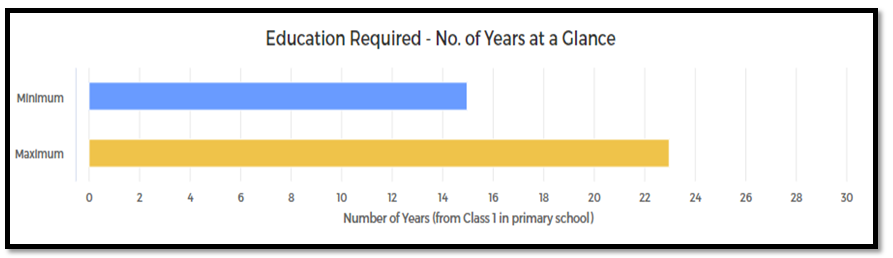
MINIMUM EDUCATION REQUIRED | MAXIMUM EDUCATION REQUIRED |
Under Graduate | Post-Doctoral |
COMPETENCIES REQUIRED
Interests
1. Investigative: You should have interests for Investigative Occupations. Investigative occupations involve working with ideas and quite a lot of thinking, often abstract or conceptual thinking. These involve learning about facts and figures; involve use of data analysis, assessment of situations, decision making and problem solving.
2. Social: You should have interests for Social Occupations. Social occupations involve helping or assisting others; these involve working with and communicating with people to provide various services; these may involve educating and advising others.
3. Artistic: You should have interests for Artistic Occupations. Artistic occupations mostly involve working with creative ideas, art and designs. These occupations involve abstract or conceptual thinking, creative self-expression and often do not follow any set processes or rules for getting things done.
Abilities
1. Abstract Reasoning: The ability to understand ideas which are not expressed in words or numbers; the ability to understand concepts which are not clearly expressed verbally or otherwise.
2. Articulation: The ability to speak clearly so others can understand you.
3. Deductive Reasoning: The ability to apply general rules and common logic to specific problems to produce answers that are logical and make sense. For example, understanding the reasons behind an event or a situation using general rules and common logic.
4. Emotional Intelligence: The ability to understand your own and others' emotions and feelings; empathy for others; adjusting your behavior or self-control and self-regulation according to others' emptions and situations.
5. Inductive Reasoning: The ability to combine pieces of information from various sources, concepts, and theories to form general rules or conclusions. For example, analyzing various events or situations to come out with a set of rules or conclusions.
6. Inter-Personal: The ability to build and maintain good relationships with others at workplaces and elsewhere.
7. Mental Stamina: The ability to sustain prolonged mental effort.
8. Oral Comprehension: The ability to listen to and understand information and ideas presented through spoken words and sentences.
9. Oral Expression: The ability to communicate information and ideas in speaking so others will understand.
10. Problem Sensitivity: The ability to tell when something is wrong or is likely to go wrong. It does not involve solving the problem, only recognizing there is a problem.
11. Selective Attention: The ability to concentrate on a task over a long period of time without being distracted.
12. Verbal Reasoning: The ability to think and reason with words; the ability to reason out ideas expressed in words.
13. Written Expression: The ability to communicate information and ideas in writing so others will understand.
Knowledge
1. Counseling: Knowledge of how to assess, evaluate and otherwise understand human behavior, personality, abilities, skills, knowledge, motivation, attitudes, values etc. and offer guidance and advices to people in order to help them deal with mental challenges and crisis as well as for deciding future courses of actions to make people happy.
2. Psychology: Knowledge of why and how humans behave the ways they behave. This includes understanding of mental processes and Knowledge of perception, beliefs, motives, attitudes, personality, values, and interests, learning styles and abilities as well as methods to do research and understand causes of behavioural disorders and treating them.
3. Law and Government: Knowledge of laws, legal codes, court procedures, precedents, government regulations, executive orders, agency rules, and the democratic political process.
4. Therapy: Knowledge of the principles, methods, and procedures for diagnosis, treatment, and rehabilitation of physical and mental dysfunctions or disorders in humans.
Skills
1. Active Learning: Focused and continuous learning from various sources of information, observation and otherwise for application in getting work done.
2. Active Listening: Giving full attention to what other people are saying, understanding the points being made by others, asking questions, etc.
3. Communication in English: Skills in communicating effectively in writing as well as verbally with others in English language.
4. Critical Thinking: Skills in analysis of complex situations, using of logic and reasoning to understand the situations and take appropriate actions or make interpretations and inferences.
5. Judgment and Decision Making: Skills in considering pros and cons of various decision alternatives; considering costs and benefits; taking appropriate and suitable decisions.
6. Negotiation: Skills in bringing others together and trying to reconcile differences.
7. Problem Solving: Skills in analysis and understanding of problems, evaluating various options to solve the problems and using the best option to solve the problems.
8. Service Orientation: Skills in or keen interest to help and assist people.
9. Public Speaking: Talking effectively to a large group of people or an audience or addressing public at large in different settings such as conferences, seminars, meetings, etc.
Personality
1. You are always or mostly a soft-hearted person.
2. You always or mostly trust others.
3. You are always or mostly helpful to others.
4. You are always calm or generally remain calm in most situations.
5. You are always or mostly caring, supportive, sympathetic and kind to others.
6. You are always or mostly organised in your day-to-day life and activities.
7. You are always or mostly disciplined in your action and behaviour.
8. You can always act independently or could do so in most situations.
9. You are always practical or in most situations.
10. You are always or mostly dependent on others or on set rules and procedures.
Career - Job Opportunities & Profiles
After having completed necessary education requirements, you can get job opportunities in:
1. Courts,
2. Law Firms
3. Investigation agencies
4. NGOs
5. Government agencies
6. Colleges and universities
As a criminologist you can work and assist the police force in profiling offenders and obtaining the basis on which the crime is committed. As a criminologist you can work in correctional facilities like Prisons and juvenile homes you would conduct behavior analysis and investigate the intricacies of the act, leading investigation and background checks of the criminal by working with inmates. You can find lucrative options in academics and research institutions in areas involved in crimes, criminal justice, prevention of crime, criminal behaviouretc. You may also find work on a project to project basis. You may also find great opportunities as a professor in universities.
CAREER GROWTH
Criminologists, in India, can get into:
1. Universities as a Research Fellow (After Master’s, as a Doctoral Research Fellow) or as a Research Associate
2. After Master’s through NET exam, first Junior Research Fellow and then Senior Research Fellow
3. After Ph.D., as a Post-Doctoral Research Fellow
4. After Ph.D., in Universities as an Assistant Professor – then Associate Professor – then Professor
5. With NGOs working in the area of Criminal Justice as an Associate after Master’s or as a Consultant after Ph.D. – after initial years, an Associate becomes a Senior Associate and then a Project Coordinator/Manager. Then a Senior Project Manager. A Consultant becomes a Senior Consultant. And then a Vice President or similar position.
6. With Police departments, on a contractual work basis – for working at the correctional homes (or prisons). There is no career progress in contractual work.
Salary Offered
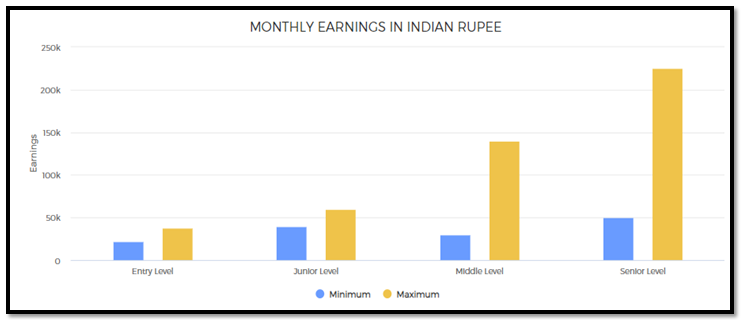
1. At the beginning of your career as a Project Associate/ Research Fellow, you may look forward to earning about Rs. 22,000-38,000 a month.
2. If you join a University Department or after having 4-5 years of experience, you may earn about Rs. 40,000-60,000 a month or even more.
3. In mid-level jobs (after 8-12 years of experience), you may earn about Rs. 30,000 - 1,40,000 or more per month.
4. In senior level jobs (after 15-20 years of experience), you may earn about Rs. 50,000 - 2,25,000 or more per month.
MONTHLY EARNINGS IN INDIAN RUPEE

1. Entry level: 0 - 2 years of work experience
2. Junior Level: From 1 to 12 years of work experience
3. Mid Level: From 5 to 20+ years of work experience
4. Senior Level: From 10 to 25+ years of work experience (there could be exceptions in some high-end technical, financial, engineering, creative, management, sports, and other careers; also in the near future, people will reach these levels much faster in many careers and in some careers, these levels will have no meaning as those careers will be completely tech skill driven such as even now, there is almost no level in a Cyber Security Expert’s job)
Work Activities
1. Analysing and interpreting data and information: Analysis of data and information to find facts, trends, reasons behind situations, etc.; interpretation of data to aid in decision making.
2. Assisting and caring for people: Assisting people in availing of services; taking care of people in different situations; offering help and services to others.
3. Communicating with co-workers and others: Communicating with people in writing, verbally or otherwise inside your workplace and various other people who have professional relationships with your place of work including vendors, government officials, etc. or with people at large.
4. Decision making and problem solving: Analysis of data and information; evaluation of alternative decisions and results of decisions; taking the right decisions and solving problems.
5. Getting Information and learning: Observing, hearing, reading, using computers, or otherwise obtaining information and learning from it.
6. Inspecting situations, events, and people: Inspecting situations, events and people to understand the reasons and causes for the situation or events to happen; inspecting people to understand reasons behind their behavior and actions.
7. Providing advices and consultation to others: Giving advices or consultation to others about various issues, conceptual matters, know-hows, scientific matters, products or services.
8. Working directly with people: Working directly with people to offer them products and services, providing assistance, etc.
Future Prospects
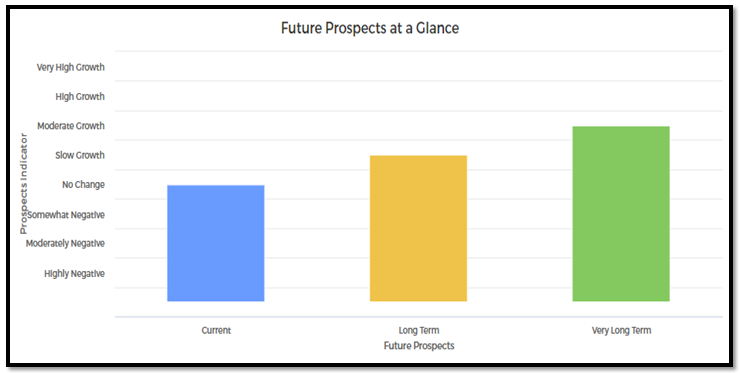
A career in this field has bright future prospects. According to statistics, career opportunities for sociologists, criminologists are expected to increase 15%. This would mean that there would be a growing demand for Criminologists in not only as researchers in governmental agencies but also as private company officials. Although this particular field of study still needs to be developed further so as to bring more opportunities in Indian markets, the correctional institutions like Tihar jail and many others in India have started accepting prospective student researchers to conduct studies of inmates and their activities. You can expect more career opportunities as a criminologist with the implementation of such initiatives.
FUTURE PROSPECTS AT A GLANCE
