

Telecom Terminal Equipment Application Developer
Entry Level Qualification
Class 12
Career Fields
Engineering & Technology
For Specially Abled


Career Entrance Exam
About Career
PARTICULARS | DESCRIPTION |
Name | Telecom Terminal Equipment Application Developer |
Purpose | Create Software Applications |
Career Field | Engineering & Technology |
Required Entrance Exam | CUET UG, JEE MAIN BE/BTECH |
Average Salary | 100000 - 300000 Rs. Per Year |
Companies For You | Smarther Technologies, MacAppStudio, Appinventiv & Many More |
Who is Eligible | Class 12th Pass |
As a Telecom Terminal Equipment Application Developer, you might be involved in the process of creating and developing applications for Android-based Smartphone/Tablets or iOS-based phones. Alternatively, you may also be involved in the process of creating and developing applications for any Mobile Platform. Here Mobile Platform means, system operating systems used in various mobile phones such as iOS (used for Apple iPhones), Android OS (used for a range of phones), Symbian OS (used in Nokia phones), Windows Phone OS (used for Windows phones), Blackberry OS (used for Blackberry phones), etc.
Telecom Terminal Equipment Application Developer is also known as Mobile Application Developer. You will be involved in the process of writing codes for various mobile software applications. You will be required to perform various unit tests for the codes written and will be ensuring that the safety measures have been taken for securing the valuable data used in the app by unauthorized external agents.
You will be understanding client requirements and then will be developing user interfaces, features, and functionalities. You will be involved in the process of processing data and information, testing of the application, and then publish tested application.
You might be working as a Telecom Terminal Equipment Application Developer (Android)
As a Telecom Terminal Equipment Application Developer (Android), you will be responsible for creating personalized applications which can be used in Smartphone or Tablets that run on an Android Operating System. You will be creating applications for only Android platforms.
You will be required to install JAVA, Eclipse Integrated Development Environment (IDE), and Android Software Development (ADS) Kit, etc.
As a Telecom Terminal Equipment Application Developer (Android), you will be required to identify various components of the Android Project, identify the role of Default Folders i.e., .src (source folder), Android Library, gen (generation folder), assets, res (resource folder), AndroidManifest.xml, etc.
You might be working as a Telecom Terminal Equipment Application Developer (Native)
As a Telecom Terminal Equipment Application Developer (Native), you will be responsible for creating personalized applications that can be used in any Mobile Platform i.e., any Smartphone or Tablet that runs on iOS, Android, Blackberry, and Windows 8x Operating Systems.
You will be required to create a flexible content layout, animated and adaptive User Interface. You will be involved in the process of installation and configuration of the Native Application Platform Suite or Toolkit. You will be required to use Cascading Style Sheets 3 (CSS3) for Application Development which includes styling HTML (Hypertext Markup Language) text properties, box properties, etc.
Now you must be wondering what is Android Operating System, iOS, User Interface, Android SDK, Eclipse IDE, etc.
1. Android Operating System: An Android Operating System, developed by Google is a mobile operating system which is initially used for touchscreen devices, cell phones, and tablets. It is a design that enables users to control their mobile phones naturally, with finger movements that reflect normal movements, for example, swiping and tapping. Some latest Android Operating System Version is; Oreo (8.0), Nougat (7.0), Marshmallow (6.0), Lollipop (5.0), etc.
2. iOS: iOS also known as iPhone Operating System created and developed by Apple Inc. It is a mobile operating system for the hardware of Apple such as iPhone, iPod Touch, iPad, and Apple Touch, etc. It is popular among its users as it permits users to associate with their iPhone using gestures, for example, swiping, tapping, scrolling, etc.
3. User Interface: A user interface is a channel between human and computer interaction. It is known as space where a user will be interacting with a computer or a machine to complete a task.
4. Android SDK: An Android Software Development Kit (SDK) is a set of development kit which is used to develop applications on android platform. This kit includes required libraries, debugger, emulator, sample source codes, etc. A debugger is a tool in a computer program that is used for testing other programs.
5. Eclipse IDE: It is a software that provides a development environment for running Java application and web-based applications. It also provides a new IDE (Integrated Development Environment) so that C++ and PHP programs can run efficiently.
6. Cascading Style Sheets 3 (CSS3): It is a style sheet language that is used for elaborating a document presentation written in a markup language like HTML. It is also known as the cornerstone technology of the World Wide Web, alongside HTML, and JavaScript.
7. AndroidManifest.xml: AndroidManifest.xml is a type of file that is required for every android application. This file describes the global value of the packages such as application components, activities, services, etc. It is located in the root folder of the application.
Key Roles and Responsibilities
As a Telecom Terminal Equipment Application Developer (for different OS like Android and iOS), you will be engaged with one or more of the following roles and responsibilities:
1. You will be required to set up an Android Application Development Environment which includes installing JAVA, Eclipse Integrated Development Environment (IDE), and Android Software Development (ADS) Kit, etc.
2. You will be required to configure Android Development Tools and will create an Android Virtual Device (AVD). An Android Virtual Device (AVD) is a device configuration which runs with the help of an android emulator.
3. You will be required to segregate various Mobile Operating systems according to their key features and benefits.
4. You will be required to identify various tools and software which are required for developing an Android Application.
5. You will be required to create Android User Interface Elements which include Views, View Groups, Layouts, Basic Views, Fragments, Buttons, Menu, Boxes, etc.
6. You will be required to test and publish the test results of the application in a pre-defined format provided by the supervisor.
As a Telecom Terminal Equipment Application Developer (Native), you will be engaged with one or more of the following roles and responsibilities:
1. You will be required to create structured documentation using various HTML Tags which include Section, Article, Header, Footer, and other tags.
2. You will be required to implement on and work on User Interface elements.
3. You will be required to add and modify HTML elements with the help of programs.
4. You will be required to implement media controls, HTML5 canvas, HTML5 APIs, and SVG graphics, etc.
5. You will be required to validate the user interface with the help of HTML5 elements and JavaScript.
6. You will be required to create an essential native application platform and features and also tools using HTML5 and JavaScript.
Career Entry Pathway
Class 10 all subjects as per scheme of studies – Class 11-12 with Mathematics & any other subject as per scheme of studies – B.Sc. in Computer Science or BCA
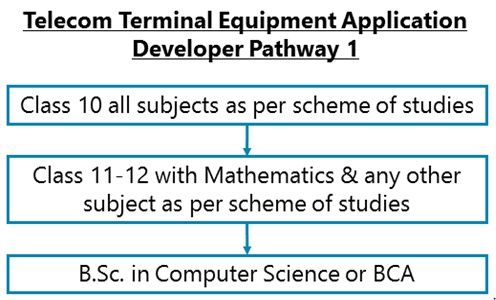
After class 12, you may apply for B.Sc. in Computer Science or Bachelor of Computer Application (BCA) from any institute or university. Alternatively, you can also obtain NSQF (National Skills Qualification Framework) Level 4 in Telecom Terminal Equipment Developer (Android) Or Telecom Terminal Equipment Developer (Native) after obtaining graduation degree.
Class 10 all subjects as per scheme of studies – Class 11-12 with Physics, Chemistry, Mathematics & any other subject as per scheme of studies – B.Sc. in Computer Science or B.Tech. in Computer Science
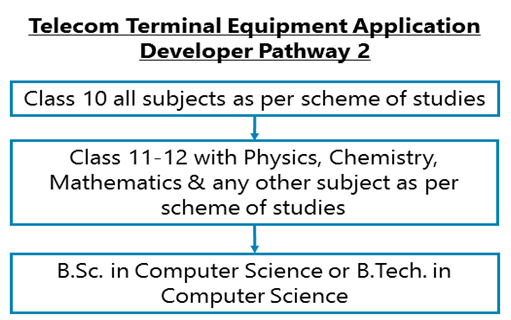
After class 12, you may apply for B.Sc. in Computer Science or B.Tech. in Computer Science from any institute or university. Alternatively, you can also obtain NSQF (National Skills Qualification Framework) Level 4 in Telecom Terminal Equipment Developer (Android) Or Telecom Terminal Equipment Developer (Native) after obtaining graduation degree.
Class 10 all subjects as per scheme of studies – Class 11-12 with Mathematics & any other subject as per scheme of studies – BCA
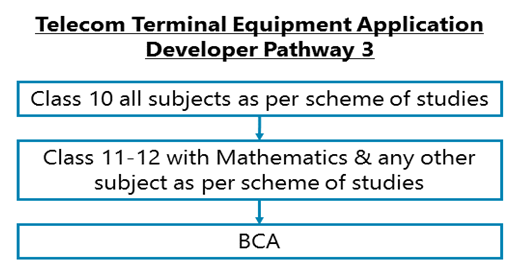
After class 12, you may apply for BCA (Bachelor of Computer Application) from any institute or university. Alternatively, you can also obtain NSQF (National Skills Qualification Framework) Level 4 in Telecom Terminal Equipment Developer (Android) Or Telecom Terminal Equipment Developer (Native) after obtaining graduation degree.
Class 10 all subjects as per scheme of studies – COPA in ITI – Obtain NSQF Level 4 in Telecom Terminal Equipment Developer (Android) Or Telecom Terminal Equipment Developer (Native)
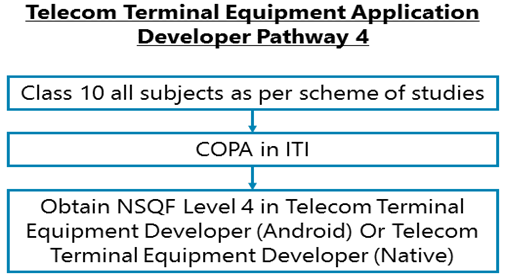
After class 10, you may apply for COPA (Computer Operator and Programming Assistant) from any ITI or other similar institute. Then you may obtain NSQF (National Skills Qualification Framework) Level 4 in Telecom Terminal Equipment Developer (Android) Or Telecom Terminal Equipment Developer (Native) from any institute.
Class 10 all subjects as per scheme of studies– Diploma (Polytechnic) in Computer Science – Obtain NSQF Level 4 in Telecom Terminal Equipment Developer (Android) Or Telecom Terminal Equipment Developer (Native)
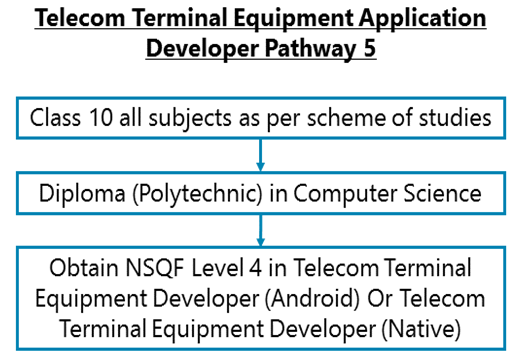
After class 10, you may apply for Diploma (Polytechnic) in Computer Science from any vocational institute or other similar institutes. Then you may obtain NSQF (National Skills Qualification Framework) Level 4 in Telecom Terminal Equipment Developer (Android) Or Telecom Terminal Equipment Developer (Native) from any institute.
Class 10 all subjects as per scheme of studies – Class 11-12 with any subject combination as per scheme of studies – Self Learning of Computer Programming – Obtain NSQF Level 4 in Telecom Terminal Equipment Developer (Android) Or Telecom Terminal Equipment Developer (Native)
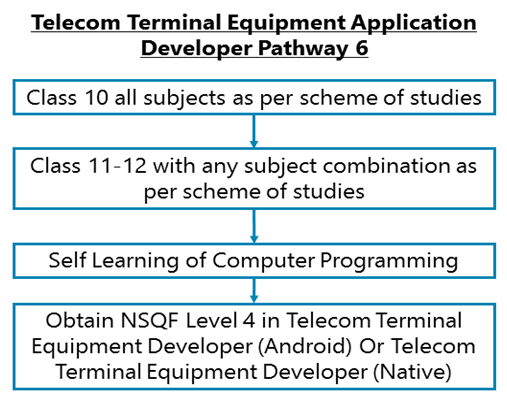
After class 12, you may apply for several courses available in computer programming from any institute or training center. Then you may obtain NSQF (National Skills Qualification Framework) Level 4 in Telecom Terminal Equipment Developer (Android) Or Telecom Terminal Equipment Developer (Native) from any institute.
Required Qualification & Competencies
If you have completed Class 10, then you can:
1. Obtain COPA in ITI and then may obtain NSQF Level 4 in Telecom Terminal Equipment Developer (Android) Or Telecom Terminal Equipment Developer (Native).
2. Diploma (Polytechnic) in Computer Science and then Obtain NSQF Level 4 in Telecom Terminal Equipment Developer (Android) Or Telecom Terminal Equipment Developer (Native).
After completing Class 11 -12, you may obtain:
1. B.Sc. in Computer Science or BCA and then may obtain NSQF Level 4 in Telecom Terminal Equipment Developer (Android) Or Telecom Terminal Equipment Developer (Native).
2. Alternatively, if you have completed class 11 -12 with Physics, Chemistry, and Mathematics then you may apply for B.Sc. in Computer Science or B.Tech. in Computer Science. And then you may also obtain NSQF Level 4 in Telecom Terminal Equipment Developer (Android) Or Telecom Terminal Equipment Developer (Native).
3. You can also go for self-learning by enrolling various Computer Programming courses available from any institute, and then obtain NSQF Level 4 in Telecom Terminal Equipment Developer (Android) Or Telecom Terminal Equipment Developer (Native).
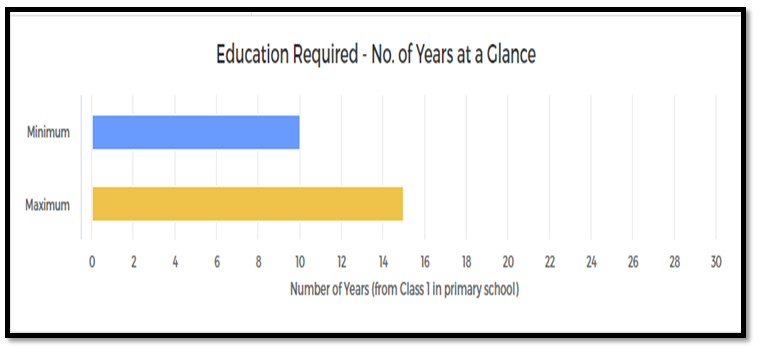
MINIMUM EDUCATION REQUIRED | MAXIMUM EDUCATION REQUIRED |
Post-Secondary Certificate / Diploma Programs for which the minimum eligibility is a pass in class X. | Under Graduate Undergraduate Degree / Honours Diploma / Graduate Diploma (equivalent to a Degree) Programs for which the minimum eligibility is a pass in Higher Secondary / Class XII School Leaving examination. |
COMPETENCIES REQUIRED
Interest
1. Realistic: You should have interests for Realistic Occupations. Realistic occupations involve more practical and hands-on activities than paperwork or office work. Realistic occupations often involve physical activities for getting things done using various tools and equipment.
2. Conventional: You should have interests for Conventional Occupations. Conventional occupations involve repetitive and routine tasks as well as fixed processes or procedures for getting things done. These occupations involve working more with data, systems, and procedures and less with ideas or creativity.
Knowledge
1. Knowledge of Terminal Equipment Application and related field such as Java Programming (OOPS, Classes and Objects, Multithreading,
2. Knowledge of eclipse (Installation, using Eclipse Interface for creating Java Applications).
Skills
1. Active Listening: Giving full attention to what other people are saying, understanding the points being made by others, asking questions, etc.
2. Critical Thinking: Skills in analysis of complex situations, using of logic and reasoning to understand the situations and take appropriate actions or make interpretations and inferences.
3. Troubleshooting: Skills in determining causes of operating errors and deciding what to do about it.
4. Coordination: Skills in working together with other people to get things done.
5. Computer (Software Development):Skills in using programming languages such as C, C++, Python, Java, Ruby, Swift, Perl, LISP, SQL, and MATLAB; development tools such as GitHub, Bootstrap, Dreamweaver, Atom, etc.; operating systems such as Windows 10, Linux, Android, Ubuntu, Mac OS, DOS, Unix, etc.; and project management tools such as Agile and SCRUM.
6. Computer (Web Authoring and Development Tools):Skills in using HTML, PHP, Adobe Dreamweaver, JavaScript, jQuery, CSS, etc. as well as different web content management systems such as WordPress, Joomla, and Drupal.
7. Programming: Skills in writing computer programs for various applications, installation of computer programs and troubleshooting of problems in computer programs or software.
Abilities
1. Problem Sensitivity: The ability to tell when something is wrong or is likely to go wrong. It does not involve solving the problem, only recognizing there is a problem.
2. Fluency of Ideas: The ability to come up with a number of ideas about a topic (the number of ideas is important, not their quality, correctness, or creativity).
3. Inductive Reasoning: The ability to combine pieces of information from various sources, concepts, and theories to form general rules or conclusions. For example, analyzing various events or situations to come out with a set of rules or conclusions.
4. Inter-Personal: The ability to build and maintain good relationships with others at workplaces and elsewhere.
5. Oral Comprehension: The ability to listen to and understand information and ideas presented through spoken words and sentences.
6. Oral Expression: The ability to communicate information and ideas in speaking so others will understand.
7. Written Comprehension: The ability to read and understand information and ideas presented in writing.
8. Written Expression: The ability to communicate information and ideas in writing so others will understand.
Personality
1. You are always or mostly organised in your day-to-day life and activities.
2. You are always or mostly disciplined in your action and behaviour.
3. You are always or mostly helpful to others.
4. You always prefer to experience new things and have new experiences or you mostly do.
5. You can always act independently or could do so in most situations.
Career - Job Opportunities & Profiles
After completing NSQF qualification, you will be eligible for entry-level jobs like:
1. Telecom Terminal Equipment Application Developer (Android)
2. Telecom Terminal Equipment Application Developer (Native)
3. Mobile Application Developer
Some of the organizations where you may find job opportunities are: Konstant Info solutions, Fusion Informatics, Open Xcell, Smarther Technologies, Hyperlink Info system, Hidden Brains, Mac App Studio, Sourcebits, India NIC Appinventiv, etc.





SPECIALISATION TRACKS IN THIS CAREER
Android Application Developer
As an Android Application Developer, you will be responsible for creating and developing personalized applications which can be used in Smartphone or Tablets that run on an Android Operating System. You will be creating applications for Android Platforms such as Oneplus, Xiaomi, Samsung, Vivo, etc.
iOS Application Developer
As an iOS Application Developer, you will be involved in the process of developing personalized applications as per the requirement of the company which can be used in the hardware of Apple such as iPhone, iPod Touch, iPad, and Apple Touch, etc.
Microsoft Windows Application Developer
As a Microsoft Windows Application Developer, you will be responsible for developing computer programs as well as creating personalized applications for Windows Phones such as Nokia.
Blackberry Application Developer
As a Blackberry Application Developer, you will be required to create and develop engaging mobile applications for satisfying Blackberry Mobile Phone customers.
CAREER GROWTH
In this career, there is no growth as such. You can start your career as a trainee or junior programmer or mobile application developer and after obtaining certain years of experience, you may grow and become a team leader/ lead programmer/ lead application developer and then a project manager. Depending upon your work performance, you can grow further into this role and reach into the role of a Chief Technology Officer.
Salary Offered
1. Salaries vary according to job profiles and the kind of facilities you get to work at.
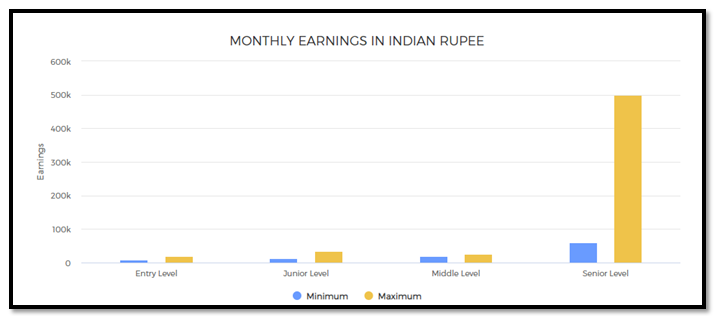
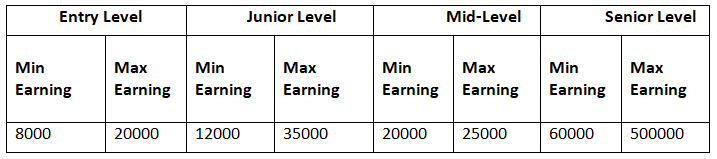
2. In the entry-level jobs, you may earn anything between Rs. 8,000 – 20,000per month.
3. Salaries increase with your work experience and as you get promoted.
4. In junior-level roles, you can expect to earn about Rs.12,000 – 35,000 per month.
5. In the mid-level jobs, with 6-12 years of work experience, you can expect to earn about Rs.20,000 – 250,000 per month or even more.
6. In the senior-level jobs, with 12-15 years of work experience, you can expect to earn about Rs. 60,000 – 500,000 or even more per month.
MONTHLY EARNINGS IN INDIAN RUPEE
1. Entry level: 0 - 2 years of work experience
2. Junior Level: From 1 to 12 years of work experience
3. Mid-Level: From 5 to 20+ years of work experience
4. Senior Level: From 10 to 25+ years of work experience (there could be exceptions in some high-end technical, financial, engineering, creative, management, sports, and other careers; also in the near future, people will reach these levels much faster in many careers and in some careers, these levels will have no meaning as those careers will be completely tech skill driven such as even now, there is almost no level in a Cyber Security Expert’s job)
Work Activities
As a Telecom Terminal Equipment Application Developer, you will be involved in the following work activities:
1. Analyzing and interpreting data and information: Analysis of data and information to find facts, trends, reasons behind situations, etc.; interpretation of data to aid in decision making.
2. Communicating with co-workers and others: Communicating with people in writing, verbally or otherwise inside your workplace and various other people who have professional relationships with your place of work including vendors, government officials, etc. or with people at large.
3. Computing: Computing using various computer software applications; writing algorithm for various computer and mobile applications; using software applications for scientific and technical work.
4. Creative thinking: Developing new ideas, concepts, innovative solutions to problems, newer ways of getting things done, designing products and services, creating work of art and craft, etc.
5. Decision making and problem solving: Analysis of data and information; evaluation of alternative decisions and results of decisions; taking the right decisions and solving problems.
6. Developing and maintaining inter-personal relationships: Developing professional relationships with co-workers and others outside organizations and maintaining good relationships.
7. Getting Information and learning: Observing, hearing, reading, using computers, or otherwise obtaining information and learning from it.
8. Organising, planning and prioritizing tasks: Planning and organising tasks in order to achieve work goals; prioritizing tasks to achieve goals and making the best use of the time available.
9. Updating and using relevant knowledge: Keeping updated with the latest knowledge relevant to your fields of work and use of the relevant knowledge in getting things done.
10. Using computers for work: Using computers for day-to-day office work; using computer software for various applications in day-to-day professional work; entering data and process information; for writing.
11. Working in a team: Working in a team of people; developing team; maintaining professional relationships among team members.
12. Working with computers, programming and performing technical tasks: Using computers and computer systems, both hardware and software for programming, developing software and / or hardware, developing computer applications, systems, and networks; developing mobile applications.
Future Prospects
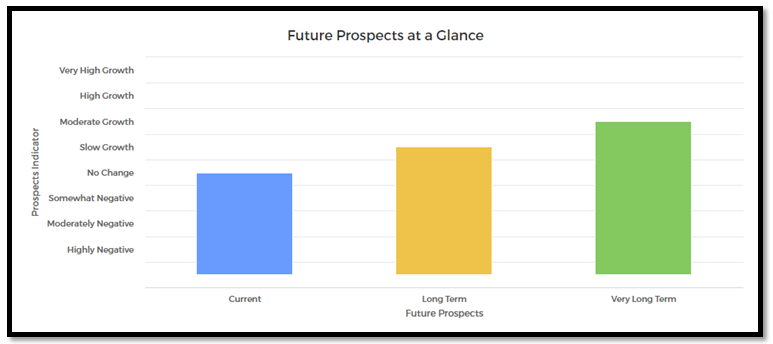
India is the largest mobile application software sourcing destination in the world. Out of 180 billion USD market, the Indian share is approximately 55%. India has the advantage of a highly qualified pool of developers and low cost of production. The cloud market of applications is expected to grow three-fold with a potential size of USD 623.3 Billion. It is expected to have a CAGR (Compound Annual Growth Rate) of around 18% during the forecast period.
Today, with the rise in the use of mobile as a replacement for a computer, most of you will be working on mobile applications. The common mobile apps used today are WhatsApp, Facebook App, Twitter App, Flipkart App, etc. The field-based specific app includes Photo editing apps, Voter App by Indian Election Commission, etc.
With the 4G now and 5G in the future, more people will use Smartphone’s and therefore more applications will be required. Some of you will work for Android-based applications; some of you might work on the iOS-based application. However, few might work on Windows and Blackberry-based applications, though their market share is quite negligible.
The demand for Mobile Application Developer or Telecom Terminal Equipment Application Developer is expected to rise in the future as well.
FUTURE PROSPECTS AT A GLANCE
