

Leather Worker (Goods and Garments)
Entry Level Qualification
Class 8
Career Fields
Apparel & Accessories
For Specially Abled


Career Entrance Exam
About Career
As a Leather Worker, you will be mainly involved in the manufacturing process of leather goods like luggage, handbags, gloves, footwear, hats, bicycle saddles, safety belts, suitcases, laces, harnesses, purses etc. You will work to prepare leather hides of animals for manufacturing the above items. You will need to work with the isolated hide for drying it, stretching it, removing any excess animal hair, smoothing it, spraying it with chemicals to turn the hide to the desired colour and converting hide into industrial marketable leather.
You may be involved in the leather finishing sector which deals with the production of finished industrial, lining or garment leather and includes processes like tanning, flaying, curing, scraping, bleaching, shearing, dyeing, embroidering or embossing. You will be constructing, decorating or repairing leather or faux (imitation) leather products. You may also be involved in designing, making, altering, repairing or fitting leather garments. You will have to use specific chemicals, machines or dyes for turning the product from animal hide to a smooth, soft and firm leather product.
Key Roles and Responsibilities
As a Leather Worker (Goods and Garments), you will be engaged with one or more of the following roles and responsibilities: -
1. Cutting out parts, according to patterns or outlines, using shears, knives, machine presses or scissors.
2. Constructing, decorating, or repairing leather products following specifications, using needles and thread, sewing machines, glue, leather lacing, hand tools, clamps, or rivets.
3. Aligning and stitching or glueing materials such as fleece, fabric, wood, or leather, to join parts.
4. Dyeing, soaking, polishing, painting, stamping, stitching, staining, buffing, or engraving leather and other materials for obtaining desired effects, shapes or decorations.
5. Drilling or punching holes for inserting decorative or functional accessories, attaching handles, metal rings, and fastening hardware such as chains etc.;
6. Repairing and reconditioning leather products such as luggage, trunks, shoes, belts, purses, saddles, and baseball gloves.
7. Checking the colour, texture, and strength of leather to make sure that it is sufficient for a particular purpose.
8. Reading prescriptions or specifications, and taking measurements for establishing the type of product to be made, using tape measures, callipers, or rulers.
9. Inspectingarticles for defects, and removing worn or damaged parts, using hand tools; identifying and correcting (if possible)malfunctions in equipment and machinery.
10. Drawing patterns, using measurements, plaster casts, or customer specifications, and outlining positioning designs on workpieces.
PARTICULARS | DESCRIPTION |
Name | Leather Worker (Goods and Garments) |
Purpose | Design Clothing and Coverings |
Career Field | Apparel & Accessories |
Required Entrance Exam | No Entrance Exam |
Average Salary | 150000 - 300000 Rs. Per Year |
Companies For You | Textiles, Leather and Related Materials & Many More |
Who is Eligible | Any One |
Career Entry Pathway
Class 5 in school- NSQF Level 2 Certificate for ‘Basic Closing Operator- Goods & Garments’, ‘Basic Cutting Operator - Goods & Garments’, ‘Helper- Dry Operations’, ‘Helper- Finishing Operations’or similar courses.
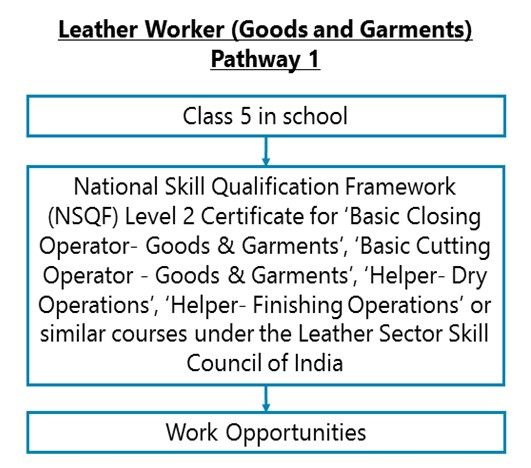
After completing Class 5 in school, you can go for National Skill Qualification Framework (NSQF) Level 2 Certificate for ‘Basic Closing Operator- Goods & Garments’, ‘Basic Cutting Operator - Goods & Garments’, ‘Helper- Dry Operations’, ‘Helper- Finishing Operations’ or similar courses under the Leather Sector Skill Council of India. The total number of training hours will vary between 120 and 300.
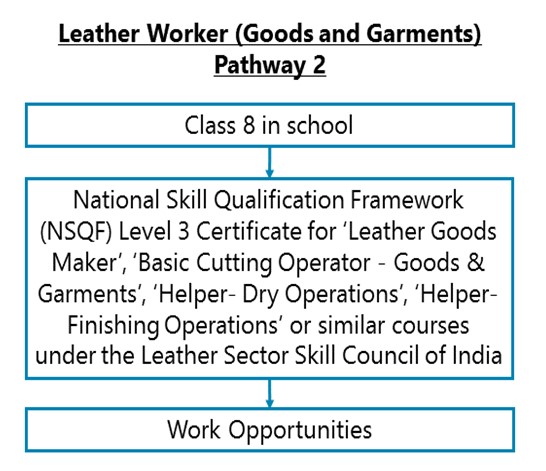
After completing Class 8 in school, you can go for the National Skill Qualification Framework (NSQF) Level 3 Certificate for ‘Leather Goods Maker’, ‘Basic Cutting Operator - Goods & Garments’, ‘Helper- Dry Operations’, ‘Helper- Finishing Operations’ or similar courses under the Leather Sector Skill Council of India. The total number of training hours will vary between 300 and 2080.
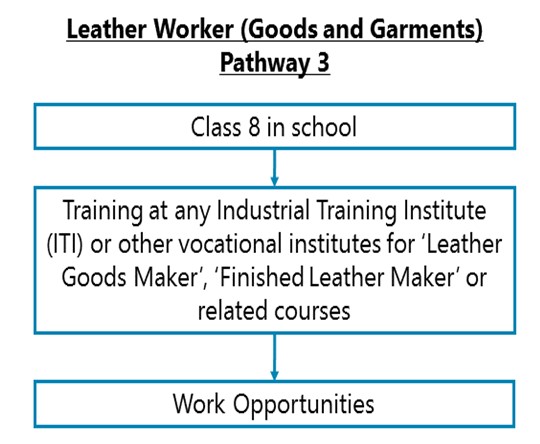
After completing Class 8 in school, you can go for training at any Industrial Training Institute (ITI), National Skill Training Institute (NSTI), Regional Vocational Training Institute (RVTI), National Vocational Training Institute (NVTI), Industrial Training Center (ITC), Workshop Training Institute (WTI) or other vocational institutes for ‘Leather Goods Maker’, ‘Finished Leather Maker’ or related courses. This is a 2-year course. You will sit for the All India Trade Test (AITT) to get a National Trade Certificate (NTC) after this course. This exam is held twice a year in February and July.
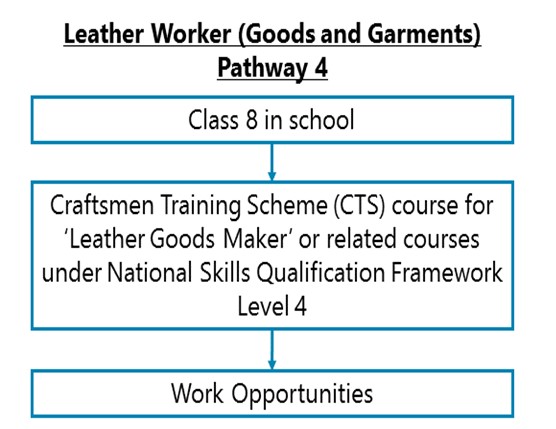
After completing Class 8 in school, you can go for the Craftsmen Training Scheme (CTS) course for ‘Leather Goods Maker’ or related courses under the National Skills Qualification Framework Level 4. This is a 1-year course with 2 semesters of 6 months each.
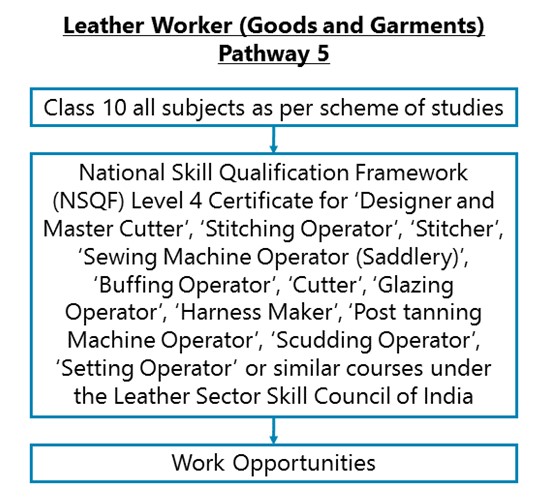
After Class 10, you can go for National Skill Qualification Framework (NSQF) Level 4 Certificate for ‘Designer and Master Cutter’, ‘Stitching Operator’, ‘Stitcher’, ‘Sewing Machine Operator (Saddlery)’, ‘Buffing Operator’, ‘Cutter’, ‘Glazing Operator’, ‘Harness Maker’, ‘Post tanning Machine Operator’, ‘Scudding Operator’, ‘Setting Operator’ or similar courses under the Leather Sector Skill Council of India. The total number of training hours will vary between 120 and 2080. Other than the course for ‘Designer and Master Cutter’, the rest can be pursued after Class 5 in school as well.
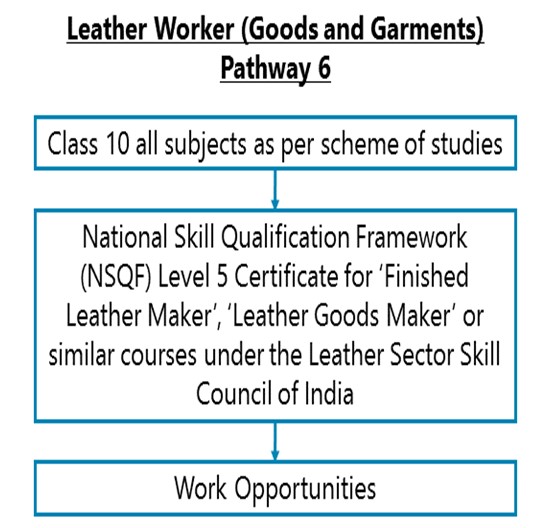
After Class 10, you can go for the National Skill Qualification Framework (NSQF) Level 5 Certificate for ‘Finished Leather Maker’, ‘Leather Goods Maker’, or similar courses under the Leather Sector Skill Council of India. The total number of training hours is 3120.
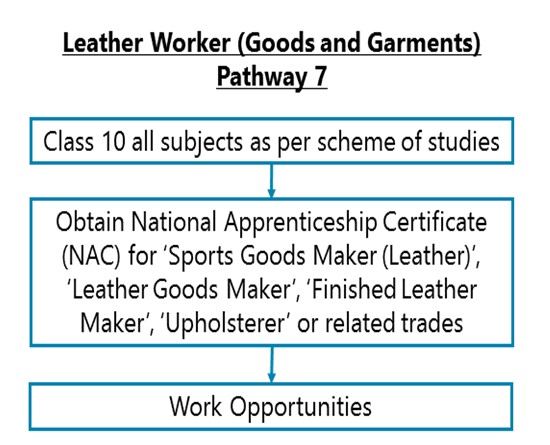
After Class 10, you can obtain National Apprenticeship Certificate (NAC) for ‘Sports Goods Maker (Leather)’, ‘Leather Goods Maker’, ‘Finished Leather Maker’, ‘Upholsterer’ or related trades after completing Apprenticeship training. Apprenticeship training will be for 2 years.
Required Qualification & Competencies
After class 5, you can go for NSQF Level 2 Training courses. After class 8, you can go for:
1. NSQF Training courses.
2. CTS Training courses.
3. ITI Training courses.
After class 10, you can go for:
1. NSQF Level 4 / 5 Training courses.
2. National Apprenticeship Training.
3. Class 11-12.
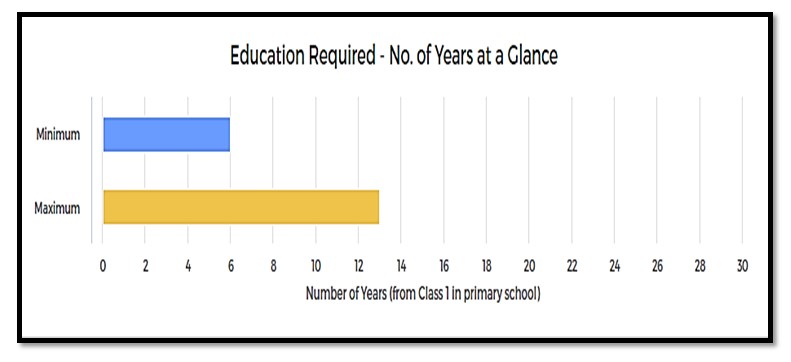
MINIMUM EDUCATION REQUIRED | MAXIMUM EDUCATION REQUIRED |
Under Secondary Certificate Programs for which the minimum eligibility is a pass in any class below class X. | Post-Secondary Certificate / Diploma Programs for which the minimum eligibility is a pass in class X. |
Competencies Required
1. You should have an interest in Realistic Occupations. Realistic occupations involve more practical and hands-on activities than paperwork or office work. Realistic occupations often involve physical activities for getting things done using various tools and equipment.
2. You should have an interest in Conventional Occupations. Conventional occupations involve repetitive and routine tasks as well as fixed processes or procedures for getting things done. These occupations involve working more with data, systems, and procedures and less with ideas or creativity.
3. You should have Problem-Solving Skills - analysis and understanding of problems, evaluating various options to solve the problems, and using the best option to solve the problems.
4. You should have Arm-Hand Steadiness - The ability to keep your hand and arm steady while moving your arm or while holding your arm and hand in one position.
5. You should have Manual Dexterity - The ability to quickly move your hand, your hand together with your arm, or your two hands to grasp, manipulate, or assemble objects.
6. You are always or mostly careful about your actions and behavior.
7. You are practical always or in most situations.
8. You are always or mostly disciplined in your actions and behavior.
9. You are always or mostly organized in your day-to-day life and activities.
Career - Job Opportunities & Profiles
You will get job opportunities for roles like:
1. Leather Worker
2. Handicraft Worker
3. Leather Technician
4. Leather Line Worker
5. Pattern Master
6. Operator – Leather Machinery
7. Style Mentor – Leather Merchandise
Some of the corporate or public sector factories, workshops, and firms that will require your services are in industries like:
1. Leather
2. Textiles, Leather and Related Materials
3. Garments / Accessories
4. Gems / Jewellery
5. Retail / Wholesale
6. Export / Import
7. Printing / Packaging
Career Growth
From entry-level job positions as a Leather Worker, Handicraft Worker, Leather Technician, Leather Line Worker, etc., you will grow up to roles like Junior / Senior Supervisor; Master Cutter; Master Craftsman; Supervisor and Foreman, Leather Goods Making; Leather Goods Supervisor; Production line supervisor; Sewing machine expert; Maintenance Manager; Leather & Rexene Goods Supervisor; Quality Supervisor; Production Manager; Lead Designer; Supervisor –Merchandising; Category Head – Apparel etc.
Salary Offered
1. Salaries vary according to job profiles and the kind of facilities you get to work at.
2. In entry-level jobs: You may get about Rs. 10,000 – Rs. 20,000 or more per month.
3. Salaries increase with your work experience and as you get promoted.
4. After having 1-6 years of experience, you may expect about Rs. 15,000 – Rs. 30, 000 per month or more.
5. After having 6-12 years of experience, you may get about Rs. 20,000 – Rs. 35,000 or more per month.
6. In senior-level jobs, with 12-20 years of work experience, you may expect to get about Rs. 25,000 – Rs. 40, 000 or more per month.
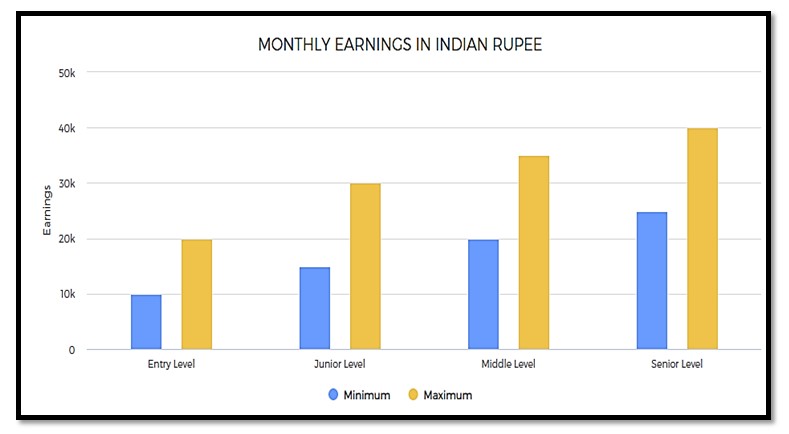
Monthly Earnings In Indian Rupee
Entry Level | Junior Level | Mid Level | Senior Level | ||||
Min Earning | Max Earning | Min Earning | Max Earning | Min Earning | Max Earning | Min Earning | Max Earning |
10000 | 20000 | 15000 | 30000 | 20000 | 35000 | 25000 | 40000 |
1. Entry level: 0 - 2 years of work experience
2. Junior Level: From 1 to 12 years of work experience
3. Mid Level: From 5 to 20+ years of work experience
4. Senior Level: From 10 to 25+ years of work experience (there could be exceptions in some high-end technical, financial, engineering, creative, management, sports, and other careers; also shortly, people will reach these levels much faster in many careers and some careers, these levels will have no meaning as those careers will be completely tech skill driven such as even now, there is almost no level in a Cyber Security Expert’s job)
Work Activities
1. Operating machines, equipment, devices, systems, and processes - Using various methods and techniques to operate machines, equipment, devices, systems, and processes in industrial and other settings.
2. Getting Information and learning - Observing, hearing, reading, using computers, or otherwise obtaining information and learning from it.
3. Inspecting equipment, systems, structures, and materials - Inspecting equipment, systems, structures, and materials to ascertain quality, performance, defects, causes of errors, etc.
4. Performing physical activities - Performing physical activities that require the use of your arms and legs and moving your whole body, such as climbing, lifting, balancing, walking, stooping, and handling materials.
5. Handling and moving objects and materials - Using hands or otherwise using physical strength to handle and move objects and materials; maneuver, install, lift, place, manipulate, etc.
6. Communicating with co-workers and others - Communicating with people in writing, verbally or otherwise inside your workplace and various other people who have professional relationships with your place of work including vendors, government officials, etc., or with people at large.
Future Prospects
The prospects for this pathway seem to be marginally improving. Organized retail in the Leather Industry is projected to increase at a rate of 25% compounded annually to reach 200 billion US Dollars. The value chain in the Leather Goods Industry depends significantly on livestock production as the sourcing and recovery of raw materials come directly from the slaughterhouses so these are some of the key activities.
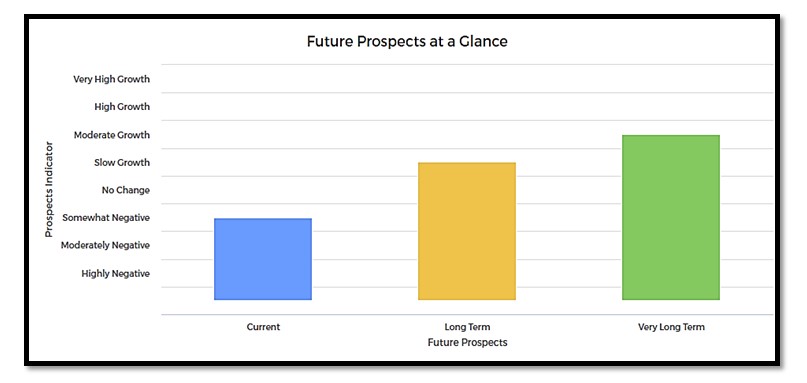
Future Prospects At A Glance
Current (0-1 year) | Long Term (2-5 years) | Very Long Term (6-10 years) |
Somewhat Negative | Slow Growth | Moderate Growth |