


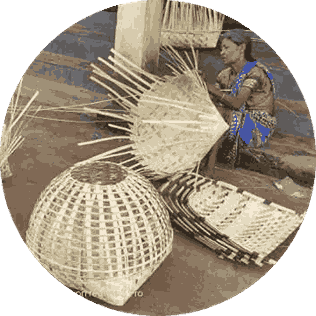
Bamboo Worker
Entry Level Qualification
Class 8
Career Fields
Agriculture & Food Science
For Specially Abled


Career Entrance Exam
About Career
As a Bamboo Worker, you will be responsible for cultivating or growing Bamboo by following various bamboo cultivation methods. You will also be involved in the process of Bamboo processing and Bamboo dying. You will be choosing, cutting, and splitting the right bamboo poles for making various Bamboo items such as mats, furniture, gifts, stationery items, Agarbatti Stick, jewelry, etc. For example, if you are making bamboo mats then you will have to select seasoned and colored bamboo strips to match with the required pattern or design. On the other hand, if you are making bamboo furniture then you will be responsible for sizing and dressing bamboo pieces, drilling holes, building frames and body with strengthening pieces, with the help of various machinery used in bamboo technology.
You might be wondering what the various uses of bamboo are
Bamboo is considered to be one of the fastest-growing plants on Earth. Bamboo is a type of grass that grows from its roots and it grows back quickly when it is cut. Bamboo is abundantly grown in tropical areas where there’s enough rain throughout the years such as Northeast Indian States (such as Kerala, Tamil Nadu, Assam, Manipur, Meghalaya, etc.), Asia, Africa, and Latin America, extending as far north as the southern United States or central China, and as far south as Patagonia. In India, it is commonly known as Bans.
Bamboo is used for various purposes such as for making furniture (to replace cedar, mahogany, and other popular hardwood lumbers); for constructing bamboo houses or Pre-Fab bamboo houses in rural areas, for making Rayon fabric (textile); for making weapons such as in several Asian Martial Arts – a “Silambam bamboo or Hill Bamboo” with one end sharpened is used in Tamil Martial Arts; for making musical instruments; for making kitchenware; for generating fuel (bamboo charcoal can be utilized as a biofuel crop); for cooking food items in certain areas; for making other handicraft items, and so on.
Nowadays bamboo is also required for making various cosmetic products – many cosmetic companies are using Bambusa Vulgaris Extract (extract of Bamboo Pole) for making face masks and other cosmetic items.
Key Roles and Responsibilities
As a Bamboo Grower, you will be engaged in various roles and responsibilities, some of which are as follows:
1. You will be preparing and managing the nursery, land, and plant and planting material for Bamboo Cultivation.
2. You will be managing soil nutrients, irrigation, harvesting & post-harvesting processes.
3. You will be integrating pests and disease management in bamboo cultivation.
As a Bamboo Processor and Dryer, you will be engaged in various roles and responsibilities, some of which are as follows:
1. You will be responsible for carrying out various processes for protecting Bamboo craft against fungal and borer attacks (borers are insects that cause damage to the wood or bamboo).
2. You will be bleaching, dying, and finishing the bamboo craft of bamboo products to achieve the high quality of bamboo craft material.
As a Bamboo Stationery Items Maker, you will be engaged in various roles and responsibilities, some of which are as follows:
1. You will be choosing and cutting the right bamboo poles for making various bamboo stationery items such as pens, desk organizers, writing boards, etc.
2. You will be peeling and soaking the bamboo so that it can gain moisture and become flexible for making various bamboo items.
As a Bamboo Jewellery Maker, you will be engaged in various roles and responsibilities, some of which are as follows:
1. You will be using sterling silver, fine braided wire, and kiln-fired cloisonne enamel for making various jewelry items.
2. You will be blending the bamboo stick or pole in various colors to give it three-dimensional contours and by taking various attractive forms and realistic shading.
As a Bamboo Basket Maker, you will be engaged in various roles and responsibilities, some of which are as follows:
1. You will be choosing, cutting, and peeling the top layer of the chosen bamboo with the help of a sharp knife and making it thin.
2. You will be interlacing the basket with the help of a sliver of braided wire or a normal wire to make the basket of the required shape and size.
As a Bamboo Mat Weaver, you will be engaged in various roles and responsibilities, some of which are as follows:
1. You will be doing basic pre-loom operations which include denting and attaching the wrap to the loom.
2. You will remove the top layer from the split bamboo to make the sliver and then let them dry in the air to manually weave the mats of different sizes and patterns.
3. You will be weaving thicker strips and ornamental borders on the edge of the mat or the end of the mat.
As a Lead Furniture Maker - Bamboo, you will be engaged in various roles and responsibilities, some of which are as follows:
1. You will be studying sketches, drawings, blueprints, building plans, 3-D images, samples, or prototypes to understand the specifications required for construction and estimate the type and quantity of different materials required.
2. You will be making bamboo furniture and other furniture components by following various quality standards and by ensuring health and safety measures at the workplace.
As a Bamboo Utility Handicraft Assembler, you will be engaged in various roles and responsibilities, some of which are as follows:
1. You will be cutting and processing the bamboo as per the required size and shape for making various handcrafted items.
2. You will be assembling various materials or giving the final touch to the products to get the desired final product.
As a Finisher – Bamboo Furniture, you will be engaged in various roles and responsibilities, some of which are as follows:
1. You will be giving the finished look to the bamboo furniture as per the requirement of the client.
2. You will be carrying out various processes such as protecting Bamboo Furniture against fungal and borer attacks or painting/polishing on wooden furniture (applying stain of color, paint, coatings, polish, etc).
As a Handmade Bamboo Agarbatti Stick Maker, you will be engaged in various roles and responsibilities, some of which are as follows:
1. You will be cutting and splitting bamboo poles to make bamboo sticks.
2. You need to consider the specific quality and dimensions used for manufacturing Agarbatti sticks or Incense Sticks.
Career Entry Pathway
Class 5 in school or ability to read and write local language – Obtain NSQF Level 3 Qualification in Bamboo and Cane Craft.
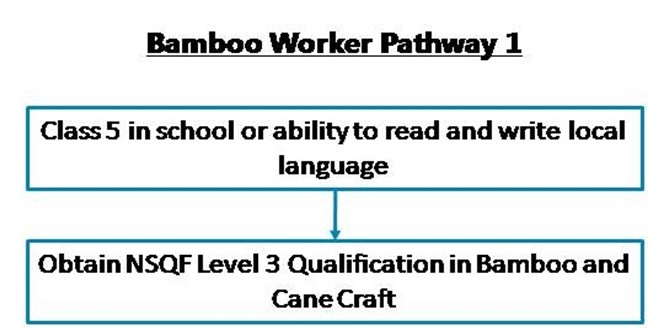
After completing class 5 in school or even if you can read and write the local language, you may obtain NSQF (National Skill Qualification Framework) Level 3 Qualification in “Bamboo and Cane Craft” or a similar course. The total number of training hours is 240 hours. This qualification is for those male or female who are of the age group of 18 to 45 years and wants to start their occupation by setting up a bamboo and cane craft unit. This course will help you in becoming an entrepreneur through expansion by employing others.
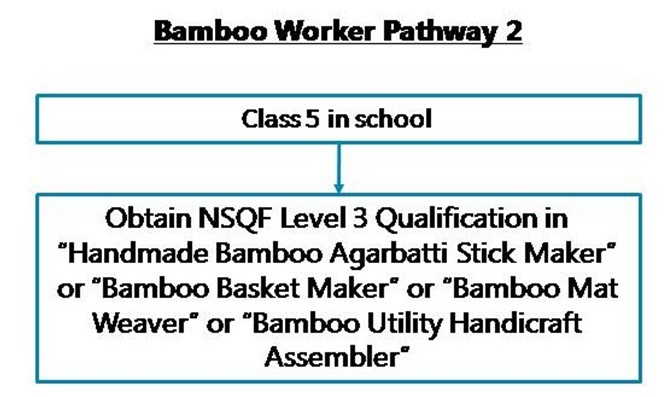
After completing class 5 in school, you may obtain NSQF (National Skill Qualification Framework) Level 3 Qualification in “Handmade Bamboo Agarbatti Stick Maker (120 hours)” or “Bamboo Basket Maker (300 hours)” Bamboo Mat Weaver (300 hours)” or “Bamboo Utility Handicraft Assembler (290 hours)” similar course. The numbers in brackets are the total number of training hours for each course. 1-2 years of work experience in handloom weaving and related operations are required to obtain NSQF Level 3 Qualification in “Bamboo Mat Weaver”. For obtaining NSQF Level 3 Qualification in “Bamboo Utility Handicraft Assembler” training in bamboo Utility Handicraft Processing and assembling of different materials and quality appraisal is suggested (which means it is not mandatory).
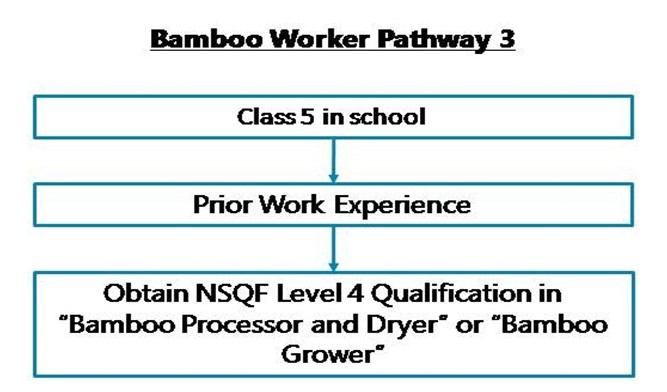
After completing class 5 in school, you may obtain NSQF (National Skill Qualification Framework) Level 4 Qualification in “Bamboo Processor and Dryer” or “Bamboo Grower (200 hours)” or a similar course. The numbers in brackets are the total number of training hours. 1-2 years of work experience in handloom weaving and related operations are required to obtain NSQF Level 4 Qualification in “Bamboo Processor and Dryer” and experience in bamboo operations for one season is required to obtain NSQF Level 4 Qualification in “Bamboo Grower”.
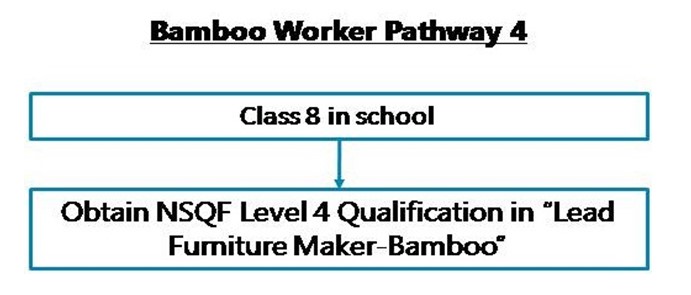
After completing class 8 in school, you may obtain NSQF (National Skill Qualification Framework) Level 4 Qualification in “Lead Furniture Maker-Bamboo” or similar course. The total number of training hours for “Lead Furniture Maker-Bamboo” is 260 hours.
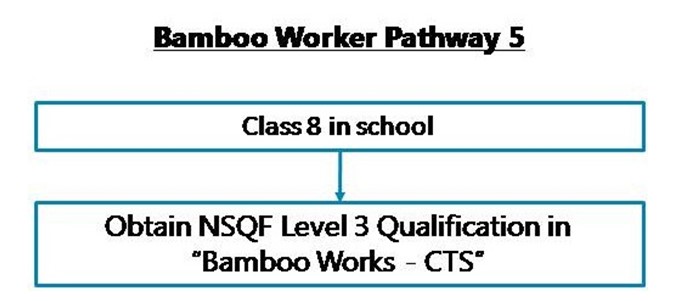
After completing class 8 in school, you may obtain NSQF (National Skill Qualification Framework) Level 3 Qualification in “Bamboo Works – CTS (Craftsmen Training Scheme)” or a similar course. The total number of training hours for “Bamboo Works - CTS” is 2080 hours.
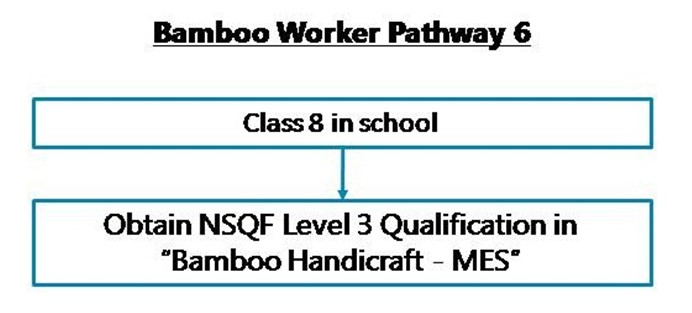
After completing class 8 in school, you may obtain NSQF (National Skill Qualification Framework) Level 3 Qualification in “Bamboo Handicraft – MES (Manufacturing execution systems)” or a similar course. The total number of training hours for “Bamboo Handicraft - MES” is 500 hours. You need to be 14 years of age to obtain this certificate.
Required Qualification & Competencies
After completing Class 5 in school, you may:
1. Obtain NSQF Level 3 Qualification in Bamboo and C
After completing Class 5 in school, you may:
1. Obtain NSQF Level 3 Qualification in Bamboo and Cane Craft
2. Obtain NSQF Level 3 Qualification in “Handmade Bamboo Agarbatti Stick Maker” “Bamboo Basket Maker” “Bamboo Mat Weaver” or “Bamboo Utility Handicraft Assembler”
3. Obtain NSQF Level 4 Qualification in “Bamboo Processor and Dryer” or “Bamboo Grower”. However, you need to have 1-2 years of work experience in handloom weaving and related operations is required for obtaining NSQF Level 4 Qualification in “Bamboo Processor and Dryer” and experience in bamboo operations for one season is required for obtaining NSQF Level 4 Qualification in “Bamboo Grower”.
Alternatively, if you have completed class 8 in school, you may:
1. Obtain NSQF Level 4 Qualification in “Lead Furniture Maker-Bamboo”
2. Obtain NSQF Level 3 Qualification in “Bamboo Works - CTS”
3. Obtain NSQF Level 3 Qualification in “Bamboo Handicraft - MES”
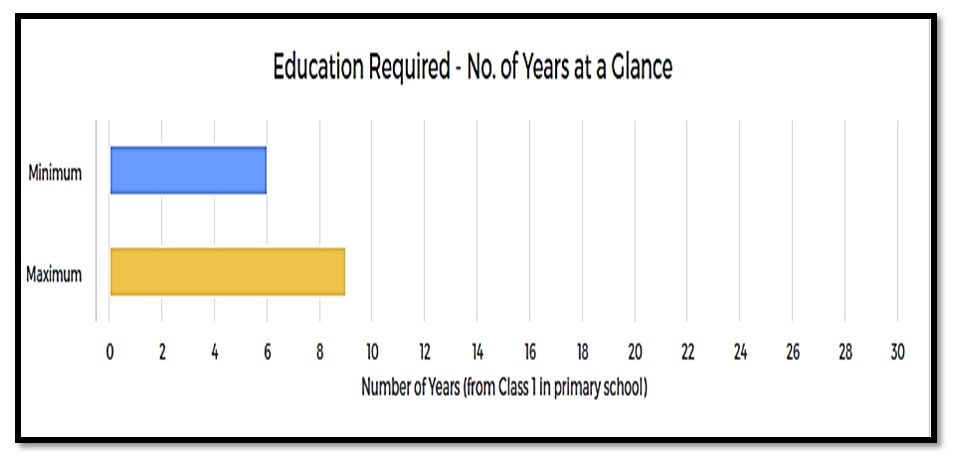
MINIMUM EDUCATION REQUIRED | MAXIMUM EDUCATION REQUIRED |
Under Secondary Certificate Programs for which the minimum eligibility is a pass in any class below class X. | Under Secondary Certificate Programs for which the minimum eligibility is a pass in any class below class X. |
Competencies Required
Interests
1. Realistic: You should have an interest in Realistic Occupations. Realistic occupations involve more practical and hands-on activities than paperwork or office work. Realistic occupations often involve physical activities for getting things done using various tools and equipment.
2. Conventional: You should have interests in Conventional Occupations. Conventional occupations involve repetitive and routine tasks as well as fixed processes or procedures for getting things done. These occupations involve working more with data, systems, and procedures and less with ideas or creativity.
Knowledge
1. Factual knowledge of Bamboo cultivation and related matters such as irrigation methods, pests & diseases, soil health, harvest & postharvest methods, market prices, climatic conditions, etc.
2. You need to know various tools, techniques, and methods for making various bamboo handcrafted items.
Skills
1. Decision Making: Skills in considering the pros and cons of various decision alternatives; considering costs and benefits; making appropriate and suitable decisions.
2. Communication in Vernacular Languages: Skills in communicating effectively in writing as well as verbally with others in a local or indigenous language such as Hindi, Tamil, Telugu, Gujarati, Bengali, Assamese, etc.
3. Customer Centricity: Skill in or a keen interest to help and assist customers.
4. Planning and Organizing: Skills in planning and organizing work for achieving targets and deadlines.
Abilities
1. Arm-Hand Steadiness: The ability to keep your hand and arm steady while moving your arm or while holding your arm and hand in one position.
2. Near Vision: The ability to see details at close range (within a few feet of the observer).
3. Manual Dexterity: The ability to quickly move your hand, your hand together with your arm, or your two hands to grasp, manipulate, or assemble objects.
4. Finger Dexterity: The ability to make precisely coordinated movements of the fingers of one or both hands to grasp, manipulate, or assemble very small objects.
5. Visualization: The ability to imagine how something will look after it is moved around or when its parts are moved or rearranged.
6. Visual Color Discrimination: The ability to match or detect differences between colors, including shades of color and brightness.
Personality
1. You are always or mostly organized in your day-to-day life and activities.
2. You are always or mostly careful about your actions and behavior.
3. You are always or mostly disciplined in your actions and behavior.
4. You are always or mostly a soft-hearted person.
5. You are always or mostly helpful to others.
6. You are always imaginative in most situations.
Career - Job Opportunities & Profiles
You will be getting limited job opportunities as a Bamboo Worker. You will be either working as a Bamboo Cultivator in a cultivation area or you will be working at your home, making various bamboo items. You might get a job opportunity as a bamboo house construction worker in rural areas in some parts of India. Most Bamboo Workers either work individually or with a village cooperative and make Bamboo Mat, Bamboo Furniture, Bamboo Basket, Bamboo Chick, Bamboo Khas Thatti, Bamboo Jewellery, Bamboo Handicrafts such as Bamboo Stairs, Toys made of Bamboo, Designer luggage, Designer Kitchen and Household product, Designer Carrier Items, Designer Gift Boxes, Agarbatti Maker, etc. for selling them to various distributors or exhibitors.
You can also become an entrepreneur by employing a few Bamboo Workers to make various products of bamboo and later sell those to various buyers such as handicraft sellers, furniture sellers, supermarket chains, etc.
Specialisation Tracks In This Career
1. Bamboo Grower
Bamboo Grower is responsible for cultivating bamboo by considering the recommended practices given by the agro-economic zone for achieving the expected yield.
2. Bamboo Processor and Dryer
The Bamboo Processor and Dryer are responsible for processing and dying the Bamboo craft material such as slivers, sticks, or other intermediate bamboo products.
3. Bamboo Stationery Items Maker
Bamboo Stationery Items Maker is responsible for making various stationery items such as writing pens, writing boards, desk organizers, etc. by cutting and peeling the bamboo poles.
4. Bamboo Jewellery Maker
As a Bamboo Jewellery Maker, you will be making Bamboo Jewellery such as earrings, bracelets, necklaces, etc. You will be making fine bamboo jewelry by using sterling silver and fine braided wire, etc.
5. Bamboo Basket Maker
Bamboo Basket Maker is responsible for choosing and splitting the bamboo for making bamboo baskets. You will need to divide the bamboo into strips of different sizes and widths with the help of a sharp knife and make them thin by peeling the top layer.
6. Bamboo Mat Weaver
Bamboo Mat Weaver is responsible for weaving various types of mats with the help of a hand-operated loom. You will be responsible for making mats of seasoned and colored bamboo strips according to pattern or design by selecting the appropriate bamboo.
7. Lead Furniture Maker - Bamboo
Lead Furniture Maker - Bamboo is responsible for making a complete range of products which includes joining components and assembling parts using various hand and power tools.
8. Bamboo Utility Handicraft Assembler
Bamboo Utility Handicraft Assembler is responsible for processing various bamboo-based materials such as Bamboo Stairs, Toys made of Bamboo, Designer luggage, Designer Lamp Shades, designer jewelry items, Designer Stationery items, Designer Kitchen and Household products, Designer Carrier Items, Designer Gift Boxes, etc.
9. Finisher – Bamboo Furniture
Finisher – Bamboo Furniture is responsible for giving the finished look to the bamboo furniture as per the requirement of the client. You will be preparing the surface of the bamboo furniture for painting and polishing.
10. Handmade Bamboo Agarbatti Stick Maker
Handmade Bamboo Agarbatti Stick Maker is responsible for preparing sticks from raw bamboo poles – manually by using a tool. These bamboo sticks with specific quality and dimensions are used for manufacturing Agarbatti sticks or Incense Sticks.
Career Growth
In this career, there is no growth as such except that your earnings may grow over some time. From a worker, you can grow to become a supervisory staff at a farm or you can be an entrepreneur by employing a few workers for making bamboo items.
Salary Offered
1. As a Bamboo Worker, if you are working at a co-operative or a bamboo cultivation and processing farm, you can earn a wage between Rs. 176 - 235 per day at present depending on your skills. For supervisory staff, the earnings could be between Rs. 350-420 per day. These earnings vary from state to state.
2. If you are working on your own, you can expect an increase in your earnings as you can then get a price for the items you make. So, if you produce a higher quantity, your earnings may go up.
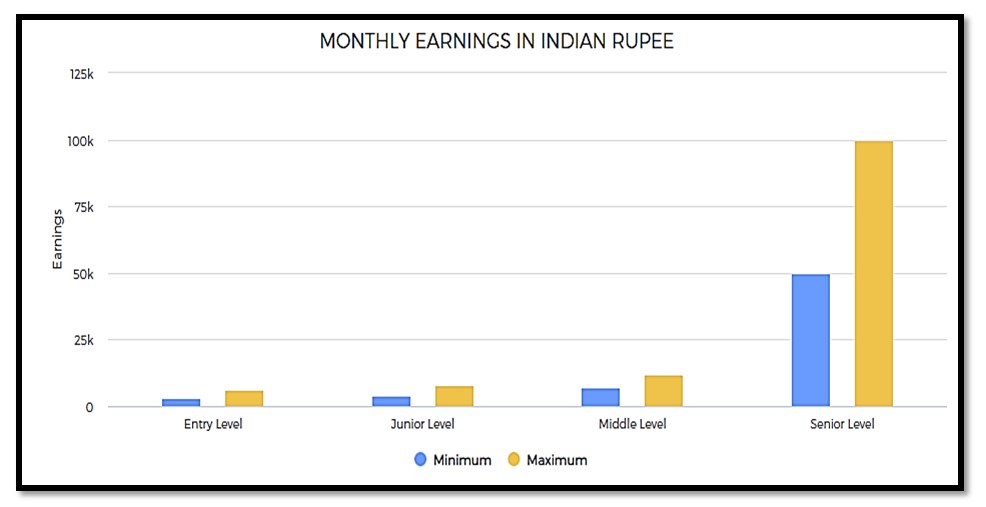
Monthly Earnings In Indian Rupee
Entry Level | Junior Level | Mid Level | Senior Level | ||||
Min Earning | Max Earning | Min Earning | Max Earning | Min Earning | Max Earning | Min Earning | Max Earning |
3000 | 6000 | 4000 | 8000 | 7000 | 12000 | 50000 | 100000 |
1. Entry level: 0 - 2 years of work experience
2. Junior Level: From 1 to 12 years of work experience
3. Mid-Level: From 5 to 20+ years of work experience
4. Senior Level: From 10 to 25+ years of work experience (there could be exceptions in some high-end technical, financial, engineering, creative, management, sports, and other careers; also shortly, people will reach these levels much faster in many careers and some careers, these levels will have no meaning as those careers will be completely tech skill driven such as even now, there is almost no level in a Cyber Security Expert’s job)
Work Activities
As a Bamboo Worker, you will be involved in the following work activities:
1. Getting Information and learning - Observing, hearing, and reading, using computers, or otherwise obtaining information and learning from it.
2. Inspecting equipment, systems, structures, and materials - Inspecting equipment, systems, structures, and materials to ascertain quality, performance, defects, causes of errors, etc.
3. Performing physical activities - Performing physical activities that require the use of your arms and legs and moving your whole body, such as climbing, lifting, balancing, walking, stooping, and handling materials.
4. Handling and moving objects and materials - Using hands or otherwise using physical strength to handle and move objects and materials; maneuver, install, lift, place, manipulate, etc.
5. Communicating with co-workers and others - Communicating with people in writing, verbally or otherwise inside your workplace and various other people who have professional relationships with your place of work including vendors, government officials, etc., or with people at large.
Future Prospects
In India, the Indian Handicrafts represent beauty, dignity, form, and style. The Handicraft Industry plays a significant role in the country’s economy and it employs more than 7.3 million people, mostly in rural and semi-urban areas. In Rural areas or semi-urban areas (in India), we see many people are engaged in Agarbatti Making, Bamboo Basket Making, Bamboo Mat Making, or Bamboo weaving work.
People are also becoming environmentally conscious, they are demanding “green design” and are interested in knowing the total life cycle of the product. They are demanding those products which are not harmful to the environment. The handicrafts and handcrafted gift items manufactured and exported from India are establishing an unsurpassable reputation in the International Market. The handicraft sector is the second-largest sector in terms of employment after the agriculture sector. According to a study by Business Standard, India’s handicraft exports are expected to cross Rs. 24,000 crore. Alternatively, around 4.5 million tones of bamboo are cultivated and about 20-40 million people are employed. As this number will only continue to scale up in the future, employment in the Bamboo Workers will also increase significantly.
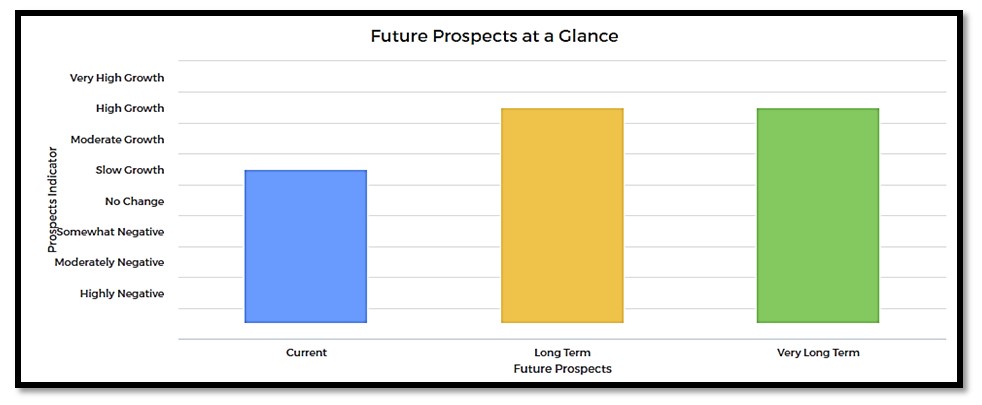
Future Prospects At A Glance
Current (0-1 year) | Long Term (2-5 year) | Very Long Term (6-10 years) |
|
|
|