

Optometrist
Entry Level Qualification
Class 12
Career Fields
Medical Services
For Specially Abled


About Career
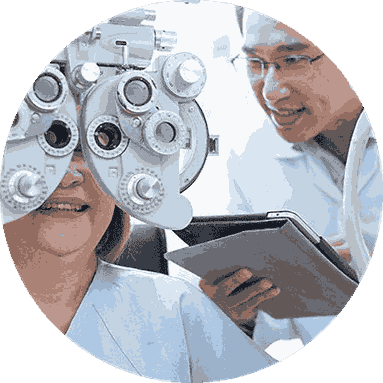
As an Optometrician (commonly called Optometrist), you will be a primary healthcare professional who specializes in eye care. You will conduct various tests for eye care and vision care.
You may assist or work with an Ophthalmologist or Eye Surgeon to diagnose eye diseases and management of therapeutic procedures for the prevention and cure of eye diseases as well as various problems associated with vision. You will help patients with eye diseases or vision problems to rehabilitate.
Key roles and responsibilities
As an Optometrician your key responsibilities will include:
1. Prescribing corrective lenses (glasses and contacts) to manage various optical abnormalities such as myopia, hyperopia, presbyopia, astigmatism, etc.
2. Educating patients on lens care, proper lighting, along with hygiene and safety of the eye.
3. Diagnosing all forms of eye disease such as infections, inflammation, glaucoma, macular degeneration, corneal/retinal abnormalities, etc.
4. Writing prescriptions for topical and oral medication to manage eye conditions.
5. Removing foreign bodies from the eye.
6. Managing vision development in children and prescribing therapeutic procedures to correct or conserve vision.
7. Consulting with ophthalmologists, and referring patients to them or other health care practitioners if more specialized medical treatment, or surgical intervention is deemed necessary
8. Supporting Ophthalmologists by providing pre-operative and post-operative surgical care.
PARTICULARS | DESCRIPTION |
Name | Optometrist |
Purpose | Managing vision development |
Career Field | Medical Services |
Required Entrance Exam | NEET UG, NEET PG |
Average Salary | 200000 - 300000 Rs. Per Year |
Companies For You | Lenskart, Titan Eye Plus, Narayana Nethralaya & Many More |
Who is Eligible | Class 12th Pass |
Career Entry Pathway
Class 10 all subjects as per the scheme of studies – Class 11-12 Physics, Chemistry, and Biology along with any other subject as per the scheme of studies - Diploma in Optometry.
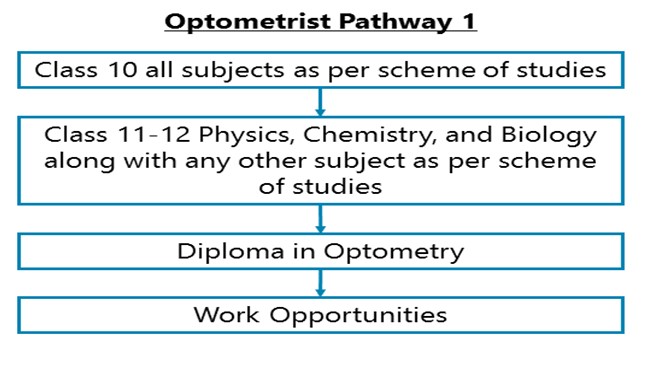
After Class 12, you can directly enroll in a diploma which will make you eligible to practice as an Optometrician.
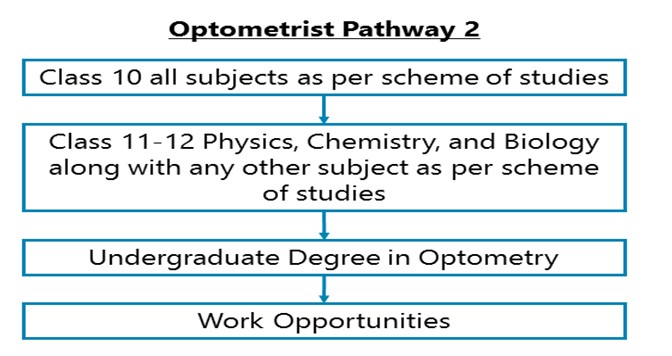
After Class 12, you can sit for various competitive exams for medical colleges or directly enroll in programs you are eligible to get a Bachelor's in Optometry.
Required Qualification & Competencies
1. School
You need to finish Class 11 and 12
2. Undergraduate
You can acquire a Diploma or Degree in Optometry having done your 10+2 with the requisite subjects.
3. Post-Graduate
You can Acquire a Masters degree in Optometry, having finished your Bachelors in the subject.
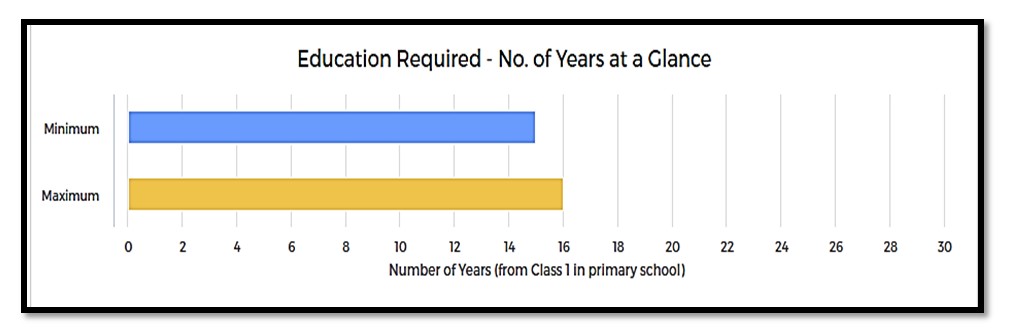
MINIMUM EDUCATION REQUIRED | MAXIMUM EDUCATION REQUIRED |
Post Higher Secondary Diploma / Certificate Programs for which the minimum eligibility is a pass in Higher Secondary / Class XII School Leaving examination. | Under Graduate Undergraduate Degree / Honours Diploma / Graduate Diploma (equivalent to a Degree) Programs for which the minimum eligibility is a pass in Higher Secondary / Class XII School Leaving examination |
Competencies Required
Interests
1. Investigative: You should have an interest in Investigative Occupations. Investigative occupations involve working with ideas and quite a lot of thinking, often abstract or conceptual thinking. These involve learning about facts and figures; involve the use of data analysis, assessment of situations, decision-making, and problem-solving.
2. Realistic: You should have an interest in Realistic Occupations. Realistic occupations involve more practical and hands-on activities than paperwork or office work. Realistic occupations often involve physical activities for getting things done using various tools and equipment.
3. Social: You should have an interest in Social Occupations. Social occupations involve helping or assisting others; these involve working with and communicating with people to provide various services; these may involve educating and advising others.
Abilities
1. Abstract Reasoning: The ability to understand ideas that are not expressed in words or numbers; the ability to understand concepts that are not clearly expressed verbally or otherwise.
2. Arm-Hand Steadiness: The ability to keep your hand and arm steady while moving your arm or while holding your arm and hand in one position.
3. Deductive Reasoning: The ability to apply general rules and common logic to specific problems to produce answers that are logical and make sense. For example, understanding the reasons behind an event or a situation using general rules and common logic.
4. Emotional Intelligence: The ability to understand your own and others' emotions and feelings; empathy for others; adjusting your behavior or self-control and self-regulation according to others' emotions and situations.
5. Finger Dexterity: The ability to make precisely coordinated movements of the fingers of one or both hands to grasp, manipulate, or assemble very small objects.
6. Flexibility of Closure: The ability to identify or detect a pattern (a figure, object, word, or sound) that is hidden among other distracting materials.
7. Hand-eye coordination: The ability to make quick and precise hand movements as per visual observations and understanding (that is, what you see and comprehend).
8. Inductive Reasoning: The ability to combine pieces of information from various sources, concepts, and theories to form general rules or conclusions. For example, analyzing various events or situations to come out with a set of rules or conclusions.
9. Inter-Personal: The ability to build and maintain good relationships with others at workplaces and elsewhere.
10. Mental Stamina: The ability to sustain prolonged mental effort.
11. Oral Comprehension: The ability to listen to and understand information and ideas presented through spoken words and sentences.
12. Oral Expression: The ability to communicate information and ideas in speaking so others will understand.
13. Problem Sensitivity: The ability to tell when something is wrong or is likely to go wrong. It does not involve solving the problem, only recognizing there is a problem.
14. Selective Attention: The ability to concentrate on a task over a long period without being distracted.
15. Verbal Reasoning: The ability to think and reason with words; the ability to reason out ideas expressed in words.
16. Written Comprehension: The ability to read and understand information and ideas presented in writing.
Knowledge
1. Biological Sciences: Knowledge of plants and animals, their anatomical structure, cell structure, tissues, physiological functions, evolution, and all other related aspects.
2. English Language: Knowledge about English grammar, words, spelling, sentence construction, using English to communicate with others, reading in English, etc.
3. Medicine: Knowledge of the science of diagnosis, treatment, and prevention of human diseases, ailments, injuries, and disorders. This includes understanding the symptoms, knowledge of the diagnostic processes, knowledge of the treatment procedures and medicines, and preventive healthcare measures.
Skills
1. Active Learning: Focused and continuous learning from various sources of information, observation, and otherwise for application in getting work done.
2. Active Listening: Giving full attention to what other people are saying, understanding the points being made by others, asking questions, etc.
3. Communication in English: Skills in communicating effectively in writing as well as verbally with others in the English language.
4. Critical Thinking: Skills in the analysis of complex situations, using logic and reasoning to understand the situations and take appropriate actions or make interpretations and inferences.
5. Judgment and Decision Making: Skills in considering the pros and cons of various decision alternatives; considering costs and benefits; and taking appropriate and suitable decisions.
6. Problem Solving: Skills in analysis and understanding of problems, evaluating various options to solve the problems, and using the best option to solve the problems.
7. Reading Comprehension: Skills in understanding written sentences and paragraphs in work-related documents.
8. Scientific: Skills in using various scientific rules and methods to get things done or solve problems.
9. Service Orientation: Skills in or keen interest in helping and assisting people.
Personality
1. You are always or mostly organized in your day-to-day life and activities.
2. You are always or mostly disciplined in your actions and behavior.
3. You are always or mostly a soft-hearted person.
4. You are always or mostly helpful to others.
5. You are always calm or generally remain calm in most situations.
6. You always feel secure in your surroundings and most situations.
7. You can always act independently or could do so in most situations.
8. You are always or mostly caring, supportive, sympathetic, and kind to others.
Career - Job Opportunities & Profiles
As an Optometrist, you might get a job in a hospital, eye clinic, or an optician store. Following are some of the job opportunities that you’ll be offered:
1. Optometrist
2. Vision Technician/Visual Aid Specialist
3. Research Scientist (in Vision Technology)
Work environment
You will be working in various healthcare settings such as eye clinics and hospitals. You may also find work with Opticians. As such, your work environment mostly is high-pressured with long work days and tight schedules.
Specialisation Tracks In This Career
1. Orthoptics
Orthoptists are allied healthcare practitioners who deal with the disorders of eye movements and diagnostic procedures for various disorders of the eye and the visual system. Orthoptic treatment of certain conditions can relieve visual symptoms and enhance the visual performance of patients.
2. Optometrist (Visual Aids and Low Vision Aids)
Your work will revolve around testing for and prescribing corrective lenses, contact lenses, etc for patients. You may also work exclusively to help patients with low vision, devising therapeutic regimens and prescribing specialized aids that can maximize the utilization of their sight and thus enable them to adapt in social, professional, and academic situations.
3. Optometrist (Pediatric Optometry)
Pediatric Optometry deals with the treatment of eye disorders and managing vision development in children. You also will be responsible for providing effective consultation for healthy vision care practices to children and their parents and also periodically perform check-ups and tests for preventative purposes.
4. Optometrist (Behavioral Optometrist)
Behavioural Optometry deals with the management of visual faculties about the demands made in everyday life, such as reading, working with phones or computers, and learning to read and write. Behavioral optometrists ensure that their patients’ vision is working properly and will work to minimize any risk to it. They will also provide vision therapy if necessary.
5. Optometrist (Sports Vision)
The field of sports vision deals with the testing and training of the visual capabilities of professional athletes. Specialists in the field are usually employed by sports teams or national athletic federations to work with athletes to help improve their performance by developing regimens to train skills such as depth perception, motion vision, hand-eye coordination, etc.
6. Neuro Optometrist
Neuro Optometrists provide eye care services to individuals who have vision-related disorders and issues that are associated with neurological diseases or disorders or neurological trauma.
7. Optometrist (Geriatric Eye Care)
Geriatric Eyecare involves optometric care for various eye diseases and conditions that are typically associated with old age.
Career Growth
Being a vocational job, career growth is quite limited in Optometry and depends heavily on your experience and the skills you possess. After starting as an Optometrist, you can (after enough experience), become a Senior Optometrist or a Senior Optician at a clinic. Or you can become the Store Manager of an optician.
Salary Offered
In entry-level and junior-level jobs, you will earn from Rs. 15,000 per month to Rs. 25,000 per month. With some experience, as you reach the mid-level, you’ll be able to make somewhere between Rs. 30,000 per month to Rs. 50,000 per month - as an established primary care provider or a clinic manager.
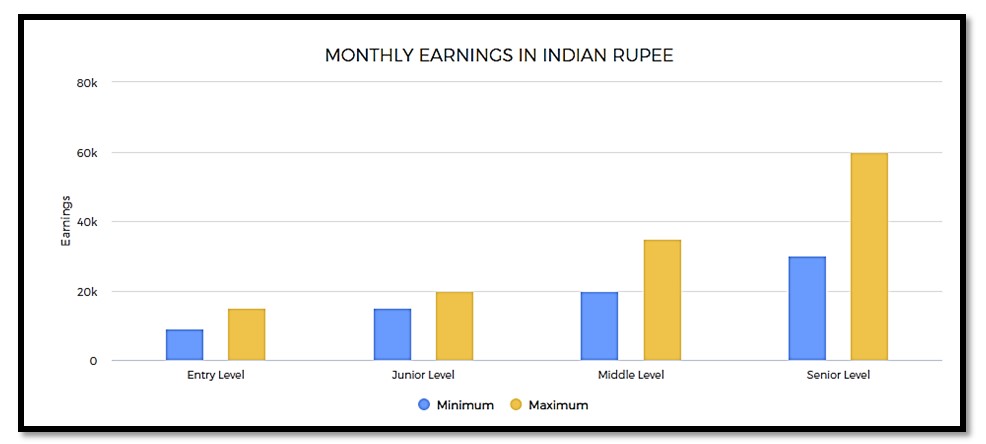
Monthly Earnings In Indian Rupee
Entry Level | Junior Level | Mid-Level | Senior Level | ||||
Min Earning | Max Earning | Min Earning | Max Earning | Min Earning | Max Earning | Min Earning | Max Earning |
9000 | 15000 | 15000 | 20000 | 20000 | 35000 | 30000 | 60000 |
1. Entry level: 0 - 2 years of work experience
2. Junior Level: From 1 to 12 years of work experience
3. Mid-Level: From 5 to 20+ years of work experience
4. Senior Level: From 10 to 25+ years of work experience (there could be exceptions in some high-end technical, financial, engineering, creative, management, sports, and other careers; also shortly, people will reach these levels much faster in many careers and some careers, these levels will have no meaning as those careers will be completely tech skill driven such as even now, there is almost no level in a Cyber Security Expert’s job)
Work Activities
As an Optometrician, your work will require you to do a combination of these activities daily:
1. Provide consultation and advice to others
2. Assisting and caring for others
3. Handling and moving objects
4. Updating and using relevant knowledge
5. Making decisions and solving problems
6. Documenting/recording information
7. Performing administrative activities
8. Analyzing data or information
9. Guiding, directing, and motivating subordinates
10. Monitor process, materials, and surroundings
11. Organizing, planning, and prioritizing work
12. Working with computers
13. Effectively communicating with people both within and outside your organization
Future Prospects
The healthcare industry is expected to grow by 22-25 percent by 2025. This indicates extremely high prospects for those aspiring for Optometry. The country’s expenditure on medical infrastructure and equipment is also rapidly increasing, this is creating a lot of awareness among people. The need for eye specialists and optometrists is only going to increase from hera on.
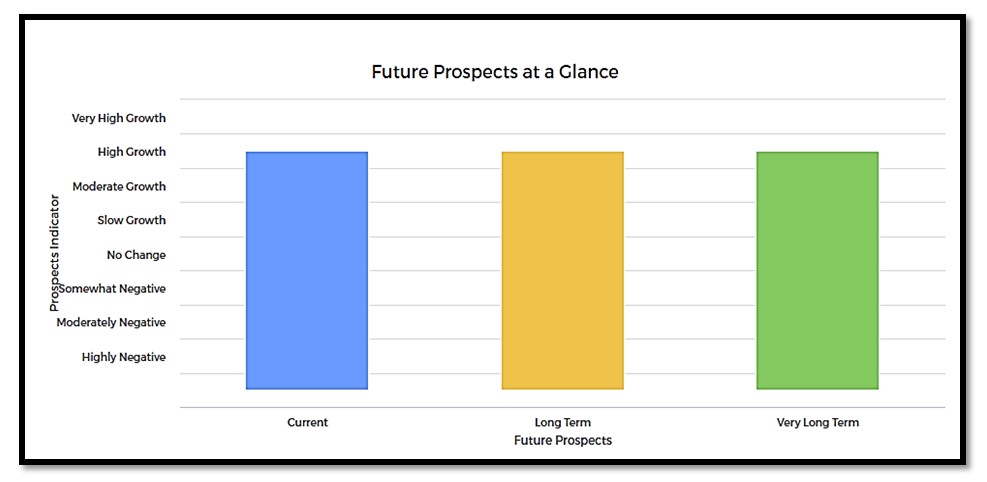
Future Prospects At A Glance
Current (0-1 year) | Long Term (2-5 years) | Very Long Term (6-10 years) |
High Growth | High Growth | High Growth |