



Sample Papers
Previous Year Papers
Syllabus
EXAM SYLLABUS
According to Notification the HPJS syllabus covers core LLB subjects with emphasis on civil/criminal laws, H.P.-specific acts, language proficiency, and judicial sensitivity to sexual offences. It tests principles, procedures, case laws, and practical application for judicial roles. Syllabus for prelims matches main Papers I–III; mains includes descriptive evaluation.
Mains Examination
Section | Topic |
Civil Law-I | Code of Civil Procedure, 1908; Indian Evidence Act, 1872; Indian Stamp Act, 1899; Himachal Pradesh Courts Act, 1976; Specific Relief Act, 1963. |
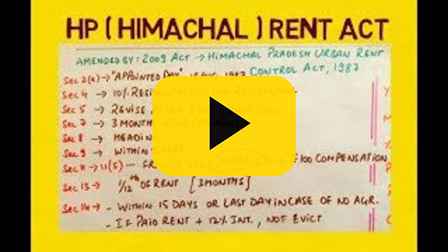
Civil Law-II | Indian Contract Act, 1872; Hindu Law (marriage, adoption, succession, maintenance); Indian Limitation Act, 1963; Transfer of Property Act, 1882; H.P. Urban Rent Control Act, 1987. |
Criminal Law | Indian Penal Code, 1860; Criminal Procedure Code, 1973; Chapter XVII (S.138–143) Negotiable Instruments Act, 1881; H.P. Excise Act, 2011; Wild Life Protection Act, 1972; Indian Forest Act, 1927.Module on Judicial Sensitivity to Sexual Offences (Integrated in Criminal Law) Latest guidelines / directions of Hon?ble Supreme Court of India with regard to bail and conditions to be imposed under Sections 437, 438, 439 Cr.P.C. What is gender stereotyping and its effects. How the gender stereotyping undermines women?s access to justice in sexual offence cases and how judicial gender stereotyping is to be avoided. Judicial approach towards new species of offensive activities, cybercrimes that are women-centric, such as transmitting of sexually explicit material, blackmailing, defamation/morphing/creating fake profile etc. Role of judge in protecting the victim during judicial process. Accountability and standards of conduct while dealing with sexual offence cases. Importance and meaning of gender sensitivity and effects of gender conditioning in judicial decisions in sexual offence cases. Incorporating gender perspective into judicial decision making and Constitutional and Statutory provisions on gender justice. Judicial approach towards child sexual abuse with reference to provisions of the POCSO Act, 2012. Credibility of statement of victim in sexual offence cases. Sentencing provisions in Sexual offence cases. Besides above, the following Acts / Provisions are included to assess the approach regarding judicial sensitivity to sexual offences. - The Protection of Children from Sexual Offences Act, 2012. The Juvenile Justice (Care and Protection of Children) Act, 2015.The Protection of Women from Domestic Violence Act, 2005. The pre-conception and Pre-natal Diagnostic Techniques (Prohibition of Sex Selection) Act, 1994. The Sexual Harassment of Women at Workplace (Prevention, Prohibition and Redressal) Act, 2013 CCS (Conduct) Rules for Prohibition of sexual harassment of women at workplace. Discrimination and Harassment of women at workplace and Rights and Dignity of women at workplace Constitutional Mandate and Guidelines by Hon?ble Supreme Court in Vishaka?s case. The Banglore Principal of Judicial Conduct, 2002. The Bangkok General Guidelines for Judges on Applying a Gender Perspective in South East Asia. |
English Composition (Paper-IV) | Choice of three essays on general subjects (100 marks). Translation of Hindi passage into English (50 marks). |
Language (Hindi) (Paper-V) | Translation of English passage into Hindi (30 marks). Essay in Hindi on any topic out of three (50 marks). Composition (idioms, corrections, etc.) (20 marks). No prescribed books; standard equivalent to H.P. Board of School Education Matriculation. |
Format
EXAM PATTERN
The pattern outlines the structure across three stages: Preliminary (objective, screening), Main (narrative, merit-based), and Viva-Voce (interview). Candidates should review this before preparation. The prelims is qualifying only; mains requires minimum marks per paper.
Stages of Examination
1. Preliminary Examination (Screening – Objective)
2. Main (Narrative/Written) Examination
3. Viva-Voce (Personality Test)
Main (Narrative) Examination (Descriptive)
Duration per paper: 3 hours.
Total Marks: 850.
Qualifying Criteria:
Minimum 40% in each of Papers I–IV.
Minimum 33% in Paper V (Hindi).
Minimum 45% aggregate in all five papers.
Paper | Subject | Marks Breakdown | Total Marks |
Paper-I | Civil Law-I Code of Civil Procedure Indian Evidence Act Indian Stamp Act Himachal Pradesh Courts Act, 1976 Specific Relief Act | — | 200 |
Paper-II | Civil Law-II Indian Contract Act Hindu Law Indian Limitation Act Transfer of Property Act H.P. Urban Rent Control Act | — | 200 |
Paper-III | Criminal Law: Indian Penal Code, Criminal Procedure Code, Chapter-XVII (Section 138 to 143) of Negotiable Instruments Act, H.P. Excise Act-2011, Wild Life Protection Act, Indian Forest Act and Module on Judicial Sensitivity to Sexual Offences:- Latest guidelines / directions of Hon?ble Supreme Court of India with regard to bail and conditions to be imposed under Sections 437, 438, 439 Cr.P.C. What is gender stereotyping and its effects. How the gender stereotyping undermines women?s access to justice in sexual offence cases and how judicial gender stereotyping is to be avoided. Judicial approach towards new species of offensive activities, cybercrimes that are women-centric, such as transmitting of sexually explicit material, blackmailing, defamation/morphing/creating fake profile etc. Role of judge in protecting the victim during judicial process. Accountability and standards of conduct while dealing with sexual offence cases. Importance and meaning of gender sensitivity and effects of gender conditioning in judicial decisions in sexual offence cases. Incorporating gender perspective into judicial decision making and Constitutional and Statutory provisions on gender justice. Judicial approach towards child sexual abuse with reference to provisions of the POCSO Act, 2012. Credibility of statement of victim in sexual offence cases. Sentencing provisions in Sexual offence cases. Besides above, the following Acts / Provisions are included to assess the approach regarding judicial sensitivity to sexual offences. - The Protection of Children from Sexual Offences Act, 2012. The Juvenile Justice (Care and Protection of Children) Act, 2015.The Protection of Women from Domestic Violence Act, 2005. The pre-conception and Pre-natal Diagnostic Techniques (Prohibition of Sex Selection) Act, 1994. The Sexual Harassment of Women at Workplace (Prevention, Prohibition and Redressal) Act, 2013 CCS (Conduct) Rules for Prohibition of sexual harassment of women at workplace. Discrimination and Harassment of women at workplace and Rights and Dignity of women at workplace Constitutional Mandate and Guidelines by Hon?ble Supreme Court in Vishaka?s case. The Banglore Principal of Judicial Conduct, 2002. The Bangkok General Guidelines for Judges on Applying a Gender Perspective in South East Asia. | — | 200 |
Paper-IV | English Composition A Choice from three Essays on General Subjects Translation of Hindi Passage into English |
EXAM PATTERN
The pattern outlines the structure across three stages: Preliminary (objective, screening), Main (narrative, merit-based), and Viva-Voce (interview). Candidates should review this before preparation. The prelims is qualifying only; mains requires minimum marks per paper.
Stages of Examination
1. Preliminary Examination (Screening – Objective)
2. Main (Narrative/Written) Examination
3. Viva-Voce (Personality Test)
Main (Narrative) Examination (Descriptive)
Duration per paper: 3 hours.
Total Marks: 850.
Qualifying Criteria:
Minimum 40% in each of Papers I–IV.
Minimum 33% in Paper V (Hindi).
Minimum 45% aggregate in all five papers.
Paper | Subject | Marks Breakdown | Total Marks |
Paper-I | Civil Law-I Code of Civil Procedure Indian Evidence Act Indian Stamp Act Himachal Pradesh Courts Act, 1976 Specific Relief Act | — | 200 |
Paper-II | Civil Law-II Indian Contract Act Hindu Law Indian Limitation Act Transfer of Property Act H.P. Urban Rent Control Act | — | 200 |
Paper-III | Criminal Law: Indian Penal Code, Criminal Procedure Code, Chapter-XVII (Section 138 to 143) of Negotiable Instruments Act, H.P. Excise Act-2011, Wild Life Protection Act, Indian Forest Act and Module on Judicial Sensitivity to Sexual Offences:- Latest guidelines / directions of Hon?ble Supreme Court of India with regard to bail and conditions to be imposed under Sections 437, 438, 439 Cr.P.C. What is gender stereotyping and its effects. How the gender stereotyping undermines women?s access to justice in sexual offence cases and how judicial gender stereotyping is to be avoided. Judicial approach towards new species of offensive activities, cybercrimes that are women-centric, such as transmitting of sexually explicit material, blackmailing, defamation/morphing/creating fake profile etc. Role of judge in protecting the victim during judicial process. Accountability and standards of conduct while dealing with sexual offence cases. Importance and meaning of gender sensitivity and effects of gender conditioning in judicial decisions in sexual offence cases. Incorporating gender perspective into judicial decision making and Constitutional and Statutory provisions on gender justice. Judicial approach towards child sexual abuse with reference to provisions of the POCSO Act, 2012. Credibility of statement of victim in sexual offence cases. Sentencing provisions in Sexual offence cases. Besides above, the following Acts / Provisions are included to assess the approach regarding judicial sensitivity to sexual offences. - The Protection of Children from Sexual Offences Act, 2012. The Juvenile Justice (Care and Protection of Children) Act, 2015.The Protection of Women from Domestic Violence Act, 2005. The pre-conception and Pre-natal Diagnostic Techniques (Prohibition of Sex Selection) Act, 1994. The Sexual Harassment of Women at Workplace (Prevention, Prohibition and Redressal) Act, 2013 CCS (Conduct) Rules for Prohibition of sexual harassment of women at workplace. Discrimination and Harassment of women at workplace and Rights and Dignity of women at workplace Constitutional Mandate and Guidelines by Hon?ble Supreme Court in Vishaka?s case. The Banglore Principal of Judicial Conduct, 2002. The Bangkok General Guidelines for Judges on Applying a Gender Perspective in South East Asia. | — | 200 |
Paper-IV | English Composition A Choice from three Essays on General Subjects Translation of Hindi Passage into English | Essay: 100 Marks Translation: 50 Marks | 150 |
Paper-V | Language (Hindi) (in Devnagari Script – No books prescribed) Translation of English passage into Hindi Essay in Hindi on any topic out of three Composition (Idioms and Corrections etc.) | Translation: 30 Marks | 100 |
Total (Main Written) | — | — | 850 |
Viva-Voce
Point | Description |
I | Candidates, who qualify the Main Written examination, for each vacancy three candidates shall be called for viva voce strictly in order of merit obtained in the written examination. The candidates will be required to appear at such place, as may be fixed by the Commission, for Viva-Voce test. The maximum marks for the Viva-Voce shall be 150. The marks obtained in the Viva-Voce will be added to the marks obtained in the Main written examination for purpose of selection of the candidates. |
II | The provisional admission of the candidates for Viva-Voce conveys no assurance whatsoever that they will be selected or recommended. Appointment orders to the selected candidates will be issued by the Government. |
III | A Candidate shall also be required to obtain at least 45% of the marks allocated for the Viva-Voce, failing which he / she will deemed to have not qualified the competitive examination. |
Eligibility
ELIGIBILITY CRITERIA
HPPSC specifically stated that the Mains was conducted for candidates who had been declared qualified in the HP Judicial Service Preliminary Examination and were provisionally admitted.
Therefore, candidates who qualified the Prelims and were included in the list of provisionally eligible candidates could appear in the Mains. The Mains examination consisted of five papers: Civil Law-I, Civil Law-II, Criminal Law, English Composition and Hindi Language.
Schedule
IMPORTANT DATES
The Himachal Pradesh Public Service Commission has issued the prelims results on 17 March 2025. Qualified candidates can now download the mains e-admit card through the HPPSC online portal. To access results or admit cards, candidates must use their login ID and password. The mains exam will be conducted from 30 March to 3 April 2025. The application window closed on 5 January 2025, with hard copy submission and fee payment allowed until 13 January 2025.
Events | Dates |
Online Registration for HPJS-2024 begins from | 31.12.2024 |
Payments through online mode for HPJS starts from | 31.12.2024 |
Online Registration for HPJS-2024 closes on | 15.01.2025 |
Last Date of Payments through online mode | 05.01.2025 |
Last date of submission of hard copies | 13.01.2025 |
Period of online release of Admit Cards for Prelims | 19.02.2025 |
Date of Preliminary Examination | 02.03.2025 |
Declaration of Prelims Results | 17.03.2025 |
Date of Main Examination | 15.07.2025 to 19.07.2025 |
Analysis
EXAM ANALYSIS
The Himachal Pradesh Judicial Service Competitive (Main) Examination-2024 was conducted by the Himachal Pradesh Public Service Commission from 15 July to 19 July 2025. Although the examination was held in 2025, HPPSC officially refers to it as the 2024 examination cycle. The Mains consisted of five papers: Civil Law-I, Civil Law-II, Criminal Law, English Composition and Hindi Language.
The overall difficulty of the HP Judicial Service Mains 2025 can be considered Moderate to Difficult. Compared with Prelims, the Mains required considerably greater conceptual understanding, legal reasoning, statutory interpretation and answer-writing ability. Candidates had to demonstrate not only knowledge of the law but also the ability to present well-structured and legally sound answers.
Civil Law-I
Civil Law-I focused on the major substantive and procedural civil laws prescribed for the examination. Questions required detailed knowledge of statutory provisions and their practical application. Candidates needed to demonstrate a clear understanding of civil-law concepts rather than merely reproduce provisions from the Bare Acts.
The paper particularly rewarded candidates who had thoroughly studied the CPC and other core civil laws, along with important principles and case laws. Proper issue identification and logical application of the relevant provisions were important for scoring well.
Civil Law-II
Civil Law-II covered other prescribed areas of civil law, including property and related legislation. Questions required candidates to explain legal provisions and apply them to factual situations.
The paper tested conceptual clarity and statutory interpretation, making detailed Bare Act preparation important. Candidates also needed to support their answers with appropriate legal principles and precedents wherever required.
Criminal Law
The Criminal Law paper tested substantive criminal law as well as criminal procedure and evidence-related areas prescribed in the syllabus. Candidates needed to demonstrate a clear understanding of offences, criminal liability, procedural safeguards and evidentiary principles.
The transition to the new criminal-law framework was particularly relevant for candidates preparing for this examination. Familiarity with the BNS, BNSS and BSA was therefore important.
English Composition
The English Composition paper tested candidates' ability to communicate effectively in written English. The paper required candidates to demonstrate clarity, grammar, vocabulary, composition and coherent presentation.
For a judicial examination, this paper is particularly important because judicial officers are required to express legal reasoning clearly and precisely in written form.
Hindi Language
The Hindi Language paper tested candidates' proficiency in Hindi, particularly their ability to write in Devanagari script. HPPSC prescribed a separate qualifying requirement for this paper.
According to the official instructions, a candidate had to secure at least 33% marks in Hindi. A candidate also needed to obtain at least 40% marks in each other Mains paper and 45% marks in aggregate across all papers to qualify for the next stage.
Answer Writing & Time Management
The biggest difference between the Prelims and Mains was the emphasis on descriptive answer writing. Candidates needed to write answers within a limited time while maintaining legal accuracy, proper structure and clarity.
A good judicial-service answer generally required the candidate to identify the legal issue, state the applicable provision or principle, analyse the facts, apply the law and reach a reasoned conclusion. Knowledge of important judgments and relevant statutory provisions could further strengthen the answers.
Competition at the Mains Stage
The Mains examination was highly competitive. 425 candidates had qualified the Preliminary Examination and were provisionally admitted to the Mains, while 396 candidates actually appeared in all the papers. On the basis of Mains performance, 63 candidates were shortlisted for the Personality Test/Viva-Voce.
This means that approximately 15.9% of the candidates who appeared in all Mains papers were shortlisted for the Personality Test, highlighting the competitive nature of the examination.
Overall Assessment
Overall, the HP Judicial Service Mains 2025 was Moderate to Difficult. The examination placed strong emphasis on substantive and procedural law, Bare Acts, legal reasoning, application of law, case laws and descriptive answer writing.
Overall Difficulty: Moderate to Difficult
Nature: Descriptive, Analytical & Application-based
Papers: Civil Law-I, Civil Law-II, Criminal Law, English Composition & Hindi Language
Key Focus: Legal Provisions, Case Laws, Legal Reasoning & Answer Writing
Major Challenge: Completing detailed answers accurately within the prescribed time
Mains Qualification: 40% in each paper, 33% in Hindi, and 45% aggregate.
Study Tips
STUDY TIPS
To succeed in the Himachal Pradesh Judicial Service (Civil Judge) Examination, focus on thorough, Bare Act-based study of core subjects such as CPC, CrPC, IPC, the Evidence Act, and the Constitution, along with relevant local laws. Practice MCQs daily and consistently work on answer-writing skills for the Mains stage. Maintain a disciplined study schedule of 10 - 12 hours per day, stay updated with recent landmark judgments, and regularly solve previous year question papers to improve time management and accuracy.
Preparing for the Himachal Pradesh Judicial Service Examination requires strong conceptual clarity, consistent Bare Act reading, and disciplined practice. Follow these effective study tips:
1. Master the Bare Acts
Read Bare Acts thoroughly and repeatedly.
Focus on definitions, key sections, provisos, and illustrations.
Most Prelims questions are directly based on Bare Acts.
2. Focus on Core Law Subjects
Give priority to CPC, CrPC, IPC (BNS), Evidence Act, and the Constitution.
Cover local Himachal Pradesh laws carefully.
3. Prepare Prelims & Mains Together
Practice daily MCQs for Prelims.
Simultaneously improve descriptive answer writing for Mains.
Work on structuring answers with proper headings and legal reasoning.
4. Solve Previous Year Question Papers
Analyze trends and repeated topics.
Practice under time limits to improve speed and accuracy.
5. Improve Answer Writing Skills
Follow the format: Introduction – Relevant Law/Section – Application – Conclusion.
Quote important sections and landmark judgments wherever possible.
6. Stay Updated with Current Legal Developments
Read about recent Supreme Court and High Court judgments.
Focus on constitutional and criminal law developments.
7. Attempt Regular Mock Tests
Take sectional and full-length mocks.
Review mistakes and revise weak areas regularly.
8. Maintain Consistency & Revision
Study 8–10 hours daily with focused sessions.
Keep short notes for quick revision before the exam.
STUDY PLANS
6 Month Study Plan
Month 1 – Strong Foundation
Start with major subjects: CPC, CrPC, IPC (BNS), Evidence Act, Constitution.
Read Bare Acts line by line and prepare concise notes.
Begin daily MCQ practice (topic-wise).
Start answer-writing practice (2 answers daily).
Month 2 – Strengthen Core Laws
Revise major subjects again for conceptual clarity.
Cover Contract Act, Torts, Specific Relief Act, Transfer of Property Act.
Continue daily MCQs and increase answer-writing to 3 answers daily.
Weekly revision of previously covered topics.
Month 3 – Local & Minor Laws
Study Himachal Pradesh-specific local laws thoroughly.
Cover remaining minor subjects.
Attempt sectional mock tests for Prelims.
Improve answer structure and presentation.
Month 4 – Intensive Practice Phase
Attempt 2 sectional mocks per week.
Write 3–4 descriptive answers daily.
Focus on quoting relevant sections and landmark judgments.
Revise Bare Acts again carefully.
Month 5 – Full-Length Mock Tests
Attempt 2–3 full-length Prelims mocks weekly.
Write at least 1 full Mains paper per week.
Analyze mistakes and improve weak areas.
Revise important case laws and constitutional provisions.
Month 6 – Final Revision & Polishing
Quick revision of all major and minor laws.
Re-solve Previous Year Question Papers.
Practice final mock tests under exam conditions.
Begin light preparation for Interview (legal awareness, personality, current issues).
Suggested Daily Schedule
6–7 hours Law subjects
1–2 hours MCQs
1–2 hours Answer writing
30–45 minutes current legal developments
3 Month Study Plan
Month 1 – Major Laws & Foundation
Revise core subjects: CPC, CrPC, IPC (BNS), Evidence Act, Constitution.
Read Bare Acts thoroughly and mark important sections and provisos.
Start daily MCQ practice (topic-wise).
Practice 2–3 Mains answers daily.
Begin revision of important landmark judgments.
Month 2 – Remaining & Local Laws
Cover Contract Act, Torts, Specific Relief Act, Transfer of Property Act.
Study Himachal Pradesh-specific local laws carefully.
Solve Previous Year Question Papers (PYQs).
Attempt sectional mock tests for Prelims.
Improve answer-writing speed and structure.
Month 3 – Full Practice & Final Revision
Attempt 2–3 full-length Prelims mocks per week.
Write at least 1 full Mains paper weekly.
Revise all Bare Acts thoroughly.
Strengthen weak areas identified during mock analysis.
Focus on presentation and time management.
Suggested Daily Routine
5–6 hours Law revision
1–2 hours MCQs practice
1–2 hours Answer writing
30–45 minutes for current legal updates
1 Month Study Plan
Week 1 – Major Laws Revision
Revise CPC, CrPC, IPC (BNS), Evidence Act, and the Constitution thoroughly from Bare Acts.
Highlight key sections, provisos, and illustrations.
Solve daily topic-wise MCQs.
Practice 2–3 structured Mains answers every day.
Week 2 – Minor & Local Laws
Revise Contract Act, Torts, Specific Relief Act, Transfer of Property Act.
Thoroughly revise Himachal Pradesh-specific local laws.
A
...STUDY TIPS
To succeed in the Himachal Pradesh Judicial Service (Civil Judge) Examination, focus on thorough, Bare Act-based study of core subjects such as CPC, CrPC, IPC, the Evidence Act, and the Constitution, along with relevant local laws. Practice MCQs daily and consistently work on answer-writing skills for the Mains stage. Maintain a disciplined study schedule of 10 - 12 hours per day, stay updated with recent landmark judgments, and regularly solve previous year question papers to improve time management and accuracy.
Preparing for the Himachal Pradesh Judicial Service Examination requires strong conceptual clarity, consistent Bare Act reading, and disciplined practice. Follow these effective study tips:
1. Master the Bare Acts
Read Bare Acts thoroughly and repeatedly.
Focus on definitions, key sections, provisos, and illustrations.
Most Prelims questions are directly based on Bare Acts.
2. Focus on Core Law Subjects
Give priority to CPC, CrPC, IPC (BNS), Evidence Act, and the Constitution.
Cover local Himachal Pradesh laws carefully.
3. Prepare Prelims & Mains Together
Practice daily MCQs for Prelims.
Simultaneously improve descriptive answer writing for Mains.
Work on structuring answers with proper headings and legal reasoning.
4. Solve Previous Year Question Papers
Analyze trends and repeated topics.
Practice under time limits to improve speed and accuracy.
5. Improve Answer Writing Skills
Follow the format: Introduction – Relevant Law/Section – Application – Conclusion.
Quote important sections and landmark judgments wherever possible.
6. Stay Updated with Current Legal Developments
Read about recent Supreme Court and High Court judgments.
Focus on constitutional and criminal law developments.
7. Attempt Regular Mock Tests
Take sectional and full-length mocks.
Review mistakes and revise weak areas regularly.
8. Maintain Consistency & Revision
Study 8–10 hours daily with focused sessions.
Keep short notes for quick revision before the exam.
STUDY PLANS
6 Month Study Plan
Month 1 – Strong Foundation
Start with major subjects: CPC, CrPC, IPC (BNS), Evidence Act, Constitution.
Read Bare Acts line by line and prepare concise notes.
Begin daily MCQ practice (topic-wise).
Start answer-writing practice (2 answers daily).
Month 2 – Strengthen Core Laws
Revise major subjects again for conceptual clarity.
Cover Contract Act, Torts, Specific Relief Act, Transfer of Property Act.
Continue daily MCQs and increase answer-writing to 3 answers daily.
Weekly revision of previously covered topics.
Month 3 – Local & Minor Laws
Study Himachal Pradesh-specific local laws thoroughly.
Cover remaining minor subjects.
Attempt sectional mock tests for Prelims.
Improve answer structure and presentation.
Month 4 – Intensive Practice Phase
Attempt 2 sectional mocks per week.
Write 3–4 descriptive answers daily.
Focus on quoting relevant sections and landmark judgments.
Revise Bare Acts again carefully.
Month 5 – Full-Length Mock Tests
Attempt 2–3 full-length Prelims mocks weekly.
Write at least 1 full Mains paper per week.
Analyze mistakes and improve weak areas.
Revise important case laws and constitutional provisions.
Month 6 – Final Revision & Polishing
Quick revision of all major and minor laws.
Re-solve Previous Year Question Papers.
Practice final mock tests under exam conditions.
Begin light preparation for Interview (legal awareness, personality, current issues).
Suggested Daily Schedule
6–7 hours Law subjects
1–2 hours MCQs
1–2 hours Answer writing
30–45 minutes current legal developments
3 Month Study Plan
Month 1 – Major Laws & Foundation
Revise core subjects: CPC, CrPC, IPC (BNS), Evidence Act, Constitution.
Read Bare Acts thoroughly and mark important sections and provisos.
Start daily MCQ practice (topic-wise).
Practice 2–3 Mains answers daily.
Begin revision of important landmark judgments.
Month 2 – Remaining & Local Laws
Cover Contract Act, Torts, Specific Relief Act, Transfer of Property Act.
Study Himachal Pradesh-specific local laws carefully.
Solve Previous Year Question Papers (PYQs).
Attempt sectional mock tests for Prelims.
Improve answer-writing speed and structure.
Month 3 – Full Practice & Final Revision
Attempt 2–3 full-length Prelims mocks per week.
Write at least 1 full Mains paper weekly.
Revise all Bare Acts thoroughly.
Strengthen weak areas identified during mock analysis.
Focus on presentation and time management.
Suggested Daily Routine
5–6 hours Law revision
1–2 hours MCQs practice
1–2 hours Answer writing
30–45 minutes for current legal updates
1 Month Study Plan
Week 1 – Major Laws Revision
Revise CPC, CrPC, IPC (BNS), Evidence Act, and the Constitution thoroughly from Bare Acts.
Highlight key sections, provisos, and illustrations.
Solve daily topic-wise MCQs.
Practice 2–3 structured Mains answers every day.
Week 2 – Minor & Local Laws
Revise Contract Act, Torts, Specific Relief Act, Transfer of Property Act.
Thoroughly revise Himachal Pradesh-specific local laws.
Attempt sectional mock tests.
Work on quoting relevant sections and landmark judgments in answers.
Week 3 – Full-Length Mock Practice
Attempt 3–4 full-length Prelims mock tests under exam conditions.
Write at least 2 full Mains practice papers.
Analyze mistakes carefully and revise weak areas.
Improve time management and answer presentation.
Week 4 – Final Revision & Polishing
Quick revision of all Bare Acts and short notes.
Re-solve important Previous Year Question Papers.
Focus on high-weightage and frequently asked topics.
Keep the last 2–3 days for light revision only.
Suggested Daily Schedule
6–7 hours Law revision
1–2 hours MCQ practice
1–2 hours Answer writing
30 minutes current legal developments
General info
OVERVIEW
The Himachal Pradesh Judicial Service Examination is a state-level competitive exam conducted by the Himachal Pradesh Public Service Commission for law graduates who want to obtain the post of Civil Judge (Junior Division). The exam is held in three stages: Preliminary (objective), Main (narrative), and Viva-Voce. It is open to holders of a 3-year or 5-year LLB degree recognized by the Bar Council of India. Online registration ran from 15 December 2024 to 5 January 2025, hard copies were due by 13 January 2025, prelims were on 2 March 2025, results on 17 March 2025, and mains are scheduled from 15 July to 19 July 2025.
Particulars | Descriptions |
Exam Full Name | Himachal Pradesh Judicial Service Examination |
Conducting Body | Himachal Pradesh Public Service Commission |
Purpose of the Exam | To recruit the civil judge (Junior Division) |
Exam Level | State Level |
Exma Date | Prelims - 2 March 2025 |
Official Website |
SELECTION PROCESS
The Himachal Pradesh Public Service Commission has not yet announced any recruitment notification for the Himachal Judicial Service 2026. According to Previous Notification the Himachal Pradesh Judicial Service Competitive Examination - 2024 is conducted in three successive stages.
Stage-I: Preliminary Examination (Screening/Qualifying Only)
Objective-type exam of 300 marks (3 papers × 100 marks each).
Duration: 1 hour per paper (total 3 hours.
No negative marking.
Marks of Preliminary Examination are NOT counted for final merit.
Approximately 20 times the number of vacancies (around 420 candidates) are shortlisted for the Main Examination on the basis of prelims merit.
Result of prelims is published on HPPSC website; no individual intimation.
Stage-II: Main (Narrative/Descriptive) Examination
Consists of 5 papers totalling 850 marks: Paper-I Civil Law-I : 200 marks Paper-II Civil Law-II : 200 marks Paper-III Criminal Law : 200 marks Paper-IV English Composition : 150 marks Paper-V Hindi Language : 100 marks
Each paper is of 3 hours duration.
Minimum qualifying marks: – 40% in each of Papers I to IV – 33% in Paper-V (Hindi) – 45% aggregate in all five papers
Only candidates who secure the above minimum marks are eligible to be called for Viva-Voce.
Approximately 3 times the number of vacancies (around 63 candidates) are called for Viva-Voce in order of Main Examination merit.
Stage-III: Viva-Voce (Personality Test)
Maximum 150 marks.
Minimum qualifying marks: 45% (i.e., 67.5 marks out of 150).
Candidates who fail to obtain 45% in Viva-Voce are disqualified even if they have qualified the Main Examination.
Assesses general knowledge, grasp of law, judicial temperament, personality, suitability for appointment as Civil Judge.
Final Merit List
Prepared by adding marks obtained in Main Examination (out of 850) + Viva-Voce (out of 150) = Total 1000 marks.
Final selection is strictly according to merit in this combined score, subject to securing minimum qualifying marks at each stage.
Post-Selection Formalities
Medical Examination of original documents & certificates.
Character & antecedent verification.
Medical examination.
Recommendation by HPPSC to Government of Himachal Pradesh for appointment as Civil Judge (Junior Division).
Important Notes
There is no provision for re-evaluation/re-checking of Preliminary or Main answer sheets.
Number of candidates called at each stage is fixed (20× for mains, 3× for viva).
Reservation rules apply only to bonafide Himachali candidates.
Final appointment is subject to satisfactory verification and availability of vacancies.
2026 exam
LATEST UPDATE
The Himachal Pradesh Public Service Commission has not yet announced any recruitment notification for the Himachal Judicial Service 2026. According to Previous Notification the Himachal Pradesh Public Service Commission has announced the results for the Himachal Pradesh Judicial Service (Preliminary) Examination. The preliminary exam was conducted on 2 March 2025, and results were declared on 17 March 2025. Over 350 candidates have qualified for the Main Examination, scheduled from 15 July to 19 July 2025. E-admit cards for mains will be issued soon on the official website. This is a three-stage exam (Prelims, Mains, Viva-Voce), and law graduates with a BCI-recognized LLB degree, aged 22-35 years, can apply to obtain the post of Civil Judge (Junior Division) in the Department of Home, H.P.
IMPORTANT DATES
The Himachal Pradesh Public Service Commission has issued the prelims results on 17 March 2025. Qualified candidates can now download the mains e-admit card through the HPPSC online portal. To access results or admit cards, candidates must use their login ID and password. The mains exam will be conducted from 30 March to 3 April 2025. The application window closed on 5 January 2025, with hard copy submission and fee payment allowed until 13 January 2025.
Events | Dates |
Online Registration for HPJS-2024 begins from | 31.12.2024 |
Payments through online mode for HPJS starts from | 31.12.2024 |
Online Registration for HPJS-2024 closes on | 15.01.2025 |
Last Date of Payments through online mode | 05.01.2025 |
Last date of submission of hard copies | 13.01.2025 |
Period of online release of Admit Cards for Prelims | 19.02.2025 |
Date of Preliminary Examination | 02.03.2025 |
Declaration of Prelims Results | 17.03.2025 |
Date of Main Examination | 15.07.2025 to 19.07.2025 |
VACANCIES DETAILS
The Himachal Pradesh Public Service Commission (HPPSC) has notified a total of 21 vacancies for the post of Civil Judge (Junior Division) in the Department of Home, H.P., through the Himachal Pradesh Judicial Service Competitive Examination-2024. These include 10 anticipated posts. The vacancies are subject to possible increase or decrease based on administrative requirements. Reservation benefits are applicable only to bonafide residents of Himachal Pradesh in the specified categories. Out-of-state reserved category candidates will be treated as General. The detailed category-wise break-up is as follows:
Pay Scale: Level J-1 (Rs. 77,840 – Rs. 1,36,520)
For the latest updates or any changes, candidates should refer to the official HPPSC website (hppsc.hp.gov.in). The recruitment aims to fill these posts through a three-stage selection process: Preliminary Examination, Main Examination, and Viva-Voce.
Categories | No. of Posts |
Unreserved | 11 |
SC | 03 |
ST | 03 |
OBC | 04 |
Total | 21 |
SALARY STRUCTURE
The Civil Judge (Junior Division) in Himachal Pradesh is placed in Pay Level J-1 with a pay scale of Rs. 77,840 – 1,36,520 (starting basic pay Rs. 77,840). Gross monthly salary at entry level is approximately Rs. 1,15,000 – 1,25,000, which includes Dearness Allowance (currently 55%), House Rent Allowance (up to 27%), Judicial Allowance, Sumptuary Allowance and other perks. In-hand salary after deductions ranges from Rs. 95,000 – 1,10,000 per month. Officers also enjoy free or subsidised official residence, official vehicle with driver, medical facilities, electricity/water allowance, robe allowance, Leave Travel Concession and the Old Pension Scheme. The first-year annual package is around Rs. 14 - 15 lakh.
Particulars | Details |
Pay Level | Level J-1 (as per Himachal Pradesh Civil Services |
Basic Pay Scale | Rs. 77,840 – 1,36,520 |
Starting Basic Pay | Rs. 77,840 |
Grade Pay | Pay Level J-1 |
Approximate Gross Salary (at entry level) | Rs. 1,15,000 – 1,25,000 |
Approximate In-Hand Salary (after deductions) | Rs. 95,000 – 1,10,000 per month |
OTHER BENEFITS & PERKS
Official Residence – Free furnished quarter (Type-V/VI) or HRA in lieu
Official Vehicle – With driver and fuel (for court & official dutie
...LATEST UPDATE
The Himachal Pradesh Public Service Commission has not yet announced any recruitment notification for the Himachal Judicial Service 2026. According to Previous Notification the Himachal Pradesh Public Service Commission has announced the results for the Himachal Pradesh Judicial Service (Preliminary) Examination. The preliminary exam was conducted on 2 March 2025, and results were declared on 17 March 2025. Over 350 candidates have qualified for the Main Examination, scheduled from 15 July to 19 July 2025. E-admit cards for mains will be issued soon on the official website. This is a three-stage exam (Prelims, Mains, Viva-Voce), and law graduates with a BCI-recognized LLB degree, aged 22-35 years, can apply to obtain the post of Civil Judge (Junior Division) in the Department of Home, H.P.
IMPORTANT DATES
The Himachal Pradesh Public Service Commission has issued the prelims results on 17 March 2025. Qualified candidates can now download the mains e-admit card through the HPPSC online portal. To access results or admit cards, candidates must use their login ID and password. The mains exam will be conducted from 30 March to 3 April 2025. The application window closed on 5 January 2025, with hard copy submission and fee payment allowed until 13 January 2025.
Events | Dates |
Online Registration for HPJS-2024 begins from | 31.12.2024 |
Payments through online mode for HPJS starts from | 31.12.2024 |
Online Registration for HPJS-2024 closes on | 15.01.2025 |
Last Date of Payments through online mode | 05.01.2025 |
Last date of submission of hard copies | 13.01.2025 |
Period of online release of Admit Cards for Prelims | 19.02.2025 |
Date of Preliminary Examination | 02.03.2025 |
Declaration of Prelims Results | 17.03.2025 |
Date of Main Examination | 15.07.2025 to 19.07.2025 |
VACANCIES DETAILS
The Himachal Pradesh Public Service Commission (HPPSC) has notified a total of 21 vacancies for the post of Civil Judge (Junior Division) in the Department of Home, H.P., through the Himachal Pradesh Judicial Service Competitive Examination-2024. These include 10 anticipated posts. The vacancies are subject to possible increase or decrease based on administrative requirements. Reservation benefits are applicable only to bonafide residents of Himachal Pradesh in the specified categories. Out-of-state reserved category candidates will be treated as General. The detailed category-wise break-up is as follows:
Pay Scale: Level J-1 (Rs. 77,840 – Rs. 1,36,520)
For the latest updates or any changes, candidates should refer to the official HPPSC website (hppsc.hp.gov.in). The recruitment aims to fill these posts through a three-stage selection process: Preliminary Examination, Main Examination, and Viva-Voce.
Categories | No. of Posts |
Unreserved | 11 |
SC | 03 |
ST | 03 |
OBC | 04 |
Total | 21 |
SALARY STRUCTURE
The Civil Judge (Junior Division) in Himachal Pradesh is placed in Pay Level J-1 with a pay scale of Rs. 77,840 – 1,36,520 (starting basic pay Rs. 77,840). Gross monthly salary at entry level is approximately Rs. 1,15,000 – 1,25,000, which includes Dearness Allowance (currently 55%), House Rent Allowance (up to 27%), Judicial Allowance, Sumptuary Allowance and other perks. In-hand salary after deductions ranges from Rs. 95,000 – 1,10,000 per month. Officers also enjoy free or subsidised official residence, official vehicle with driver, medical facilities, electricity/water allowance, robe allowance, Leave Travel Concession and the Old Pension Scheme. The first-year annual package is around Rs. 14 - 15 lakh.
Particulars | Details |
Pay Level | Level J-1 (as per Himachal Pradesh Civil Services |
Basic Pay Scale | Rs. 77,840 – 1,36,520 |
Starting Basic Pay | Rs. 77,840 |
Grade Pay | Pay Level J-1 |
Approximate Gross Salary (at entry level) | Rs. 1,15,000 – 1,25,000 |
Approximate In-Hand Salary (after deductions) | Rs. 95,000 – 1,10,000 per month |
OTHER BENEFITS & PERKS
Official Residence – Free furnished quarter (Type-V/VI) or HRA in lieu
Official Vehicle – With driver and fuel (for court & official duties)
Security – Provided as per threat perception
Pension – Old Pension Scheme (NPS not applicable for direct judicial recruits in H.P.)
Leave Benefits – 30 Earned Leave + 20 Half-Pay Leave + Casual Leave, etc.
Promotions – Civil Judge (Jr. Div.) Civil Judge (Sr. Div.) District Judge (within 8–12 years)
Job Security & Prestige – Constitutional post under Article 233/234; transfer only by High Court
Note: The above figures are based on the 7th Pay Commission matrix (Level J-1) as implemented by the Government of Himachal Pradesh.
HOW TO APPLY
The Himachal Pradesh Public Service Commission has not yet announced any recruitment notification for the Himachal Judicial Service 2026. According to Previous Notification to apply for HPJS 2024, visit the official HPPSC website and register via One Time Registration (OTR) using name, mobile, and email. After verification, log in, fill personal/educational details, select preferences, and upload documents (photo, signature, LLB marksheets, category certificate). Pay fee online via card/UPI/net banking. Submit and download confirmation; send hard copies to HPPSC Shimla by 13 January 2025.
Visit the Official Website
Access hppsc.hp.gov.in and click "Apply Online" for OTR profile creation.
Register as a New Candidate
Enter name, email, mobile, state; verify via OTP/link.
Fill in the Online Application Form
Provide personal, educational, category, and preference details accurately.
Upload Required Documents
Scanned photo/signature (JPG), certificates (PDF); follow size/format guidelines.
Pay the Application Fee
Category-wise fee via online modes; confirmation generated post-payment.
Download the Filled Form
Save application and receipt for records.
Print and Retain the Confirmation
Send A4 printout + self-attested documents to Secretary, HPPSC, Shimla-171002, with exam name and application number on envelope.
Registration Document Checklist
Personal Identification Documents
Valid photo ID (Aadhaar, Voter ID, Passport, etc.); Recent passport-size photo; Scanned signature.
Educational Qualification Documents
Matriculation certificate (age proof); LLB degree/marksheets (semester-wise/consolidated).
Enrollment Details (If Applicable)
Not mandatory.
Category Certificates (If Applicable)
SC/ST/OBC (parental lineage, <1 year old for OBC); EWS/BPL; Bonafide Himachali.
Contact Information
Active mobile/email for OTP/updates.
Bank / Payment Information
Card/UPI/net banking details; ensure balance.
Other Recommended Items
Credential certificates from two unrelated persons; Preferred exam center note.
Important Technical Requirements
Scanned documents per HPPSC guidelines: Photo/signature (JPG, <50KB); Certificates (PDF, <1MB). No special characters in filenames.
EXAM CENTERS
HPJS is conducted at designated centers in Himachal Pradesh for accessibility. Candidates select preferences during application; allotment is first-come, first-served but subject to change. The Bar Council of India usually offers exam centers in almost all major state capitals and important regional cities to ensure easy accessibility. The exact list of centers is released every year in the official notification, and candidates must select their center early as allotment is on a first-come, first-served basis.
Preliminary Examination Centers
Dharamshala (Kangra District)
Shimla
Mandi
Main Examination Center
Shimla
Dharamshala (Kangra), Mandi, Shimla.
ADMIT CARD
HPJS admit cards are released online on the official HPPSC website. Candidates download using OTR login (user ID/password). The admit card includes exam date, time, center, and instructions. Mandatory to carry with valid ID on exam day.
Introduction to Admit Card
The HPJS admit card is an essential document issued by the Himachal Pradesh Public Service Commission (HPPSC) for all registered candidates. It serves as official permission to appear in the exam and must be carried to the exam centre.
Release of Admit Card
HPPSC releases the admit card online on the official HPJS portal. Candidates are informed through email, SMS, and website notifications once the admit card download link becomes active. For prelims, it was released on 19 February 2025; for mains, expected in March 2025 post-prelims results.
How to Download the Admit Card
Candidates can download their HPJS admit card using the steps below: Visit the official HPPSC website (hppsc.hp.gov.in). Click on the “Admit Card” or “Candidate Login” link. Enter your OTR user ID and password. View and download the admit card. Take a printout for the exam day.
Details Mentioned on the Admit Card
The HPJS admit card contains important information including: Candidate’s name Roll number Exam date and timing Exam centre address Candidate’s photograph and signature Exam-day instructions Reporting time
Documents Required Along With Admit Card
On the exam day, candidates must carry: Printed HPJS admit card A valid photo ID proof (Aadhaar card, Passport, Driving License, Voter ID, etc.) Original identity proof along with e-admit card.
Correction in Admit Card
If candidates find any error in the admit card (such as name, photograph, or exam centre), they should immediately contact the HPPSC helpdesk for correction before the exam date.
Importance of the Admit Card
Without the admit card, candidates will not be allowed to enter the exam venue. It also acts as an identity verification document and may be required during future processes, such as appointment verification.
EXAM RESULTS
HPJS results are released online on the official HPPSC website. Candidates check via login (roll number/DOB). Results show qualifying status, marks (mains/viva), and merit position. Qualifiers proceed to next stage or appointment.
Where the Results Are Released
The HPJS results are published online on the official website of the Himachal Pradesh Public Service Commission. Candidates must visit the portal to access their individual result.
How to Check the Result
To view the result, candidates need to log in using their OTR user ID, password, and other required credentials. After logging in, the result will appear on the screen for download.
Details Mentioned in the Result
The HPJS result page includes important information such as the candidate’s name, roll number, marks obtained, qualifying status, and category. It also indicates whether the candidate is eligible for the next stage or appointment.
Qualifying Criteria
Candidates must secure minimum qualifying marks: Prelims (merit-based cutoff); Mains: 40% per paper I–IV, 33% in Hindi (Paper-V), 45% aggregate; Viva-Voce: 45% (67.5/150).
Result Format and Download
The result is provided in PDF format. Candidates can download and save it for future requirements, especially during the appointment process.
Rechecking / Revaluation Option
HPJS allows candidates to apply for rechecking of mains answer sheets if they believe any discrepancy exists. This request must be submitted online within the stipulated time and with the required fee.
After the Result – Recommendation
Candidates who qualify all stages become eligible for appointment. HPPSC releases separate notifications regarding recommendations, and candidates must follow the instructions for medical verification and joining.
Online tests
Click
 |
 |
 |
|
Make learning fun with videos!

Aggregated videos
We spend time curating the best videos and playlists - so you don't have to!

Choose how you learn
Dont understand a topic ? We got you covered with your choice of creators

Multilingual support
Discover material in Hindi, English, regional languages and more coming soon