

Primary Teacher
Entry Level Qualification
Class 10
Career Fields
Education & Teaching
For Specially Abled


Career Entrance Exam
About Career
PARTICULARS | DESCRIPTION |
Name | Primary Teacher |
Purpose | Teaching |
Career Field | Education & Teaching |
Required Entrance Exam | UPJEE BED |
Average Salary | 150000 - 200000 Rs. Per Year |
Companies For You | Public Schools, Private Schools, International Schools & Many More |
Who is Eligible | Class 10th Pass |
As a Primary Teacher, you will be responsible for teaching various subjects to students of class 1 to class 5. Although in India, primary school is considered to be up to class 5 in many states, in some other states and in some other countries, primary school is from class 1 to class 8. Class 1 to 5 is called lower primary and class 6 to 8 is called upper primary.
You will have the very important role of shaping the students’ classroom environment, making sure that all students meet their learning goals, in addition to making sure that they are well-mannered, disciplined, and enthusiastic about learning. In addition to educating the children on various subject matters, you will also be responsible for their holistic development, that is, both physical and mental well-being of the children.
Key roles and responsibilities
1. Preparing for taking classes by understanding the learning objectives according to school syllabus and then accordingly preparing class outlines, notes, and other teaching materials.
2. Setting the rules in the class to maintain order and discipline among the students and to create a conducive environment for learning.
3. Utilizing various teaching methods and instructional methods to meet students' varying learning needs and interests.
4. Meeting with parents, guardians, other teachers, and school administrators in order to resolve students' behavioral and academic problems or for giving feedback on students' performance.
5. Assigning and evaluating classwork, class and home assignments and tests.
6. Maintaining accurate and up to date student records for monitoring students’ regularity and other administrative purposes.
7. Planning and supervising class projects, field trips, and other experiential activities to help students learn in ways other than from books.
8. In schools where meal is served for the students, supervising the process of serving food and beverages to ensure that all students get appropriate food and in the right amount. You will ensure hygiene and cleaniness in the dining areas.
Career Entry Pathway
Class 10 all subjects as per scheme of studies – Class 11-12 with any subject combination as per scheme of studies - Acquire a Diploma in Education (D.Ed) or D.El.Ed. or any equivalent, accredited teacher training and certification course OR - Acquire a Bachelors in Education (B.Ed) Degree - Go through supplementary teacher training and pass eligibility exams as necessary - such as a Teacher Eligibility Tests (TET) for various state boards and Central Teacher Eligibility Test (CTET) for Central Board etc.
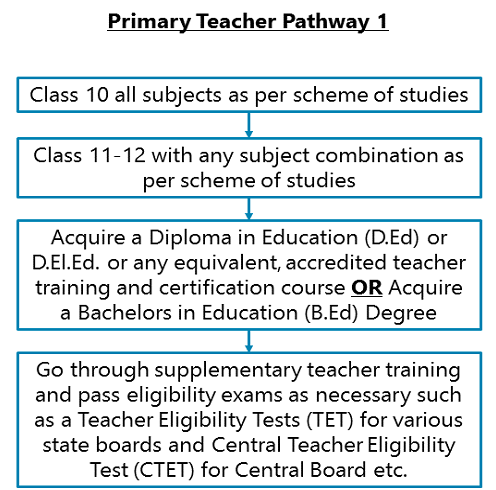
Once you are done with Higher Secondary Schooling you can acquire a Diploma Qualification in Education (D.Ed) or Elementary Education (D.El.Ed), or equivalent qualification such as BTC (Basic Training Certificate), PTC (Primary Teachers Certificate), ETE (Elementary Teacher Education), NTT (Nursery Teacher Training), TTC (Teachers Training Certificate) and JBT (Junior Basic Training). Alternatively, you can acquire a Bachelor’s degree in education for similar eligibility but more potential flexibility (for teaching middle/secondary school level if necessary). You may need to go through additional teacher training and preparation in order to clear eligibility exams such as Teacher Eligibility Exam (TET) for various state boards and Central Teacher Eligibility Exam (CTET) for the central boards etc. which is a desirable qualification and mandatory for government recruitment.
Required Qualification & Competencies
School
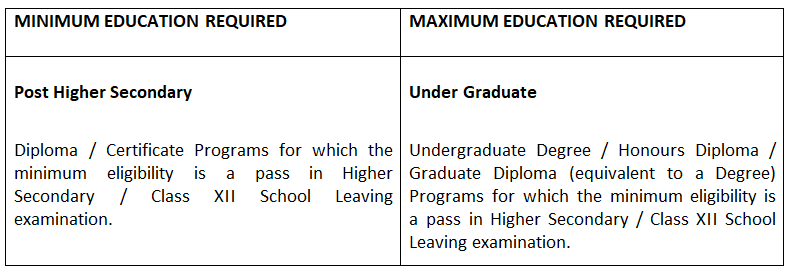
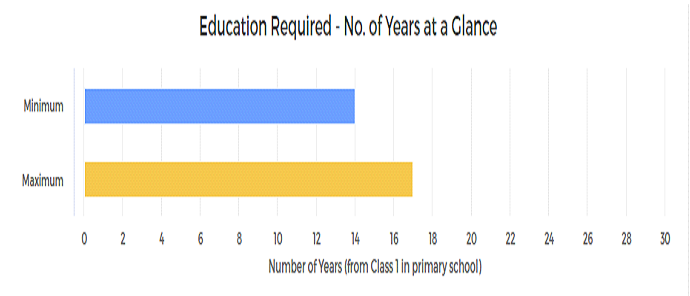
You can complete Class 10, Class 11 and 12 with any combination of subjects.
Undergraduate
You can either choose to complete your graduation in any subject you like or you can choose to do training courses / certifications like Diploma in Education (D.Ed) / Diploma in Elementary Education (D.El.Ed.) / Certificate in Primary Teaching (CPT) / Teachers Training Certificate (TTC), etc., based on your aspirations and the educational requirements of your State for recruitment of primary teachers.
COMPETENCIES REQUIRED
Occupational Interests:
1. Social - You should have interests for Social Occupations. Social occupations involve helping or assisting others; these involve working with and communicating with people to provide various services; these may involve educating and advising others.
2. Artistic - You should have interests for Artistic Occupations. Artistic occupations mostly involve working with creative ideas, art, and designs. These occupations involve abstract or conceptual thinking, creative self-expression and often do not follow any set processes or rules for getting things done.
3. Conventional - You should have interests for Conventional Occupations. Conventional occupations involve repetitive and routine tasks as well as fixed processes or procedures for getting things done. These occupations involve working more with data, systems, and procedures and less with ideas or creativity.
Personality traits
1. You are always or mostly organised in your day-to-day life and activities.
2. You are always or mostly careful about your actions and behaviour.
3. You are always or mostly disciplined in your action and behaviour.
4. You are always or mostly a soft-hearted person.
5. You are always or mostly caring, supportive, sympathetic and kind to others.
6. You are always or mostly helpful to others.
Skills:
1. Instruction: Skills in training others how to do something.
2. Teaching: Skills in teaching and educating others about various academic and applied subjects across different academic fields.
3. Active Listening: Giving full attention to what other people are saying, understanding the points being made by others, asking questions, etc.
4. Critical Thinking: Skills in the analysis of complex situations, using logic and reasoning to understand the situations and take appropriate actions or make interpretations and inferences.
5. Reading Comprehension: Skills in understanding written sentences and paragraphs in work related documents.
6. Time Management: Skills in prioritizing work, managing time effectively.
7. Problem Solving: Skills in analysis and understanding of problems, evaluating various options to solve the problems and using the best option to solve the problems.
Knowledge:
1. Education and Training: Knowledge of various principles and methods of developing training or teaching curriculum, the design of instructional methods, developing course materials, teaching and giving instruction individuals and groups.
2. English Language: Knowledge about English grammar, words, spelling, sentence construction, using English to communicate with others, reading in English, etc.
3. Mathematics: Knowledge of arithmetic, algebra, geometry, calculus, trigonometry, statistics, and other mathematical disciplines and their applications.
4. History and Archaeology: Knowledge of historical events and their causes, historical evidence, interpretations of the learning from historical events, influences of historical events on civilizations and cultures.
5. Clerical: Knowledge of various clerical tasks and procedures such as handling emails and phone calls, filling up forms, data entry, managing files, managing records, maintaining information databases, stenography, scheduling appointments, and other office procedures and general administrative tasks.
Career - Job Opportunities & Profiles
You will find a job as a Primary Teacher in a Government or privately run primary/ secondary school (in the primary section). Additionally, you may also teach students at their homes, at your own home or teaching facility or teach online.
Work environment
You will primarily work in a typical school environment, that is, in classrooms, and teaching staff rooms. You will have regular working days (Monday to Friday, and sometimes on Saturdays) and you will have to follow strict routines and non-negotiable deadlines. Also, since you’ll be dealing with very young children, your work environment will often get noisy and stressful. Your work will also be challenging at times when you have to discipline a classroom full of students.
CAREER GROWTH
A primary teacher can become a senior teacher and then after 12-15 years of experience in teaching, she can become a teacher-in-charge or vice principal or principal of a primary school or the primary section of a secondary school.
Salary Offered
1. In a privately managed school, you may get an average monthly salary package ranging between Rs. 10,000 - 18,000.
2. In a Government school, teachers get an average monthly salary package of around Rs. 14,000 - 35,000.
3. Senior level teachers may look forward to earning anywhere between Rs. 20,000 - 40,000 per month.
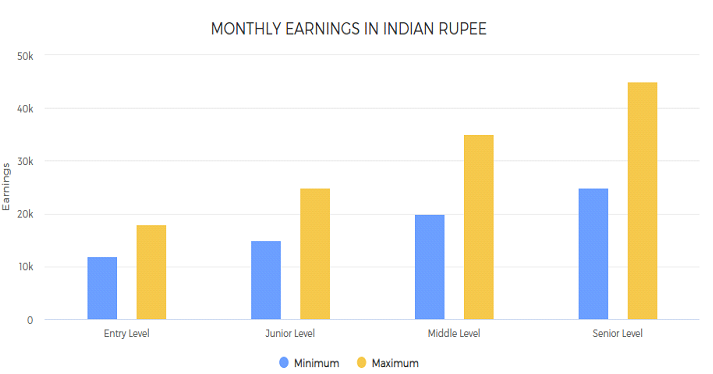
MONTHLY EARNINGS IN INDIAN RUPEE
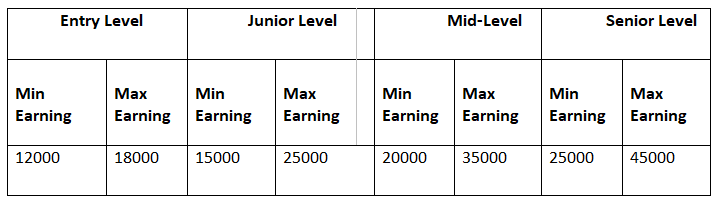
Work Activities
1. Organizing, Planning, and Prioritising Work — You have to develop specific goals and plans in order to streamline your work and accomplish your goals.
2. Getting Information — You will need to be observant to receive, and otherwise obtain information from all relevant sources.
3. Establishing and Maintaining Interpersonal Relationships — You will need to develop constructive and cooperative working relationships and maintain them over time.
4. Training and Teaching Others — You will need to identify the educational needs of others and develop methods for teaching or instructing others.
5. Updating and Using Relevant Knowledge — You will keep up-to-date technically and apply new knowledge to your job.
6. Making Decisions and Solving Problems — You will analyze information and evaluate results to choose the best solution in order to solve problems.
7. Documenting/Recording Information — You will have to enter, transcribe, record, store, or maintain information in written or electronic form.
8. Performing Administrative Activities — Your job will require you to perform day-to-day administrative tasks such as maintaining information files and processing paperwork.
Future Prospects
According to an IBEF (India Brand Equity Foundation) report, India has nearly 8,08,802 recognized primary schools spread across the country. Today, nearly 99% of the rural population has access to a primary school within 1km. This number is increasing every year thanks to the Right to Education Act of 2009 which made schooling a fundamental right and mandatory requirement for every child in the country. As the primary schooling infrastructure continues to expand, the demand for qualified primary teachers is also going to increase in the near future.
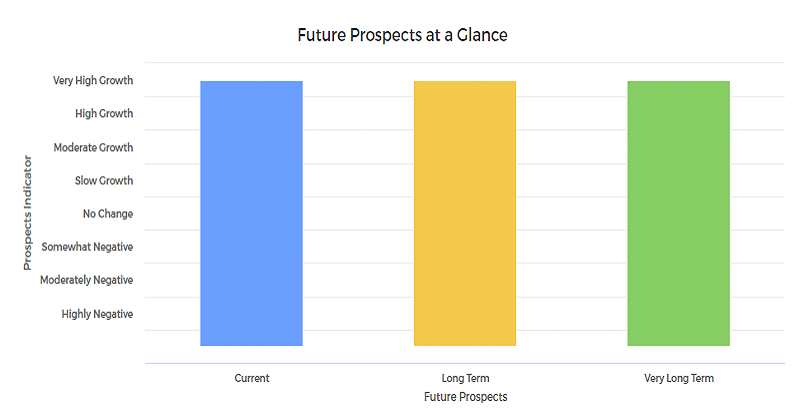
FUTURE PROSPECTS AT A GLANCE



