

Physicist
Entry Level Qualification
Class Graduate
Career Fields
Mathematics & Science
For Specially Abled


Career Entrance Exam
About Career
PARTICULARS | DESCRIPTION |
Name | Physicist |
Purpose | Solve Complex Mathematical Problems |
Career Field | Mathematics & Science |
Required Entrance Exam | No Entrance Exam |
Average Salary | 300000 - 500000 Rs. Per Year |
Companies For You | Space Organisations like ISRO, Research Institutions & laboratories & Many More |
Who is Eligible | Graduate |
As a Physicist, you will be involved in studies and research in Physics. Depending upon your interests, qualifications and experience, you may work in any one or more of the following four roles:
Theoretical Physicist: As a Theoretical Physicist you will use Mathematics to develop explanations of natural phenomena, explanations of various phenomena of the universe, or explanations of the experimental data generated by an Experimental or Computational Physicist; you will formulate new hypothesis and prove the hypothesis mathematically to develop new theories. For example, Theoretical Physicists propose that particles, which make atoms, are actually made of strings. This has been proven theoretically but not experimentally yet.
Experimental Physicist and Applied Physicist: As an Experimental Physicist, you will work in laboratories and seek to test new hypotheses and theories developed by Theoretical Physicists. If you are in Applied Physics, you will research and develop various applications using principles and theories of Physics. Examples: Experimental Physicists may work with the CERN (the European organisation for nuclear research) and prove the existance of particles like Boson. Applied Physicists may develop a new music technology by applying the principles of Acoustics.
Computational Physicist: As a Computational Physicist, you will develop various algorithms and computational processes to analyse and interpret experimental or observational data developed by Experimental Physicists. You will also simulate experiments that are not possible in labs by computer programming.
Key roles and responsibilities
As a Physicist, depending on your field of specialisation, you would have the following roles and responsibilities:.
1. As a Physicist, you will develop scientific theories that would explain the natural physical phenomena like gravitation, magnetism, thermodynamics, etc.
2. You will run different kinds of experiments to test theories developed by you or other physicists.
3. You will solve complex mathematical problems, analyse a lot of data and evaluate data using the software.
4. Run data simulation on a computer to analyse and interpret data.
5. You will use mathematical tools to transform the physical problem into an equation.
6. You will write a proposal to acquire funding for your projects or experiments.
7. You will develop new scientific equipment.
8. Write scientific papers for your new experimental data and results so that other physicists can use it.
Career Entry Pathway
Class 10 all subjects as per scheme of studies– Class 11-12 Physics, Chemistry and Mathematics along with any other subject as per scheme of studies– UG in Physics (Honours or specialisation in Physics is an advantage) – PG in Physics – Ph.D. in Physics
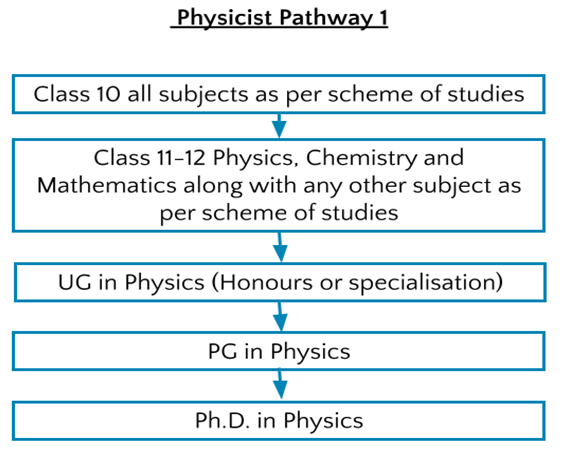
After Class 11-12 Physics, Chemistry and Mathematics along with any other subject as per scheme of studies, you can study science stream with Physics, Chemistry & Mathematics in your higher secondary school and then study for an undergraduate degree in Physics (Honours or specialisation in Physics is an advantage) followed by a master’s degree in Science discipline in Physics. After a Master’s Degree, you can take a Ph.D. in Physics.
Class 10 all subjects as per scheme of studies– Class 11-12 Physics, Chemistry and Mathematics along with any other subject as per scheme of studies– UG in Physics (Honours or specialisation in Physics is an advantage) – PG in Physics
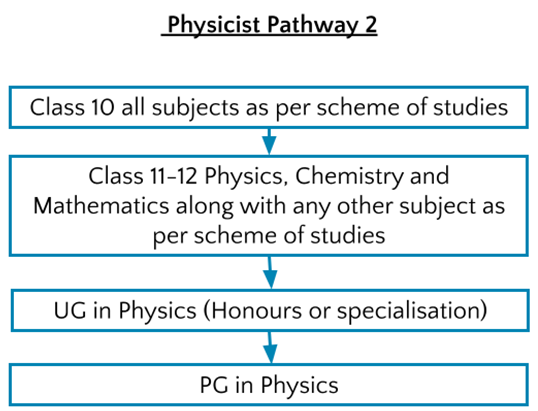
After Class 11-12 Physics, Chemistry and Mathematics along with any other subject as per scheme of studies, you can study science stream with Physics, Chemistry & Mathematics in your higher secondary school and then study for an undergraduate degree in Physics (Honours or specialisation in Physics is an advantage) followed by a master’s degree in Science stream in Physics.
Class 10 all subjects as per scheme of studies– Class 11-12 Physics, Chemistry and Mathematics along with any other subject as per scheme of studies– UG in Engineering Physics – PG in Engineering Physics – Ph.D. in Physics
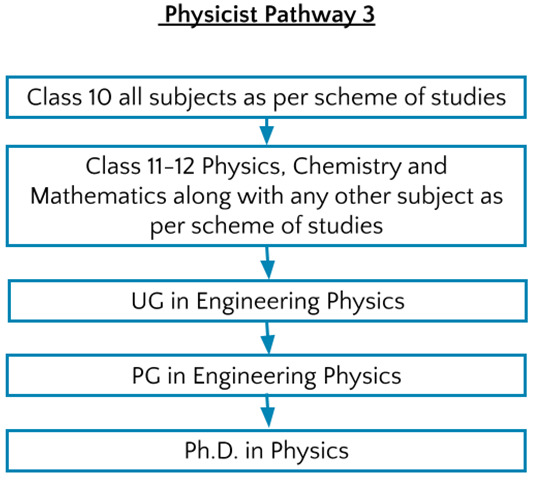
After Class 11-12 Physics, Chemistry and Mathematics along with any other subject as per scheme of studies, you can study science stream with Physics, Chemistry & Mathematics in your higher secondary school and then study for an engineering degree in Engineering Physics followed by a master’s degree in Engineering Physics. After a Master’s Degree, you can take a Ph.D. in Physics.
Class 10 all subjects as per scheme of studies– Class 11-12 Physics, Chemistry and Mathematics along with any other subject as per scheme of studies– UG in Engineering Physics – PG in Engineering Physics
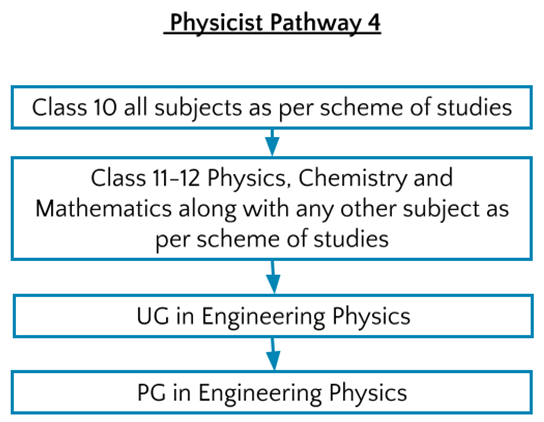
After Class 11-12 Physics, Chemistry and Mathematics along with any other subject as per scheme of studies, you can study science stream with Physics, Chemistry & Mathematics in your higher secondary school and then study for an engineering degree in Engineering Physics followed by a master’s degree in Engineering Physics.
Required Qualification & Competencies
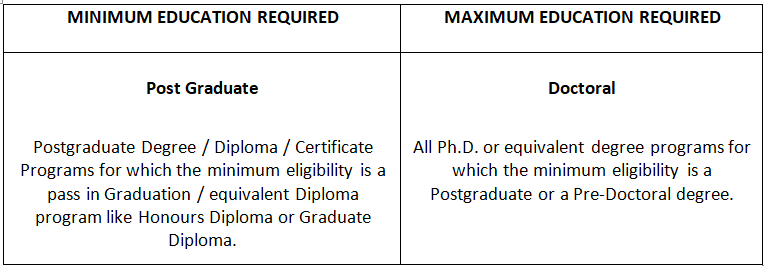
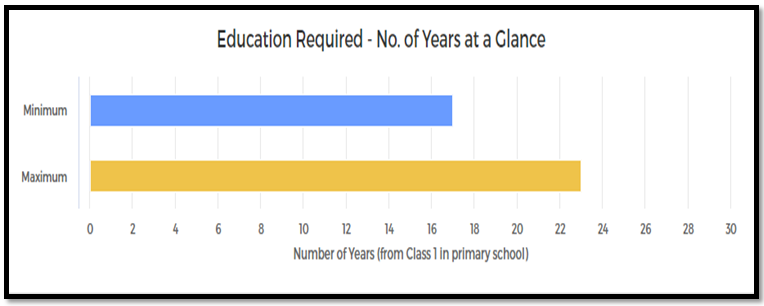
Undergraduate studies after school
To become a physicist, you should complete your schooling with Physics, Chemistry and Mathematics and join for an undergraduate course of Bachelor of Science in Physics with any combination of Mathematics Computer Science Chemistry Statistics Geology Geography. The best option would be to keep a combination of Physics, Chemistry and Mathematics.
You can also study Engineering Physics as a B.E. or B.Tech. Course.
Post Graduate studies
After finishing B.Sc. or B.Sc. (Hons), you can take the post graduate course in Physics or Engineering Physics.
Doctoral Studies
The physicist is a specialised scientist, and thus research becomes an important part of the pathway. Thus, after completing Post Graduate Studies, you can choose to take a course of Ph.D. in Physics.
Compentencies Required
You should have the following occupational interests:
1. Investigative - You should have interests for Investigative Occupations. Investigative occupations involve working with ideas and quite a lot of thinking, often abstract or conceptual thinking. These involve learning about facts and figures; involve the use of data analysis, assessment of situations, decision making and problem-solving.
2. Realistic - You should have interests for Realistic Occupations. Realistic occupations involve more practical and hands-on activities than paperwork or office work. Realistic occupations often involve physical activities for getting things done using various tools and equipment.
Following personality attributes are required:
1. You are always or mostly organised in your day-to-day life and activities.
2. You are always or mostly disciplined in your action and behaviour.
3. You are always practical or in most situations.
4. You are always or mostly care about your actions and behaviour.
You should have the following skills and knowledge:
1. Reading Comprehension - Skills in understanding written sentences and paragraphs in work related documents.
2. Critical Thinking - Skills in the analysis of complex situations, using logic and reasoning to understand the situations and take appropriate actions or make interpretations and inferences.
3. Problem Solving - Skills in analysis and understanding of problems, evaluating various options to solve the problems and using the best option to solve the problems.
4. Scientific - Skills in using various scientific rules and methods to get things done or solve problems.
5. Computers - Knowledge of computer software, computer programming, computer networks, computer and mobile applications.
6. Mathematics - Knowledge of arithmetic, algebra, geometry, calculus, trigonometry, statistics, and other mathematical disciplines and their applications.
7. Physical Science - Knowledge of physical principles, laws, their interrelationships, and applications to understand fluid, material, earth, ocean, atmosphere, and space dynamics, as well as mechanical, electrical, atomic and subatomic structures, properties and processes.
You should have the following aptitudes and abilities:
1. Oral Comprehension - The ability to listen to and understand information and ideas presented through spoken words and sentences.
2. Written Comprehension - The ability to read and understand information and ideas presented in writing.
3. Mathematical Reasoning - The ability to choose the right mathematical methods or formulas to solve a problem.
4. Numerical Reasoning - The ability to add, subtract, multiply, divide, and perform other basic numerical calculations correctly.
Career - Job Opportunities & Profiles
1. As a physicist, there are three major career opportunities for you - academic institutes, research institutions and private industries
2. Most of the universities and college will hire you as a Physics teacher at the position of Junior Professor or Assistant Professor. If you are into research, then you will be hired at the position of Research Associate/Research Fellow depending upon your qualifications.
3. Research institutions will hire you as a Scientist/Scientist Officer.
4. Private Industries will hire you are a Research Scientist, Technical Consultant, etc.
You can find job opportunities at the following facilities:
1. Government defence department like DRDO in India.
2. Space organisations like ISRO
3. Private space organisations
4. Nuclear Plants and Research institutions like BARC in India.
5. Institutes of scientific research like IISc, IIA, RRI, TIFR, etc.
6. Physics department of all IITs and Engineering colleges.
7. University and Colleges which offer courses in Physics.
8. Leading equipment, vehicles, etc. manufacturing industries like Tata, Hyundai, Larson & Turbo, etc.
9. Research institutions and laboratories.
Work Environment
You would be required to spend most of your working time in laboratories, while most of them will be small and safe, if you work in nuclear labs, they will be large along with higher risk. While in office, you would spend most of the time in analysing your work, working to raise funds, discussing work with other scientists, etc. Most of the work will need patience as experiments and work tend to take time to deliver results.
Specialisation Tracks In This Career
Applied Physicist
As an Applied Physicist, you will solve different engineering problems by developing new technologies. You would not develop new equipment like an engineer, rather guide them with new technological advancements. Like you might develop a new technology out of the laser, that engineers can use to develop a new medical instrument.
Biophysicist
Biophysicists work to apply principles of Physics and Biology to develop insights that can be used to overcome diseases, eradicate hunger, improve lifestyle, create renewable energy sources, apply new technology in medical science, etc.
Computational Physicist
Computational Physicists specialise in solving complex quantitative problems in Physics and develop algorithms or computational models for analysis and interpretation of experimental and observation data. They do not develop or solve new theories; rather they analyse the data to prove a theory or an observation. For example, they can use observational data from various sources to develop an image of the black hole. So, they help another physicist, complete their work through computational skills.
Condensed Matter Physicist
Condensed Matter Physicists work on semiconductors, transistors, laser technology, nanotechnology while understanding the physical properties of matter like state (solid, liquid, gas), thermal properties, electric properties, density, etc.
Material Physicist
Material Physicists study and analyse physical properties of various materials to develop new materials, develop new applications of an existing material, etc.
Space Physicist
Space Physicists study and research on various physical phenomenon of the outer space. Their work help scientists and engineers develop rockets, propulsion systems, rocket fuels, space probes, etc.
Medical Physicist
Medical Physicists work towards improving the quality, safety, and cost-effective healthcare services through services that are patient-oriented and beneficial for patients. They use the concepts and theories of physics into the theoretical and practical aspect of medicine. In the hospital, they work in diagnostic and interventional radiology and radiation oncology departments.
Physicist (Acoustics)
Physicists (Acoustics) specialise in the design, analysis, and control of sound and sound waves. They work on technologies, designs and spaces to reduce unwanted noise (called noise control), developing medicinal technologies like ultrasound, designing concert halls, creating airports and railway station announcement systems, etc.
Career Growth
1. Career growth in university and college states from Assistant Professor and then Associate Professor, Professor and Professor Emeritus, Professors can also get administrative positions such as Director/Dean/Vice Chancellor, etc
2. If you are hired as a research associate, then you will go on to become a Doctoral Research Fellow, then Post-Doctoral Research Fellow and then Scientist in Progressive Grades.
3. Research institutions will hire you as a scientist/scientist officer with the lowest grade and the grade changes from low to high. In India, grades are “Scientist “C” as the joining level and then D, E, F, G, H and finally DS. A senior level scientist can also get into administrative positions like Principal Scientist, Assistant Director, Deputy Director, Director, etc
4. If you join a private organisation as a research scientist, then you will move to senior research scientist and principal scientist with work experience.
Salary Offered
1. At the entry level, you can join as a research associate with a basic salary of Rs. 25,000 to 30,000 per month. As a doctoral research fellow (junior research fellow) you would be earning around Rs. 35,000 to 38,000 per month. At the entry level, as a Scientist (grade SD) you would be earning around Rs. 80,000 to 100,000 per month. As an assistant professor, you would be earning anything between Rs. 65,000 to 70,000 per month. All these salaries are inclusive of some allowances.
2. At the junior level with a work experience of 6-8 years, you would be earning anything between Rs. 1, 20,000 to 1, 40,000 per month.
3. At the middle level with an experience of 10-12 years, you would be earning anything between Rs. 1,40,000 1,90,000 per month as a scientist and Rs. 1,20,000 to 1,60,000 as an associate professor.
4. At the senior level of over 15 years of work experience, you would be earning anything between Rs. 1,60,000 to 2,20,000 per month as a professor and Rs. 2,10,000 to 2,50,000 per month as a Scientist.
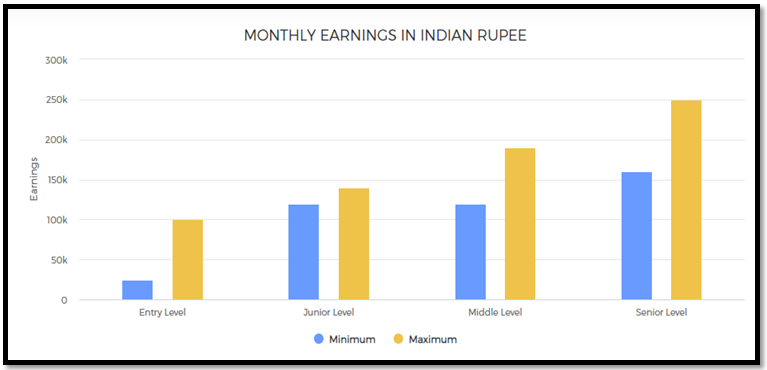
Monthly Earnings In Indian Rupee
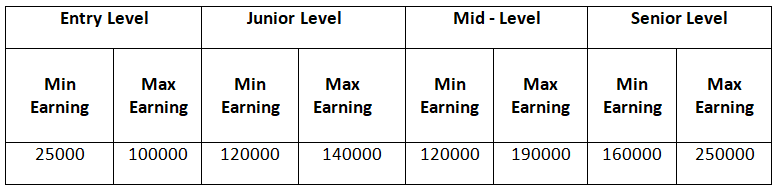
1. Entry level: 0 - 2 years of work experience
2. Junior Level: From 1 to 12 years of work experience
3. Mid-Level: From 5 to 20+ years of work experience
4. Senior Level: From 10 to 25+ years of work experience (there could be exceptions in some high-end technical, financial, engineering, creative, management, sports, and other careers; also in the near future, people will reach these levels much faster in many careers and in some careers, these levels will have no meaning as those careers will be completely tech skill driven such as even now, there is almost no level in a Cyber Security Expert’s job)
Work Activities
As Physicist, you might be involved in various applied and theocratical areas of Physics. In these areas, you might be involved in different activities such as:
1. Working with computers, programming and performing technical tasks - Using computers and computer systems, both hardware and software for programming, developing software and hardware, developing computer applications, systems, and networks; developing mobile applications.
2. Creative thinking - Developing new ideas, concepts, innovative solutions to problems, newer ways of getting things done, designing products and services, creating work of art and craft, etc.
3. Getting information & learning - Observing, hearing, reading, using computers, or otherwise obtaining information and learning from it.
4. Information processing - Searching, compiling, tabulating, calculating, auditing, verifying or otherwise dealing with information processing including data entry, transcription, recording, storing and maintaining databases.
Future Prospects
Most of the jobs are in research institutions and colleges are quite stagnant as they have a fixed career progression path, especially in government institutions and colleges. The scientists' jobs are not many, and even with a great increase in percentage per annum, the overall scope will be still be limited and only for the very best students. However, in industries, with the competition growing with cutting edge technologies, many corporate Research & Development departments are looking for a Physicist. So, if you have the right skills and knowledge, you may find yourself working in some Research & Development team of big industries.
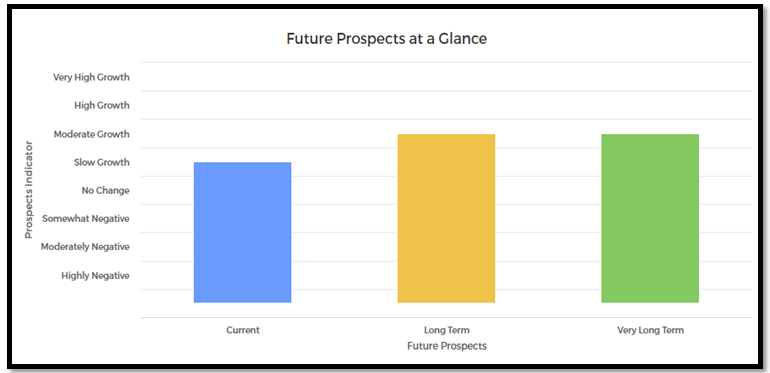
Future Prospects At a Glance



