

Political Analyst
Entry Level Qualification
Class Graduate
Career Fields
Humanities, Liberals Arts & Social Science
For Specially Abled


 ,
,
About Career
PARTICULARS | DESCRIPTION |
Name | Political Analyst |
Purpose | Analyze Political Trends |
Career Field | Humanities, Liberals Arts & Social Science |
Required Entrance Exam | No Entrance Exam |
Average Salary | 100000 - 200000 Rs. Per Year |
Companies For You | The Times of India, NDTV, The Hindu.& Many More |
Who is Eligible | Graduate |
1. Political Analysts research and study about the various aspects involved in politics – such as how political systems are developed and how they work, the impacts of government policies, which factors influence political trends, how political parties conduct and mandate poll campaigns, what strategies they use to win elections, etc.
2. Political Analysts research and analyse government formation and actions, political ideologies, public policies, political trends, political behaviors, as well as global relations. They study, analyse, and interpret data such as various public documents on government policies and their outcomes, political literature, various documents of political parties and their actions, news reports, election results, public opinion surveys, and so on. Political Analysts report their findings and interpretation of the data to general public, to political parties, to governments, to university scholars and students, and to all other concerned group of people.
So, the important question one should ask is- where do Political Analysts work? Where does the research conducted by Political Analysts is needed?
Not only does the research conducted by Political Analysts help government organizations to advocate for specific policies, their research also impacts the decision making process for various policies and causes such as climate change, citizenship, healthcare, immigration and so on. With advanced apparatuses used in conducting in-depth market research in specific areas, Political Analysts can even modify or propose new policies to enhance the overall working of the system.
Political Analysts not only work with and for the government organizations, they work with:
1. Think tanks & policy research institutes: The researchers work on issues such as public health, education, urban development, democracy, security, and environment. Some examples of core research related areas are post-financial crisis in political economy; political theories in the contemporary political scenario; international relations amidst trade wars, etc.
2. Political parties: Political Analysts work with political parties; they work for the political parties in creating election campaigns, conducting research for evaluating the voter base, identifying the needs and demands of the society. They work along with political strategists, political scientists, political campaign managers and other professionals in understanding the political scenario. They research and study the effect of Political strategies, create political campaigns and make sure the party wins. Remember the political campaigning behind BJP’s 2015 majority win and AAP’s win in 2020 elections? Well IPAC- a political consultancy was behind both the major wins. Therefore, political analysts also work in political consultancies and campaign management firms.
3. Governments: Some Political Analysts work with governments of various countries and states. They advise the governments on various public policies, political strategies, election strategies, outcomes of public policy implementation, and on various other issues related to political and public policies.
4. Media houses/ news channels: Political Analysts also work with various media houses and news channels as Analysts, they conduct research and study political strategies; provide political opinion on various public policies and political decisions, etc. They work in media houses/news channels like Times Now or NDTV, as Analysts.
5. Universities: Some Political Analysts work at University departments or schools or centre which carry on political research and offer courses in Politics and related areas.
Key Roles And Responsibilities
As a Political Analyst, you would be engaged in one or more of the following key roles and responsibilities:
1. You will consult with and advise government officials, civic bodies, research agencies, the media, political parties, and others concerned with political issues.
2. You will evaluate programs and policies, and make related recommendations to institutions and organizations.
3. You will interpret and analyse policies, public issues, legislation, or the operations of governments, businesses, and organizations. Collect data from sources such as public opinion surveys and election results.
4. You will collect, analyse, and interpret data such as election results and public opinion surveys, reporting on findings, recommendations, and conclusions.
5. You will develop and test theories, using information from interviews, newspapers, periodicals, case law, historical papers, polls, or statistical sources.
6. You will evaluate the effects of policies and laws on government, businesses and people.
7. You will also be involved in disseminating (spreading information) research results through academic publications, written reports, or public presentations.
8. You will monitor current events, policy decisions and legislation changes.
9. You will also be involved in raising public awareness of important political and social issues.
Career Entry Pathway
Class 10 all subjects as per scheme of studies – Class 11-12 with any subject as per scheme of studies – Bachelor of Arts (B.A.) in Political Science / Politics/ related subject – Master of Arts in Political Science / Politics with specialization in Comparative Politics/ Political Economy/ International Relations/ Political Theory/ Public Administration/ Public Policy or similar - Start working as Intern or Trainee in a Think tanks or policy research institute/ political management & consultancy firms/ media & news channels / etc. – Work for 4-5 years in the relevant field – Become a Political Analyst
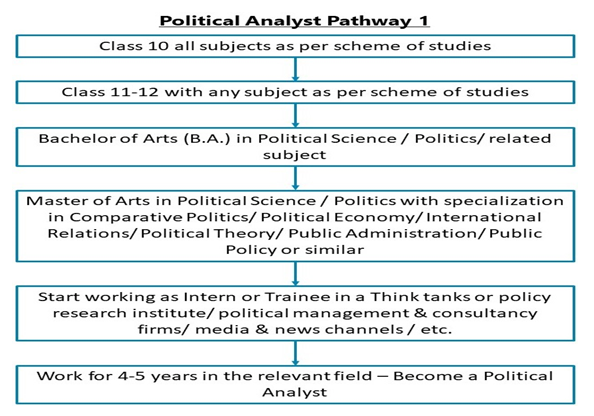
After completing Class 10 all subjects as per scheme of studies and Class 11-12 with any subject as per scheme of studies, you can go for a Bachelor of Arts (B.A.) in Political Science/ Politics/ related subject. After graduation you must pursue a Master of Arts in Political Science or Politics with specialization in Comparative Politics/ Political Economy/ International Relations/ Political Theory/ Public Administration/ Public Policy or similar field. After completing Master’s degree, you can start working as Intern or Trainee in a think tank or policy research institute, political management & consultancy firm, media & news channels etc. and gain a work experience of 4-5 years in the relevant field to become Political Analyst.
Class 10 all subjects as per scheme of studies – Class 11-12 with any subject as per scheme of studies – Bachelor of Arts (B.A.) in Political Science / Politics/ related subject – Master of Arts in Political Science / Politics with specialization in Comparative Politics/ Political Economy/ International Relations/ Political Theory/ Public Administration/ Public Policy or similar – Ph.D. in Political Science/ Politics/ related field
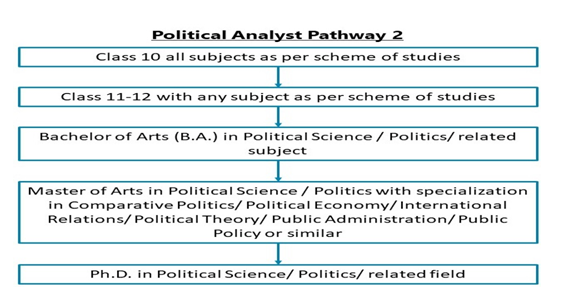
After completing Class 10 all subjects as per scheme of studies and Class 11-12 with any subject as per scheme of studies, you can go for a Bachelor of Arts (B.A.) in Political Science/ Politics/ related subject. After graduation you must pursue a Master of Arts in Political Science or Politics with specialization in Comparative Politics/ Political Economy/ International Relations/ Political Theory/ Public Administration/ Public Policy or similar field. After completing Master’s degree, you can do a Ph.D. and then star working in a think tank or policy research institute, a university, or with a political management and consultancy firm.
Class 10 all subjects as per scheme of studies – Class 11-12 with any subject as per scheme of studies – BJMC (Bachelor of Journalism and Communication)/ Bachelor in Journalism (B.J)/ Bachelor of Communication & Journalism (B.C.J)/ or similar field – Work at a media house or news channel and gain 10-12 years of work experience in political news coverage and political articles – Become a Political Analyst
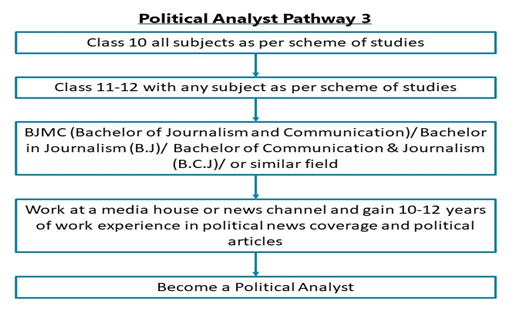
After completing Class 10 all subjects as per scheme of studies and Class 11-12 with any subject as per scheme of studies, you can go for a Bachelor of Journalism and Communication (BJMC)/ Bachelor in Journalism (B.J)/ Bachelor of Communication & Journalism (B.C.J)/ or a similar course. After graduation you can look for opportunities and work at a media houses or a news channel and gain 10-12 years of work experience in covering political news and writing political feature article. With this experience you can become Political Analyst or a Political Correspondent with a news channel, media company, etc.
Class 10 all subjects as per scheme of studies – Class 11-12 with any subject as per scheme of studies – Bachelor of Arts (Political Science/ Politics/ similar field) – LL.B. – Work for 4-5 years to gain experience - Become a Political Adviser or Analyst
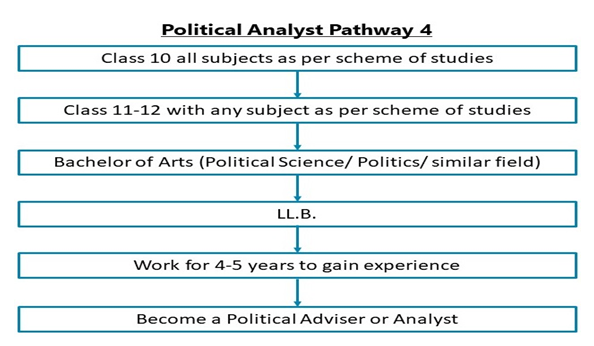
After completing Class 10 all subjects as per scheme of studies and Class 11-12 with any subject as per scheme of studies, you can first do a Bachelor’s degree in Political Science or Politics or in a similar field. Then you can do a LL.B. Post bachelor’s LL.B. courses are of 3-years duration in India and in some other countries LL.B. or similar Law courses are of 4-years duration. After your LL.B., you can get an opportunity with a political party/ organisation, political consulting company, or with a policy research institute or media company. This is a good pathway to find a good opportunity in politics.
Required Qualification & Competencies
You can study Class 11-12 with any subject as per scheme of studies. Then you can go for a Bachelor’s degree in Politics/ Political Science/ or in a related field. You can study in any of the following fields to become a Political Analyst either by the virtue of your educational qualifications and work experience or on the basis of your work experience alone. Remember that all these fields may not have Bachelor’s, Master’s and Doctoral level studies:
1. Comparative Politics
2. Conflict and Resolution
3. Defence& Security Studies (Political Science)
4. Global Politics
5. Governance and Regulatory Studies
6. International Policies
7. International Relations
8. Legislative Studies
9. Peace Studies
10. Political Geography
11. Political Marketing
12. Political Science
13. Politics
14. Public Affairs and Public Policy
15. Public Communication
16. Regional Studies
17. Security, Peace & Conflicts
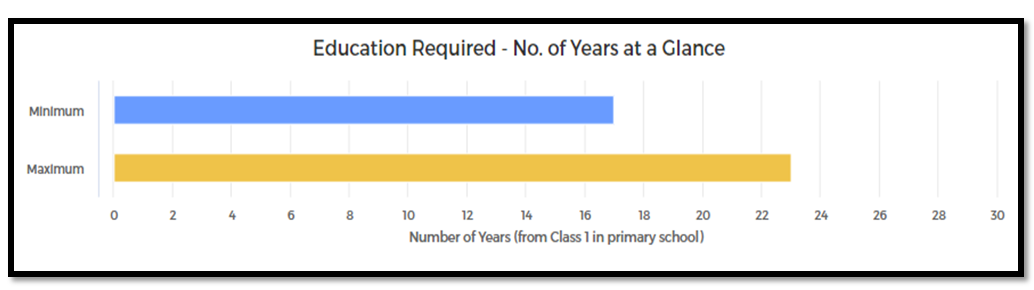
MINIMUM EDUCATION REQUIRED | MAXIMUM EDUCATION REQUIRED |
Post Graduate Postgraduate Degree / Diploma / Certificate Programs for which the minimum eligibility is a pass in Graduation / equivalent Diploma program like Honours Diploma or Graduate Diploma. | Post-Doctoral Post Ph.D. programs for which the minimum eligibility is a Doctoral degree. |
Competencies Required
Interest
1. Investigative: You should have interests for Investigative Occupations. Investigative occupations involve working with ideas and quite a lot of thinking, often abstract or conceptual thinking. These involve learning about facts and figures; involve use of data analysis, assessment of situations, decision making and problem solving.
2. Artistic: You should have interests for Artistic Occupations. Artistic occupations mostly involve working with creative ideas, art and designs. These occupations involve abstract or conceptual thinking, creative self-expression and often do not follow any set processes or rules for getting things done.
3. Social: You should have interests for Social Occupations. Social occupations involve helping or assisting others; these involve working with and communicating with people to provide various services; these may involve educating and advising others.
Knowledge
1. Politics & Governance: Knowledge about different political ideologies, political systems and processes, governance standards and processes, constitutions, etc.
2. Communications and Media: Knowledge of how different media such as print, television, radio and social media works; how to produce content such as news, articles, audio-visual programs, etc. for different media. This includes various ways to inform and entertain people via print, audio, audio-visual and online media.
3. Sociology: Knowledge of how humans behave in groups, how societies form, social norms, human relationships, social interactions, cultures and societal trends.
Skills
1. Active Listening: Giving full attention to what other people are saying, understanding the points being made by others, asking questions, etc.
2. Critical Thinking: Skills in analysis of complex situations, using of logic and reasoning to understand the situations and take appropriate actions or make interpretations and inferences.
3. Judgment and Decision Making: Skills in considering pros and cons of various decision alternatives; considering costs and benefits; taking appropriate and suitable decisions.
4. Public Speaking: Talking effectively to a large group of people or an audience or addressing public at large in different settings such as conferences, seminars, meetings, etc.
Abilities
1. Abstract Reasoning: The ability to understand ideas which are not expressed in words or numbers; the ability to understand concepts which are not clearly expressed verbally or otherwise.
2. Deductive Reasoning: The ability to apply general rules and common logic to specific problems to produce answers that are logical and make sense. For example, understanding the reasons behind an event or a situation using general rules and common logic.
3. Fluency of Ideas: The ability to come up with a number of ideas about a topic (the number of ideas is important, not their quality, correctness, or creativity).
4. Inductive Reasoning: The ability to combine pieces of information from various sources, concepts, and theories to form general rules or conclusions. For example, analyzing various events or situations to come out with a set of rules or conclusions.
5. Oral Comprehension: The ability to listen to and understand information and ideas presented through spoken words and sentences.
6. Oral Expression: The ability to communicate information and ideas in speaking so others will understand.
7. Problem Sensitivity: The ability to tell when something is wrong or is likely to go wrong. It does not involve solving the problem, only recognizing there is a problem.
8. Verbal Reasoning: The ability to think and reason with words; the ability to reason out ideas expressed in words.
9. Written Comprehension: The ability to read and understand information and ideas presented in writing.
10. Written Expression: The ability to communicate information and ideas in writing so others will understand.
Personality
1. You are always or mostly organised in your day-to-day life and activities.
2. You are always or mostly careful about your actions and behaviour.
3. You always prefer to experience new things and have new experiences or you mostly do.
4. You can always act independently or could do so in most situations.
5. You are always practical or in most situations.
Career - Job Opportunities & Profiles
As a Political Analyst, you may find work in any of the following organisation to begin with as an Intern/ Trainee/ Associate / Doctoral Fellow/ Post-Doctoral Fellow/ or similar positions:
1. Political management & consultancy and campaign management companies and private organizations such as: IPAC (Indian Political Action Committee), Political Edge, NPAC (National Political Action Committee), Rajneethi, JanSoch, LeadTech, C fore, PoltuBaaz, EthiCore, etc.


2. Indian think tanks, policy research institutes, polling and public relations firms such as: Research Foundation for Governance in India (RFGI), The Takshashila Institution, The Association for Democratic Reforms (ADR), Centre for Asian Strategic Studies-India (CASS-India), Centre for Civil Society (CCS), Pahle India Foundation (PIF), etc.
3. National and international media & news channels such as: Republic TV, NDTV India, ABP News Network, Zee News, India TV, CNN-News 18, NDTV 24x7, BBC World News, Fox News, Cable News Network (CNN), MSNBC, Al Jazeera, etc.




4. International think tanks, policy research institutes, polling and public relations firms and universities such as: SciencsPo, Jawaharlal Nehru University, Jadavpur University, Presidency University, Delhi University, Mumbai University, Center for Strategic and International Studies, McKinsey Global Institute, Carnegie Endowment for International Peace, American Enterprise Institute, Institute of economic affairs, etc.
5. Governments: Some country’s federal and state governments recruit Political Analysts as specialist consultants. These are generally fixed term appointments (say for 1/2/3 years) but with experience, you can expect to get your terms getting extended for a long period of time. With experience of working with a government, you can switch to other type of organisations are described above.
6. Political parties: Political parties in India and in several other countries recruit Political Analysts on fixed term contracts (like many governments do).
Specialisation Tracks In This Career
1. Political Analyst (Political Economy)
Political Analysts specialising in political economy research and study about the relations of production and trade with law, customs and the government. Their research also focuses on the distribution of national income and wealth. Political analysts also study how the political institutions, the political environment and the economic system influence each other.
2. Political Analyst (International Relations)
Political Analysts specializing in international relations research and study the interconnection of politics, economics and law at the global/international level. Their study focuses on the relationships between states, intergovernmental and transnational organizations.
3. Political Analyst (Public Policy)
Political analysts specializing in Public policy aka Policy analyst are involved in conducting research, analysing the current policies and influencing political and social events to raise public awareness on different issues.
4. Political Analyst (Campaigns and Elections)
Political Analysts involved in the campaigns and elections research and study political parties, understand party’s objectives and organize campaign strategies in order to make the parties win the elections. They study, research and identify the key strong foundations of the party and align the objectives by studying and analysing voter’s behaviour and political views.
Career Growth
1. In academics and some policy research institutes or centres, you may progress as follows:
After your Master’s, you join as a Doctoral Fellow – then after completion of Ph.D., as a Post-Doctoral Fellow / Assistant Professor. From an Assistant Professor, you can become an Associate Professor and then a Professor. Subsequently, you can become a Dean/ Director of an institute/ university department/ policy research institution.
2. In some policy research institutions, you progress as:
Post-Doctoral Fellow – Senior Analyst – Lead Analyst – Associate Director – Director – President
Depending upon your qualifications, you may also join directly as a Lead Analyst.
3. In other organisations:
In order to become a Political Analyst, you may have to work in various capacities. Initially you may start of as an Intern or Trainee in any media house or news channel and work in the research and writing space. You will then progress as Research Analyst or Research Lead in the same domain. After working for 3-4 years in the research field, you would then work as Political Analyst and after a few years of working in the Political consultancy firms and campaign management organizations you would further lead up to the position of Senior Political Analyst and then Political Research Scientist or you could work as political campaign manager.
Remember that position as Political Analyst may not exactly be of the same title in various political consultancy/campaign management/ think tanks, etc. Your job role would be mostly in the research field therefore in most companies/ private or government organizations you may take up the role of Associate Research Analyst/ Assistant Research Analyst/ Senior Research Analyst.
In US, in most think tanks and political consultancies, at an associate level, you may start working as a Political Adviser and may grow up to the position of Senior Political Officer or Research Director.
Salary Offered
1. At the Entry level or as an Intern/Trainee, you may expect a slightly lower stipend or salary, of around Rs. 8,000- 15,000 per month. If you begin as a Doctoral Fellow, you may earn about Rs. 35,000-38,000 per month during your Ph.D. As a Post-Doctoral Fellow, you may earn about Rs. 45,000-60,000 per month.
2. At the junior level, you may earn around, Rs. 25,000 – 70,000 per month.
3. At the middle level, you may earn around, Rs. 45,000 – 2,10,000 per month or even more.
4. At the senior level, you may earn around, Rs. 75,000 – 2,50,000 per month or even more.
Globally,
In USA,
1. At the entry level, you may earn around $1000 - $1,250 per month.
2. As a Political Analyst, at the junior level, you may earn around $1,500 – $5,500 per month.
3. As a Political Analyst, at Middle level, you may earn around $2, 500 – $8, 310 per month.
4. As a Political Analyst, at the senior level, you may earn around $3, 700 - $13, 500 per month.
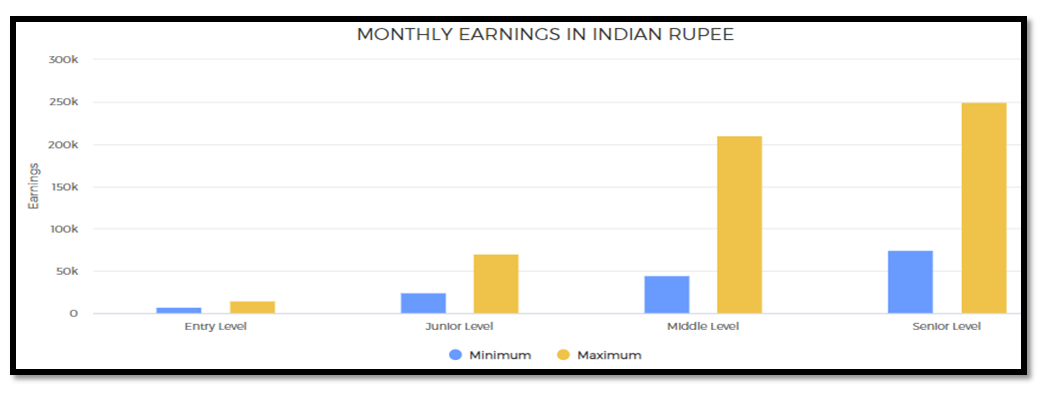
Monthly Earnings In Indian Rupee
Entry Level | Junior Level | Mid Level | Senior Level | ||||
Min Earning | Max Earning | Min Earning | Max Earning | Min Earning | Max Earning | Min Earning | Max Earning |
8000 | 15000 | 25000 | 70000 | 45000 | 210000 | 75000 | 25000 |
1. Entry level: 0 - 2 years of work experience
2. Junior Level: From 1 to 12 years of work experience
3. Mid Level: From 5 to 20+ years of work experience
4. Senior Level: From 10 to 25+ years of work experience (there could be exceptions in some high-end technical, financial, engineering, creative, management, sports, and other careers; also in the near future, people will reach these levels much faster in many careers and in some careers, these levels will have no meaning as those careers will be completely tech skill driven such as even now, there is almost no level in a Cyber Security Expert’s job)
Work Activities
1. Analyzing and interpreting data and information: Analysis of data and information to find facts, trends, reasons behind situations, etc.; interpretation of data to aid in decision making.
2. Communicating with co-workers and others: Communicating with people in writing, verbally or otherwise inside your workplace and various other people who have professional relationships with your place of work including vendors, government officials, etc. or with people at large.
3. Decision making and problem solving: Analysis of data and information; evaluation of alternative decisions and results of decisions; taking the right decisions and solving problems.
4. Developing and maintaining inter-personal relationships: Developing professional relationships with co-workers and others outside organizations’ and maintaining good relationships.
5. Getting Information and learning: Observing, hearing, reading, using computers, or otherwise obtaining information and learning from it.
6. Managing and supervising: Managing and supervising work of others; setting goals; giving instructions; monitoring work performance, etc.
7. Strategic planning: Developing visions and goals, developing strategies and action plans for achieving visions and goals.
8. Updating and using relevant knowledge: Keeping updated with the latest knowledge relevant to your fields of work and use of the relevant knowledge in getting things done.
9. Using computers for work: Using computers for day-to-day office work; using computer software for various applications in day-to-day professional work; entering data and process information; for writing.
10. Working in a team: Working in a team of people; developing team; maintaining professional relationships among team members.
Future Prospects
1. The scope of Political Science is yet untapped in Indian political market. But with the increase in transparency, thanks to the Internet and social media, political management is increasingly becoming complex. Winning an election is no longer just a door-to-door campaigns but a complex play of various factors and public communication through various media. Winning an election requires positive impacts of governance and public policy on the masses, political ideologies beneficial to people, systematic analysis of electorate and election trends, formulation of election strategies, and so on. Under this complex scenario, the demands for Political Analysts are rising.
2. Political organizations, campaign management firms and other political consultancies are gaining tremendous recognition in the Indian markets. India’s political scenario has undergone a paradigm shift due to the digital transformation and growth of social media. This change in Political communication has interlinked or bridged the gap between the masses and the individual.
3. While this change can also be witnessed in India and its neighbouring nation-states there are political consultancies, campaign management firms and research think tanks that are entering the realm of Indian Politics. It is expected that these organizations are set to increase employment opportunities in the field of political science.
4. According to the US Bureau of Labour Statistics, employment opportunities for political scientists are estimated to grow by up to 5% . There is an increase in demand for political science professionals in government as well as private organizations to analyse, research and assess the impact of public policies and political decisions, etc. Therefore a career as a Political Analyst or Political Scientist is going to be in high demand in the upcoming years as well.
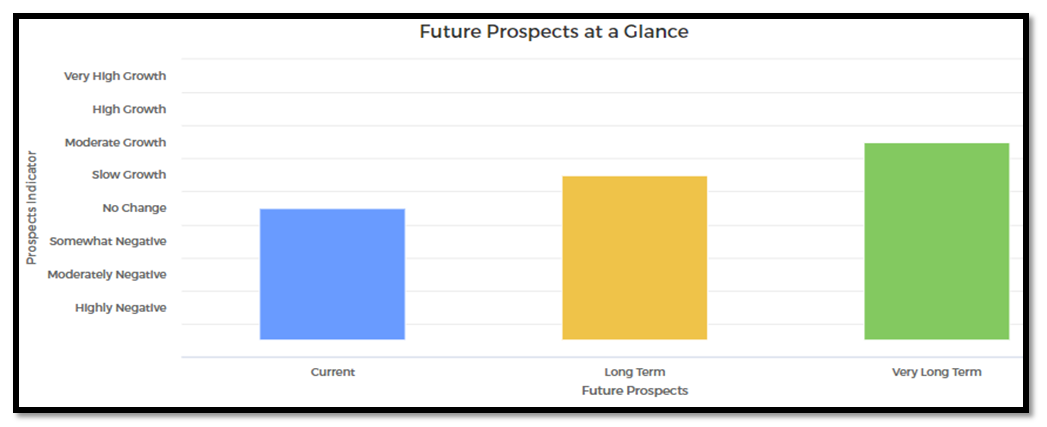
Future Prospects At A Glance
Current (0-1 year) | Long Term (2-5 year) | Very Long Term (6-10 years) |
No Change | Slow Growth | Moderate Growth |


