

Actor
Entry Level Qualification
Class 12
Career Fields
Performing Arts
For Specially Abled


Career Entrance Exam
About Career
As an actor, you depict a character given to you as per the demand of the script. You visualize, interpret and perform that character either for entertainment purpose or informational / educational purpose to the audience. You may work in films, theatres, television series, live events, theme parks, radios, operas, while performing on the stage or sometimes backstage producing voice notes or narration work for animated characters for movies or other electronic media. As an actor, you will learn various skills such as dancing, playing instruments, horse riding, martial arts, stunts etc. as per your role. Many actors get training to improve and develop their skills.
An actor brings life to the character by using their facial expressions, voice-overs, body languages while using proper costume and props under the guidance and support of a director. You will perform various roles such as comic role, serious role, action role etc. while living these roles in real.
However, it must be noted that you will be cast in a role on the basis of auditions given to the directors or producers
Key roles and responsibilities
As an actor, you will be responsible for fulfilling the following roles and responsibilities.
1. You will memorize your character’s lines and dialogues.
2. You will interpret the script and research about the character you are going to perform by reading the material or following the attributes of the person similar to the character.
3. You will collaborate with directors, producers, co-actors., and other crew members such as cameraman, dress makeup etc.
4. You will prepare for the auditions.
5. You will perform action stunts, comic roles for the motion pictures and television productions.
6. You will rehearse on and off camera with other actors and rehearse your solo performance while managing with costumes and props.
7. You will work under the director and seek their guidance and advice.
8. You may either play the role of the main character or supporting role.
9. You will prepare for live performances and productions.
10. At the theatre, you will be required to work at the stage while giving performances in front of the audience.
11. You will involve in promoting productions work through various plays or movies.
12. You will communicate the character to the audience using emotions, expressions, actions and influence them to see or feel like a real character.
13. You will attend the auditions and seminars related to improving your acting skills.
PARTICULARS | DESCRIPTION |
Name | Actor |
Purpose | Roles In Films, Television, Theater |
Career Field | Performing Arts |
Required Entrance Exam | No Entrance Exam |
Average Salary | 500 - 5000 Rs. Per Day |
Companies For You | studios, television, theatres, feature film & Many More |
Who is Eligible | Any One |
Career Entry Pathway
Class 10 all subjects as per scheme of studies – Class 11-12 with any subject as per scheme of studies – Certificate course in Theatre/Drama
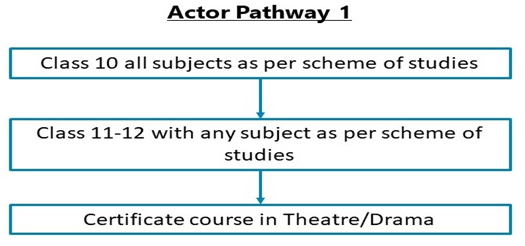
After your Class 10 all subjects as per scheme of studies pursue Class 11-12 with any subject as per scheme of studies. Then study for a short-term certificate course in theatre/drama. However, it must be noted that you can become an actor without having a specific degree or qualification provided you have enough talent or skills
Class 10 all subjects as per scheme of studies – Class 11-12 with any subject as per scheme of studies - Diploma Course in Performing Arts/Modelling
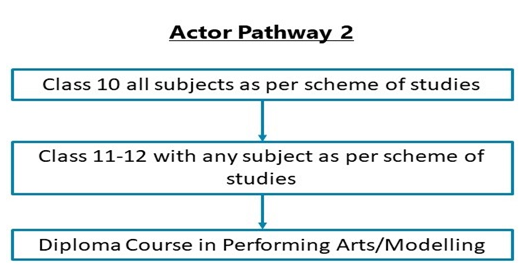
After your Class 10 all subjects as per scheme of studies pursue Class 11-12 with any subject as per scheme of studies. Then study for a Diploma Course in Performing Arts/Modelling from any arts or theatre school. However, it must be noted that you can become an actor without having a specific degree or qualification provided you have enough talent or skills.
Class 10 all subjects as per scheme of studies – Class 11-12 with any subject as per scheme of studies – UG in Theatre Arts/Drama/Acting and Performing/Radio and Television Broadcasting
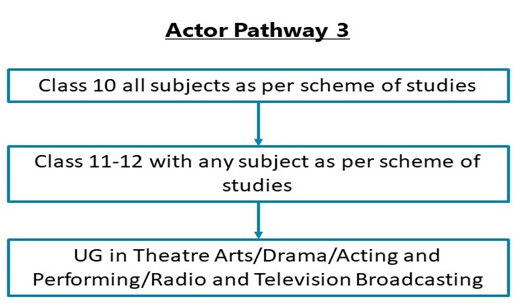
After your Class 10 all subjects as per scheme of studies pursue Class 11-12 with any subject as per scheme of studies. Then study for a Bachelor’s Degree in Theatre Arts/Drama/Acting and Performing/Radio and Television Broadcasting from any arts or vocational college/university. However, it must be noted that you can become an actor without having a specific degree or qualification provided you have enough talent or skills
Class 10 all subjects as per scheme of studies – Class 11-12 with any subject as per scheme of studies – UG in Theatre Arts/Drama/Acting and Performing/Radio and Television Broadcasting – PG in Theatre Arts/Drama/Acting and Performing/Radio and Television Broadcasting
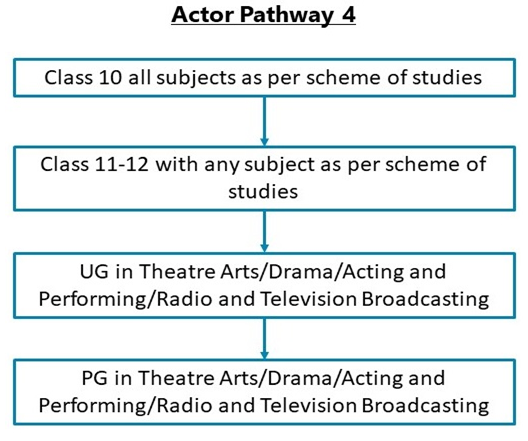
After your Class 10 all subjects as per scheme of studies pursue Class 11-12 with any subject as per scheme of studies. Then study for a Bachelor’s Degree in Theatre Arts/Drama/Acting and Performing/Radio and Television Broadcasting from any arts or vocational college/university. After that, you can go for a Master’s Degree in Theatre Arts/Drama/Acting and Performing/Radio and Television Broadcasting. However, it must be noted that you can become an actor without having a specific degree or qualification provided you have enough talent or skills
Class 10 all subjects as per scheme of studies – Class 11-12 with any subject as per scheme of studies – UG in any discipline– PG or Post Diploma in Theatre Arts/Drama/Acting and Performing
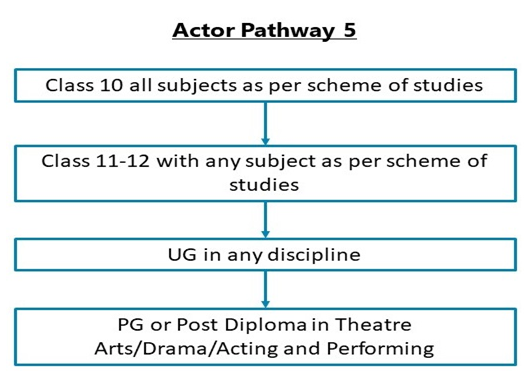
After your Class 10 all subjects as per scheme of studies pursue Class 11-12 with any subject as per scheme of studies. Then study for a Bachelor’s Degree in any discipline and then study for Post Graduate Degree or Post Diploma in Theatre Arts/Drama/Acting and Performing. However, it must be noted that you can become an actor without having a specific degree or qualification provided you have enough talent or skills.
Required Qualification & Competencies
To become an Actor, you can train yourself by doing a course in Acting right after your higher secondary school studies. You may also do an undergraduate degree in Performing Arts with a specialisation in Dramatics / Dramatic Arts or Theatre. There are options to do a Bachelor’s degree in Theatre in foreign universities.
Alternatively, you can do a Bachelor’s degree in any discipline and then do a Master’s degree or a Diploma in Theatre Art/ Dramatics / Dramatic Art / in a similar field. You can do a Master Degree or Diploma in Cinema/ Cinematic Art and concentrate in Acting. There are Diploma courses also in Acting.
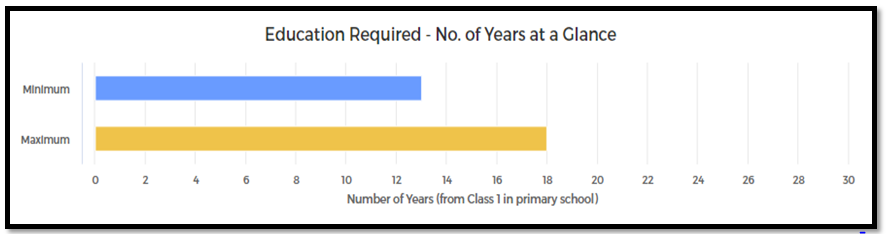
MINIMUM EDUCATION REQUIRED | MAXIMUM EDUCATION REQUIRED |
Post Higher Secondary | Post Graduate |
Compentencies Required
Interests
1. Artistic: You should have interests for Artistic Occupations. Artistic occupations mostly involve working with creative ideas, art and designs. These occupations involve abstract or conceptual thinking, creative self-expression and often do not follow any set processes or rules for getting things done.
2. Enterprising: You should have interests for Enterprising Occupations. Enterprising occupations involve taking initiatives, initiating actions, and planning to achieve goals, often business goals. These involve gathering resources and leading people to get things done. These require decision making, risk-taking and action orientation.
Abilities
1. Abstract Reasoning: The ability to understand ideas which are not expressed in words or numbers; the ability to understand concepts which are not clearly expressed verbally or otherwise.
2. Bodily-Kinaesthetic Intelligence: The ability to coordinate the movement of your arms, legs, and bodily motion; the ability to keep or regain your body balance when in an unstable position; the ability to quickly and repeatedly bend, stretch, twist, or reach out with your body, hands, arms, fingers, or legs.
3. Emotional Intelligence: The ability to understand your own and others' emotions and feelings; empathy for others; adjusting your behaviour or self-control and self-regulation according to others' emptions and situations.
4. Fluency of Ideas: The ability to come up with a number of ideas about a topic (the number of ideas is important, not their quality, correctness, or creativity).
5. Hearing Sensitivity: The ability to detect or tell the differences between sounds that vary in pitch and loudness.
6. Originality: The ability to come up with unusual or innovative ideas about a given topic or situation, or to develop creative ways to solve a problem.
7. Physical Stamina: The ability to exert yourself physically over long periods of time without getting winded or out of breath.
8. Selective Attention: The ability to concentrate on a task over a long period of time without being distracted.
Knowledge
Performing Arts: Knowledge about the theories and techniques required for producing various works of performing arts such as music, dance, drama, theatre, film, television series, etc.
Skills
1. Acting: Skills in acting in cinema, drama, theatre, commercial advertisements, etc.
2. Active Listening: Giving full attention to what other people are saying, understanding the points being made by others, asking questions, etc.
3. Judgment and Decision Making: Skills in considering pros and cons of various decision alternatives; considering costs and benefits; taking appropriate and suitable decisions.
Personality
1. You are always or mostly a soft-hearted person.
2. You are always imaginative or in most situations.
3. You always prefer to experience new things and have new experiences or you mostly do.
4. You can always act independently or could do so in most situations.
5. You trust others sometimes but not always.
6. You are helpful to others sometimes.
7. You are mostly impulsive in your action and behaviour.
Career - Job Opportunities & Profiles
1. As an actor, you will get various job opportunities at studios, television, theatres, feature film, radio channels, etc.
2. You can start your career as supporting roles in short movies or radio channels.
3. Some of you might go for the option of opening your private channels at social media such as YouTube videos.
4. Many television productions will hire you as a lead or supporting role actor.
5. In the film industry, you will get small roles at starting or may get bigger roles if you have a reference in the industry.
Work Environment
An actor does not have fixed working hours. They may be required to work at any time of day including evening, night, weekend or even on holidays as per the demand of the script. You are most likely to spend long hours at film/television set and in rehearsal studios. You may work in studios, television shows and at various locations working for a movie. You will often travel to many places and countries and may perform in unpleasant conditions such as bad weather, heavy costumes etc. This is a field where you will be required to do a lot of struggle and hard work while facing many challenges.
Career Growth
An actor moves forward inhis or her career based on experience and success. Once you get fame, nothing can stop you to reach the highest point of your career provided you do hard work to maintain that level.
1. As a junior artist or junior actor, you would become a senior actor after gaining experience.
2. A TV actor may get chance to work in films based on their talent and skills.
3. After many years of experience, a film actor may continue their journey as a Director/Producer.
4. Some of you might open their schools or colleges to teach acting and drama.
Salary Offered
There is no fixed salary for an actor, as it would depend on your skills and experience.
1. As a junior artist, working at the theatre would earn Rs. 500 to 5,000 per day. After gaining experience in this field you may earn anything between Rs. 5,000 to 10,000 per show.
2. At the initial stage of your career on TV, you may earn Rs. 2,000 to 10,000 per episode depending on your role. After gaining experience, you may earn anything between Rs. 40,000 to 1,00,000 per episode.
3. Short film actors or YouTubers may earn anything between Rs. 8,000 to 80,000 per show/video at the starting of their career. After getting success and experience you would earn anything between Rs. 10 lakhs to 50 lakhs or it may extend to crores.
4. A film actor at the starting of their career would earn anything between 1 crore to 10 crores. After getting success and fame you would earn anything between Rs. 25 crores to 100 crores or even more.
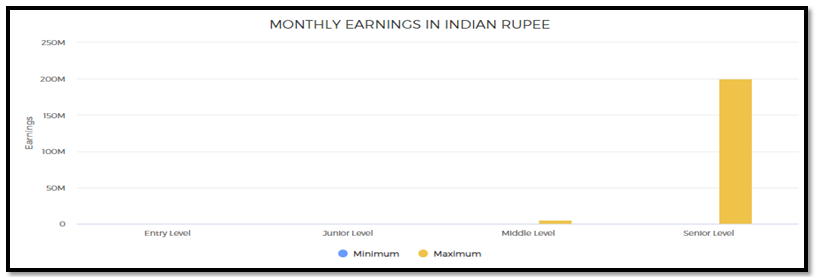
Monthly Earnings In Indian Rupee

1. Entry level: 0 - 2 years of work experience
2. Junior Level: From 1 to 12 years of work experience
3. Mid Level: From 5 to 20+ years of work experience
4. Senior Level: From 10 to 25+ years of work experience (there could be exceptions in some high-end technical, financial, engineering, creative, management, sports, and other careers; also in the near future, people will reach these levels much faster in many careers and in some careers, these levels will have no meaning as those careers will be completely tech skill driven such as even now, there is almost no level in a Cyber Security Expert’s job)
Work Activities
1. Communicating with co-workers and others: Communicating with people in writing, verbally or otherwise inside your workplace and various other people who have professional relationships with your place of work including vendors, government officials, etc. or with people at large.
2. Creative thinking: Developing new ideas, concepts, innovative solutions to problems, newer ways of getting things done, designing products and services, creating work of art and craft, etc.
3. Decision making and problem solving: Analysis of data and information; evaluation of alternative decisions and results of decisions; taking the right decisions and solving problems.
4. Getting Information and learning: Observing, hearing, reading, using computers, or otherwise obtaining information and learning from it.
5. Leading: Inspiring and motivating co-workers to work to achieve specific goals; enabling and facilitating others to perform tasks effectively; addressing issues and solving problems in order to help people perform well.
6. Organising, planning and prioritising tasks: Planning and organising tasks in order to achieve work goals; prioritising tasks to achieve goals and making the best use of the time available.
7. Performing for people: Performing various tasks for people to entertain them, help them, and assist them.
Future Prospects
Employment opportunities for an actor are expected to grow as the domestic film industry produces the most number of movies in the World. Also, with the fastest growing services of cable and satellite with increased usage of 3G and 4G along with portable devices, it would lead to the growth of the Television and Film industry. Other factors include rising of regional cinema, digitalization, growth of multiplexes, and increasing income of people would drive the growth of the entertainment industry and more opportunities for actors. Though, small and medium-sized theatres and performing arts companies might face a decline in demand.
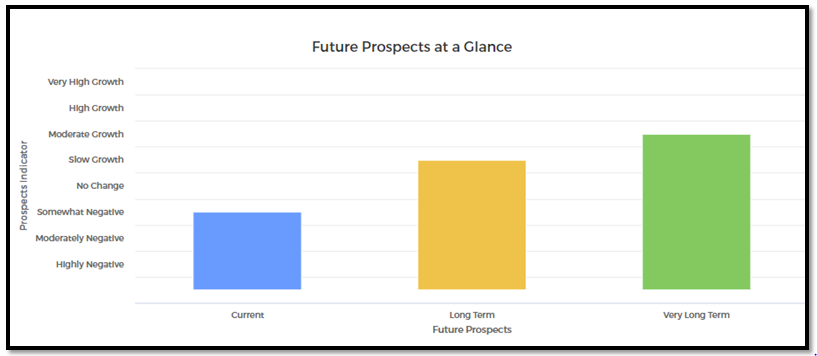
Future Prospects At a Glance



