
Group D Government Assistant
Entry Level Qualification
Class 10
Career Fields
Government & Defense Services
For Specially Abled


Career Entrance Exam
About Career
PARTICULARS | DESCRIPTION |
Name | Group D Government Assistant |
Purpose | Maintenance and Upkeep |
Career Field | Government & Defense Services |
Required Entrance Exam | RAILWAY GROUP D |
Average Salary | 200000 - 600000 Rs. Per Year |
Companies For You | Indian Railways, Ministry of Water Resources & Many More |
Who is Eligible | Class 10th Pass |
1. Group `D' posts (at Central Government, State Government, and Union Territory offices) are meant for carrying out routine duties such as those of gatemen, cleaners, porters, attendants, bearers, drivers, stewardess, printing assistants, caretakers, cooks, record keepers, watchmen, electricians, security guards, helpers, assistant stores officer, operators etc. in different government boards or establishments or directorates.
2. Group ‘D’ level roles exist in all government offices / ministries such as offices of District Judges / Sessions Judges or other courtrooms / Ministers and Ministerial departments, government offices, directorates, government research institutes, or other national / field organizations like ASI (Archaeological Survey of India), GSI (Geological Survey of India), National Surveying and Mapping Agency, BHEL (Bharat Heavy Electricals Limited), NTPC Ltd. (National Thermal Power Corporation Limited), ONGC (Oil and Natural Gas Corporation)etc. as well as all other public sector undertakings.
3. You may work as a Group D executive in different government departments like railways, irrigation departments, fire department, posts & telegraph, mining, electricity board, Central Excise, civil accounts service, printing and press, revenue services, defense estates, etc.
4. Following the advice of the 6th Pay Commission, except in Railways and some other universities/government offices, all other departments had abolished this nomenclature or category of Group ‘D’ services and had either merged it with Group C pay bands or classified it as MTS Group C posts. MTS stands for ‘Multi-Tasking Staff’ and have defined educational criteria for recruitment.
5. The 7th pay commission has, however, planned to reintroduce all Group D ranks in all departments/offices of the government. Also, the MTS level entry examinations still continue to exist for recruitment to Group D posts.
Functional Fields of Work
You will be associated with any one of the following or other cadres/fields of work depending on the operations conducted by your appointing authority or other special duty branches apart from these specific to your department such as if you are in mining or in railways or in Rajbhasha departments. Generally, remember, any employee can laterally transition to different cadres as well, after a minimum 3 years of service in any particular cadre and after clearing departmental exams, through Employment Exchange or Departmental Promotion Committees.
1. Security Cadre
The security staff is responsible for the maintenance, upkeep and securing the official compound day and night. Work hours are usually interchangeable with alternate individuals reporting on duty. They ensure proper checks against the entry of unauthorized persons, no unauthorized material comes in or goes out, arrange vigilant watches, prevent grazing and illegal cutting of grass and wood, etc.
2. Stores / Records
Store-cum-Record Keepers are responsible for handling classified as well known – classified official government or associated documents from time to time. They are the ones who control and manage stores including indenting/estimation/ monitoring of store requirements, equipment, furniture/field/ office stationery, etc., processing procurement of all items in stores, scrutiny in cases of loss, theft or fire, correspondence with senior management regarding all aspects of store and stock maintenance. They are also responsible for cooperating during the inspection of all stores intermittently.
3. Motor Transport Cadre
This cadre includes both MTD and mechanics. MTD is Motor Driver. Employees in this cadre drive government vehicles including in the field, maintain the vehicles in perfect working conditions at all the times, are able to locate faults and carry out minor fittings/drilling/soldering/repairs, able to change wheels / correctly inflate tyre, etc.
4. Refreshment, Assistance, Maintenance Cadre
Office/field/ work assistants, attendants, canteen staff (including coupon/counter clerks, cooks, salesmen, tea-coffee maker, halwai, and washmen), caretakers, gardeners, dispatch riders, etc. are included in this cadre. Dispatch Riders dispatch letters/files to out-station officers if required on motorcycles or by public transport etc. Assistants provide support for official work, carrying of files / other documents, photocopying, sending of FAX, arranging/preparing meeting rooms, etc.
5. Printing Cadre
The routine jobs include carrying out all the activities/processes pertaining to printing, ensuring proper packing of printed material, proper utilization of machines/material/ manpower, maintenance/minor repair of printing machines and equipment. For example, in the Government of India Presses, Government of India Textbook Presses, surveying organizations, etc.
6. Instrumentation, Laboratory and Technical Help Cadre
Monitoring, handling, moving, arranging, testing and repairing (only minor functional problems) all technical/scientific laboratory/field equipment or instruments are taken care of by posts in this cadre. Research / laboratory / work / field assistants and mechanical / electrical / electronics helpers are part of this cadre.
7. Ministerial Cadre
Officers / Office Superintendents / Assistants in different government directorates or ministerial offices, who prepare reports/returns, budget estimates, audit reports, handle cashing activities, and assist seniors in all kinds of administrative activities within official premises, are part of Ministerial Cadre.
8. Stenographic Cadre
Responsibilities include taking live dictations from officers, or in courtrooms, typing letters, attending/transferring phone calls, maintaining and preparing files/letters as required.
9. Library and Information Cadre
Responsibilities include supervision, management and overall charge of Libraries. Analyses of scientific requirements and processing procurement of all library books, their accounting and proper documentation, arrangement for annual verifications/recovery of library books are among the main duties of the trade.
10. Dispensing, Nursing and Care Cadre
This includes the pharmacists, staff nurses, nursing orderlies, attendants, dressers working in any government department or service boards. They attend patient cases, dress wounds, remove stitches, supply medicines to patients, maintain records of medicines, assist dispensary doctors or medical officers etc.
Key Roles and Responsibilities
As a group D employee, depending on your appointing authorities/departments, you will be engaged with one or more of the following roles and responsibilities: -
1. You will be assisting in routine office work like maintaining routine data, dispatch, etc. which may include basic entries on a computer and to maintain physical maintenance of records of your division.
2. You will be responsible for general cleanliness & upkeep of your section/unit which will include watch & ward duties, opening & closing of rooms, cleaning of rooms, dusting of furniture, equipment, instruments, cleaning of building, fixtures, upkeep of parks, lawns, potted plants, etc. or to guard (day & night) the official compound.
3. You will be carrying instruments/equipment/tents or other official items/devices required for field survey work including loading, unloading for transportation and ensuring their protection and safe handling.
4. You will maintain stock registers / dead stocks registers and ensure that it is maintained correctly and kept up-to-date. You will prepare reports and returns related to stores.
5. You should have a thorough knowledge about fire risks, precautions to be taken against fire and maintenance of first-aid fire appliances.
6. You may have to handle cash and execute all duties of a cashier assistant such as record keeping, daily balance verification / totaling, updating of registers and / or preparation of bills, data entry, and respective correspondence work.
7. You may have to take dictation from officers, type letters, attend/transfer phone calls, prepare tour programs, preparing letters/documents as required, etc.
Career Entry Pathway
Class 8 in school – apply for regional “Group D Class IV” recruitment exams
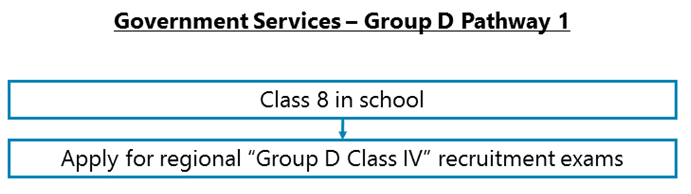
After completing Class 8 in school, you may try for some regional Group D recruitment exams. Remember, these are mostly regional and state government posts that may require you to have prior knowledge of local traditions, culture and daily practices apart from evaluation of your existing Class 8 level knowledge of English, Hindi, Science and Mathematics and current affairs. So it will be better if you are a resident of the state in which these exams are conducted.
Class 10 all subjects as per scheme of studies - Multi Tasking (Non-Technical) Staff Examination
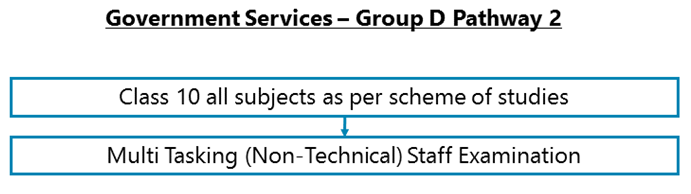
After completing Class 10, you can appear for Multi-Tasking (Non-Technical) Staff Examination conducted every year by SSC. This examination is for securing General Central Service Non-Gazetted, Non-Ministerial posts in various Ministries / Departments / Offices of the Government of India, in different States / Union Territories. Age of the candidates should be between 18 and 27 years. MTS category was introduced after Group D services were merged with Group C ones, pursuant to the advice of the 6th CPC. Hence, this exam recruits to erstwhile Group D posts as well.
Class 10 all subjects as per scheme of studies – SSC / RRB / RRC / NTPC or similar
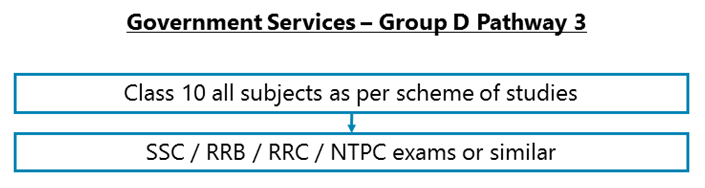
After completing Class 10, you can appear for SSC (Staff Selection Commission) / RRB (Railway Recruitment Board) / RRC (Railway Recruitment Cell) / NTPC (Non Technical Popular Categories) or similar independent Recruitment Boards exams such as of universities (NIOS, JIPMER or state universities), technical directorates, health departments, defense estates organization, state high courts or educational institutes etc.
Class 10 all subjects as per scheme of studies - ITI / apprenticeship / NAC (non-engineering trades) – SSC / RRB / RRC / NTPC or similar
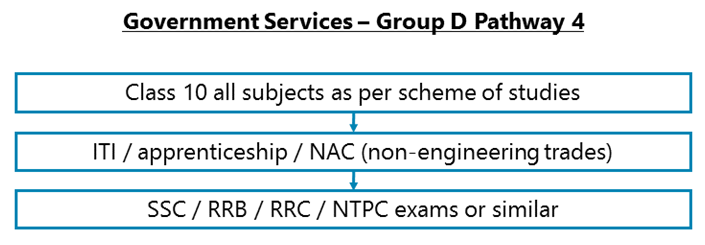
After completing Class 10, you can go for ITI / apprenticeship / National Apprenticeship Certificate (NAC), in any non-engineering trade such as Laboratory Assistant, Physiotherapy Technician, Radiology Technician, Surveyor, Industrial Painter, Interior Decoration and Designing, Mason, Cabin or Room Attendant, Old Age Care Assistant, Front Office Assistant, Domestic House Keeping, Counseling Skills, Firemen, Hospital Waste Management or similar approved by NCVT (National Council for Vocational Training) / State Council for Technical Education & Vocational Training (SCTE & VT). Then you can appear for SSC (Staff Selection Commission) / RRB (Railway Recruitment Board) / RRC (Railway Recruitment Cell) / NTPC (Non-Technical Popular Categories) similar independent Recruitment Boards exams such as of universities (NIOS, JIPMER or state universities), technical directorates, health departments, defense estates organization, state high courts or educational institutes etc.
Class 10 all subjects as per scheme of studies -ITI / apprenticeship / NAC (engineering trades) – SSC / RRB / RRC / NTPC or similar
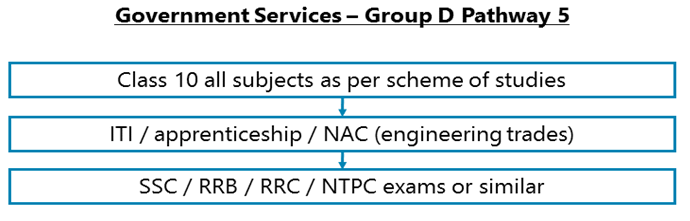
After completing Class 10, you can go for ITI / apprenticeship / National Apprenticeship Certificate (NAC), in any engineering trade such as Electrician, Electrical Fitter, Wiremen, Electronics, Information Technology, TV & Radio, Instrumentation, Computer, Draughtsman, Computer Networking, Data Networking, Machinist, Tool and Die, Mechanic (Mining Machinery, Agricultural Machinery, Computer Hardware, Consumer Electronics Appliances, Electronics Communication System, Industrial Electronics, Machine Tools Maintenance, Mechatronic, Medical Electronics, Motor Vehicle, Refrigeration and Air-Conditioner etc.) approved by NCVT/SCVT. Then you can appear for SSC (Staff Selection Commission) / RRB (Railway Recruitment Board) / RRC (Railway Recruitment Cell) similar independent Recruitment Boards exams such as of universities (NIOS, JIPMER or state universities), technical directorates, health departments, defense estates organization, state high courts or educational institutes etc.
Class 10 all subjects as per scheme of studies - Class 11-12 with any subject as per scheme of studies - SSC Stenographer Grade D exam
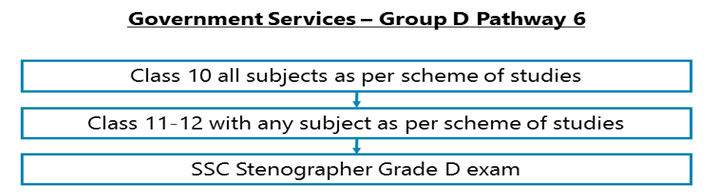
After completing Class 11-12, you can appear for Stenographer exam conducted by SSC every year. This exam recruits both Grade C and Grade D posts and is called “Stenographer Grade C and D recruitment exam”. This is a computer-based examination (CBT) and you need to be between 18 to 27 years to be able to appear for this exam.
Required Qualification & Competencies
You must complete your school studies at least till Class 8 with any subjects to be eligible for lower positions under Group D. However, with only a pass in Class 8, your options will be limited as only some regional recruitment board exams will be open for you, that too state government jobs.
1. You can apply for different Group D recruitment exams after Class 8, Class 10, after Class 10 + ITI, Class 11-12, after Diploma (after passing Class 10).
2. Most Group D services require you to at least have a pass in Class 10 with any subjects. For positions like Mali (Gardener) or Site Electrician, if you have studied till Class 10 without ITI training / Diploma, you will need prior field experience of a few months at least.
3. You may study Mathematics to be eligible for engineering trades in ITIs or for apprenticeships. Your ITI course, in this case, must be of at least 2 years. Thereafter, you can be recruited for Group D posts at a higher pay band.
4. You may also go for ITI / NSQF / MES / CTS courses after Class 10 to enhance your educational experience and apply to higher posts, even if you do not have Mathematics at Class 10 level.
6. Important and popular exams in this regard are SSC (Staff Selection Commission), RRB (Railway Recruitment Board), RRC (Railway Recruitment Cell), NTPC (Non-Technical Popular Categories).
7. Apart from these, ministries and government departments have their own recruitment rules and boards such as Ministries of Defense, Textiles, Civil Aviation, Railways, Health & Family Welfare, Home Affairs, Human Resource Development, Department of Science & Technology (DST), etc.
8. Independent institutes and universities such as NIOS, JIPMER or state universities conduct their own exams for recruitment to Group D posts. Besides, technical directorates, health departments, defense estates organization, state high courts also have their own departmental rules and have separate recruiting bodies.
9. SSC conducts a number of exams in a year and in different Tiers (I, II, III, IV) which means one exam is separated into different Tiers and each Tier examines a candidate for the same posts differently.
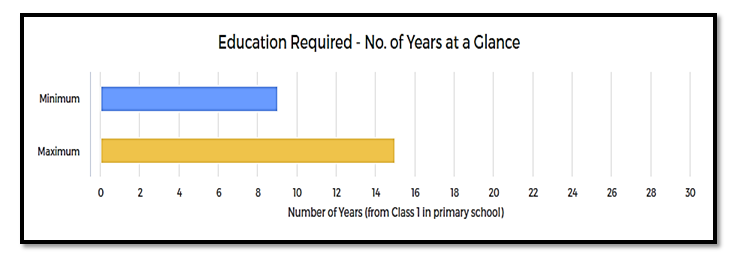
MINIMUM EDUCATION REQUIRED | MAXIMUM EDUCATION REQUIRED |
Under Secondary Certificate Programs for which the minimum eligibility is a pass in any class below class X. | Under Graduate Undergraduate Degree / Honours Diploma / Graduate Diploma (equivalent to a Degree) Programs for which the minimum eligibility is a pass in Higher Secondary / Class XII School Leaving examination. |
Competencies Required
1. You should have Arm-Hand Steadiness - The ability to keep your hand and arm steady while moving your arm or while holding your arm and hand in one position.
2. You should have Manual Dexterity - The ability to quickly move your hand, your hand together with your arm, or your two hands to grasp, manipulate, or assemble objects.
3. You should have Control Precision - The ability to quickly and repeatedly adjust the controls of a machine or a vehicle to exact positions.
4. You should have Deductive Reasoning Ability - to apply general rules and common logic to specific problems to produce answers that are logical and make sense. For example, understanding the reasons behind an event or a situation using general rules and common logic.
5. You should have Information Ordering Ability - to arrange things or actions in a certain order or pattern according to a specific rule or set of rules (e.g., patterns of numbers, letters, words, pictures, mathematical operations).
6. You should have Physical Stamina - The ability to exert yourself physically over long periods of time without getting winded or out of breath.
7. You should have Inter-Personal Ability - The ability to build and maintain good relationships with others at workplaces and elsewhere.
8. You should have Oral Comprehension Ability - The ability to listen to and understand information and ideas presented through spoken words and sentences.
Career - Job Opportunities & Profiles
After a pass in SSC examination, you may get a job in various departments/organizations under the Central / State Governments or in Union Territories. Remember, there are various pay levels within a Group and your entry-level pay will depend on your educational qualification.
Suppose, you get recruited for Group D as a Nursing Orderly / Laboratory Attendant, you will be growing through various levels till Level 5 and then you may move to Group Class of services after clearing departmental exams, through Employment Exchange or Departmental Promotion Committees.
1. Caretaker
2. Laboratory Attendant
3. Field Attendant
4. Telephone Operator
5. Farm Assistant
6. Nursing Orderly
7. Medical Helper
8. Garden Sub-Overseer
9. Security Guard
10. Hospital Attendant
11. Watchman
12. Gateman
13. Cook
14. Porter
15. Sweeper/Cleaner
16. Canteen Attendant
17. Library Attendant
18. Projectionist
19. Stenographer Grade D
20. Assistant Store Keeper
21. Veterinary Compounder
22. Multi-Tasking Staff (MTS)
23. Assistant Pointsman
24. Helper (General Services, Civil, Mechanical/ Carriage and Wagon, Diesel, Electrical - AC, Power Lighting, telecommunication/signal) – only for “Railways”
You may get work in various government departments/ministries/organizations such as:
1. Various departments like Railways, Post & Telegraph, Electricity Board, Postal Service, Civil Accounts Service, Revenue Services, The Central Services, and all the other major departments
2. Central Government Health Scheme (CGHS) Administrative Offices
3. Offices of District Judges, Sessions Judges or other courtrooms
4. Legislative Department, Ministry of Law and Justice
5. Offices of Ministers and Ministerial departments
6. Directorate General of Quality Assurance (DGQA)
7. Central Ground Water Board
8. Zoological Survey of India, Anthropological Survey Of India, National Atlas & Thematic Mapping Organization
9. Government Research Institutes such as National Centre for Disease Control (NCDC), Regional Drugs Testing Laboratory (RDTL), National Centre of Organic Farming (NCOF), Central Research Institute (CRI), Central Water and Power Research Station, etc. for Level 1 Group D posts
10. Ministry of Water Resources
11. National Archives of India, Ministry of culture
12. Directorate General Of Health Services - DGHS
13. Union Public Service Commission (UPSC)
1. You may grow through various Levels from 1 till 7 depending on the department you work in or if you want to change your Office/ Department. You may do so only after you complete at least 3 years of continuous service on a regular basis and then appear for the SSC exam again. Such repeat candidates are typically known as Central Government Civilian Employees (CGCE) Applicants.
2. However, you will have to hold your post and remain in service in your existing department until you receive an ‘Offer of Appointment’ from the Office/ Department where you finally get recommended for appointment after clearing departmental exams, through Employment Exchange and Departmental Promotion Committees.
3. You may also progress to Group C from Group D after clearing departmental examinations. However, at Level 6, you are supposed to serve for a minimum of 5 years and individuals generally retire at Level 6 if they start at Group D Level 1.
4. For an example, if you are a Group D employee working in the Ministry of External Affairs (MEA) you may be eligible for recruitment to Grade-VI posts of “General Cadre” in the Indian Foreign Services such as Lower Division Clerks etc. 15% of such Grade VI posts are filled by Group D employees from MEA. These Grade VI posts belong to Group C. However, Class 8 pass-outs are not eligible for such promotions, only Class 10 and above.
5. The promotion to Group 'C' posts from amongst Group 'D' employees shall be made on the basis of the merit list prepared by holding written test & interview.
6. You and your services can also be “lent” to a State Government or a subordinate/local authority (borrowing authorities) by your Appointing Authority being a national-level organization.
Career Growth
1. You may grow through various Levels from 1 till 7 depending on the department you work in or if you want to change your Office/ Department. You may do so only after you complete at least 3 years of continuous service on a regular basis and then appear for the SSC exam again. Such repeat candidates are typically known as Central Government Civilian Employees (CGCE) Applicants.
2. However, you will have to hold your post and remain in service in your existing department until you receive an ‘Offer of Appointment’ from the Office/ Department where you finally get recommended for appointment after clearing departmental exams, through Employment Exchange and Departmental Promotion Committees.
3.You may also progress to Group C from Group D after clearing departmental examinations. However, at Level 6, you are supposed to serve for a minimum of 5 years and individuals generally retire at Level 6 if they start at Group D Level 1.
4. For an example, if you are a Group D employee working in the Ministry of External Affairs (MEA) you may be eligible for recruitment to Grade-VI posts of “General Cadre” in the Indian Foreign Services such as Lower Division Clerks etc. 15% of such Grade VI posts are filled by Group D employees from MEA. These Grade VI posts belong to Group C. However, Class 8 pass-outs are not eligible for such promotions, only Class 10 and above.
5. The promotion to Group 'C' posts from amongst Group 'D' employees shall be made on the basis of the merit list prepared by holding written test & interview.
6. You and your services can also be “lent” to a State Government or a subordinate/local authority (borrowing authorities) by your Appointing Authority being a national-level organization.
Salary Offered
1. The minimum entry-level basic pay is Rs. 18000 per month, according to the 7th Pay Commission.
2. Apart from the basic pay, employees are entitled to Night Duty Allowance, Dearness Allowance (DA), House Rent Allowance (HRA), Transport Allowance, Compensatory Allowance, Special Pay, Substantive Pay, Time Scale Pay, Daily Allowance, Overtime Allowance (OTA), Running Allowances (based on total monthly km run – only for Railways) etc. and many more such benefits.
3. For retired employees, the minimum pension is usually Rs. 8,000 per month and the maximum pension is usually Rs. 1, 07,450 per month.
4. Employees may additionally accept fees etc. for extra work in connection with University examinations without prior sanction but they have to submit annual return of such income to the government.
5. However, in some states such as Tripura, the minimum pay at the entry-level of the pay matrix is Rs. 16,000 per month for Group-D employees, only in those departments/offices where there is a distinction between Group C and Group D.
6. Promotions are typically competency-based but take years and it is possible to rise from Group D to Group C and Group C to Group B but by the time you reach Group C, you will almost simultaneously reach your retirement age too. Group D employees generally rise till Level 5 if you join at Level 1.
7. It is mandatory to work in Level 6 for a minimum of 5 years and this is applicable across all departments/offices/ ministries. An MA pass individual can join in Level 1 as a Field Attendant (Group D) and retire as a Class 2 gazetted officer (Group B). A Matriculation pass individual also can enter as a Technical Staff (Group D) and retire as a gazetted officer too!
8. The monthly emoluments as per the 7th Central Pay Commission in India are given below. The minimum qualification required for entry-level positions is Class 8. The 3rd column below is the minimum basic pay as per the 7th CPC and the 4th is the maximum basic pay for the respective levels.
Level-1 | Pay Band: 5200-20200 | Rs 18,000 | Rs 56, 900 |
Level-2 | Pay Band: 5200-20200 | Rs 19,900 | Rs 63, 200 |
Level-3 | Pay Band: 5200-20200 | Rs 21,700 | Rs 69, 100 |
Level-4 | Pay Band: 5200-20200 | Rs 25,500 | Rs 81, 100 |
Level-5 | Pay Band: 5200-20200 | Rs 29,200 | Rs 92, 300 |
Level-6 | Pay Band: 9300-34800 | Rs 35,400 | Rs 1, 12, 400 |
Level-7 | Pay Band: 9300-34800 | Rs 44,900 | Rs 1, 42, 400 |
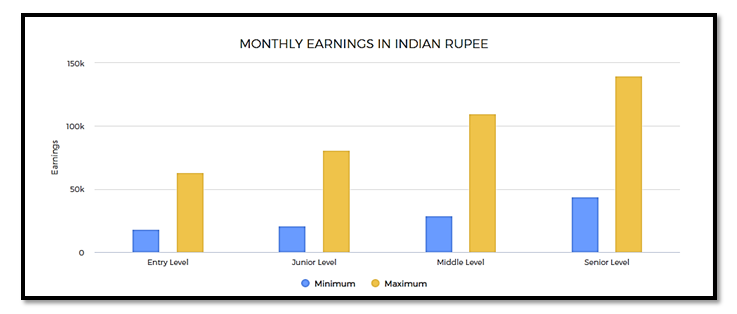
Monthly Earning In Indian Rupees
Entry Level | Junior Level | Mid-Level | Senior Level | |||||
Min Earning | Max Earning | Min Earning | Max Earning | Min Earning | Max Earning | Min Earning | Max Earning | |
18000 | 63000 | 21000 | 81000 | 29000 | 110000 | 110000 | 140000 | |
1. Entry level: 0 - 2 years of work experience
2. Junior Level: From 1 to 12 years of work experience
3. Mid-Level: From 5 to 20+ years of work experience
4. Senior Level: From 10 to 25+ years of work experience
Work Activities
1. Assessing and determining compliance with standards, laws, rules, and guidelines: Using relevant information, auditing information, processes and systems to determine whether organisations or people are complying with standards, laws, rules, and guidelines.
2. Assessing and evaluating quality: Assessing and evaluating quality of materials, systems, processes, products, services, etc.
3. Calculating and computing: Calculating or computing using various mathematical formula and functions using computers or otherwise; doing financial or commercial calculations or computations.
4. Communicating with co-workers and others: Communicating with people in writing, verbally or otherwise inside your workplace and various other people who have professional relationships with your place of work including vendors, government officials, etc. or with people at large.
5. Developing and maintaining inter-personal relationships: Developing professional relationships with co-workers and others outside organisations and maintaining good relationships.
6. Handling and moving objects and materials: Using hands or otherwise use physical strength to handle and move objects and materials; manoever, install, lift, place, manipulate, etc.
7. Inspecting equipment, systems, structures, and materials: Inspecting equipment, systems, structures, and materials to ascertain quality, performance, defects, causes of errors, etc.
8. Processing information: Transcribing, entering, storing, recordingor maintaining information in electronic, magnetic or written form; searching, compiling, tabulating, calculating, auditing, verifying or otherwise dealing with information processing including data entry, transcription, recording, storing and maintaining databases.
9. Scheduling tasks: Scheduling project timelines, tasks and activities.
10. Working in a team: Working in a team of people; developing team; maintaining professional relationships among team members.
Future Prospects
1. You can expect a decent future in this field as the growth prospects are encouraging. The central & state government jobs are among the most coveted career outlooks, even today, for most of the youth in India despite the software and IT industry is so lucrative. In the general government sector, vacancies are rising in number and new job roles are being introduced with some of the old ones being discontinued due to change in technology as well as transformed official duties.
2. Group D positions were abolished by the 6th Central Pay Commission but the 7th CPC has reintroduced it and recruitment to Group D posts has again begun in various Government offices/departments/ministries/directorates/ high courts / civil & family courts/universities. This reintroduction has opened up 5 lakh vacant positions.
3. Vacancies are rising in number especially in railways, post & telegraph, electricity board, postal service, courtrooms, universities, civil accounts service, revenue services, and mining. Year 2019 started well with Central government vacancies 140736 in number and State government vacancies 708690 in number. Specifically, vacancies in the police force are 22848 in number, in the Indian Army it is 7608, in Government banks it is 87012, in railways, it is 23880, and government teaching jobs are 804 in number. If we focus on SSC only, then the vacancies are 4960 currently. If we consider all 8th, 10th, 12th pass vacancies then it is more than 20000.
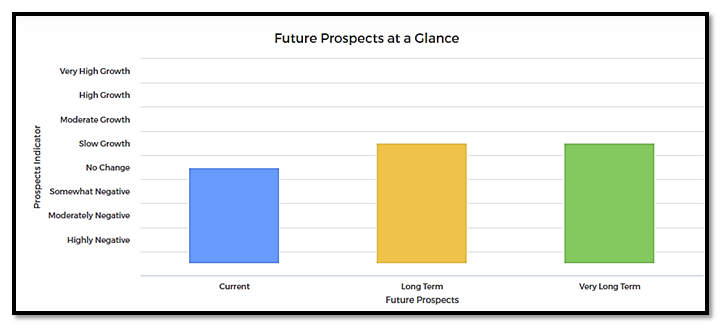
Future Prospect At A Glance
Current (0-1 year) | Long Term (2-5 year) | Very Long Term (6-10 years) |
No Change | Slow Growth | Slow Growth |


