
Phlebotomy Technician
Entry Level Qualification
Class 12
Career Fields
Allied & Para Medical Science
For Specially Abled


About Career
PARTICULARS | DESCRIPTION |
Name | Phlebotomy Technician |
Purpose | Laboratory Testing |
Career Field | Allied & Para Medical Science |
Required Entrance Exam | CUET UG, AIIMS BSC |
Average Salary | 90000 - 150000 Rs. Per Year |
Companies For You | LabCorp, Quest Diagnostics, HCA Healthcare & Many More |
Who is Eligible | Class 12th Pass |
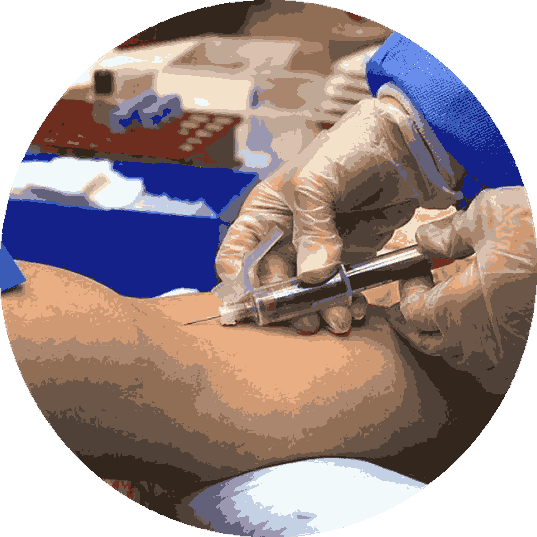
Phlebotomy Technicians are the people who are trained in the process of collecting blood primarily by performing a process called venipuncture or various other processes. Venipuncture is the process of making a puncture in a vein of a patient with the help of an injection needle to take out blood from him or her. Phlebotomy technicians collect blood from patients to get the blood sample clinically or medically tested, for transfusions, donations, or myriad research purposes. You will be working on a variety of different capacities for collecting blood samples, but this will always be your major focus. You will be collecting blood from the skin also by pricking the finger or other part of the skin. Pricking means going deep into the skin with the help of a needle to take blood from tissue capillaries. You will be working under the supervision of a Medical Laboratory Technician.
A Phlebotomy Technician is required to work well with the patients and also to keep them calm. As a Phlebotomy Technician, you will be responsible for introducing yourself to the patient, interpreting the tests prescribed by the doctor or physician, properly explaining the patient the procedure and preparing them accordingly, and performing the vein or skin puncture as per the prescription or requirement, drawing blood into the correct tubes with the proper supplements (if required), giving instructions to the patients on post-puncture care and sending specimens to the laboratory.
Key Roles and Responsibilities
As a Phlebotomy Technician, you will have the following roles and responsibilities:
1. To dispose of the contaminated sharps as per the applicable laws, standards, and policies.
2. To organize and clean blood-drawing trays, sterilize all the instruments such as scissors, gloves, trays, or related items.
3. To ensure that all the instruments such as all needles, syringes, or related items are sterile and are of first-time use.
4. To ensure that the patient is not having any high-risk illness or disease.
5. To take track of the patient’s prolonged bleeding or past diagnosis of bleeding disorders.
6. To draw the blood from the veins or skin (finger, feet, etc.) in a vacuum tube or a sample collection tube by using a syringe or needle or by venipuncture method.
7. To collect the sample for tests at specific time intervals, if required.
8. To process blood or other collected samples for further analysis by medical experts.
9. To enter patient entries, insurance details, and billing information into the computer.
10. To ensure that proper infection control standards have been followed all the time.
Career Entry Pathway
Class 10 with any subjects, Science and Mathematics – Class 11-12 in Science stream with Physics, Chemistry, and Biology – Obtain an NSQF Level 3 Qualification in Phlebotomy Technician.
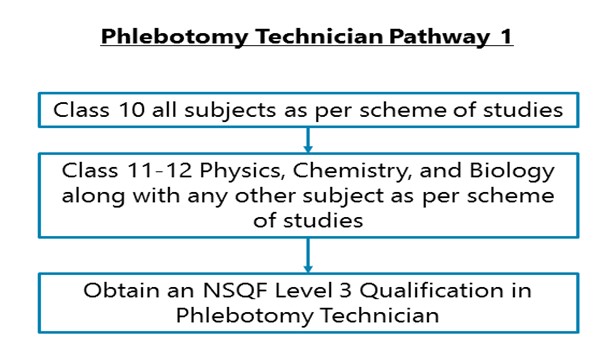
After completing class 12, you can obtain an NSQF (National Skills Qualification Framework) Level 3 Qualification in Phlebotomy Technician after obtaining the necessary training. This NSQF Level 3 qualification in Phlebotomy Technician is 600 hours of duration (i.e., 360 Hours for classroom and skill lab training + 240 Hours of Clinical or Laboratory Training).
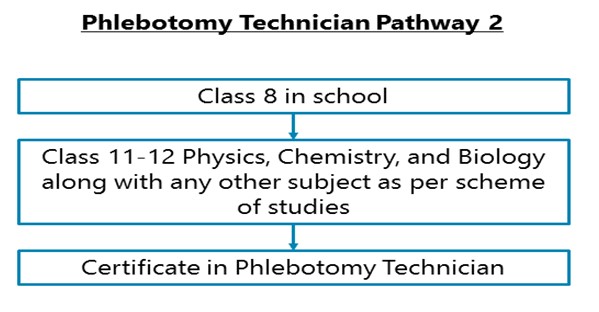
After completing class 12, you may apply for a Certificate in Phlebotomy Technician from any vocational or private institute. Nowadays various laboratories are offering certification courses such as the Phlebotomy Technician course by Dr. Lal Pathlabs which is 6 Months in duration (4 Months + 2 Months Internship). Similarly, Certification in Phlebotomy Technician with 4 months duration by Vivo Healthcare with the motive of “Skilling India to Save Lives”.
Required Qualification & Competencies
1. You may obtain an NSQF Level 3 qualification in Phlebotomy Technician if you have completed Class 12.
2. After completing Class 12, you can also apply for a Certificate in Phlebotomy Technician.
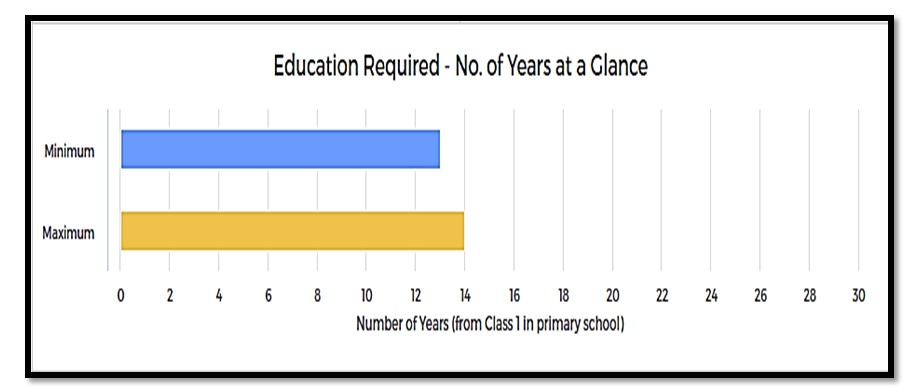
MINIMUM EDUCATION REQUIRED | MAXIMUM EDUCATION REQUIRED |
Post Higher Secondary Diploma / Certificate Programs for which the minimum eligibility is a pass in Higher Secondary / Class XII School Leaving examination. | Post Higher Secondary Diploma / Certificate Programs for which the minimum eligibility is a pass in Higher Secondary / Class XII School Leaving examination. |
Competencies Required
Interests
1. Realistic — Realistic occupations frequently involve work activities that include practical, hands-on problems and solutions.
2. Social — Social occupations frequently involve working with, communicating with, and teaching people.
3. Investigative — Investigative occupations frequently involve working with ideas and require an extensive amount of thinking.
Knowledge
1. English Language: Knowledge about English grammar, words, spelling, sentence construction, using English to communicate with others, reading in English, etc.
2. Healthcare Science and Services: Knowledge of different fields that are related to offering various types of healthcare services to people; assisting physicians and surgeons to carry out diagnosis, treatment, and prevention of human diseases, ailments, and disorders. This includes knowledge of different practices apart from medicine which are used to treat and prevent human diseases or to provide holistic healthcare and wellness. This also includes knowledge about drugs and medicines.
3. Personal Care Service: Knowledge of how to provide various assistance and services to others. This includes looking after the needs of individuals, understanding what they need, and providing all assistance at home or elsewhere.
Skills
1. Active Listening: Giving full attention to what other people are saying, understanding the points being made by others, asking questions, etc.
2. Coordination: Skills in working together with other people to get things done.
3. Critical Thinking: Skills in the analysis of complex situations, using logic and reasoning to understand the situations and take appropriate actions or make interpretations and inferences.
4. Judgment and Decision Making: Skills in considering the pros and cons of various decision alternatives; considering costs and benefits; and making appropriate and suitable decisions.
5. Problem Solving: Skills in analysis and understanding of problems, evaluating various options to solve the problems, and using the best option to solve the problems.
Abilities
1. Abstract Reasoning: The ability to understand ideas that are not expressed in words or numbers; the ability to understand concepts that are not clearly expressed verbally or otherwise.
2. Deductive Reasoning: The ability to apply general rules and common logic to specific problems to produce answers that are logical and make sense. For example, understanding the reasons behind an event or a situation using general rules and common logic.
3. Emotional Intelligence: The ability to understand your own and others' emotions and feelings; empathy for others; adjusting your behavior or self-control and self-regulation according to others' emotions and situations.
4. Hand-Eye Coordination: The ability to make quick and precise hand movements as per visual observations and understanding (that is, what you see and comprehend).
5. Inter-Personal: The ability to build and maintain good relationships with others at workplaces and elsewhere.
6. Problem Sensitivity: The ability to tell when something is wrong or is likely to go wrong. It does not involve solving the problem, only recognizing there is a problem.
7. Selective Attention: The ability to concentrate on a task over a long period without being distracted.
8. Verbal Reasoning: The ability to think and reason with words; the ability to reason out ideas expressed in words.
9. Written Expression: The ability to communicate information and ideas in writing so others will understand.
Personality
1. You are always or mostly organized in your day-to-day life and activities.
2. You are always or mostly a soft-hearted person.
3. You are always or mostly helpful to others.
4. You are always or mostly caring, supportive, sympathetic, and kind to others.
5. You remain calm in difficult situations sometimes but some other times you are anxious.
6. You always or mostly prefer to stick within a routine or carry out routine and repetitive activities.
Career - Job Opportunities & Profiles
1. At the beginning of your career, you may find a job opportunity as an assistant or intern Phlebotomist. Later on, after gaining experience, you may become a Phlebotomy Technician or Senior Phlebotomist.
2. You may find job opportunities in clinical laboratories such as HOD (House of Diagnosis), Dr. Lal Path Labs, Ranbaxy, etc., hospitals (Government as well as Private Hospitals), community health centers, nursing homes, doctor’s clinics, blood donation centers, and other health care facilities.
Work Environment
A Phlebotomy Technician may work in a variety of working environments, including hospitals, labs, doctor’s clinics, and even donation facilities. They work under the supervision of a Clinical Laboratory Technologist or other medical professionals. They need to be extremely accurate and careful of their profession. On a busy day, a phlebotomy technician has to take dozens of blood samples, which means sometimes they have to work under pressure without actually sacrificing accuracy and safety. The work environment for a Phlebotomy Technician might be stressful at times because sometimes patients might become anxious while getting their blood drawn, and hence it’s the responsibility of a Phlebotomy Technician to keep them calm.
Career Growth
With a Phlebotomy Technician career, you may find limited job opportunities. After gaining certain experience you may move from Phlebotomy Technician to senior Phlebotomist.
Salary Offered
1. At the beginning of your career, you may earn about Rs. 7,000 – 10,000 per month.
2. With 3-5 years of experience, you may earn about Rs. 12,000-15,000 or even more per month.
3. With 8-10 years of experience, you may earn about Rs. 18,000 – 25,000 or even more per month.
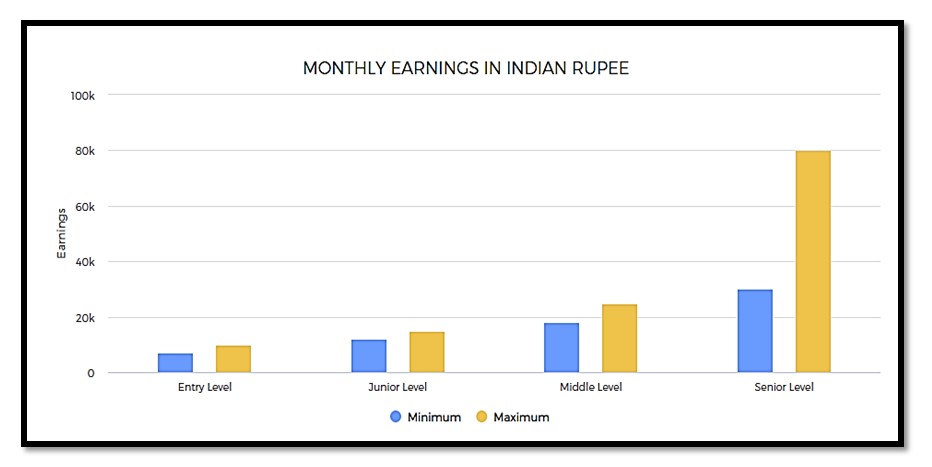
Monthly Earnings In Indian Rupee
Entry Level | Junior Level | Mid-Level | Senior Level | ||||
Min Earning | Max Earning | Min Earning | Max Earning | Min Earning | Max Earning | Min Earning | Max Earning |
7000 | 10000 | 12000 | 15000 | 18000 | 25000 | 30000 | 80000 |
1. Entry level: 0 - 2 years of work experience
2. Junior Level: From 1 to 12 years of work experience
3. Mid-Level: From 5 to 20+ years of work experience
4. Senior Level: From 10 to 25+ years of work experience (there could be exceptions in some high-end technical, financial, engineering, creative, management, sports, and other careers; also shortly, people will reach these levels much faster in many careers and some careers, these levels will have no meaning as those careers will be completely tech skill driven such as even now, there is almost no level in a Cyber Security Expert’s job)
Work Activities
1. Assisting and caring for people: Assisting people in availing of services; taking care of people in different situations; offering help and services to others.
2. Communicating with co-workers and others: Communicating with people in writing, verbally or otherwise inside your workplace and various other people who have professional relationships with your place of work including vendors, government officials, etc., or with people at large.
3. Decision-making and problem-solving: Analysis of data and information; evaluation of alternative decisions and results of decisions; taking the right decisions and solving problems.
4. Getting Information and learning: Observing, hearing, reading, using computers, or otherwise obtaining information and learning from it.
5. Identifying objects, actions, and events: Identifying various characteristics of objects; observing and understanding actions and events; understanding changes in actions and events.
6. Inspecting situations, events, and people: Inspecting situations, events, and people to understand the reasons and causes for the situation or events to happen; inspecting people to understand reasons behind their behavior and actions.
7. Organising, planning, and prioritizing tasks: Planning and organizing tasks to achieve work goals; prioritizing tasks to achieve goals and making the best use of the time available.
Future Prospects
As per a report by IBEF (Indian Brand Equity Foundation) in India, the Healthcare market is expected to reach US$ 372 billion. It is also expected that the hospital industry will grow by a CAGR of 16-17% (Compounded Annual Growth RATE). So, employment for phlebotomists is projected to grow quite fast.
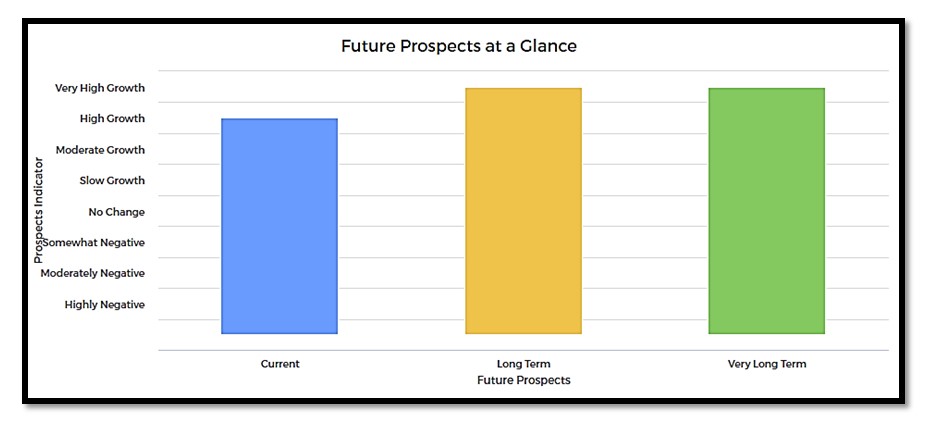
Future Prospects At A Glance
Current (0-1 year) | Long Term (2-5 years) | Very Long Term (6-10 years) |
High Growth | Very High Growth | Very High Growth |


