

Geneticist / Genetic Engineer
Entry Level Qualification
Class 12
Career Fields
Mathematics & Science
For Specially Abled


About Career
PARTICULARS | DESCRIPTION |
Name | Geneticist / Genetic Engineer |
Purpose | Research Regarding New Technologies, Experimental Techniques |
Career Field | Mathematics & Science |
Required Entrance Exam | No Entrance Exam |
Average Salary | 4,00,000- 6,00,000 Rs. Per Year |
Companies For You | DNA engineering, science laboratories, & Many More |
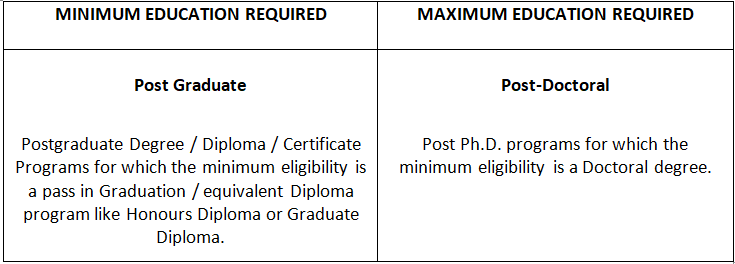
Who is Eligible | Post Graduate |
Geneticists study genes of humans, animals, plants, virus, bacteria and all other organisms to understand the molecular basis of genetic inheritance, how genetic inheritance lead to expression of various characteristics in organisms through biomolecular processes, and how genes could be altered naturally as well as artificially.
Some basic concepts on DNA, genes, genome, RNA, etc.
To help you understand further, let us recapitulate some basics which you might have studied in Biology in school. As you know, in a cell of an organism there is a nucleus. In The nucleus, there are chromosomes. A chromosome consists of a DNA or Deoxyribonucleic Acid which has either a part of or the full genetic material or genome of an organism.
A DNA has a double helix structure in which two strands of polynucleotides wrap around each other. Each polynucleotide consists of a very large number of nucleotides. Each nucleotide consists of one of the four nucleobases - called Adenine, Cytosine, Guanine, and Thymine (A, C. G and T), a deoxyribose sugar and a phosphate. The nucleotides are joined together to form a polynucleotide chain or one strand of the DNA double helix. Then the two polynucleotide strands are bound together by the nucleobases according to a base pairing rule (A binds with T and C binds with G).
So, what is a GENE?
Now imagine one strand of a DNA molecule. A given part of the nucleotides will have various combinations or sequence of the nucleobases A, C, G and T – such as ATCGTAGCTACG and so on. A GENE is such a sequence (or part) of a nucleotide that has the CODE (meaning a set of instructions or rules) to form a molecule, mainly proteins which have different functions (however, a gene may also be a non-coding gene).
Functions of these proteins made from genetic CODE give rise to biological or genetic traits – some of the traits or characteristics such as color of eyes, shapes of faces, etc. in animals are visible and some of the traits are not visible such as the thousands of biochemical processes that happen inside an organism’s body, tendency to acquire a diseases, and how strong one’s immune system would be.
What do the Geneticists primarily do?
Study of genes
Firstly, they will study genes and all the biomolecular processes that happen to convert a code written in a gene to form a protein molecule via the RNA (Ribonucleic Acid) molecules. In this process, a gene is copied into an RNA called an mRNA or messenger RNA.
These RNAs are carried to the Ribosome. Ribosome links various amino acids together as per the genetic code carried by the mRNA. Proteins are macromolecules (very large molecules) of amino acids.
These are complex processes. Geneticists have the expertise to study these and develop various insights and biological data from their studies.
Genome sequencing
Secondly, Geneticists, study genomes and sequence genomes of various organisms for applications in various fields such as medicine, biological engineering, agriculture, etc. A genome consists of all the genetic molecules of an organism including DNA and RNA. A genome sequence is the complete list of the all the sequences of 4 nucleobases A, C, G, and T or genes that make up the entire chromosome of an organism as well as the description of the RNA (which are used for transforming the genetic codes into proteins).
In genome sequencing, all the gene sequences and RNAs are described. For example, the real size of a human genome in terms of the number of nucleotide base pairs (AT or CG) could be more than 3 billion but the protein coding genes in humans are approximately 20,000-25,000. Other genes are estimated at approximately 14,000-15,000.
So, you can understand that if you know the entire sequence of genes of an organism, you would know it’s biological processes, which gene can cause a disease, and so on (Remember that all genes in an organism do not have a code to produce a protein. Some genes are non-coding).
Mutation and alternation or modification of genes
During the process of replication of genetic codes into RNAs, there could be an error, called mutation. If there is an error, the desired protein will not be formed and therefore may affect the characteristics of an organism. Such mutation could be beneficial and over many generations, mutations lead to evolution which help organisms to adapt with changing environment or requirement.
Geneticists study mutations and they can also alter or modify genetic sequences to produce proteins in target organisms leading to certain desired characteristics. This is the major work of the Geneticists.
For example, Geneticists can produce a potato with less carbohydrate. They can produce a bull with stronger and bulkier muscles which may increase the amount of meat that can be produced from the bull. Geneticists can produce a fruit with certain beneficial proteins along with the proteins naturally available with the fruit.
Manufacturing organisms in the lab
Geneticists can literally ‘manufacture’ organisms at the lab. For example, using a method called ‘cloning’. Cloning can copy DNAs of an organism and then reproduce the entire organism either naturally or artificially. Cloning may also involve copy of cells of an organism in a lab.
You might have heard of Dolly (a sheep), the first cloned animal in the world. Dolly’s embryo was created by taking a cell from its mother and then inseminating the ovum of another sheep. So far, after Dolly, Geneticists and Genetic Engineers have cloned a number of animals such as tadpoles, carp (fish), mice, cat, rat, monkeys, and even a pashmina goat (produced at the Sher-e-Kashmir University of Agricultural Science).
Plant breeding and animal breeding
Plant breeding involves changing the characteristics of a plant for various benefits – such as making them resistant from insect attack, increasing productivity of crops, improve the food value of the crops, and so on.
Animal breeding involves changing the characteristics of livestock or farm animals to improve productivity, improve food quality, and for other purposes.
Geneticists are involved in plant breeding and animal breeding.
The exciting world of gene alterations or modifications
Gene alteration and modifications have many usages and over the next 5-50 years, Geneticists will acquire tremendous power to manufacture and alter organisms – from creating new organisms to modify characteristics of organisms for various benefits.
For example, Geneticists today can alter a cancer causing gene in a human and make sure that the person never suffers from cancer. It is possible to identify the gene and then alter. Geneticists can replace a defective gene with a corrected one. In 30-50 years, the cost of such process will be much less leading to eradication of many human diseases from the face of earth.
Another example – bacteria are used for producing insulin, hormones, vaccines and various other materials by altering certain genes in the bacteria and thereby imposing the desired characteristics.
Bacterial genes are altered by Geneticists to produce biofuels. This will be a big area in the future. Genetically Modified Crops (Called GM crops) could solve a lot of problem regarding food in the world. Plants and animals could be genetically engineered to perform a desired function.
The possibilities are enormous. Geneticists are involved in this exciting field.
What will be your day-to-day work like?
Your work will depend on the field you are working in, however, it will mostly be research / laboratory based which will involve working with instruments and tools like microscopes, gene sequencers, mass spectrometers, chromatographs, etc. (colloquially called ‘wet’ laboratories) to observe and study genes as well as a lot of working on a computer with analytical software.
The genomic data you will work on may be from actual patients being treated for a disease, or derived from plants/bacteria or normal human genes or genes from mice / rabbits / dogs / monkeys etc.
However, in all cases you will mandatorilybe involved in documentation and paperwork to record all your research data and / or present it to other scientists, seniors or management teams. You will be requiring extensive use of analytical / scientific software such as Basic Local Alignment Search Tool (BLAST), ClustalW, Insightful S-PLUS, Mendel, PHYLIP, RTI International SUDAAN, S.A.G.E., SAS JMP, SAS/Genetics, Ward Systems Group Gene Hunter etc.
Apart from these work environments, you may also enter the Academia as a teacher / lecturer where you shall be involved in imparting education or demonstrating techniques and instrument or research procedures to students / scholars.
Key Roles and Responsibilities
As a Geneticist / Genetic Engineer depending on your functional field of work, you will be engaged with one or moreof the following roles and responsibilities: -
In research and development
1. You will be involved in conducting research regarding new technologies, experimental techniques, instruments and laboratory supplies that can improve research standards as well as operating procedures and outcomes.
2. You will be extracting DNA or performing diagnostic tests involving processes such as gel electrophoresis etc.
3. You will be planning or conducting basic genomic and biological research related to areas such as regulation of DNA or proteins.
4. You will be creating or using statistical models for the analysis of genetic data.
5. You will be analyzing and evaluating large genomic datasets through appropriate chemical/biological/mathematical calculations and analyses for research purposes.
6. You will be developing leading-edge technologies/protocols for improving existing genetic techniques or for incorporating new DNA-based diagnostic procedures.
7. You will be preparing detailed written or verbal presentations, technical reports and compilations based upon research outcomes for publication, grant or patent applications.
For Clinical Diagnostic Research
1. You will be performing comprehensive review and interpretation of clinical genetic data of live/deceased patients belonging to all age groups.
2. You will be identifying, researching and interpreting genetic sequences.
3. You will be reviewing a large spectrum of genetic disorders.
4. You will be reading and assimilating complex biological information from existing literature and other resources to provide accurate, thorough, and thoughtful clinical interpretation of the results.
5. You will be consulting with referring physicians, nurse practitioners, genetic counselors and other geneticiststo aggregate specific information about particular cases to perform your diagnosis more accurately.
6. You will be drafting preliminary clinical test reports based on your research outcomes and findings.
For Education and Training
1. You will be involved in teaching/demonstrating to a class of students or a team of research scholars pursuing this academic discipline.
2. You will typically be engaged in supervising or outlining research projects for doctoral or post-doctoral scholars working in your team.
3. You will demonstrate techniques or handling of apparatuses to your students inside a laboratory and counsel / guide students in performance of laboratory course experiments.
4. You will participate in seminars, science congresses, conferences across the world.
5. You will be involved in conducting regular research regarding new technologies, experimental techniques, instruments and laboratory supplies that can improve research standards as well as operating procedures and outcomes.
Career Entry Pathway
Class 10 all subjects as per scheme of studies – Class 11-12 Physics, Chemistry, and Biology along with any other subject as per scheme of studies – Undergraduate degree in Life Sciencesor similar– Post graduation degree in Genetics, Genomics, Genetic Engineering or similar
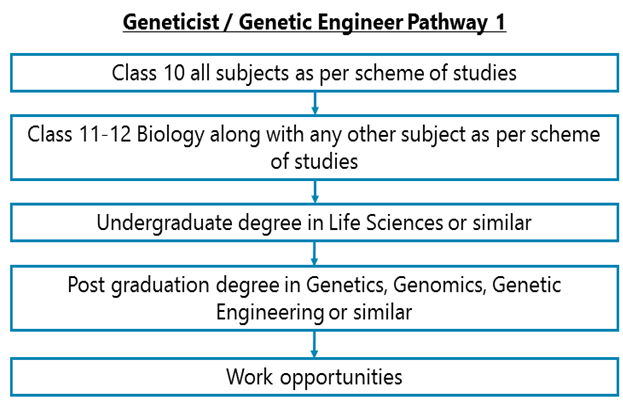
After completing Class 11-12 Physics, Chemistry, and Biology along with any other subject as per scheme of studies, you can go for an undergraduate degree in Life Sciences or in any discipline of Biological Sciences such as Genetics, Biotechnology, Biochemistry, Biophysics, Zoology, Botany, Plant Sciences, Microbiology, Molecular Biology or similar. Then you can go for a postgraduation degree in Genetics, Genomics, Molecular Biology, Genetic Engineering or similar.
Class 10 all subjects as per scheme of studies – Class 11-12 Physics, Chemistry, Mathematics and Biology along with any other subject as per scheme of studies – Undergraduate degree in Life Sciences or Biological Engineering, Medicine, Biochemistry, Biotechnologyor similar – Post graduation degree in Medical Genetics & Genomics, Human and Molecular Genetics, Genetic Engineering
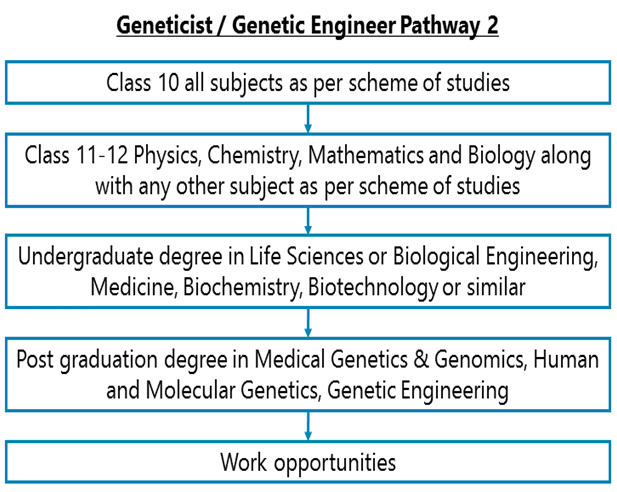
After completing Class 11-12 Physics, Chemistry, Mathematics and Biology along with any other subject as per scheme of studies, you can go for an undergraduate degree in Life Sciences or Bioengineering / Biotechnology / Biochemical / Biomedical / any other field of Biological Engineering, General Medicine (MBBS) or similar. Then you can go for a post graduation degree in Medical Genetics & Genomics, Human and Molecular Genetics, Genetic Engineering or similar.
Class 10 all subjects as per scheme of studies – Class 11-12 Physics, Chemistry, and Biology along with any other subject as per scheme of studies – Undergraduate degree in medicine – MD – Certification as a Clinical Geneticist
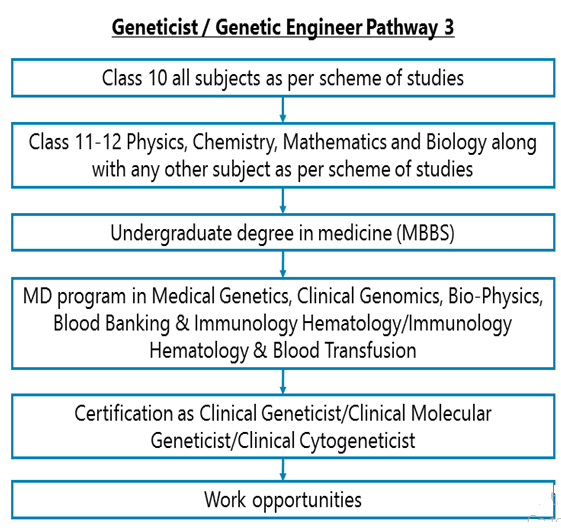
After completing Class 11-12 Physics, Chemistry, and Biology along with any other subject as per scheme of studies, you can go for an undergraduate degree in medicine (MBBS). Then you can complete an MD program in Medical Genetics, Clinical Genomics, Bio-Physics, etc.Then you are eligible to be certified as Clinical Geneticist/Clinical Molecular Geneticist/Clinical Cytogeneticist etc.
Class 10 all subjects as per scheme of studies – Class 11-12 Physics, Chemistry, and Biology along with any other subject as per scheme of studies – MBBS – Post graduation course in Genetic Counseling
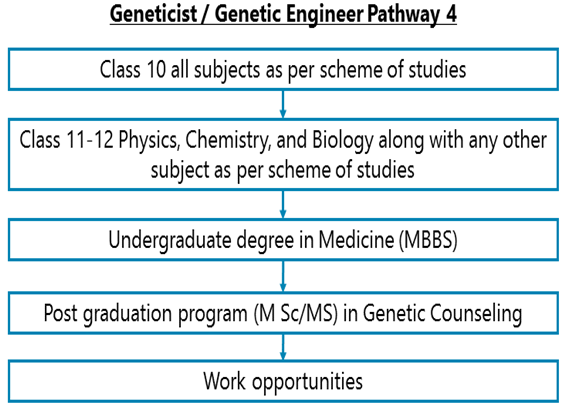
After completing Class 11-12 Physics, Chemistry, and Biology along with any other subject as per scheme of studies, you can complete your undergraduate degree in Medicine (MBBS) and then complete a postgraduation program (M Sc/MS) in Genetic Counseling.
Class 10 all subjects as per scheme of studies – Class 11-12 Physics, Chemistry, and Biology along with any other subject as per scheme of studies – MBBS – MD in Psychiatry, Epidemiology - Post graduation course in Genetic Counseling
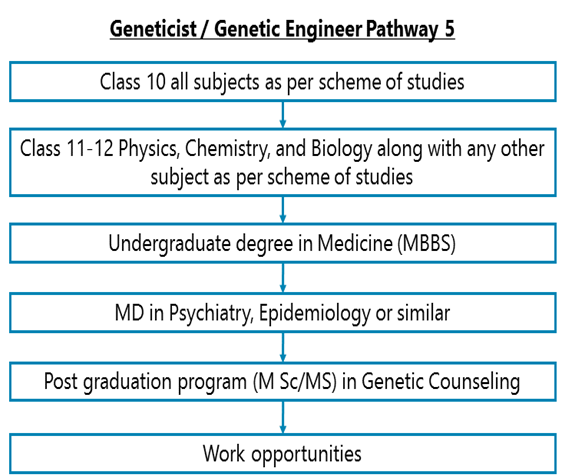
After completing Class 11-12 Physics, Chemistry, and Biology along with any other subject as per scheme of studies, you can complete your undergraduate degree in Medicine (MBBS) and then go for an MD in Psychiatry, Epidemiology or similar. Then you can follow it up with a postgraduation program (M Sc/MS) in Genetic Counseling.
Required Qualification & Competencies
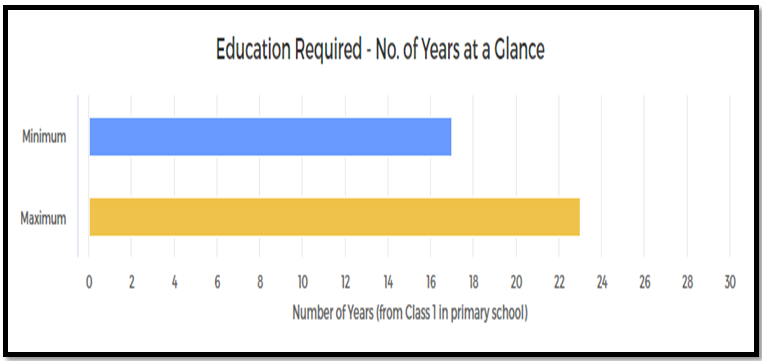
After your Class 11-12 with Biology along with any other subject as per scheme of studies, you can study for an undergraduate degree. Then you can do a Master’s degree. Then you may either opt for a work opportunity or complete your Ph.D.
You can study for a Bachelor’s / Master’s / Doctoral degree in any of the following fields (Note that all these fields may not offer you a degree at all three levels, that is in Bachelor’s, Master’s and Doctoral. Some fields may offer a degree only at the Master’s or at the Doctoral level or may only be a specialization / certificate program):
1. Genetics
2. Genetics and Genome Biology
3. Medical Genetics
4. Molecular Biology and Genetics
5. Classical Genetics
6. Molecular Genetics
7. Genetic Engineering
8. Genetic Engineering & Genomics
9. Accessible Genetics
10. Animal Genetics & Breeding
11. Biochemistry and Genetics
12. Biomedical Genetics
13. Epigenetics
14. Evolution and Genetic Architecture
15. Genetic and Genomic Counseling
16. Genetic Counseling
17. Genetic Diagnostics
18. Genetic Genealogy
19. Human Development: Genetics, Neuroscience & Psychology
20. Human Genetics and Medical Biotechnology
21. Human Molecular Genetics
22. Molecular Genetics & Genomic Medicine
23. Nutrition and Genetics
24. Pediatric Genetic Testing
25. Pharmacogenomics & Genetics
26. Physiology, Anatomy and Genetics
27. Plant Breeding & Genetics
28. Plant Genetic Resources
29. Population Genetics
Compentencies Required
1. You should have interests for Investigative Occupations. Investigative occupations involve working with ideas and quite a lot of thinking, often abstract or conceptual thinking. These involve learning about facts and figures; involve use of data analysis, assessment of situations, decision making and problem solving.
2. You should have interests for Realistic Occupations. Realistic occupations involve more practical and hands-on activities than paperwork or office work. Realistic occupations often involve physical activities for getting things done using various tools and equipment.
3. You should have interests for Enterprising Occupations. You should have interests for Enterprising Occupations. Enterprising occupations involve taking initiatives, initiating actions, and planning to achieve goals, often business goals. These involve gathering resources and leading people to get things done. These require decision making, risk taking and action orientation.
4. You may need knowledge of Biological Sciences - Knowledge of plants and animals, their anatomical structure, cell structure, tissues, physiological functions, evolution, and all other related aspects.
5. You may need knowledge of Chemical Science - Knowledge of the chemical composition, structure, and properties of substances and of the chemical processes and transformations that they undergo.
6. You should have knowledge of Data and Information Security - Knowledge various software, systems and processes to ensure security of data and systems in computer networks as well as in individual computers and systems.
7. You may need knowledge of Healthcare Science and Services - Knowledge of different fields which are related to offering various types of healthcare services to people; assisting physicians and surgeons to carry out diagnosis, treatment and prevention of human diseases, ailment and disorders.
8. You will need knowledge of relevant computer software and applicationssuch as Basic Local Alignment Search Tool (BLAST), ClustalW, Insightful S-PLUS, Mendel, PHYLIP, RTI International SUDAAN, S.A.G.E., SAS JMP, SAS/Genetics, Ward Systems Group GeneHunter etc.
9. You should have Critical Thinking skills- Skills in the analysis of complex situations, using logic and reasoning to understand the situations and take appropriate actions or make interpretations and inferences.
10. You should have Reading Comprehension Skills - Skills in understanding written sentences and paragraphs in work related documents.
11. You should have Judgment and Decision Making Skills - considering pros and cons of various decision alternatives; considering costs and benefits; taking appropriate and suitable decisions.
12. You should have Problem Solving Skills - Skills in analysis and understanding of problems, evaluating various options to solve the problems and using the best option to solve the problems.
13. You should have Oral Comprehension Ability - listen to and understand information and ideas presented through spoken words and sentences.
14. You should have Oral Expression Ability - communicate information and ideas in speaking so others will understand.
15. You should have Deductive Reasoning Ability - apply general rules and common logic to specific problems to produce answers that are logical and make sense. For example, understanding the reasons behind an event or a situation using general rules and common logic.
16. You should have Problem Sensitivity - The ability to tell when something is wrong or is likely to go wrong. It does not involve solving the problem, only recognizing there is a problem.
17. You should have Inductive Reasoning Ability - The ability to combine pieces of information from various sources, concepts, and theories to form general rules or conclusions. For example, analysing various events or situations to come out with a set of rules or conclusions.
18. You should have Near Vision - The ability to see details at close range (within a few feet of the observer).
19. You are always or mostly careful about your actions and behaviour.
20. You are always or mostly disciplined in your action and behaviour.
21. You are always calm or generally remain calm in most situations.
22. You can always act independently or could do so in most situations.
23. You always prefer to experience newthings and have new experiences or you mostly do.
Career - Job Opportunities & Profiles
1. You will be typically involved in research based roles working in a laboratory (Fundamental/Academic research, R&D, Clinical Research).
2. You can find work in biotechnology companies, DNA engineering/science laboratories, clinical diagnostics laboratories, pharmaceutical/therapeutics companies or allied companies, healthcare research-based companies, academic & government research institutes, contract research organizations, biopharmaceuticals companies and research centres, etc.
3. Some of the leading companies that you may work with include BioRad Laboratories, Roche Diagnostics Limited, Abbott Laboratories, Pfizer Inc., Biogen, Biocon, Thermo Fisher Scientific, Illumina, Bristol-Myers Squibb, Strand Life sciences, Agilent etc. Strand Life sciences Illumina, Agilent, and Bio-Rad are considered as world standard and most trusted.









4. You may work with government funded research centers like Indian Institute of Chemical Biology, Center for Cancer Research, Indian Institute of Science, Institute of Genomics and Integrative Biology, Indian Agricultural Research Institute, Center for DNA Fingerprinting and Diagnostics, Centre for Cellular & Molecular Biology, National Institute of Immunology, National Bureau of Plant Genetic Resources, etc.




5. You may find work in government organisations like defense research related organizations, agricultural departments, departments of forest/fish/wildlife;educational institutions like universities;or government/private hospitals where you will be working directly with active patient data.
Some of the entry – level work roles that you may get in such organizations are:
1. Geneticist
2. Genetic Analysis Specialist
3. Research Professional
4. Computational Research Coordinator
5. Research Intern
6. Variant Scientist
7. Research Investigator
8. Content Scientist
9. Genomic Scientist
10. Consulting Geneticist
Specialisation Tracks In This Career
Computational Geneticist
Computational Geneticists work on developing mathematical models using computer software to decode various secrets of the DNA double helix strands or maybe causes of disease pathogenesis etc. They twist turn rotate invert modify DNA molecules to arrive at results through computer programming and different software. This is a tech-driven field where professionals spend all of their time at computers.
Geneticist (Genetic Epidemiology)
Epidemiology deals with the occurrence, distribution and possible control of various diseases such as cardiovascular (heart), neuropath logical (nervous system) diseases or cancer, etc. Professional Epidemiology Geneticists perform analysis of data to monitor disease trends and work with genes that are directly or indirectly related to the pathogenesis of a particular disease. Generally, geneticists continue working in the realm of one disease throughout their career.
Quantitative / Statistical Geneticist
You will be simultaneously working with many large datasets of numerous genomes and DNA figures which you have to manipulate/merge using statistical methods/theorems for data analysis or finding out strategies of other research experiments. This is a tech-driven field where professionals spend all of their time at computers.
Geneticist (Functional Genomics)
Functional Genomics deals with the functions and interactions of a gene. Practicing Functional Genomics Scientists have to study vast data and genome sequences to find out the interacting molecules. Most genes do not function independently or in isolation so every gene has to be studied in relation to other communicating genes.
Cytogeneticist
Cytogenetics deals with genetic analysis of various cell types including skin cells, fibroblast, lymphoblast, and stem cells. These can be from a human specimen submitted for clinical testing to study a disease which means cytogeneticists study medical samples of human patients to find cellular abnormalities through a gene-based analysis. Generally, the analytical process focuses on increase or decrease in the number of chromosomes in a cell which is studied under a microscope.
Genetic Genealogist
Genetic Genealogists study family histories of consecutive generations through their DNA samples, for an example, while trying to locate living descendants of war combatants, scientists have performed DNA tests to collect biological data and then tried to find individuals who are closely related through family traits. Surname research is a major part of this discipline.
Geneticist (Clinical Genomics)
Clinical Geneticists study and analyze genes in biological samples of active/non-active human patients. They typically work in large clinical diagnostics laboratories or medical facilities where team members work with data from actual patients who are being tested for medical reasons. Generally, prescribing doctors refer to certain genetic tests of some of their patients to such clinical labs.
Cancer Geneticist
Cancer Geneticists, as the name suggests, examine and analyze how different genes interact leading to the formation, progression or elimination of cancerous tumors. They study the interactions between different genes to analyze how this disease develops or progresses, in order to find ways to treat it or stop it from advancing.
Geneticist (Translational Genetics)
This is an extremely popular sub-branch where Geneticists study ‘human genome’ to identify genes where a possible drug can be targeted to cure a disease, which means before discovering a drug, scientists need to know where the drug will go and hit to start working. This location is identified by Translational Geneticists. They require a profound knowledge of various human diseases and how they affect human genes. They generally work for pharmaceuticals companies or drug makers as part of‘drug discovery’ teams.
Molecular Geneticist
Molecular geneticists study fragments of DNA / RNA. They generally break down the entire DNA / RNA molecule into smaller pieces and concentrate on one piece at a time. This is typically called ‘DNA Fragment Analysis’. Molecular Geneticists generally work in the same field throughout their career for examples, one can work in the field of ‘Cancer Biology’ or ‘Gerontology’ (genetic aspects of ageing) or ‘Botany’ (plant genes), etc.
Geneticist (Pediatrics)
Molecular geneticists study fragments of DNA / RNA. They generally break down the entire DNA / RNA molecule into smaller pieces and concentrate on one piece at a time. This is typically called ‘DNA Fragment Analysis’. Molecular Geneticists generally work in the same field throughout their career for examples, one can work in the field of ‘Cancer Biology’ or ‘Gerontology’ (genetic aspects of ageing) or ‘Botany’ (plant genes), etc.
Geneticist (Population Genetics)
Population Geneticists work on genetic analyses applied to large-scale population-based studies which concern either macroscopic organisms like humans / animals or clonal population of microscopic organisms like bacterial colonies etc. This means that such scientists can focus their studies on human populations or bacterial (or other microscopic organisms) populations. Clonal populations contain ‘clones’ or genetically identical individuals like fungi, viruses, bacteria, etc. grown in a given location and typically derived from the same ancestral cell.
Scientific Content Specialist or Content Scientist (Genetics)
This is a relatively new and emerging job role which requires qualified individuals trained in the realm of Genetics to dig into existing academic literature and use specific gene tracking tools (software) like Blast, COBALT, etc. to perform bioinformatics data analyses which will help companies build‘precision medicine’ (formulating treatments based on genetic understanding of a patient’s disease). This industrial role involves extensive reading, judgment, and analytical skills as well as data interpretation / representation.
Genetic Engineer
Genetic Engineers work towards modifying properties of existing natural species of animal or plants by altering their genetic compositions. This may be by introducing a new molecule to cover a portion of a gene or by deleting a small segment of a gene or by adding a new sequence of molecules in the middle of the DNA chain or at the ends of it.
Genetic Counselor
Genetic Counselors provide professional guidance to individuals possessing or suspecting genetic abnormalities that may pose potential risks to themselves or their children in terms of hereditary malformations or diseases. Such professionals typically hold an accreditation certificate from relevant national authorities and are certified Genetic Counselors. They provide consultation services, to people having a personal or family history of a genetic condition or after 2/more pregnancy losses or for a child with a known inherited disorder or to people seeking advice regarding abnormal test results suggesting a genetic or chromosomal condition, etc.
Career Growth
You may grow though the following roles depending on your functional field of work.
Research:
Postdoctoral Research Specialist, Senior Associate Principal Scientist, Principal Investigator, Innovation Program Director, Head of R&D, VP Global Research/Vice President of Research Administration and Innovation, Executive VP of Research and Development, Director-Research and Innovation/Strategy and Innovation Scientific Director, Senior Director-Scientific Operations, Chief Scientific Officer
Education:
Visiting Associate Scientist, Associate Lecturer, Lecturer (Level B), Lecturer (Level C), Senior Lecturer/Associate Professor, Emeritus Professor, Visiting Senior Research Fellow, Honorary Senior Research Fellow, Director of Department
Salary Offered
1. At the entry level jobs, after your Master’s degree depending upon the institution where you are graduating from, you may expect to get about Rs. 30,000 – 50,000 or even more a month. In junior level jobs (after 4-5 years of experience), you can make about Rs. 45,000 – 60,000 or more per month.
2. In mid-level jobs in India (after having 8-10 years of experience), you can expect to earn about Rs. 1,00,000 – 2,00,000 or even more a month.
3. In senior-level jobs in India (after having 15 years of experience), you can expect to earn about Rs. 1,50,000 – 3,00,000 or even more a month.
Global (US)
1. Remember that, if you are not a US citizen, getting a job in USA after a bachelor’s degree will be a rare case. However, after your Graduate (Master’s or Ph.D.), you may look forward to if you do really well in your course. The chances of getting a job after graduate courses increase with the reputation of the university from where you graduate. However, if you are from a premier institute like IIT, you may get a campus placement in USA. But even that is few and far between.
2. At the entry level jobs, after your Bachelor’s degree depending upon the institution where you are graduating from, you may expect to get about USD 3,000 – 6,000 or even more a month.
3. After 4-5 years of work experience, you may expect to earn around USD 4,500 to USD8,000 a month or more depending on your job location and roles.
4. At the entry level jobs, after your Graduate (after Master’s or Ph.D.) degree depending upon the institution where you are graduating from, you may expect to get about USD4,500 – 7,000 or even more a month.
5. In junior level jobs (after 4-5 years of postgraduation), you can make about USD 5,000 – 8,000 or more per month.
6. In mid-level jobs (after having 8-10 years of experience), you can expect to earn about USD7,000 – 12,500 or even more a month.
7. In senior level jobs (after having 12-15 years of experience), you can expect to earn about USD 10,000 – 18,000 or even more per month.
8. People in senior leadership roles may make much more. For example, a Vice President/President in charge of R&D in a global pharmaceutical company may make half a million dollar a year or even more.
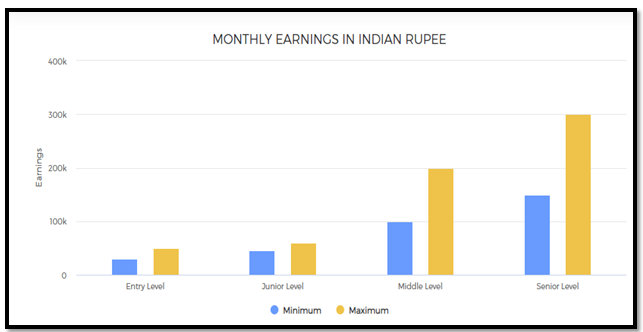
Monthly Earnings In Indian Rupee
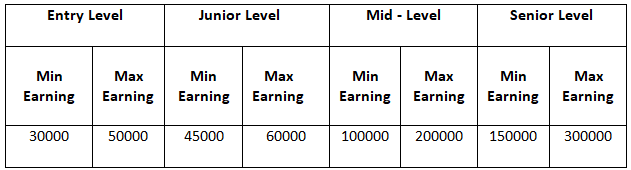
1. Entry level: 0 - 2 years of work experience
2. Junior Level: From 1 to 12 years of work experience
3. Mid-Level: From 5 to 20+ years of work experience
4. Senior Level: From 10 to 25+ years of work experience (there could be exceptions in some high-end technical, financial, engineering, creative, management, sports, and other careers; also in the near future, people will reach these levels much faster in many careers and in some careers, these levels will have no meaning as those careers will be completely tech skill driven such as even now, there is almost no level in a Cyber Security Expert’s job)
Work Activities
1. Analysing and interpreting data and information - Analysis of data and information to find facts, trends, reasons behind situations, etc.; interpretation of data to aid in decision making.
2. Processing information - Compiling, tabulating, calculating, auditing, verifying or otherwise dealing with information processing including data entry, transciption, recording, storing and maintaining databases.
3. Identifying objects, actions, and events - Identifying various characteristics of objects; observing and understanding actions and events; understanding changes in actions and events.
4. Creative thinking - Developing new ideas, concepts, innovative solutions to problems, newer ways of getting things done, designing products and services, creating work of art and craft, etc.
5. Inspecting equipment, systems, structures, and materials - Inspecting equipment, systems, structures, and materials to ascertain quality, performance, defects, causes of errors, etc.
6. Strategic planning - Developing visions and goals, developing strategies and action plans for achieving visions and goals.
7. Updating and using relevant knowledge - Keeping updated with the latest knowledge relevant to your fields of work and use of the relevant knowledge in getting things done.
8. Getting Information and learning - Observing, hearing, and reading, using computers, or otherwise obtaining information and learning from it.
9. Operating machines, equipment, devices, systems and processes - Using various methods and techniques to operate machines, equipment, devices, systems and processes in industrial and other settings.
10. Handling and moving objects and materials - Using hands or otherwise use physical strength to handle and move objects and materials; maneuver, install, lift, place, manipulate, etc.
11. Monitoring processes, systems and performance - Observing and recording information on various criteria to monitor mechanical, electronic, electrical and other processes and systems; monitoring progress of projects and tasks.
12. Making decisions and solving problems - Analysis of data and information; evaluation of alternative decisions and results of decisions; taking the right decisions and solving problems.
13. Organising, planning and prioritising tasks - Planning and organising tasks in order to achieve work goals; prioritising tasks to achieve goals and making the best use of the time available.
14. Training and teaching - Understanding educational and training needs of others, developing training programs and educational programs, conducting training prorams, teaching and instructing others.
15. Using computers for work - Using computers for day-to-day office work; using computer software for various applications in day-to-day professional work; entering data and process information; for writing.
16. Working in a team - Working in a team of people; developing team; maintaining professional relationships among team members.
Future Prospects
1. You can expect an exciting future in this field as the industry growth prospects are encouraging. Global clinical genomics market is expected to reach USD 879.0 million, at a rate of 17.1% compounded annually. North America accounted for the major share in this market, followed by Europe, and Asia-Pacific.
2. The global genome editing market is expected to grow at a rate of 14.5% to reach to USD 6.28 billion. The CRISPR segment of the global genome editing market is expected to grow at the highest rate. North America is to dominate this market and projected to grow at the highest rate.
3. The Global Genetic Testing market is expected to reach $ 69, 999.98 million by 2026 growing at a rate of 8.0% compounded annually during 2018 - 2026. The global animal genetics market is projected to reach USD 5.8 billion from USD 4.2 billion, at a rate of 6.5 % compounded annually. North America is expected to dominate the animal genetics market.
4. Though Indian genomics market is a nascent one, however, the Indian Government has taken up significant measures. A Central sectoral scheme, Bengaluru-Boston Biotech Gateway to India has been formed. Through this initiative, a range of institutes in Boston (Harvard/ MIT) and Bengaluru will be able to connect to share ideas and mentor the entrepreneurs, especially in the field of Genomics.
5. Another one is the National Laboratories Scheme, which will aid the development of low-cost technologies in big data in health genome biology. The Genome India project initiated by the Department of Biotechnology, Govt. of India, will catalogue the genomic data of 10,000 Indians and link them to its bio banks and bio repository.
6. Genomics market worldwide is projected to grow by US$14.7 Billion, driven by a compounded growth of 9.8%. Instruments/Systems segment displays the potential to grow at over 9.6%and is poised to reach over US$9.4 Billion by the year 2025. In Japan, Instruments/Systems will reach a market size of US$865.8 Million by the year 2024.
7. As the world’s second largest economy and the new game changer in global markets, China exhibits the potential to grow at 9.4% over the next couple of years. The global consumer DNA (genetic) testing market was valued at US$359.059 million in 2017 and is projected to grow at a rate of 15% compounded annually.
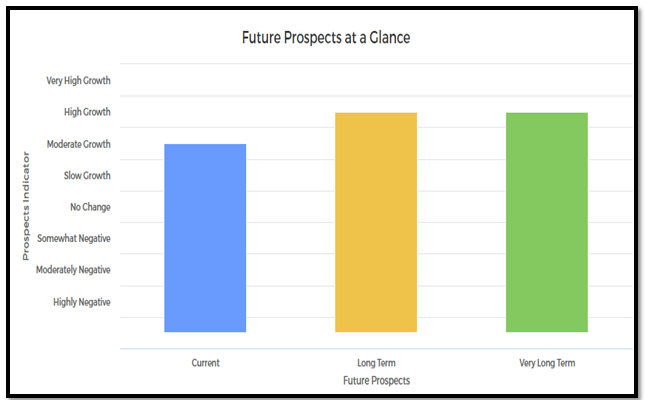
Future Prospects At a Glance



